





















Has the Fête de la musique become a massive marketing operation? As June 21 approaches, brands take turns announcing their own events
As June 21 draws near, the ritual remains unchanged… or almost. Because today, it is no longer just neighborhood accordionists or amateur rock bands warming up, but the marketing departments of major multinationals. One after another, brands are unveiling their own lineups for the big day. A question then inevitably arises: is the original spirit of this major popular festival dissolving into the grand pool of branding?
A popular utopia without hierarchy
@abi.lafleur the US could never #fetedelamusique #fetedelamusique2025 #paris #summer original sound - abi.lafleur
To understand the current shift, one must return to the roots of the event. Launched in 1982 under the presidency of François Mitterrand (and championed by Jack Lang), the Fête de la musique is anchored on a key date: June 21, the summer solstice, symbolizing the longest day of the year in the Northern Hemisphere. Admittedly, UNESCO had already established an international music day in 1975, but set on October 1, it remained confidential. The stroke of genius of the French version? Turning it into an ultra-popular event, designed to showcase amateur and professional musicians eager to express themselves. The rules of the game were clear from the very first edition: absolute free admission, openness to all and a total absence of artistic hierarchy. The success was immediate. Very quickly, the initiative crossed borders. By 2017, the tally already showed more than 120 participating countries. Because the strength of this concept does not stop at the borders of major metropolises: it flows into the smallest villages, travels through the countryside and invites itself where least expected – into hospitals or behind prison walls. A truly universal festival.
Paris, the nerve center (and viral hub) of European music
@maiagxn Kaytranada à Paris pour la fête de la musique 2024
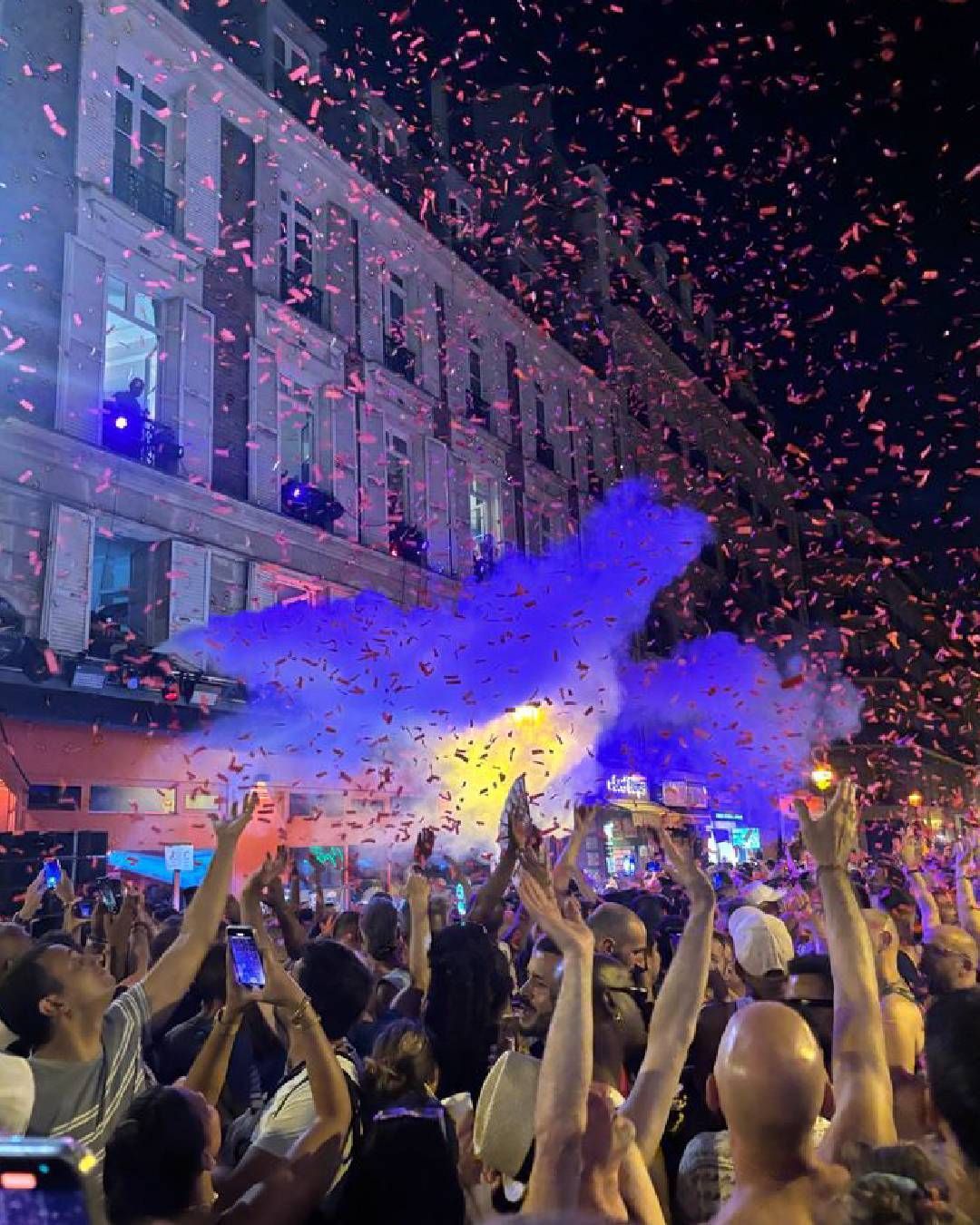
While the event exported itself as early as the 1980s, the rise of social media, and particularly TikTok, has propelled the Parisian Fête de la musique into another dimension. Today, the French capital has become the center of gravity for the European festive scene, especially for our British neighbors. Every year, they cross the Channel en masse for the occasion. It matters little if Eurostar ticket prices skyrocket to indecent rates – up to £600 return – the surge in fares does not seem to discourage youth from across the Channel, firmly determined to come and dance through the cobblestone streets. It must be said that in recent years, several viral videos have fully built the international myth of the Parisian version. Performances by global artists like Diplo, Kaytranada or Justice, combined with giant scenes of jubilation and free sets, have won over a global audience. Yet, behind these images of joy, the reality behind the scenes is sometimes darker. Last year, the event was marred by a wave of anxiety: 145 women fell victim to needle spiking. Even before kickoff, malicious calls to "spike women" had circulated on social media, serving as a reminder that the festive public space remains a vulnerable environment.
The onslaught of brands and the saturation of public space
With only a few days to go, brands are rivaling in ingenuity to occupy the terrain, unveiling lineups worthy of the biggest summer festivals. Streaming giant Spotify is taking over the Place de la Bastille to make a major statement, while the sneaker retailer Courir is deploying its footprint across seven distinct spots in the capital. Even the Chloé fashion house is joining the dance to showcase its fragrances at the heart of the party. For all these companies, June 21 has become an absolutely unmissable marketing highlight, on par with the Football World Cup currently taking place. And whether or not they have a legitimate connection to the art of music matters little, since the goal is precisely to fabricate one from scratch. To achieve this and stand out from the crowd, they do not hesitate to bring out the heavy artillery, combining pharaonic stage setups, massive influencer gifting campaigns and renowned headliners.
From street musician to return on investment
The observation is bitter for purists: we have shifted from a festival that brought together amateur musicians on a street corner to a massive advertising showcase where brands privatize public squares and sponsor mainstream artists. But what are they really looking to get out of these events, since they remain free for the public? The answer comes down to two words: visibility and virality. Investing in the public space in a spectacular way allows companies to generate content for social media. Once the video of the evening is shared en masse by participants and invited influencers, a large part of the communication work is done. More deeply, it is a strategy of emotional anchoring. By associating themselves with a specific time of year perceived as a moment of pure joy and freedom, brands weave themselves into people's daily lives through a positive lens. They are no longer selling a product; they are pretending to build a community. Brands have successfully privatized the public space to turn it into their own giant stage. It remains to be seen whether the spontaneity of the early days will survive this deluge of logos, or if June 21 will end up being nothing more than just another festival on the advertisers' calendar.