




























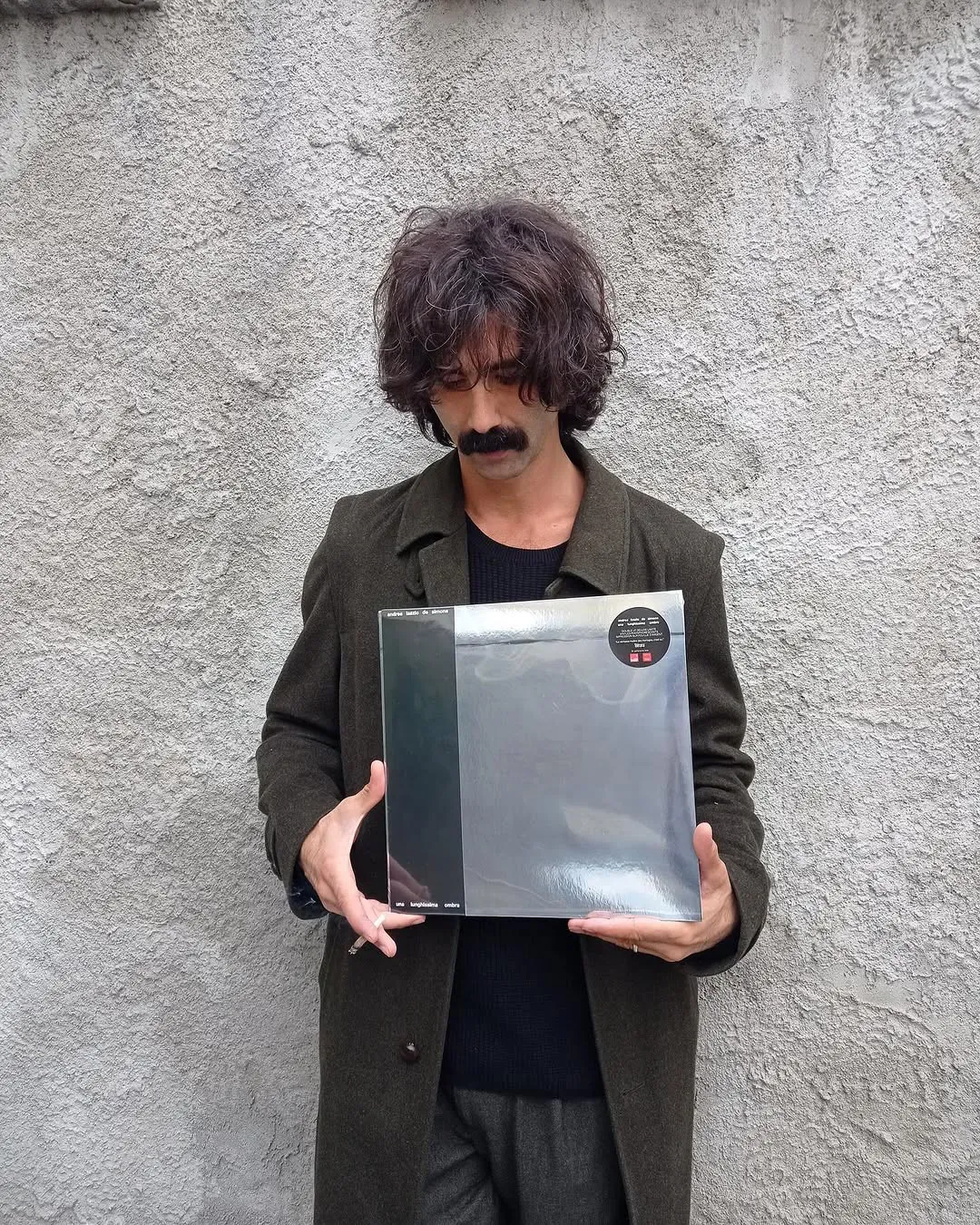
Andrea Laszlo De Simone's new magical and hermetic album The singer-songwriter's new project hovers over things, casting “Una Lunghissima Ombra” (A Very Long Shadow)
After a long wait filled with various teasers - from singles released on New Year’s Eve, surprise announcements, and mysterious visual projects - last Friday finally saw the release of Una Lunghissima Ombra, the new album by Andrea Laszlo De Simone: singer-songwriter from Piedmont, director, composer, producer, celestial poet, cosmic messenger, and family man (not always necessarily in that order). Let’s say it right away without fear of contradiction: this is one of the most important Italian albums of the year. You can tell by the extensive coverage it has received in the Italian press - see the cover stories from Rolling Stone and Rumore - but not only that.
Indeed, by a strange twist of fate, De Simone is more famous in France than here in Italy. To crown this success across the Alps, in 2024 he also received the prestigious César Award for the soundtrack of the film Le Règne Animal by Thomas Cailley (2023), sealed by the beautiful title track. Many of the themes that fascinated him in the film are also present in the new album, such as the father-son relationship and the connection with nature, «the human being understood as a creature, as an animal in the face of a reality that seems inescapable.»
Who is Andrea Laszlo De Simone
A brief recap for those who may have missed the earlier chapters. Andrea Laszlo De Simone is a musician from Turin who began his career as a drummer, first in his brother’s band - Nadar Solo - and later in the project Anthony Laszlo (a duo with his guitarist friend Anthony Sasso), eventually making his solo debut in 2012 with Ecce Homo: a homemade, almost naïve album, recorded with limited means - lo-fi more out of necessity than choice. The first positive responses came in 2017 with the release of his second album, Uomo, Donna, driven by the singles Sogno l’amore and Vieni a Salvarmi. To describe its timeless sound, critics evoked some major names from Italian songwriting and progressive music of the ’60s and ’70s, including Claudio Rocchi, Enzo Carella, and early Alan Sorrenti - but above all Lucio Battisti and Radiohead, with a few more or less explicit tributes to the latter: the album’s final track - Sparite Tutti - for instance, features the exact same drum pattern as Weird Fishes (from In Rainbows) and is thematically inspired by How To Disappear Completely (from Kid A).
But the real breakthrough for the singer-songwriter from Piedmont came in 2019 with the release of Immensità, a four-track EP (Immensità, La Nostra Fine, Mistero and Conchiglie) - or, alternatively, a 25-minute suite in four chapters (dream, reality, space, time). During the pandemic came the single dedicated to his children Dal giorno in cui sei nato tu (2020) and the concert film Il Film del Concerto at the Triennale (2021), envisioned as a sort of «journey from darkness to light.»
As De Simone himself explained, the Immensità suite was «a spiral journey centered on the elaboration of grief and aimed at rebirth.» Conceptually, its natural epilogue could only be the following single titled Vivo (2021), as an «anthem to life and its inevitable fragility» - «All of this represents for me the path ‘from darkness to light’; experiencing and performing it during the making of Il Film del Concerto was simply wonderful.» But since there is almost always a sense of circularity in De Simone’s music, in 2022 came the other side of the Vivo coin (later combined on a single 45 RPM record) - titled I Nostri Giorni. The two songs - said the artist - «are bound together just as joy and sadness, tragedy and consolation, life and death are.»
A Very Long Shadow: an album to watch, a film to listen to
This circularity can also be felt in the new work released on Friday. Una Lunghissima Ombra once again begins from the darkness of the opening track and ends with the title song, which summarizes in a single verse everything that came before - I realize I’ve grown up, I only see tired faces / And when evening comes, I cast a very long shadow - and therefore actually represents both the farewell and the point of origin.
The album is made up of 17 tracks in total, including 5 instrumentals - a prologue (Il Buio) and 4 interludes (Neon, Diffrazione, Spiragli and Rifrazione) - which serve as a counterpoint to 12 actual songs, all connected by a central theme, like in a true “opera,” which, in De Simone’s own words, should represent «the intrusive thoughts, those that are constantly present within us even when we’re thinking about something else, and that end up casting long shadows over our existence.»
Ascoltando il nuovo album di andrea laszlo de simone sentendomi un po' vivere un po' morire un po' galleggiare nell'universo un po' nel mezzo di una crisi esistenziale pic.twitter.com/5G6X3nhvwv
— camilla (@sleeeepingg) October 17, 2025
We say “should” because, although the songs share a general theme, it’s also true that De Simone always leaves within them a small zone of mystery: there’s always a cone of shadow, so to speak - a small frame through which the listener can glimpse only the silhouette of the meaning, without being able to fully bring it into focus. This forces the listener to make an imaginative effort, to fill a void of meaning within the boundless universe of these songs, which sometimes expand and stretch far beyond the natural limits of pop music, with tracks lasting 6, 7, or even 8 minutes. It’s as if, at a certain point, De Simone (grants or) surrenders the helm to the listener, who suddenly becomes, unwittingly, a sort of «Buckleyan starsailor,» a star navigator who has lost his course and sails by sight through the song, letting himself be guided by instinct and his own interpretive freedom.
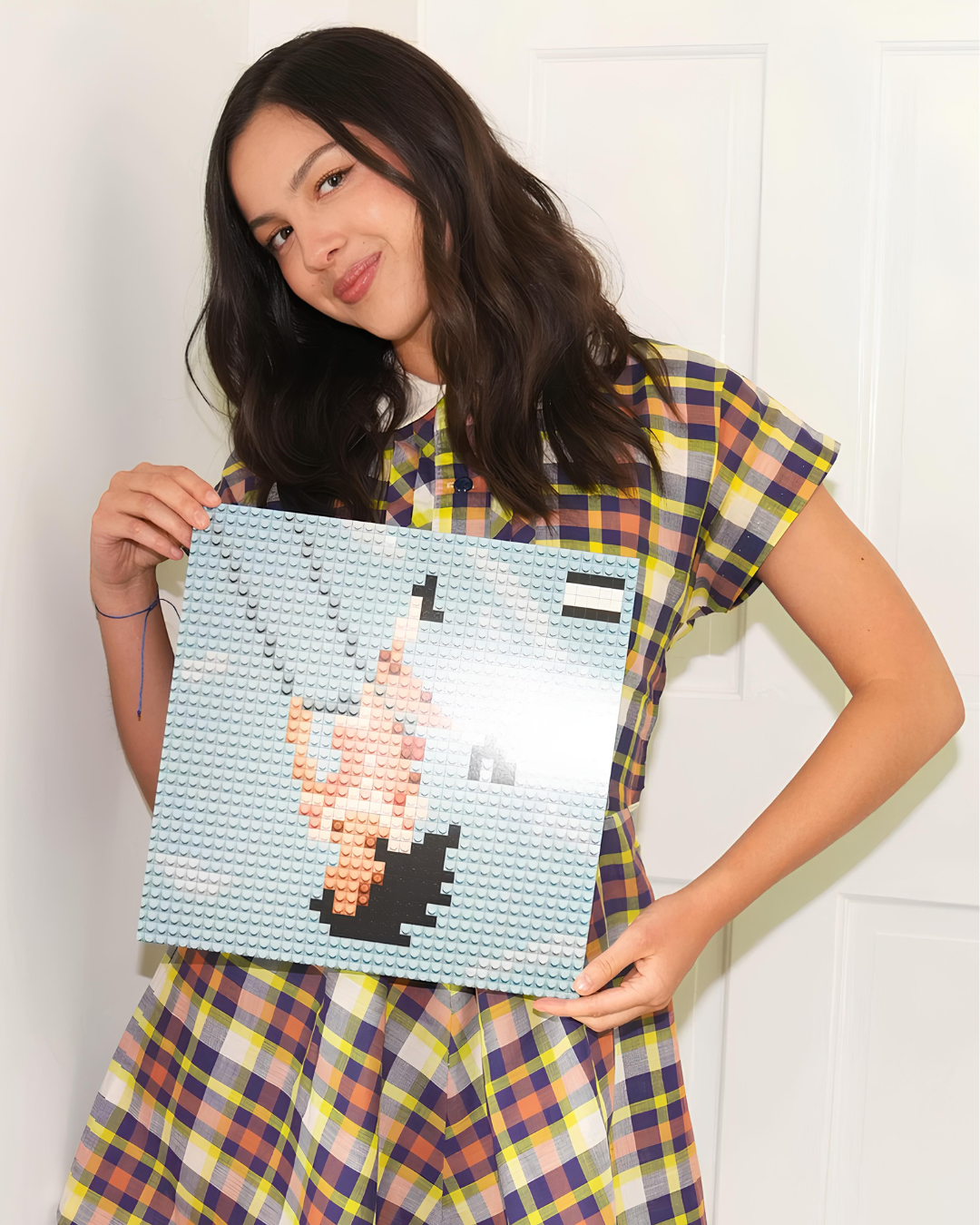
Just think of the cover art, whose meaning has sparked much speculation among fans: is it a mirror, a vision, the Oort Nebula, a road in the fog, or perhaps much more simply some smoke from a smoke bomb left over from the shooting of the Vieni a Salvarmi video, as De Simone later revealed. The meaning, according to De Simone himself, is «the unpredictability of life.» And that black line, which some mistook for the horizon, is «the crack that runs through everyone’s life.» Even when he’s forced to provide explanations, De Simone never goes into too much detail, preferring to leave room for the listener’s agency.
To facilitate this process, the album also includes a visual component, defined as a “film” for convenience, even though, being completely devoid of narrative, it cannot truly be classified as a traditional music video, but rather as a work of video art. In practice, it’s an audiovisual project made up of a series of «film paintings» - static shots of everyday places particularly familiar to the artist: the city of Turin seen from above, a hillside road, a park tree, a fairground carousel - ordinary places deliberately chosen not to attract attention, but rather to stimulate the viewer’s imagination. «I wanted to move away from the language of music videos, which tends to confine the meaning of songs, and instead recreate that feeling you get when listening to music on headphones while sitting on a bench, staring at basically nothing,» the artist explained.
spero vivamente che Andrea Laszlo De Simone stia vivendo la migliore delle vite possibili.
— greta elisabetta (@gretelisabetta) August 2, 2023
This doesn’t mean there isn’t a concept behind the film; as De Simone further explains, it’s a metaphorical representation of the process of forming a shadow: the static shots represent the light source, the song lyrics used as subtitles represent the object (that is, the intrusive thoughts echoing in the mind), and the music represents the shadow that the object casts - that sense of unease mixed with melancholy that, especially on certain gloomy autumn evenings, takes hold of us and wraps around us like a blanket. These musical shadows are made of concrete sounds (the blowing of the wind, the crackling of fire, the flowing of a river, the background noise of the city) and meticulously crafted orchestral sounds that intertwine and stretch into long fades when needed, with choirs, strings, brass, and countless other ancient and modern instruments, like the Jew’s harp that marks the passing of time at the beginning of Aspetterò.
The musical references are more or less the same as those mentioned in the past: there’s the magical flight of Rocchi in the Aria of early Sorrenti, the one among the clouds of Modugno, and the more melodic one of Battisti, gliding over celestial orchestral expanses at the imaginary and impossible stellar crossroads between Umberto Bindi and Spiritualized’s Ladies & Gentlemen We Are Floating in Space, or Mercury Rev’s Deserter’s Songs. A fusion of songwriting tradition and psychedelic pop modernity that has few equals in the contemporary Italian music scene. There are also references to the more electronic and dystopian sounds of his beloved Radiohead, especially in the final part of the album, where they echo in the syncopated structure of Quello che ero una volta and culminate in something even bolder in the unexpected masterpiece Non è reale. This is the only musical influence De Simone has acknowledged and cited in interviews, as he has often said he isn’t a great connoisseur of music, except for the soundtracks of the films he grew up with.
It’s likely that the homage to the theme of Moon River found in the single La Notte comes from there - a desperate cry for help - If there’s someone who’s not afraid, I pray come to my aid - stripped of the anger found in Vieni a Salvarmi and laid over a cheerful melody reminiscent of a 1960s Italian beach song. The effect is somewhat similar to the music of The Smiths, who managed to make you sing terrible things over sparkling melodies. This strong contrast between music and subject matter is a recurring feature of the album, which also appears in reverse, as in Pienamente, one of the few glimmers of light, with an extremely positive lyric that invites one to fully embrace life - yet musically it «sounds almost like a suicide note.»
The last distinctive sound element is the filtered voice, which might once again recall Radiohead’s Kid A. But while Thom Yorke chose to distort his voice to avoid any autobiographical overlap between himself and what he sang, De Simone doesn’t use his real voice for other reasons: «It feels too rooted in the present, too grounded in reality. And instead, perhaps by personal inclination, I tend to move music into a magical context parallel to existence, as if it were on a timeline that runs right alongside ours.»
Cercando il coraggio di ascoltare il nuovo album di Andrea Laszlo De Simone (coraggio che non troverò)
— Francesca ⊹ (@5antimeridiane) October 17, 2025
Moving on to the “objects,” among the many intrusive thoughts sung about on the album, one of the most frequent is related to the sense of guilt: Colpevole marks its birth, Quando its initial rejection, and Un Momento Migliore its acceptance. Within this trilogy of guilt, Colpevole is the song that most firmly anchors us to the present and to our responsibilities toward the rest of the world through harsh yet poetic lyrics. The opening recalls Soldati by Ungaretti, except that here not only the leaves fall, but entire branches - Like branches cut off by the wind / Thrown one upon another / Without purpose / Good only for catching fire. Those branches are all of us, burning as our straw tails might burn: not an accusation, but an attempt to awaken consciences, «because even conscience sometimes makes mistakes.»
It’s no coincidence that Colpevole is immediately followed by Quando, the beautiful and latest single that describes the moment when our mind tries to justify our contradictions and rejects the sense of guilt. It’s a clumsy attempt at human justification or, as De Simone said, «a clumsy yet deeply human search for understanding» - It’s the fault of the breath, fragile like me if I suffer so much, but I’m alive / It’s the fault of the silence, shy like me if I don’t tell you what I think / It’s the fault of the noise, cowardly like me if you can’t manage to listen.
Finally, the guilt trilogy concludes with the painful assumption of responsibility in Un Momento Migliore, the single released on New Year’s Eve, complete with a sample of Amadeus’s countdown from La notte Che Verrà. The one assuming this responsibility is not a person, but the whole world, which De Simone imagined as if it were a real person - an anthropomorphic world ashamed of itself.
This is just one of the many intrusive thoughts that invade the mind while listening to the album, but there are many more - wrapped in sound, trapped in words, lost and dispersed in the smoke and fog of the cover art and the various visual frames of this grand project. «Poetry is poetry when it carries within itself a secret,» said Ungaretti, considered - not by chance - a precursor of Hermeticism. Similarly, in Andrea Laszlo De Simone’s album, there still seem to be many secrets left to uncover: his is a musical hermeticism, a very long shadow behind which much poetry still hides.