
Meta has launched three new pairs of Meta Glasses Everything you need to know about the news presented yesterday at Meta Connect
During Meta Connect, the annual developer conference organized by Mark Zuckerberg's company in Silicon Valley, three new models of Meta Glasses developed together with Ray-Ban and Oakley were announced, along with a Neural Band designed to accompany the glasses with an integrated display and allow users to send messages or navigate menus with simple hand gestures. During the presentation, Zuckerberg called this technology a «major scientific breakthrough» that will soon become an accessory in everyday life. Since their launch, the smart glasses powered by Meta AI have shown great commercial potential, a forecast supported by Zuckerberg's financial choices, as this summer he decided to invest €3 billion in the partner company EssilorLuxottica.
The Meta Ray-Ban Display and the Neural Band
Wow! Using the neural wristband alongside the Meta Ray-Ban display glasses to text seems like a game-changer for smart glasses. pic.twitter.com/1dSphsYUWQ
— Nathie @ Meta Connect (@NathieVR) September 18, 2025
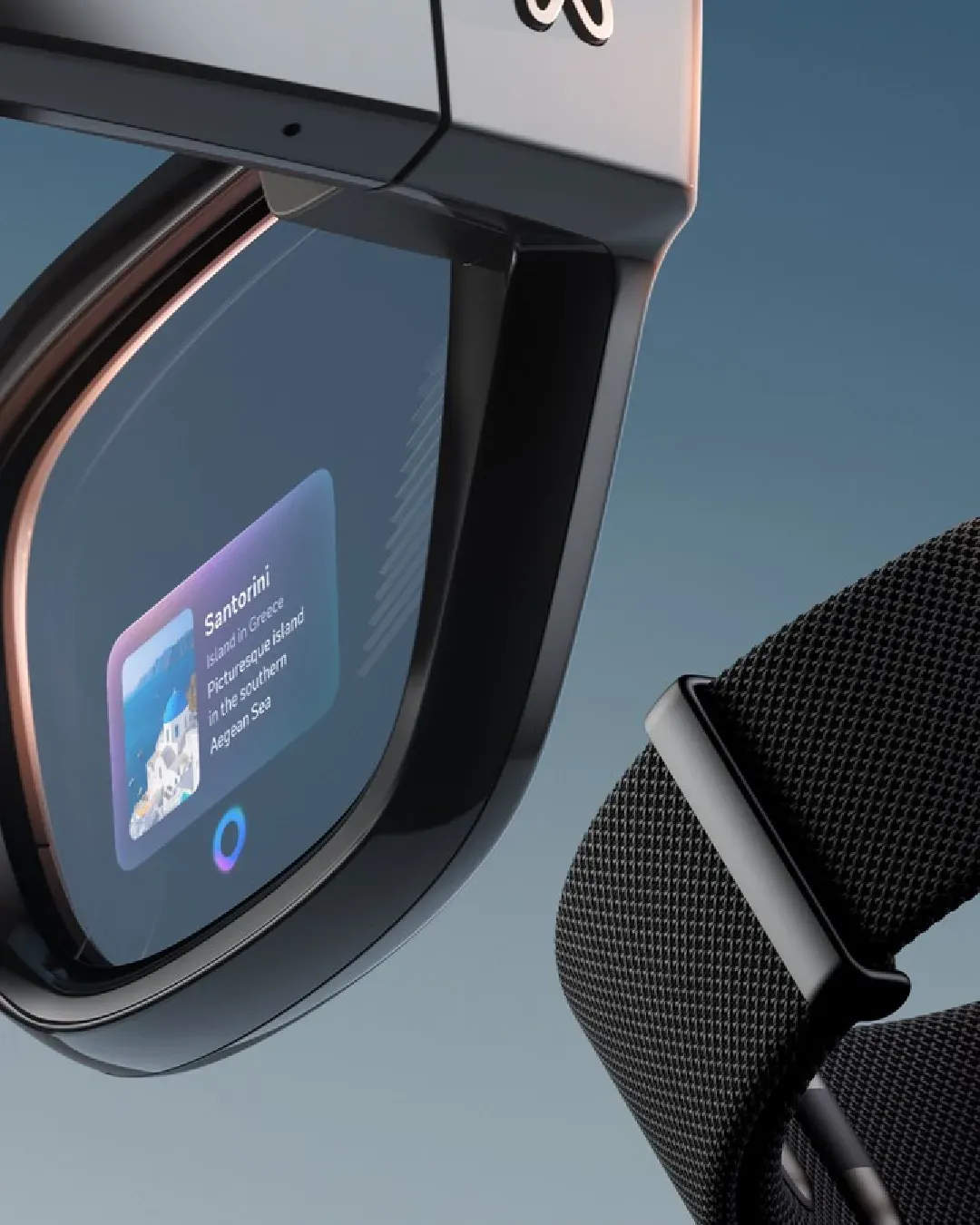
The most striking novelty of yesterday’s presentation is undoubtedly the new flagship model of the Meta line: the first glasses with a high-resolution color display integrated into the right lens. They allow you to view messages, answer video calls, and watch content such as Reels or navigation directions directly floating in front of your eyes, without ever having to take out your smartphone. Available starting late September in the United States and early 2026 in the rest of the world, the Ray-Ban Display will be produced in limited quantities and sold only in physical stores (to properly fit the band to the wrist), at a price of about $799.
To interact with the content, you need the Neural Band, a wristband that interprets micro-hand gestures, such as a tap with the index and middle fingers to select, a thumb swipe on the index to scroll through menus, or a pinch to adjust volume and zoom. You can even activate Meta AI with a double tap of the thumbs, instead of using voice commands. Thanks to this visual interface, features like real-time translations, automatic subtitles, and GPS navigation become immersive experiences that appear directly on the lenses.
Criticism of Meta AI
Despite the economic success of Meta AI and the digital glasses, the company continues to receive heavy criticism from parents and activists concerned about the impact of new technologies and social media on young people. During Meta Connect, many people, including the families of young suicide victims, protested outside the New York headquarters to demand more protections for minors online.
In addition, two former Meta researchers have recently accused the company of having covered up studies highlighting the risks related to virtual reality use among children, accusations that the company has called «nosense». Meanwhile, Meta is carrying out a massive investment campaign to build AI data centers in the United States (one of which will be the size of Manhattan) and hire top talent away from competitors, with the stated goal of developing forms of «superintelligence» capable of surpassing human abilities.
Ray-Ban Meta - Gen 2
Ray-Ban Meta glasses (Gen 2) pic.twitter.com/5Qx36zO6db
— Kote (@kotecinho) September 18, 2025
The first model born from the collaboration with Ray-Ban, which has already sold two million units since its launch in 2023, is getting updates in this new generation. While the look of the Ray-Ban Meta remains the same, the new version inherits some features from the sports models, such as an improved camera capable of shooting up to 3K video, slow-mo and hyperlapse modes, and a battery that doubles its life. New colorways have also been introduced for the brand’s three most iconic silhouettes: Wayfarer, Headliner, and Skyler.
Oakley Meta Vanguard
While the Ray-Ban Display focuses on augmented reality, the new model created with Oakley targets athletes instead. The Vanguard glasses take on the typical wraparound Oakley look, but hide a 12 MP ultra-wide camera with a 122° field of view in the bridge, perfect for POV videos up to 3K, slow motion, and hyperlapse. Designed to withstand any condition, they feature IP67 certification, enhanced audio with speakers 6 dB more powerful, and a five-microphone system capable of isolating your voice even in wind and noise. The battery promises up to 9 hours of life, the best ever seen on a pair of Meta glasses, and the controls are positioned under the temples for easy use even with a helmet.
The Vanguard glasses interact in real time with Strava and Garmin: during a run or bike ride, you can ask Meta AI for your performance data or let the glasses take photos and videos automatically during the most significant moments. At the end of the workout, the data can be overlaid on the videos to share them on social media. They will be available in the United States starting October 29 in four colors, at a price of about $499. The interchangeable Prizm lenses will be sold separately.