
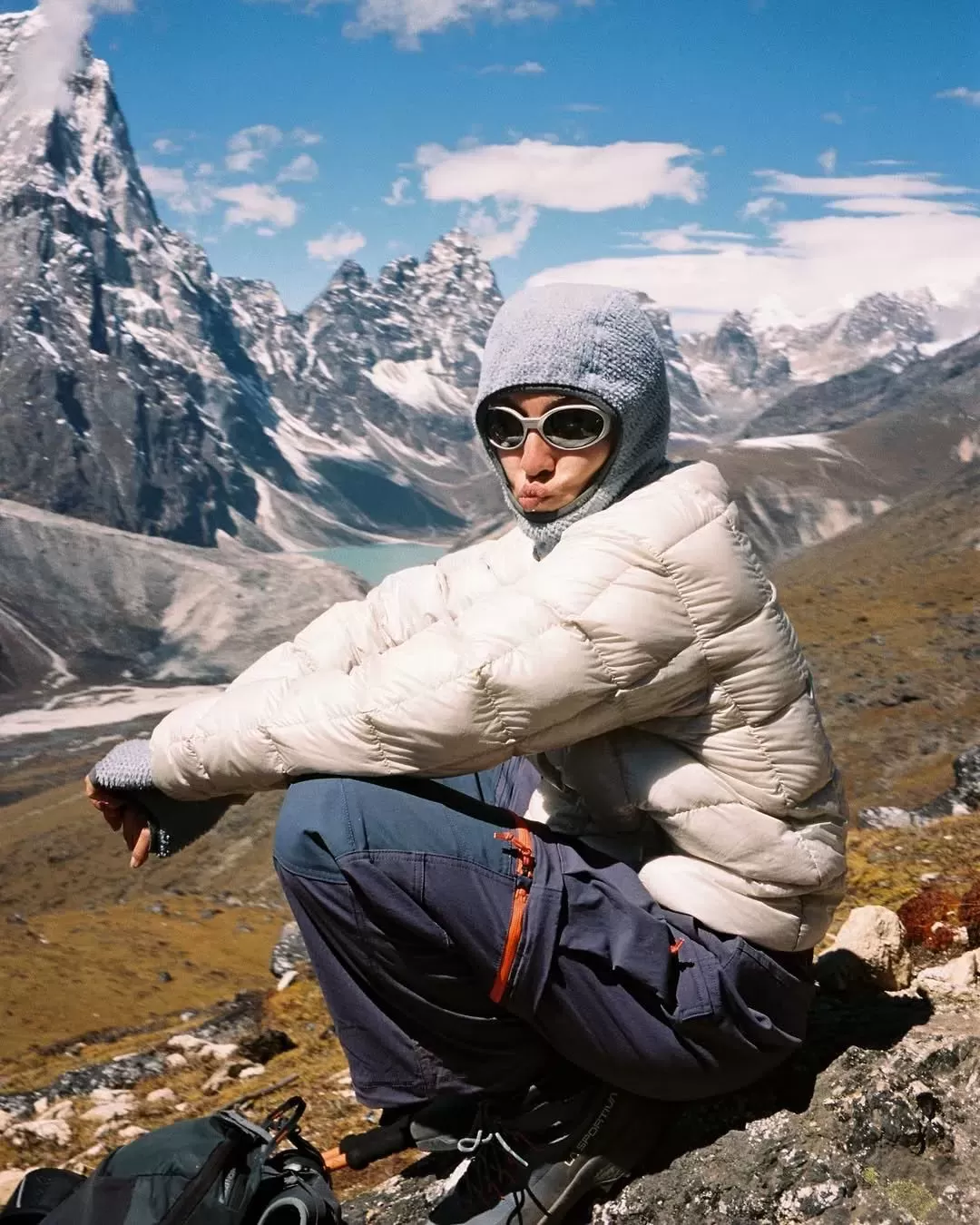
What does Gorpcore stand for today? The aesthetics paradox of a function-based trend
Not long ago, a funny meme was circulating on TikTok about the moment when you finally show your hiking shoes the nature they were designed for. In the city, a pair of sneakers made for rugged mountain terrain doesn't make much sense, yet there's a whole aesthetic dedicated to it. We've decided to call it Gorpcore, the look of those who wear technical clothing in the city – from Good Old Raisins and Peanuts, the trail snack typically carried by hikers and climbers on outdoor adventures – and today it's one of the main street style trends. On the streets of all the fashion capitals (places where the risk of encountering a green dirt path is relatively low), full looks featuring brands like Arc'teryx, La Sportiva, And Wander, Patagonia, Gramicci, ROA, Merrell and Keen are seen, along with an improbable amount of accessories equipped with climbing ropes and carabiners.
@letthemeatcarbs They’re no longer white #salomon #salomonxt6 #goretex #hiking #saklikent #turkey original sound - SAINTED
At a time when the revenues of major fashion companies are tending towards the negative, Gorpcore is driving sportswear sales, pushing the sector towards surprising results, especially in Italy. According to a new report by Mediobanca, in 2025 the country is the European leader in the production and export of sporting goods (22%), with the Mountain Attitude segment accounting for 29% of total revenues. Judging by the growing demand for technical apparel, it's becoming necessary to question the cultural relevance that outdoor sports are generating both online and on the runway. Now that street style rewards functionality over hype, will the quality of technical brands decline?
The success of the fashion-sportswear duo is tangible. Technical brands like On, Vibram, Salomon and The North Face have agreed to collaborate with brands focused on fashion and aesthetics like Loewe, Balenciaga, MM6 Maison Margiela and Cecilie Bahnsen. At the same time, in the last two years we've witnessed the rise of water bottles as collectible accessories and status symbols, with brands like Yeti, Stanley, and Hydro Flask driving the trend to social exhaustion, and the cultural boom – encouraged by sportswear brands – of running clubs and specialized gyms in cities, like Nike Strength Studio or Alo Yoga. Sportswear – the real kind, not just the short-sleeved T-shirts and colorful sneakers of the previous decade – has managed to occupy every social space, from aperitifs to camping, from TikTok fit checks to Fashion Week shows.
@momentsabloom outfits for the countryside #outdooroutfits #natureoutfit #hikingoutfit #autumnfashion #cosyvibes #gorpcore Second Chances - Gregory Alan Isakov
«The Gorp phenomenon and the boom of urban techwear have turned technical clothing into a cultural symbol,» says Daniele DeNegri, founder of the communications agency Green Media Lab, which manages clients such as La Sportiva, Vibram, and Patagonia. But while the trend has brought attention to authentic brands, on the other hand, «when an aesthetic becomes a trend, the risk is that it gets replicated without truly understanding its meaning.» The Green Media Lab founder’s observation is echoed by Andrea d’Amico, Managing Partner at the agency Attila&Co (Cisalfa Sport, Sease, Puma). D’Amico acknowledges that although sportswear entered the fashion world thirty years ago, today the average consumer demands more than just aesthetics. «Performance is no longer confined to the field or the gym: we live in a hyperactive and layered society where a garment must function in every context,» adds d’Amico, ultimately justifying the rise of Gorpcore in cities like Milan or New York, where there are no hiking trails but there is a need for clothing that adapts to temperature changes and various daily scenarios.
So, if technical sportswear has infiltrated streetstyle and fashion seeks to benefit from it through collaborations and imitations, should we worry that functionality might be lost? Apparently, it depends: while it’s true that a surge in demand for a product can damage its production, due to a strained and fragmented supply chain, consumer interest in technical clothing remains steady, focused more on performance than on aesthetics. According to DeNegri, «today's consumer is more informed, looking for authenticity and real sustainability, and above all, wants to feel part of a coherent system» – hence the boom in running clubs and yoga studios, one might add.
«We’ve seen a steady increase in interest toward outdoor and sports brands, even among demographics that were previously distant from them, like under-30s. The real challenge today is to maintain authenticity and performance while speaking to a broader audience.» The success of Italian production aligns perfectly with the new needs of functional sportswear consumers, as illustrated by DeNegri’s example of regions with deep manufacturing traditions, such as the Montebelluna district for outdoor sports footwear. But it wasn’t just history that made the Alps an international benchmark (with 63.3% of Italy’s Mountain Attitude revenue coming from exports) for mountain apparel, but also the ability of Italian manufacturers to «anticipate global changes and meet the growing demand for products that combine functionality, aesthetics, and attention to sustainability.»
In short, it seems that it wasn’t the mountain aesthetic that fascinated fashion, but rather the technical performance and adaptability of sportswear. As d’Amico emphasizes, we are witnessing a radical change in consumer priorities, who are no longer swayed solely by a garment’s appearance. «It’s not just about sportswear, but also the world of beauty and lifestyle: it’s the rise of wellness as a lifestyle, a vision that isn’t limited to physical fitness but includes movement, mindful nutrition, sleep, mental health, and work-life balance.» Clothing, like skincare and supplements, saunas, and targeted workouts, in 2025 must serve a practical and personalized purpose. The concept of wellness, as d’Amico adds, «becomes a tool of identity, and sportswear the uniform of this new way of living.» Technology, aesthetics, and sustainability become non-negotiable for any brand wanting to stay afloat in today’s uncertain landscape, concludes d’Amico. «The consumer today wants all of this but, rightly, at an accessible price. And that’s where the challenge remains open.»