




































Trump's new tariffs are hitting Made in Italy Confindustria estimates losses of 20 billion euros and 118,000 jobs
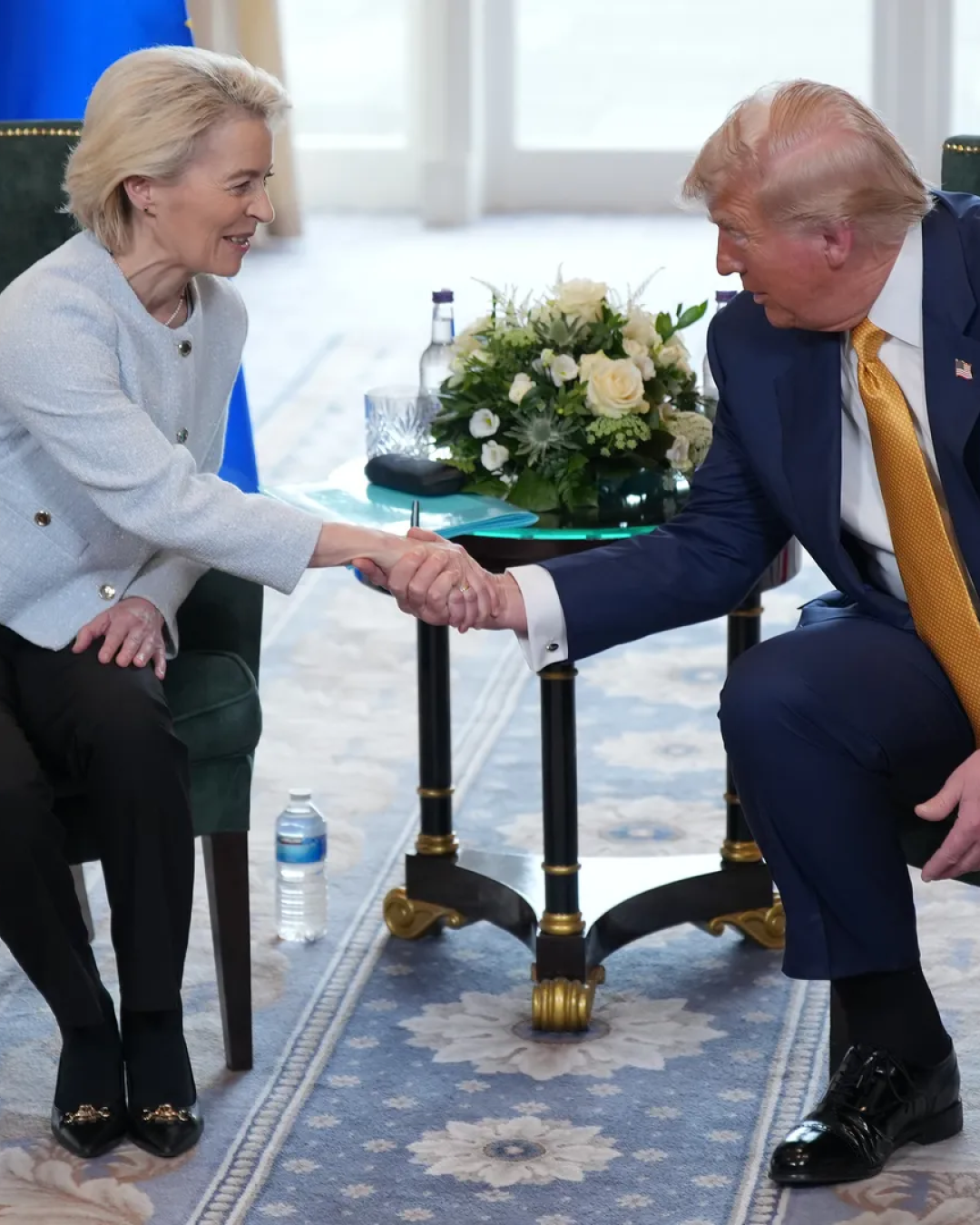
After months of prolonged negotiations, talks between the United States and the European Union on new tariffs for European exports finally concluded yesterday. Just a few days ago, the prospect of a 30% tax could have plunged the Italian economy into deep crisis. However, after just forty minutes of negotiation, European Commission President Ursula von der Leyen expressed satisfaction with the deal reached: a new tariff regime set at +15% on a wide range of European goods and consumer products. As reported by WWD, the agreement between Washington and Brussels, announced Sunday by U.S. President Donald Trump in Scotland, was described by the president himself as «the biggest deal ever made». The new 15% rate, which Trump clarified would apply uniformly to automobiles and other products, is accompanied by other significant commitments. The European Union has agreed to purchase $750 billion worth of energy from the United States and plans to invest around $600 billion in the American economy, although the specific details of the latter point remain unclear. The result of the negotiation is far from a triumph — if anything, it confirms once again Trump’s erratic behavior, which nonetheless seems to deliver the desired outcome for the U.S. president every time. As Francesco Costa, journalist and deputy editor of Il Post, points out in his podcast Wilson, this is a rare case of a “one-sided trade agreement”, since the EU has not imposed any equivalent tariffs on U.S. imports. So the question remains: was this really the best solution?
President Donald J. Trump meets with the President of the European Commission, Ursula @vonderLeyen, in Scotland to discuss trade.
— The White House (@WhiteHouse) July 27, 2025
"We've had a very good relationship over the years, but it's been a very one-sided transaction... & I think both sides want to see a bit fairness." pic.twitter.com/XFxojMJ7EP
Beyond the fact that the meeting did not take place in an institutional setting, but rather in one of the U.S. President’s golf clubs, Trump announced that Brussels had agreed to fully eliminate its trade barriers, thus opening its markets to American products with zero tariffs and committing to the purchase of large quantities of U.S. military equipment. Von der Leyen described the negotiation as «very tough» but emphasized that the agreement would bring stability and predictability to transatlantic trade relations, which have recently been marked by high volatility. According to the BBC, the European Union essentially yielded to Trump, but such stabilization was urgently needed, especially in light of the European Central Bank’s warning of a particularly uncertain European economic context due to ongoing trade tensions. Behind the EU’s apparent satisfaction lies a significant concession compared to the previous tariff regime, especially when compared to the lower 10% rate secured by the United Kingdom. Adding to the narrative was Giorgia Meloni — as reported by The Guardian — who stated that despite everything, the agreement remains positive as it ensures greater stability for Italy, one of the EU’s top exporters to the U.S., with a trade surplus of over 40 billion euros and yet another looming recession.
@amedeoiasci Parliamo del nuovo patto di commercio tra Stati Uniti e Europa che vanno veramente tanti favori verso l’America che potrà comunque far pagare dei dazi a porter europei si becca 500 miliardi di dollari di investimento e qualche terrone di dollari di business a livello di difesa #EuropaAmerica original sound - jashiproject_italia
According to experts, Italy is likely to suffer the most from the consequences of the new tariffs, which will directly and immediately impact many key Made in Italy supply chains. As reported by Domani, Confindustria had previously estimated — under the optimistic assumption of a 10% tariff — losses of 20 billion euros and 118,000 jobs. With the tariff now set at 15%, these figures worsen by 50%, pointing to a much graver scenario. One of the hardest-hit sectors is wine: according to Federvini, Italy exports bottles worth 2 billion euros annually to the U.S., involving nearly half a million workers. According to Coldiretti, 30% tariffs could have inflicted up to 2.3 billion euros in direct damage to the Italian agri-food sector. Although the current agreement mitigates the impact, losses are still expected to exceed 1 billion euros. Svimez economists estimate that the deal signed yesterday will cost Italy a quarter of a percentage point of GDP, equivalent to nearly 100,000 fewer jobs, with inevitable consequences on public debt and national finances. Given this picture, the inevitable question arises: what will be the impact on the fashion industry? If food & beverage was the first to take a hit, the Italian fashion sector—long a leader in exports to the U.S.—could be next. Amid exploitation scandals, declining revenues among major groups, and growing apathy from general consumers toward the luxury market, could this be the final blow for Made in Italy?