






















IFM Fashion Show: Michael Rider Mentors the Next Gen The new fashion guard hits the ground running
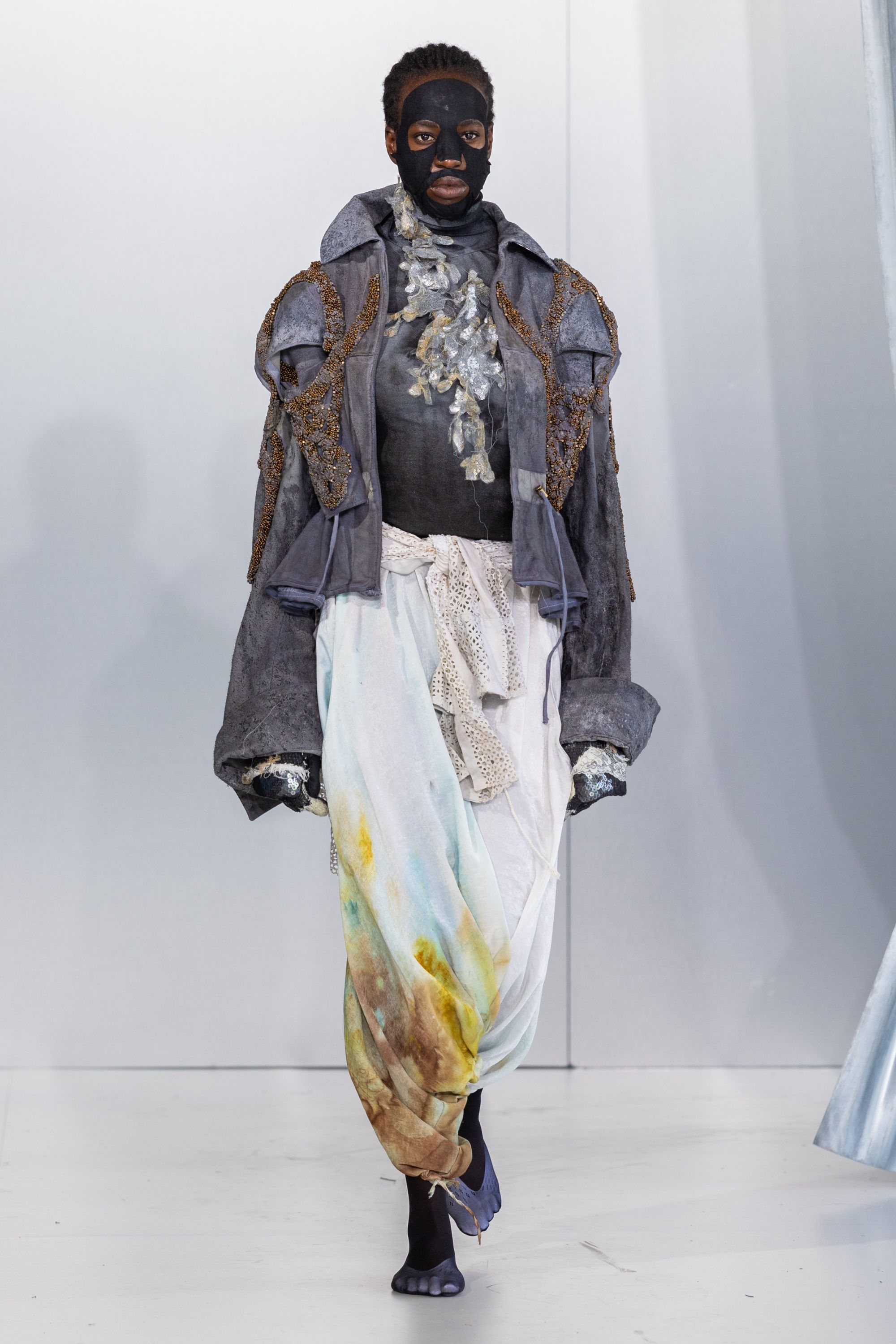
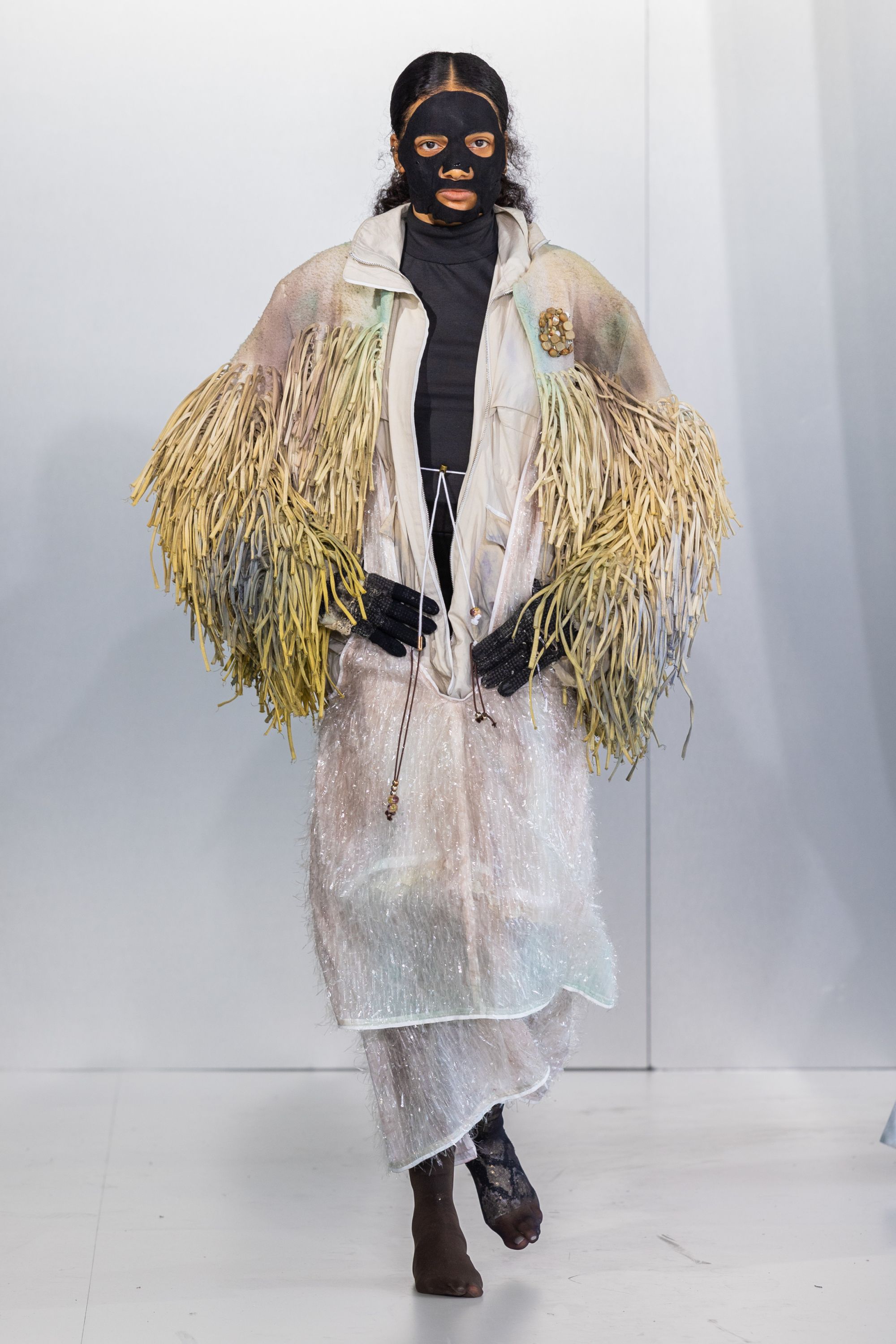
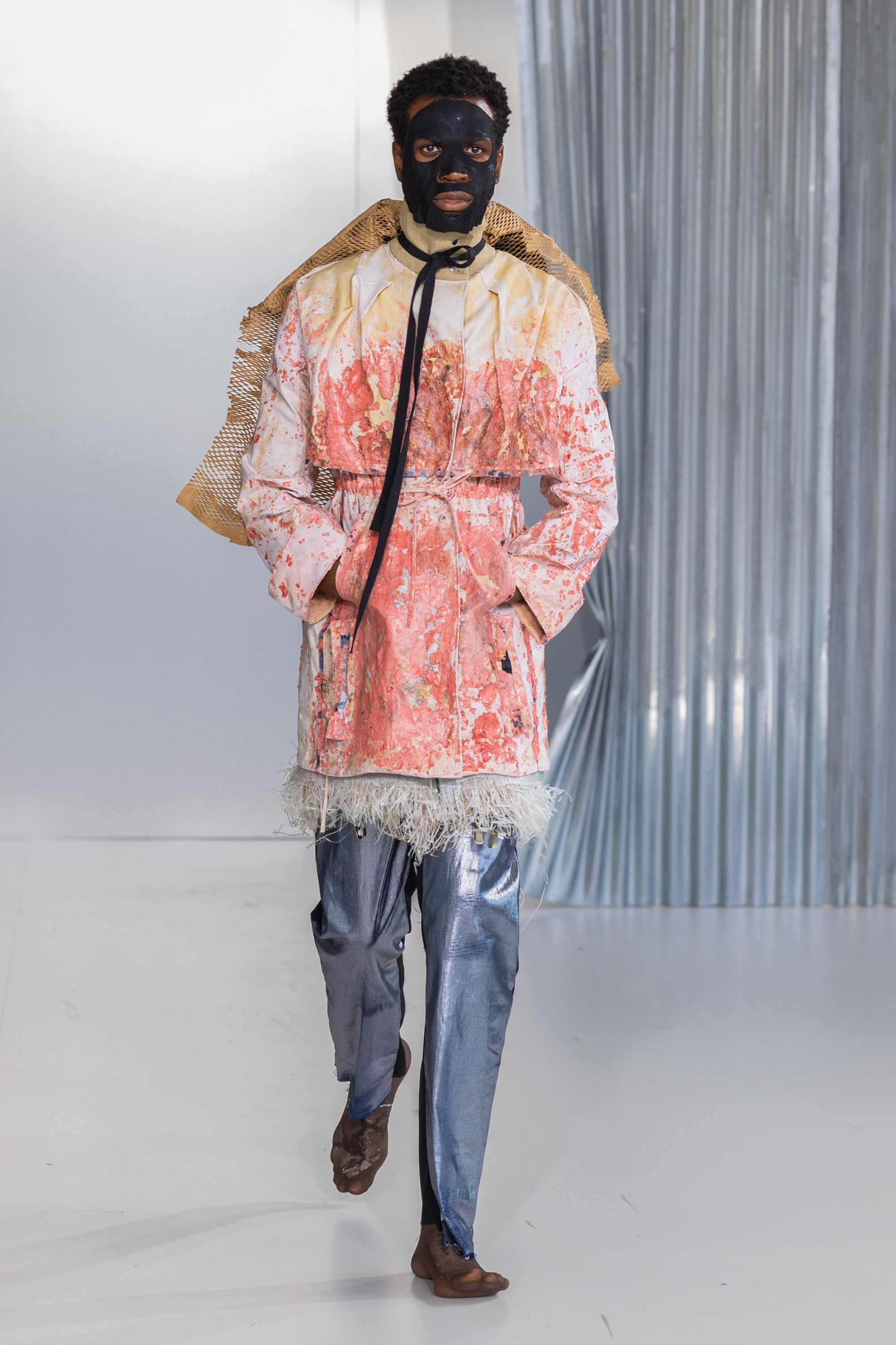
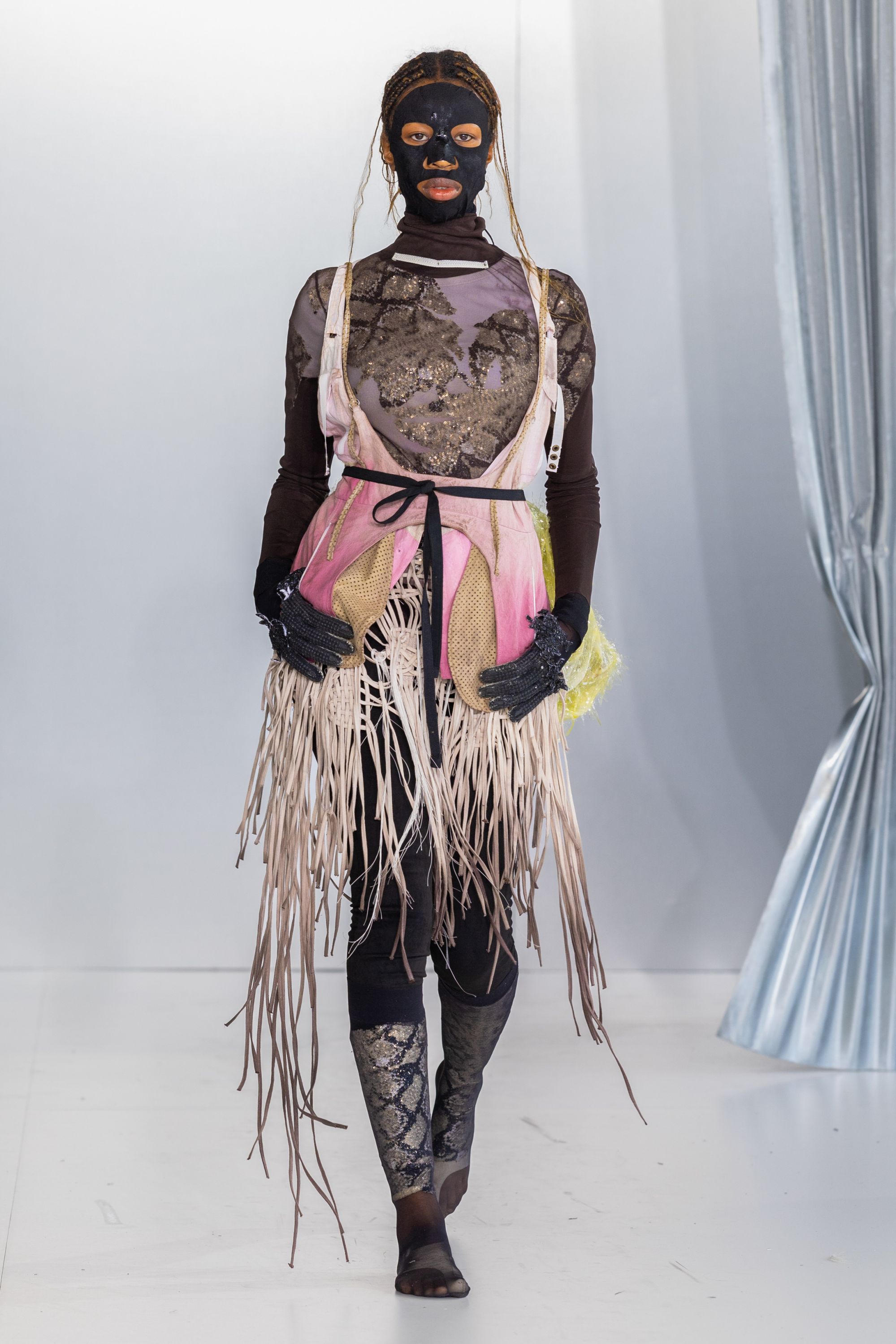
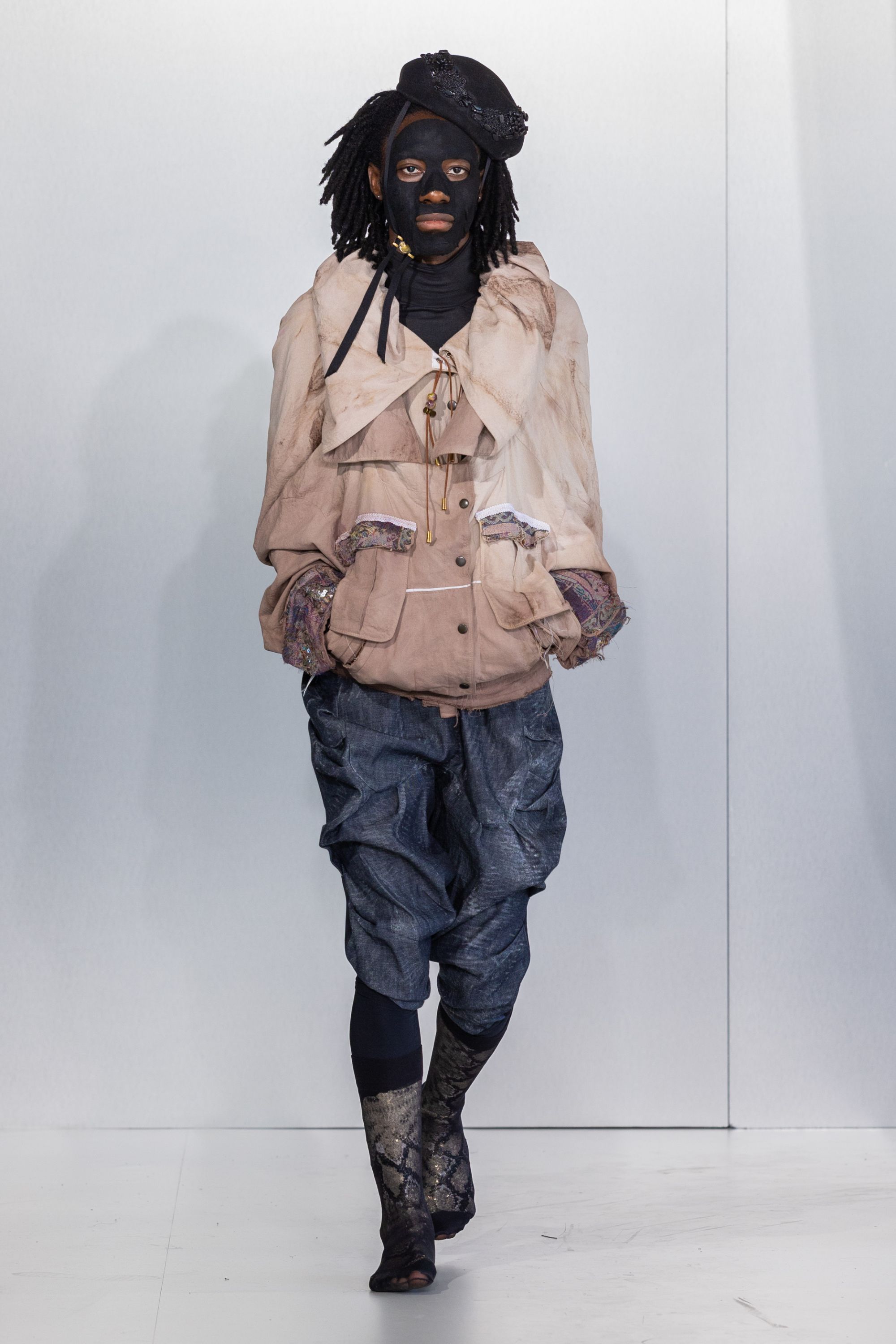
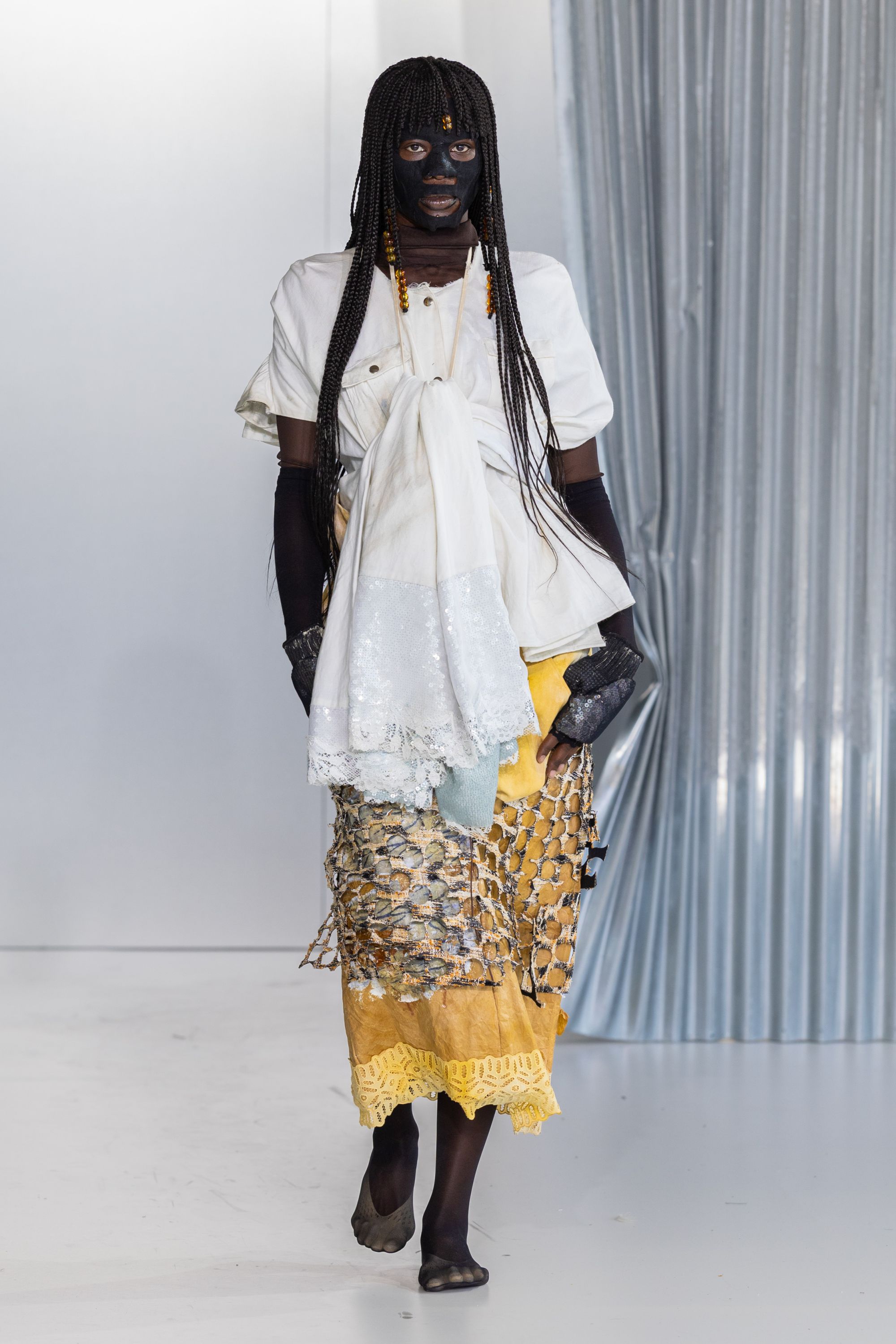
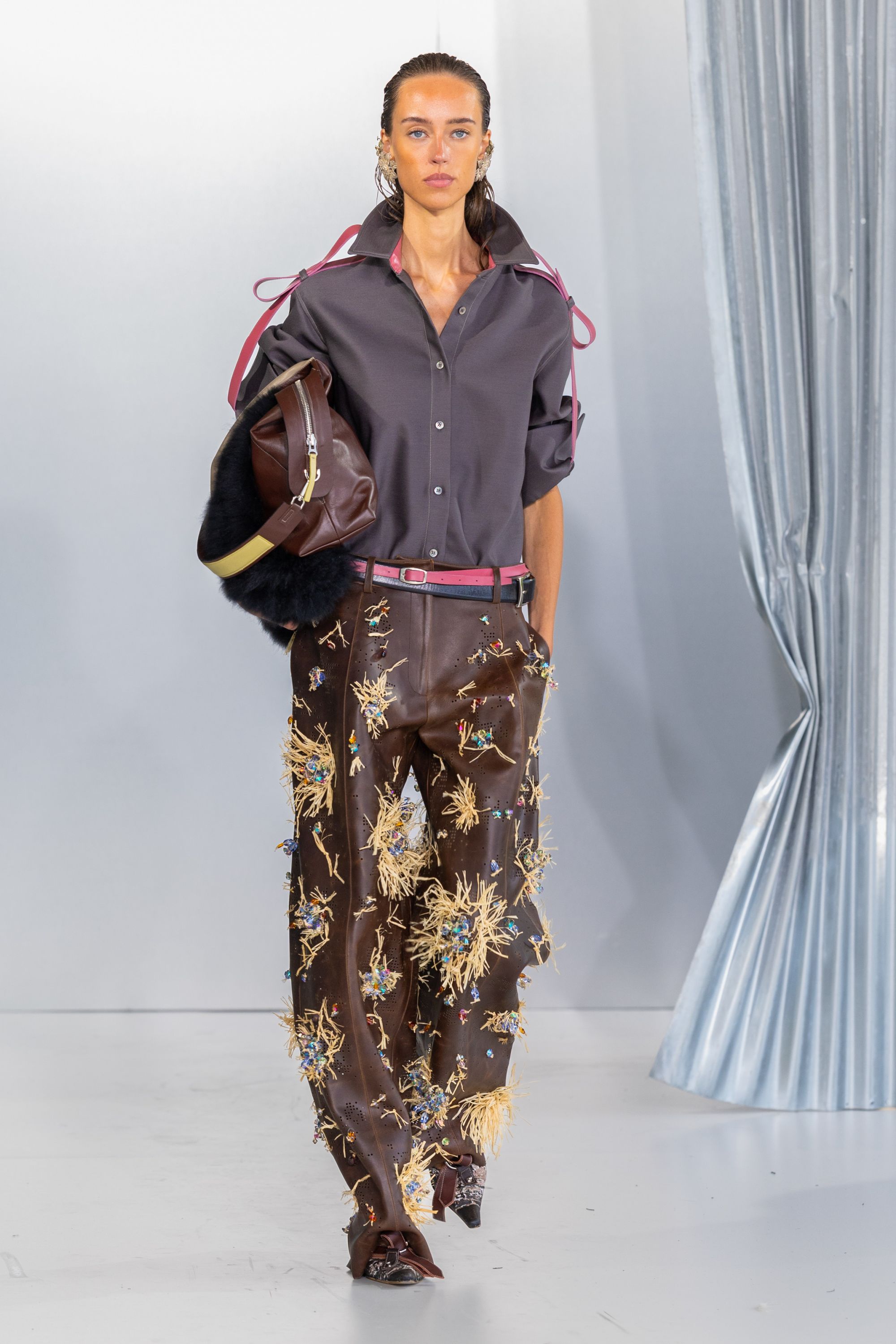
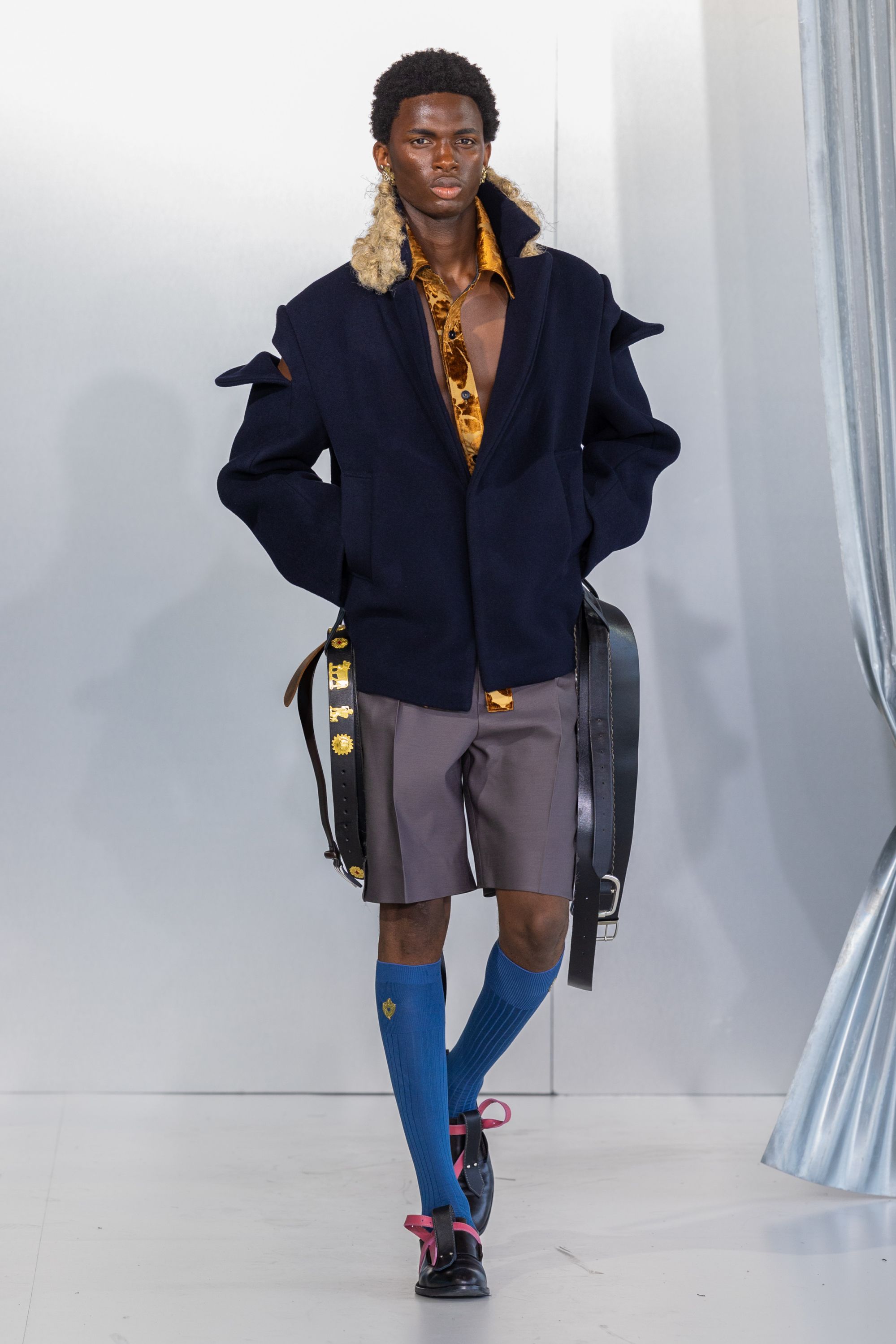
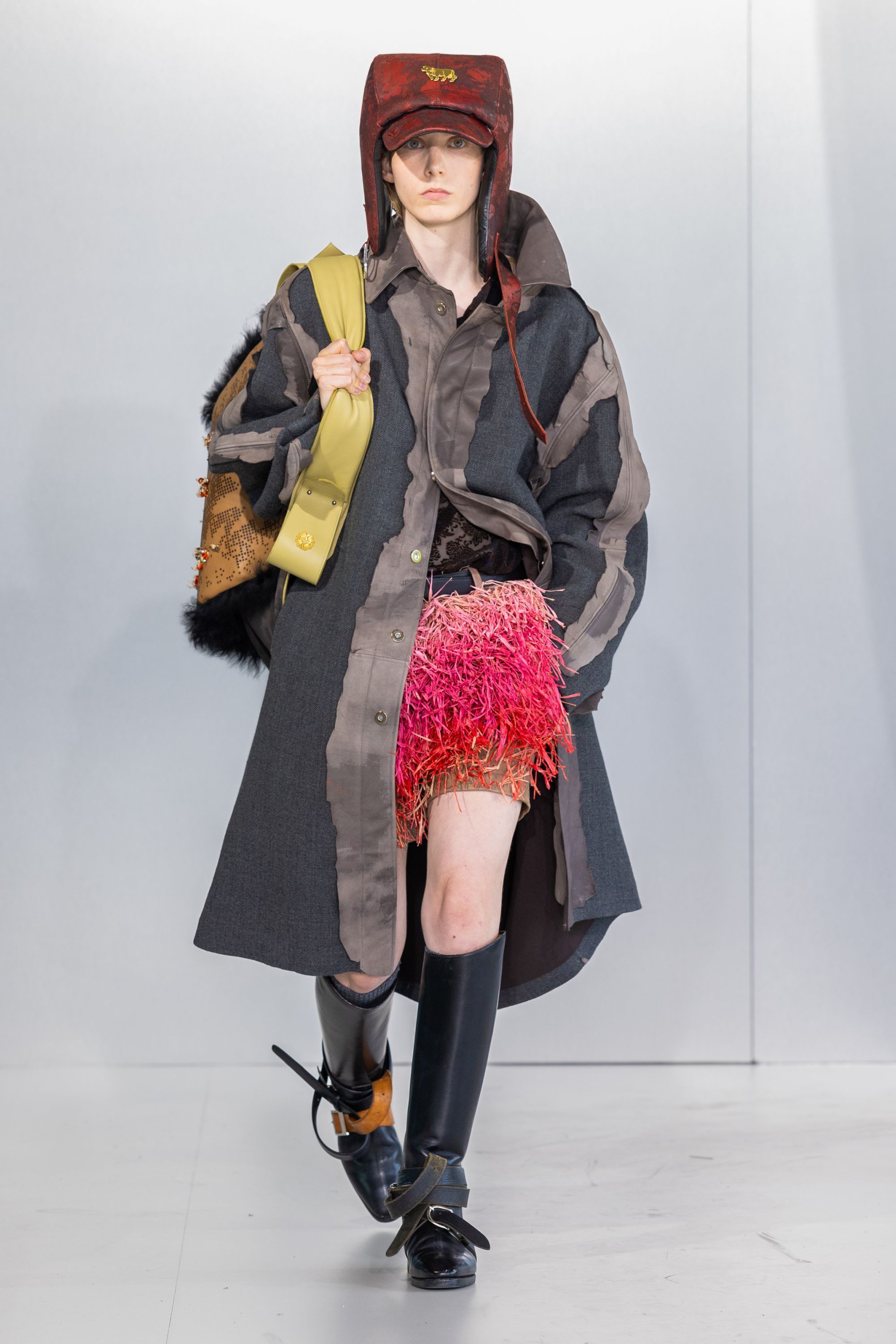
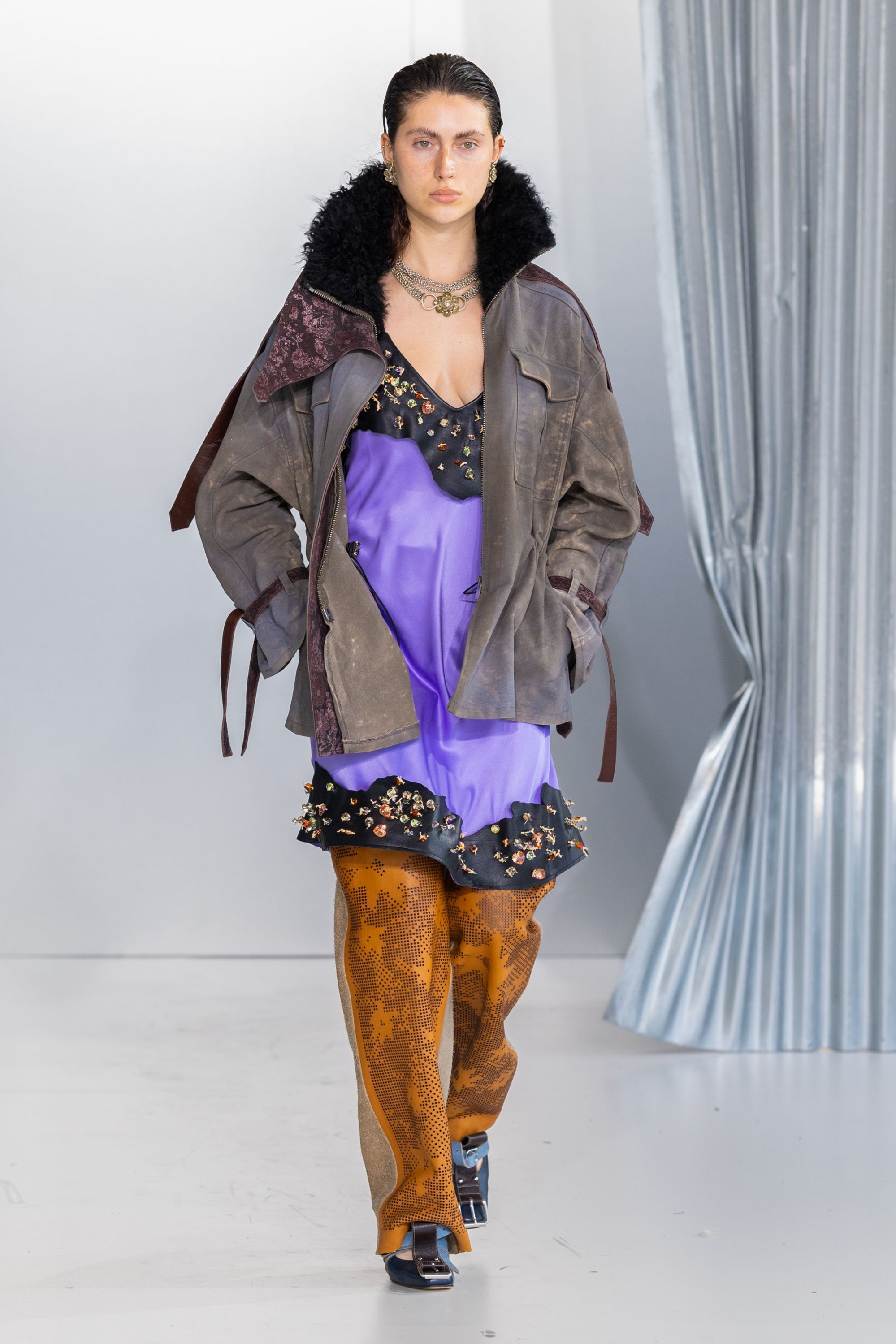
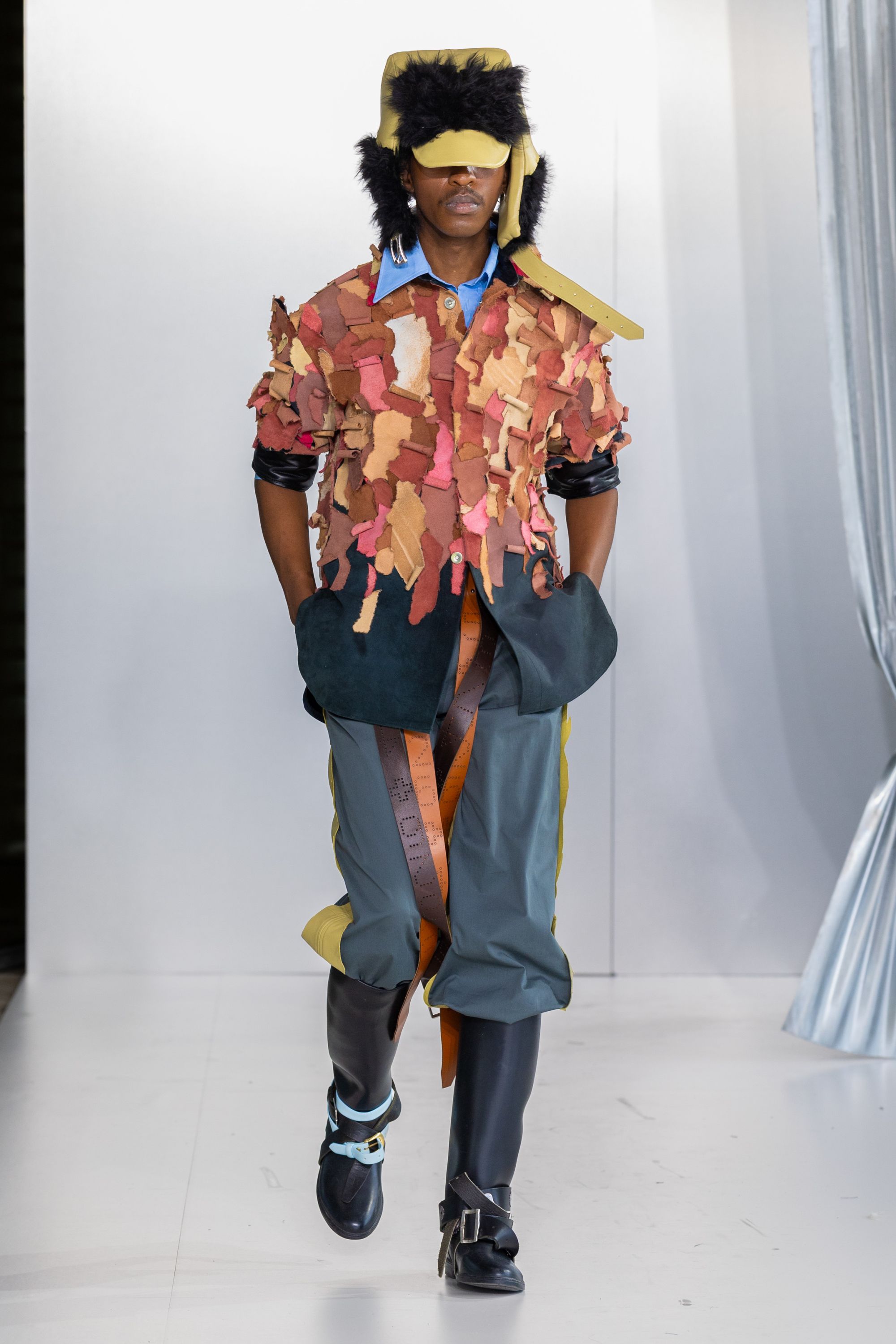
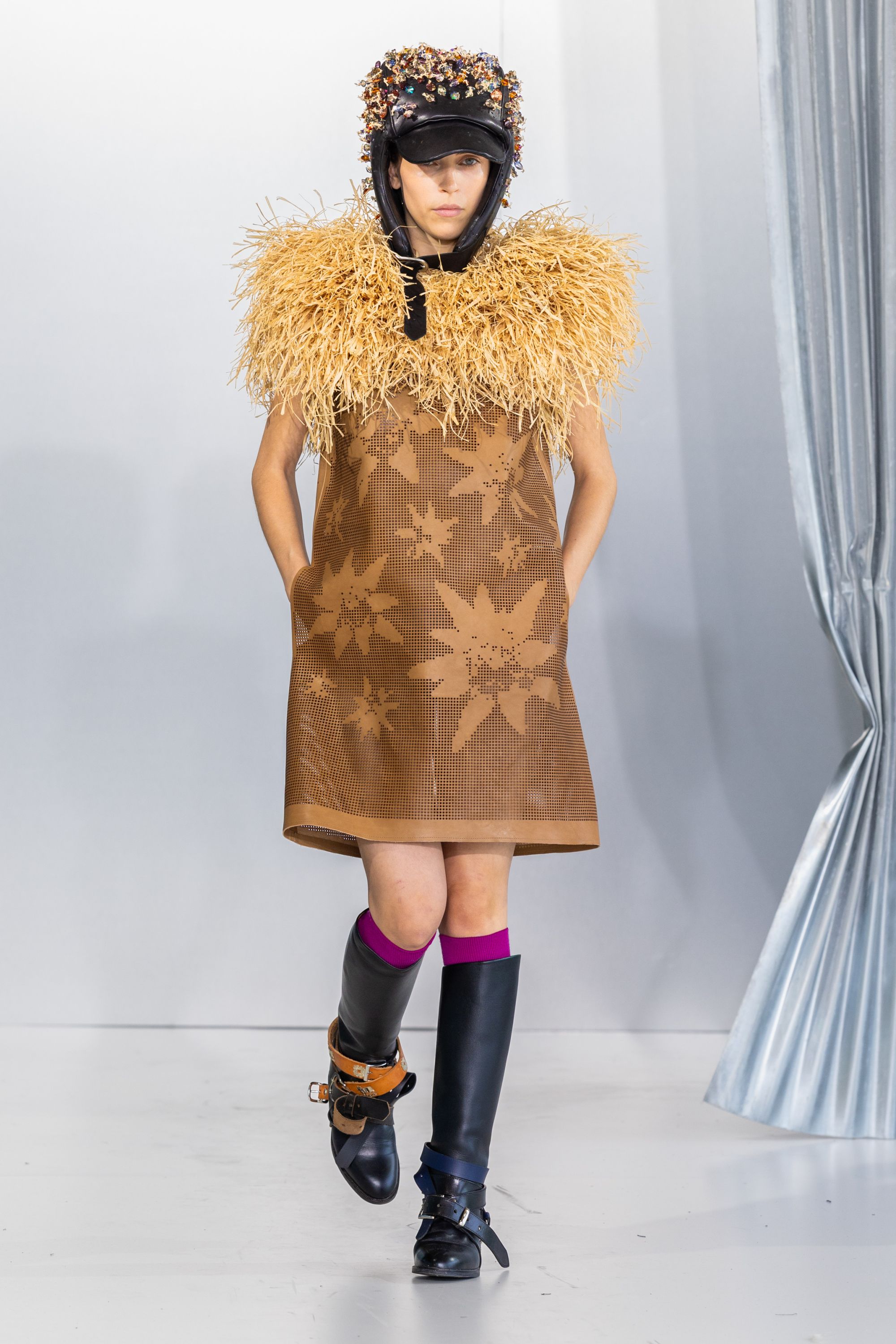
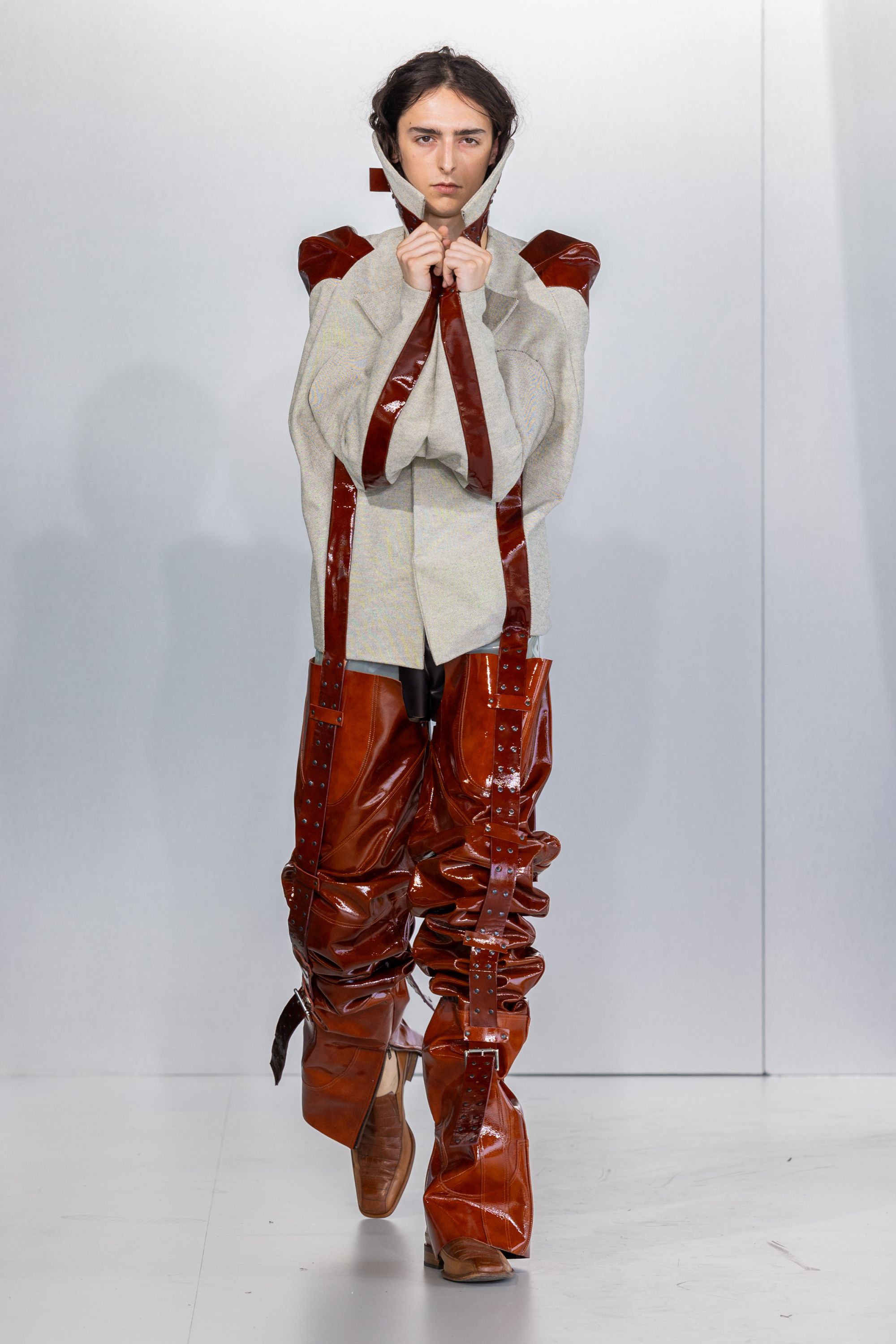
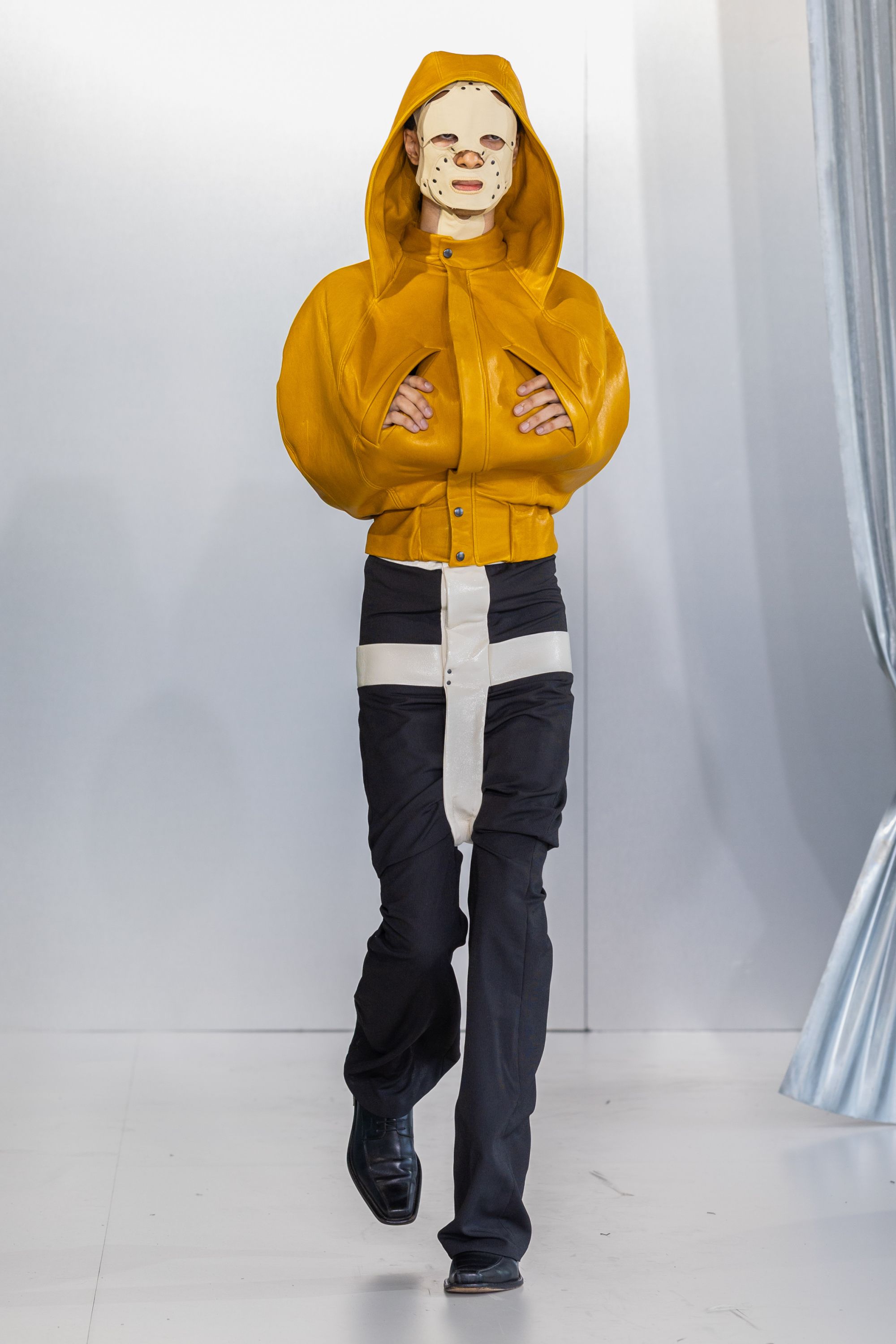
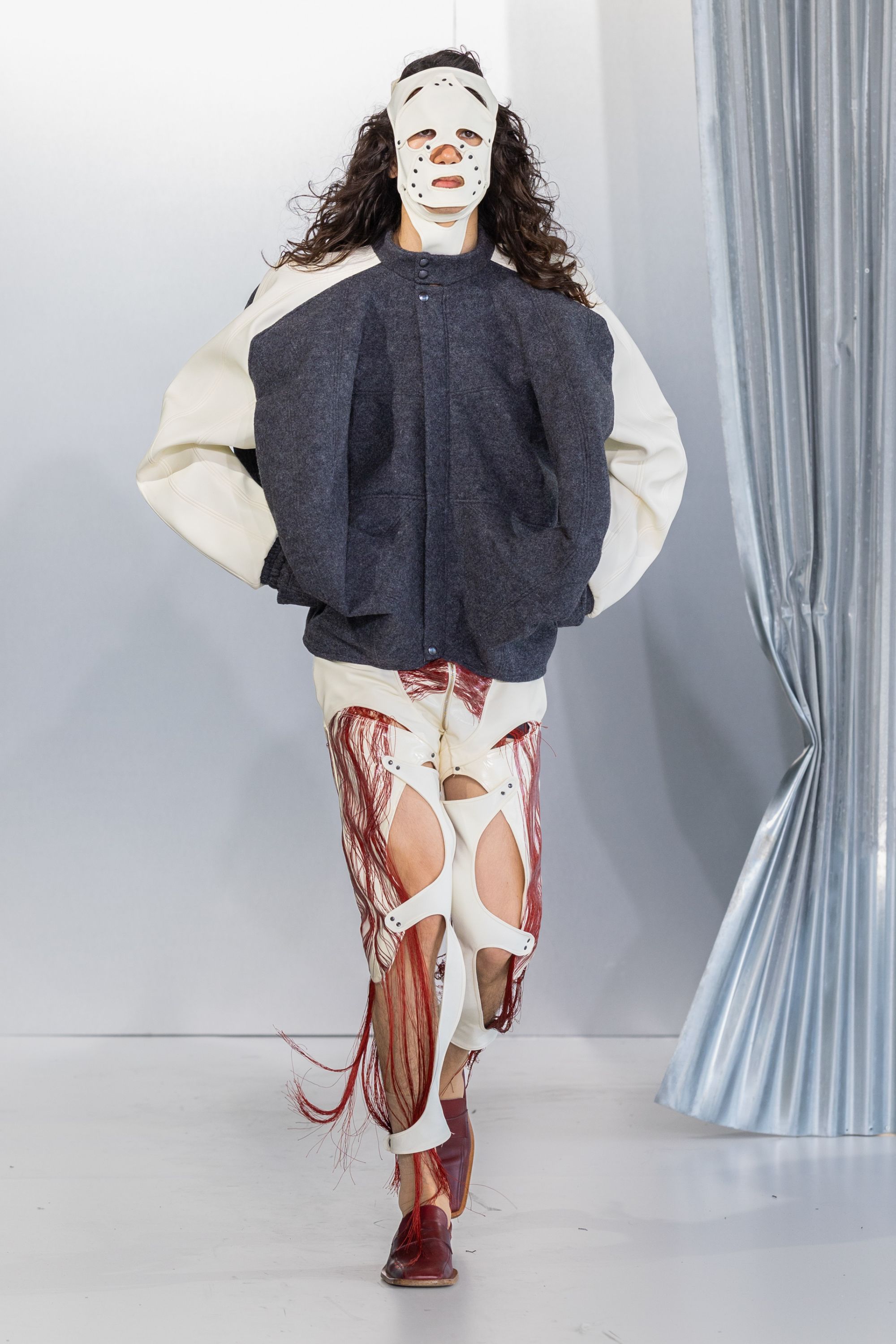
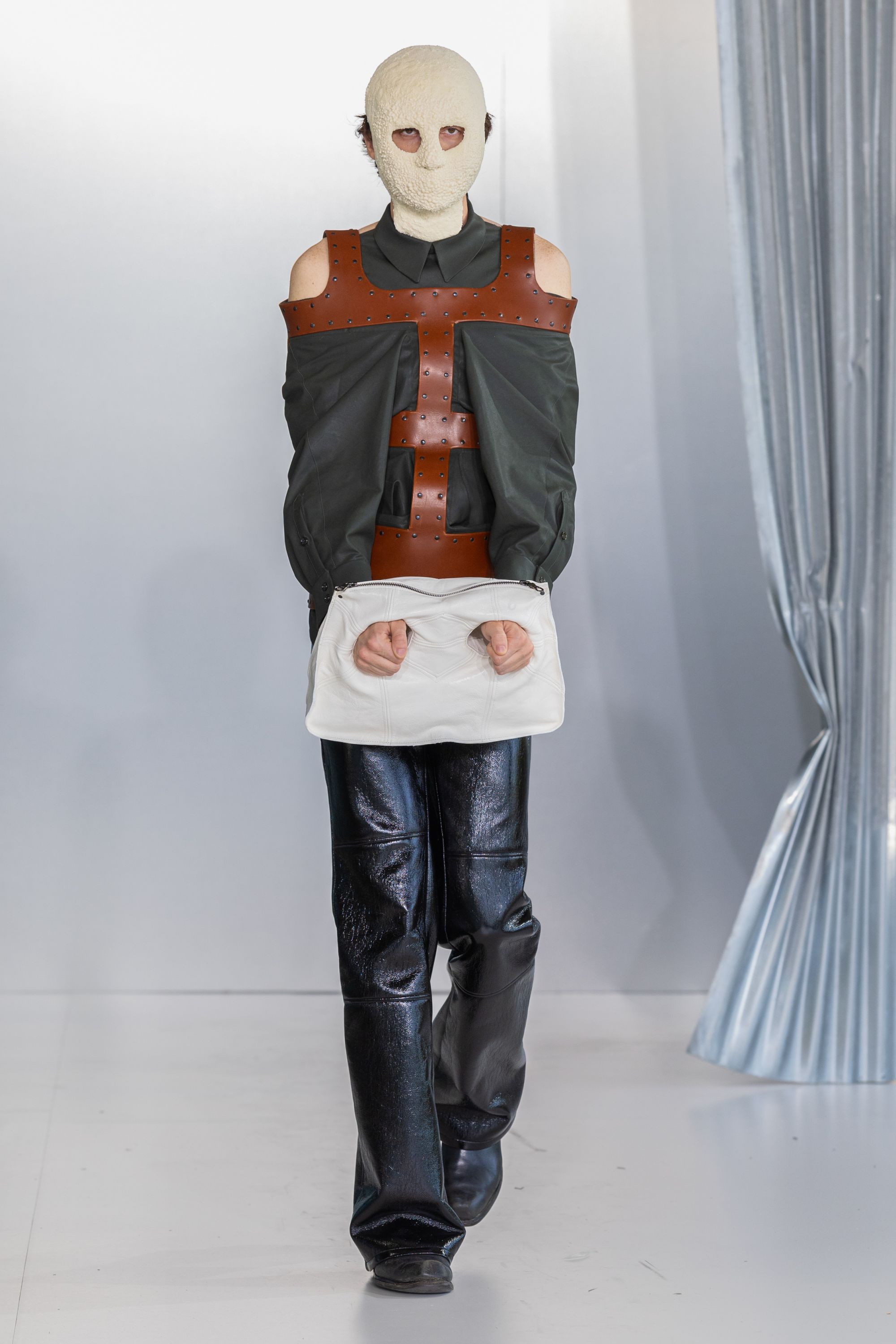
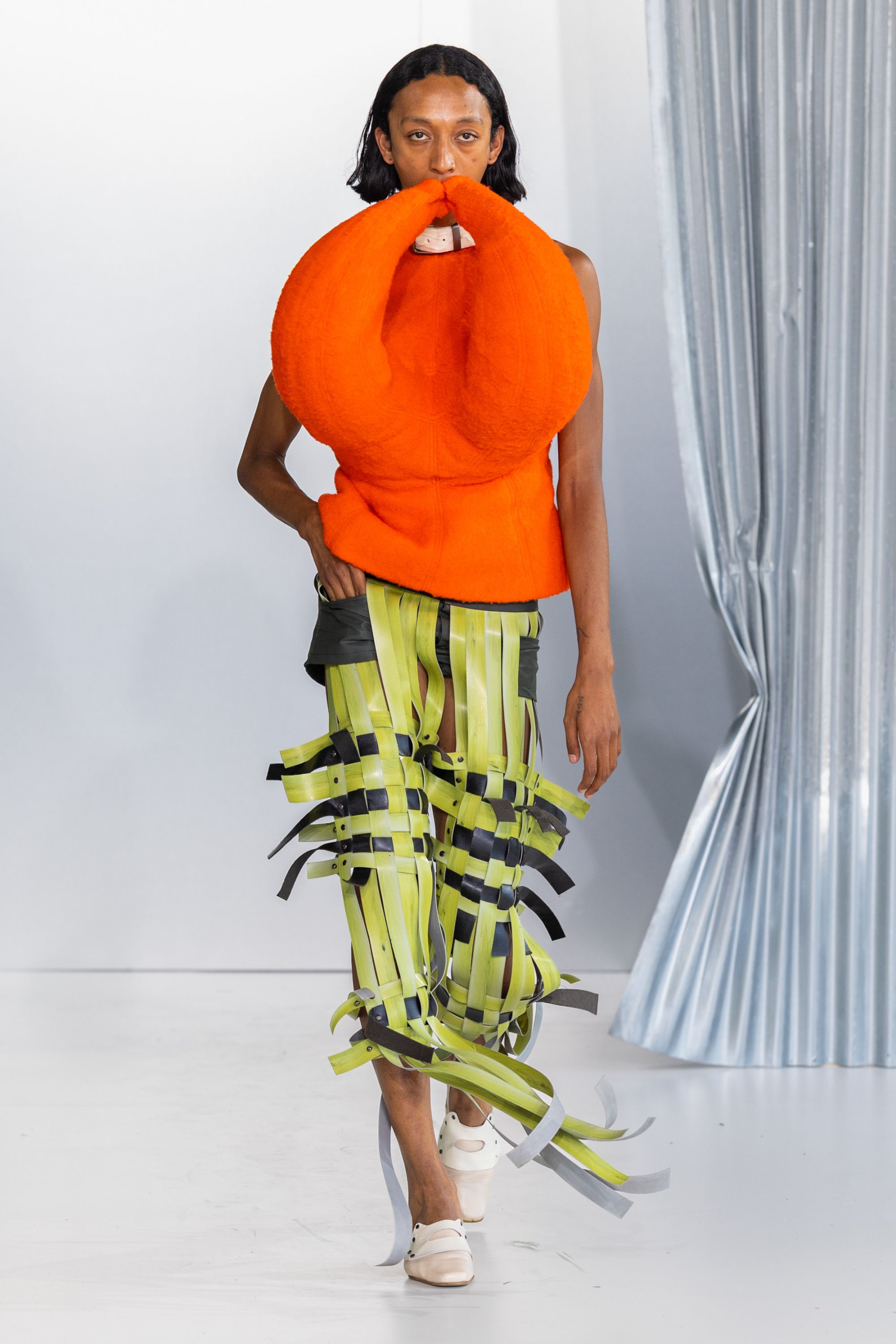
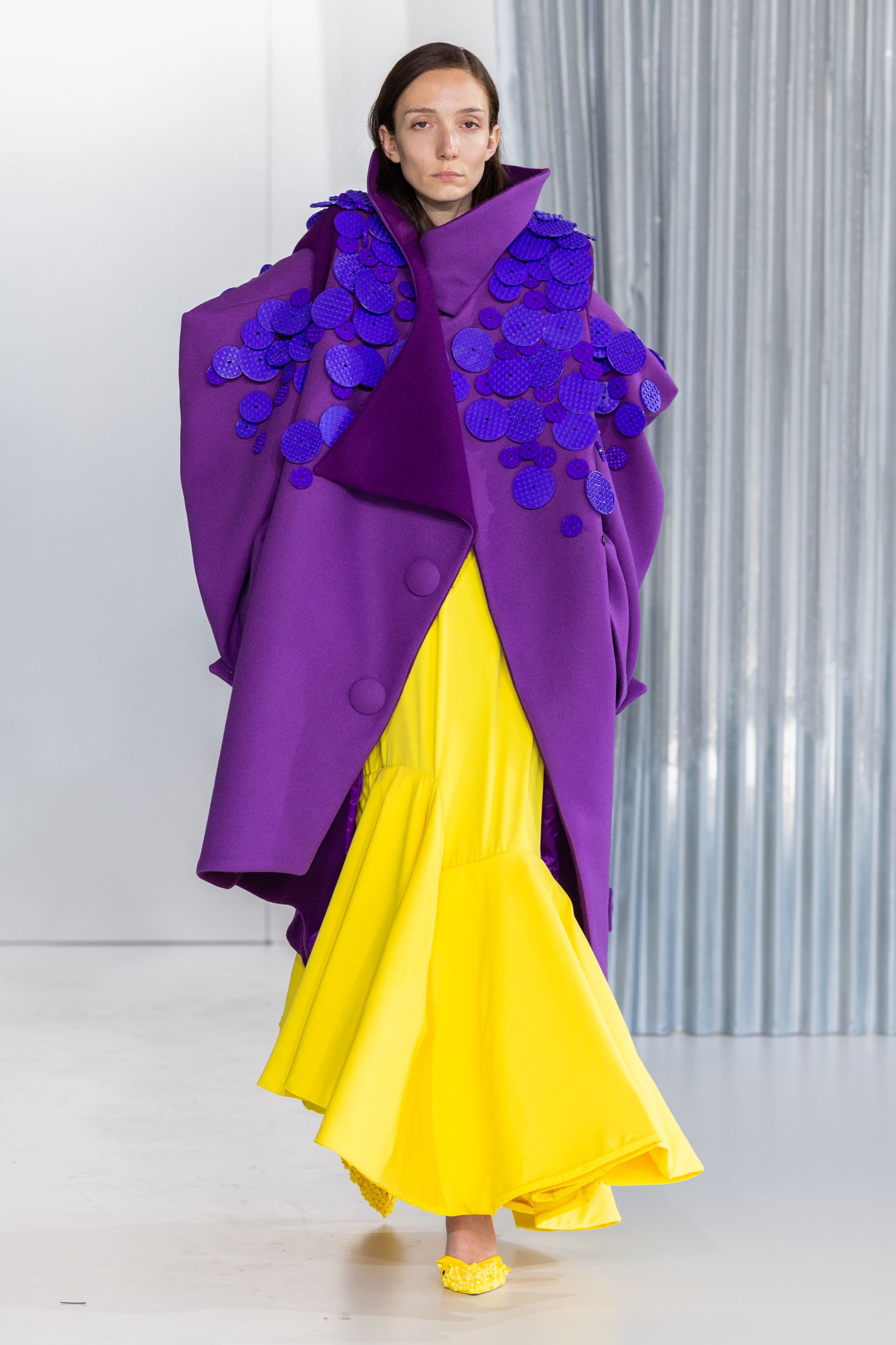
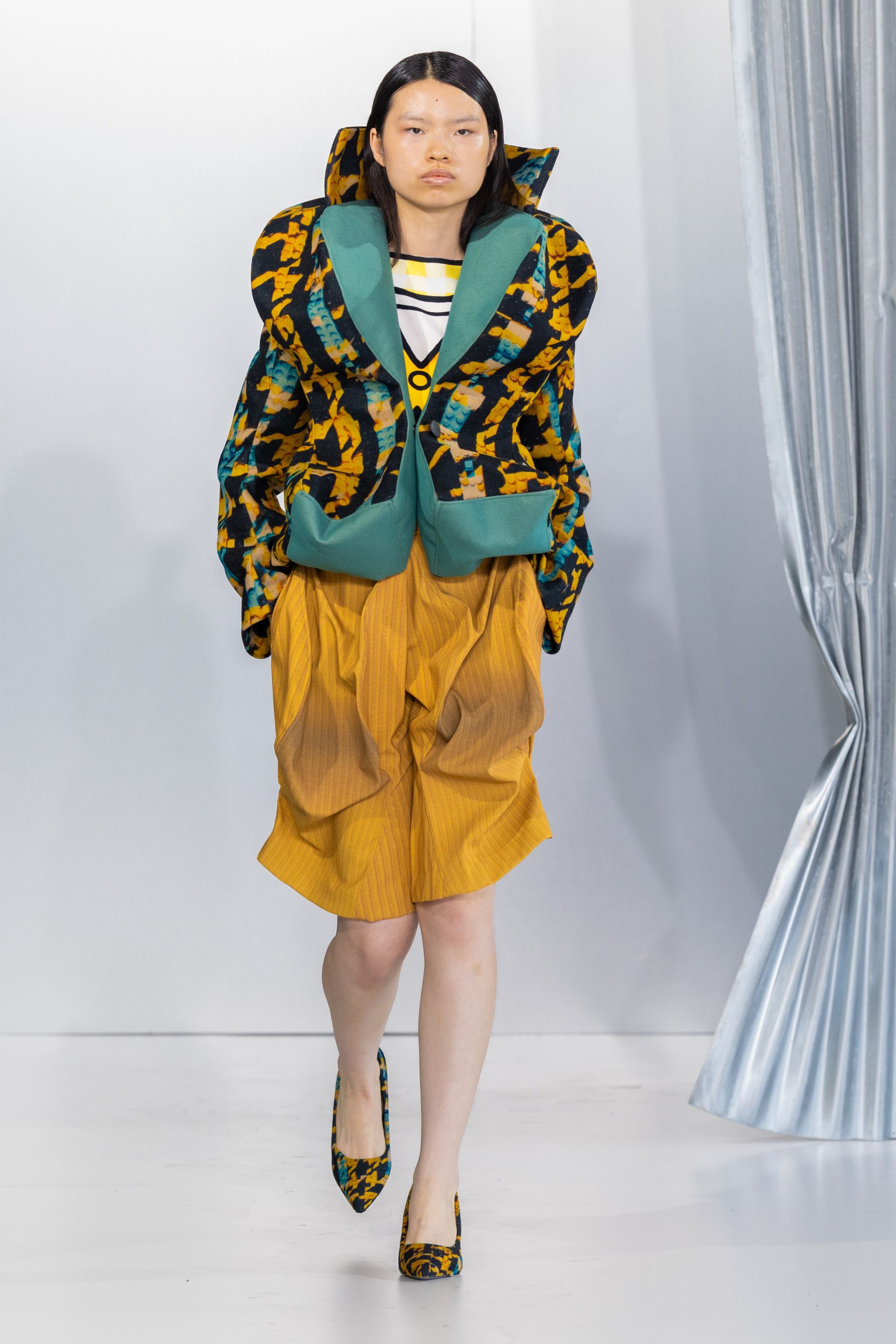
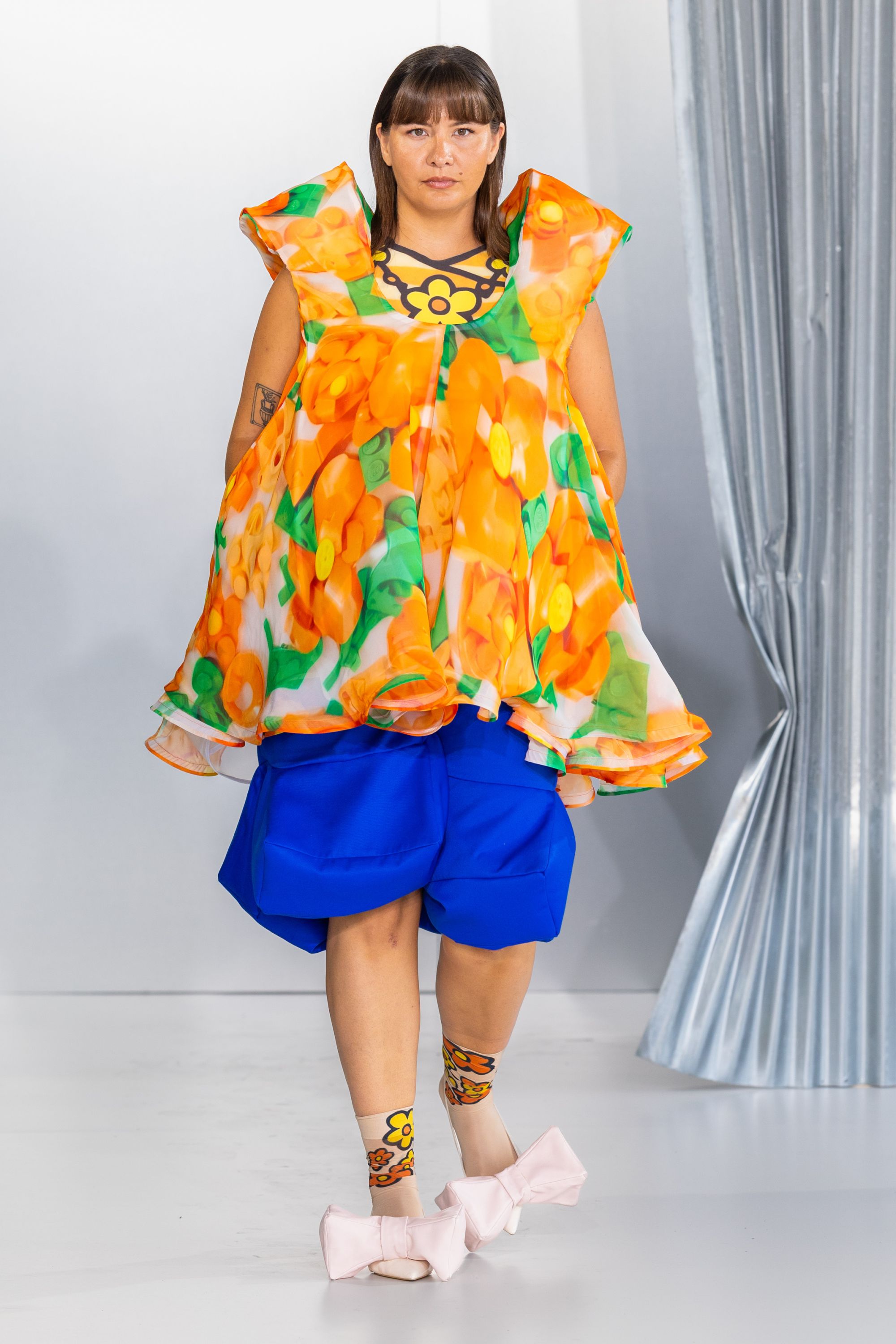
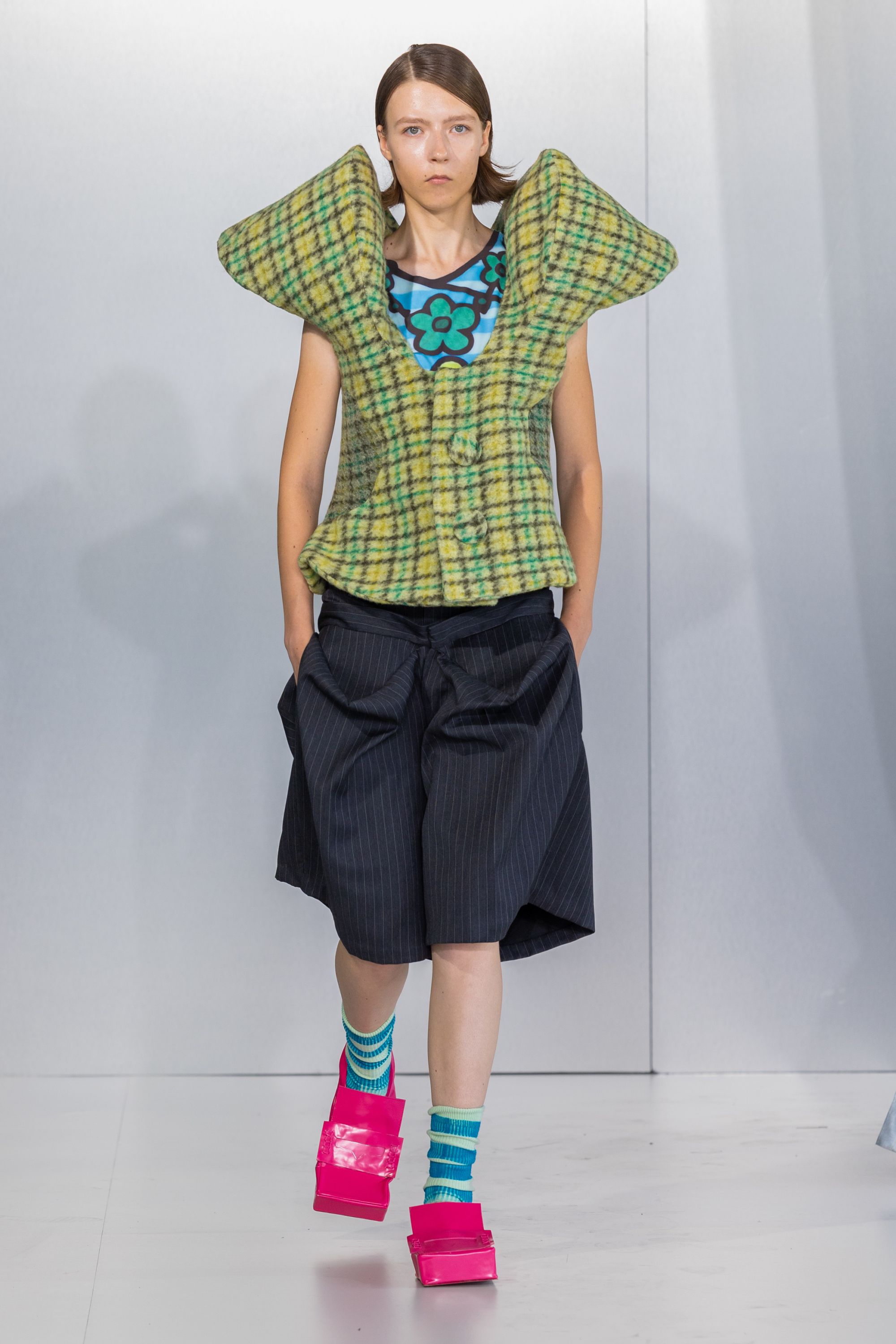
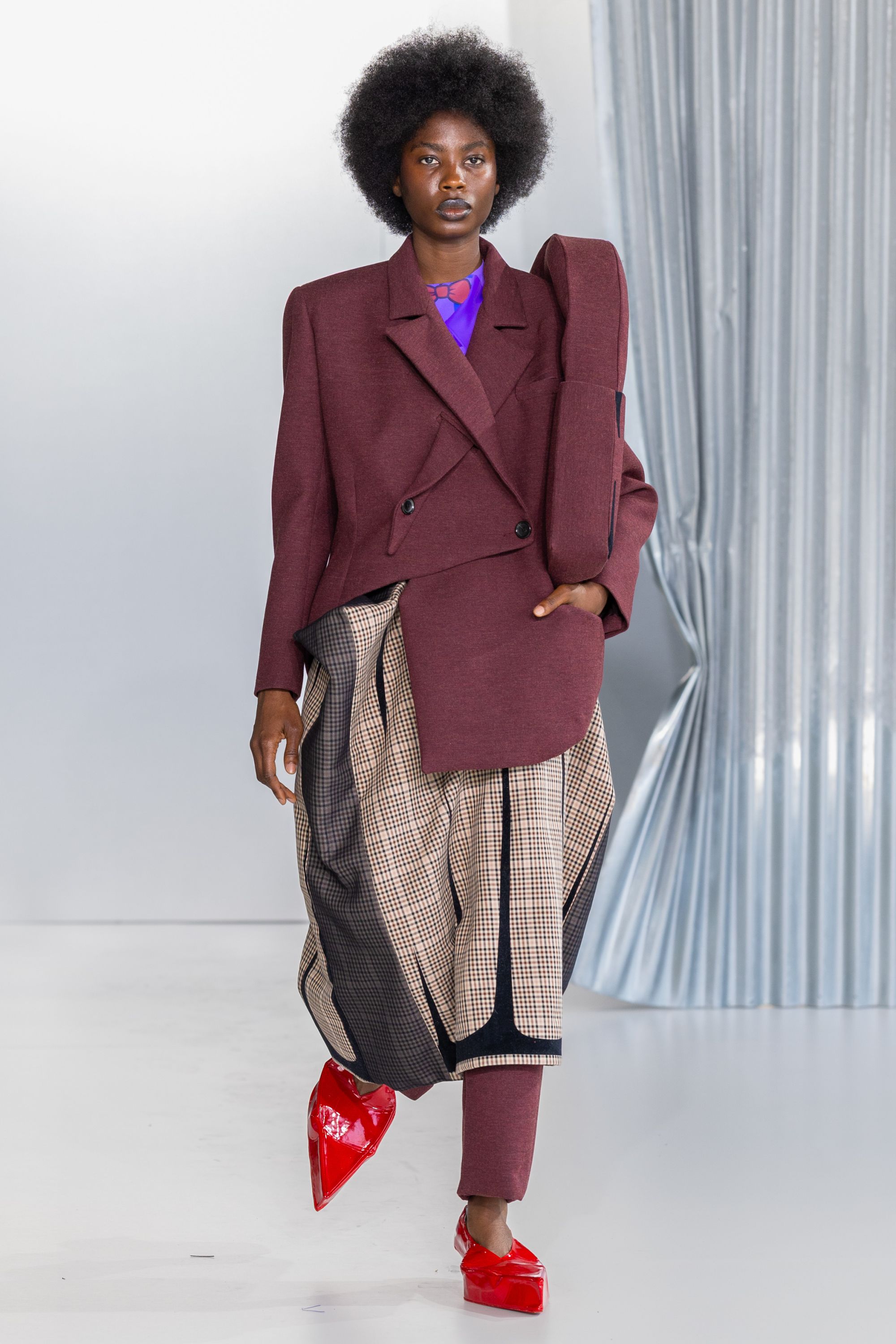
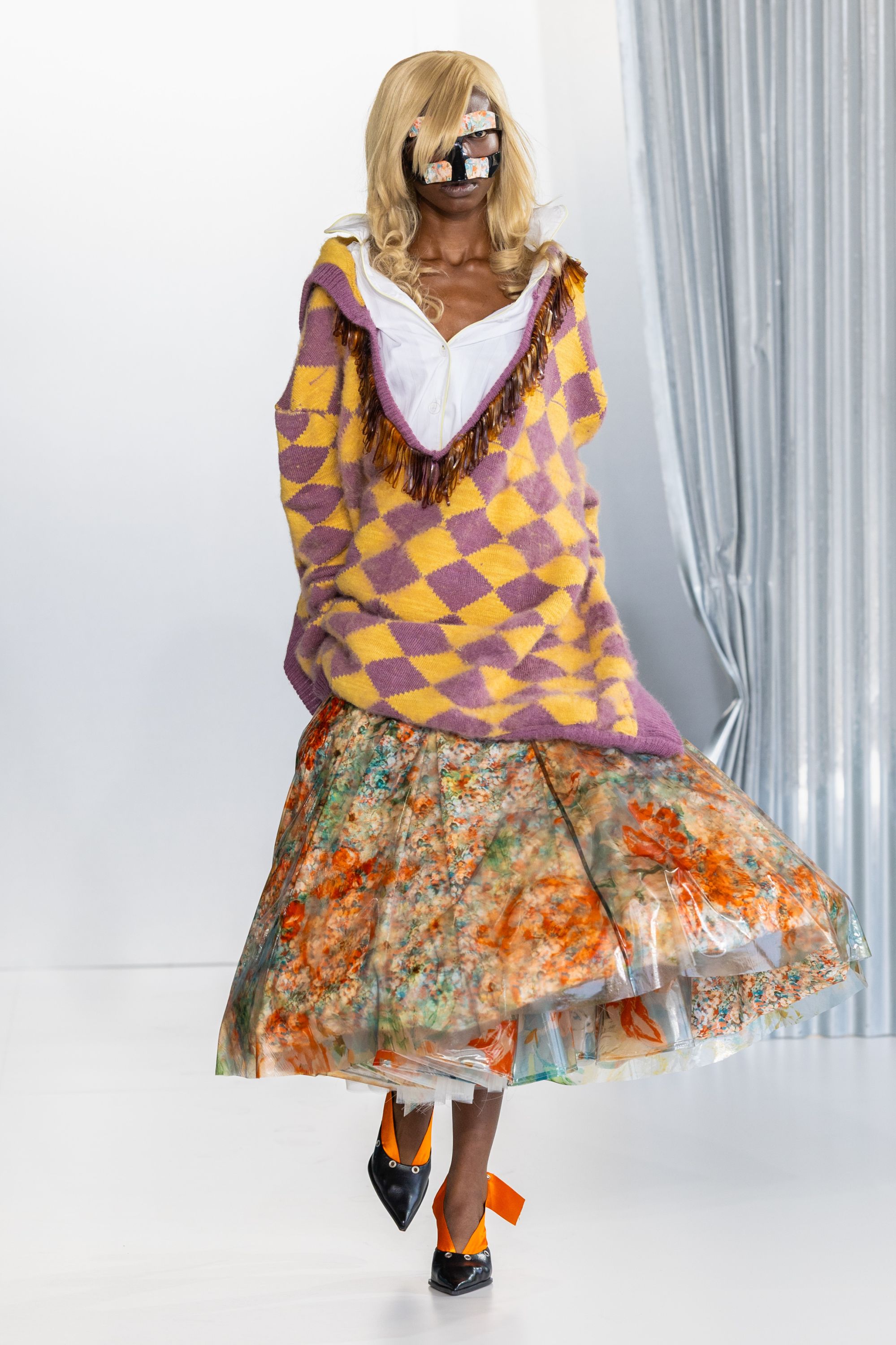
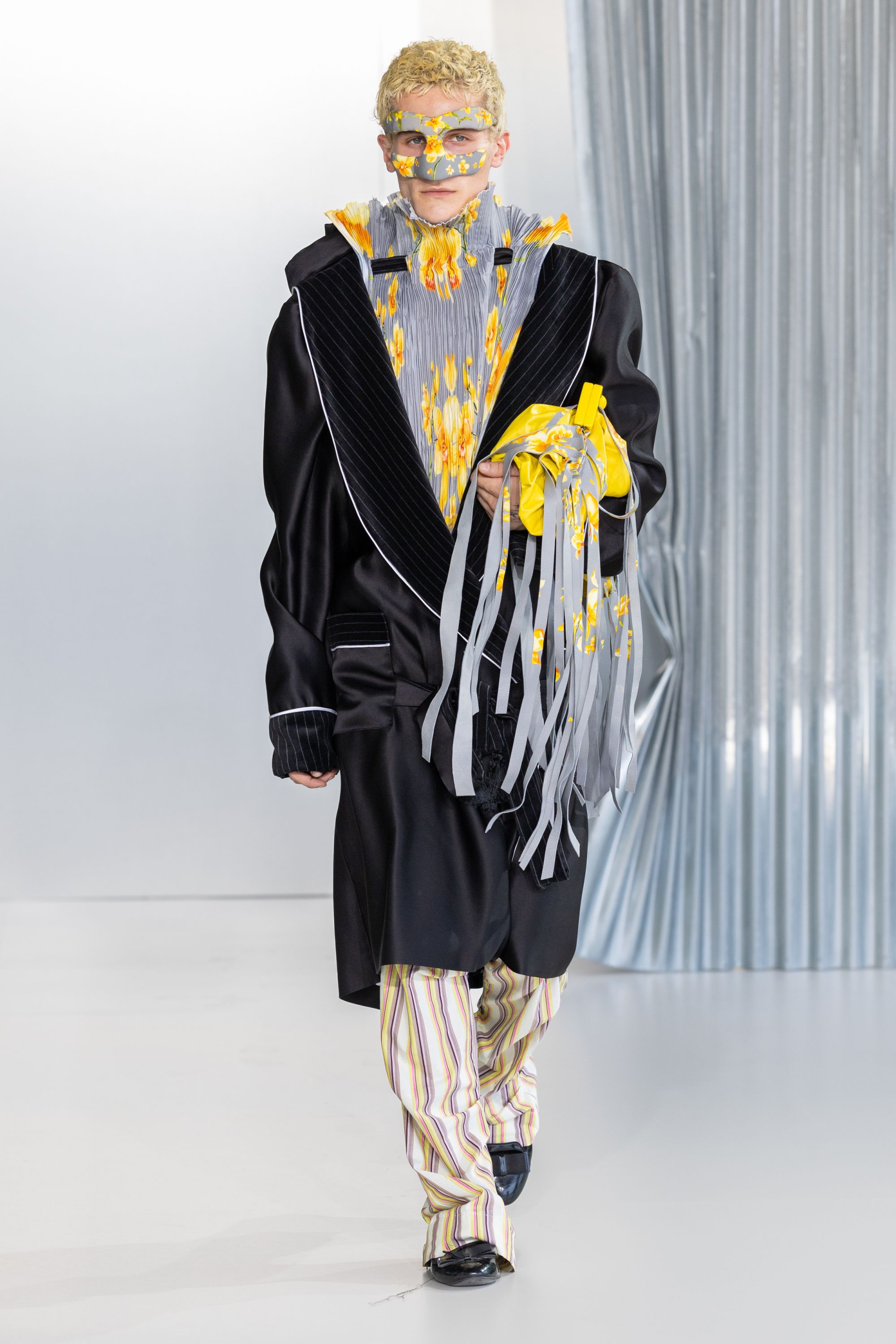
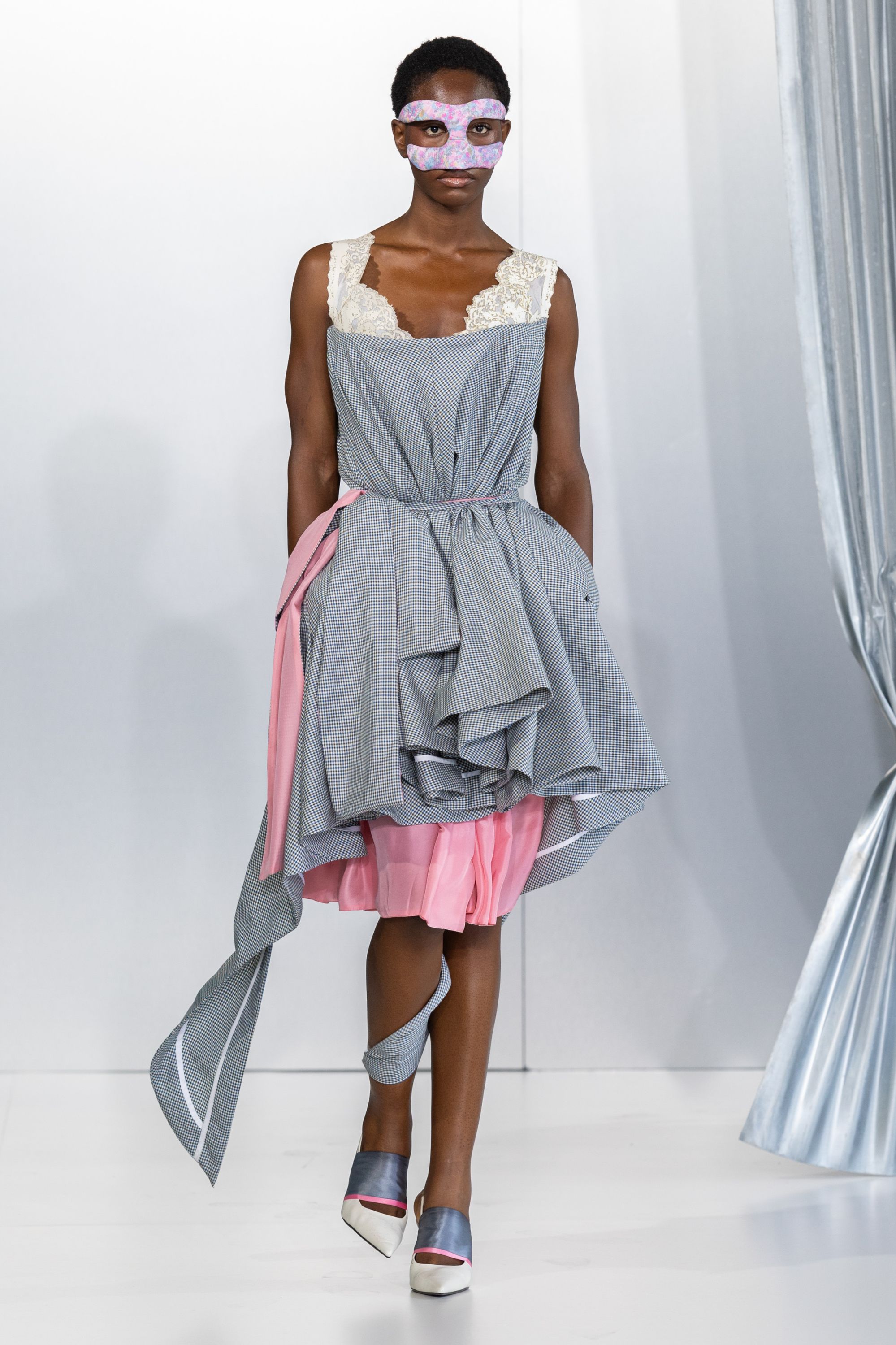
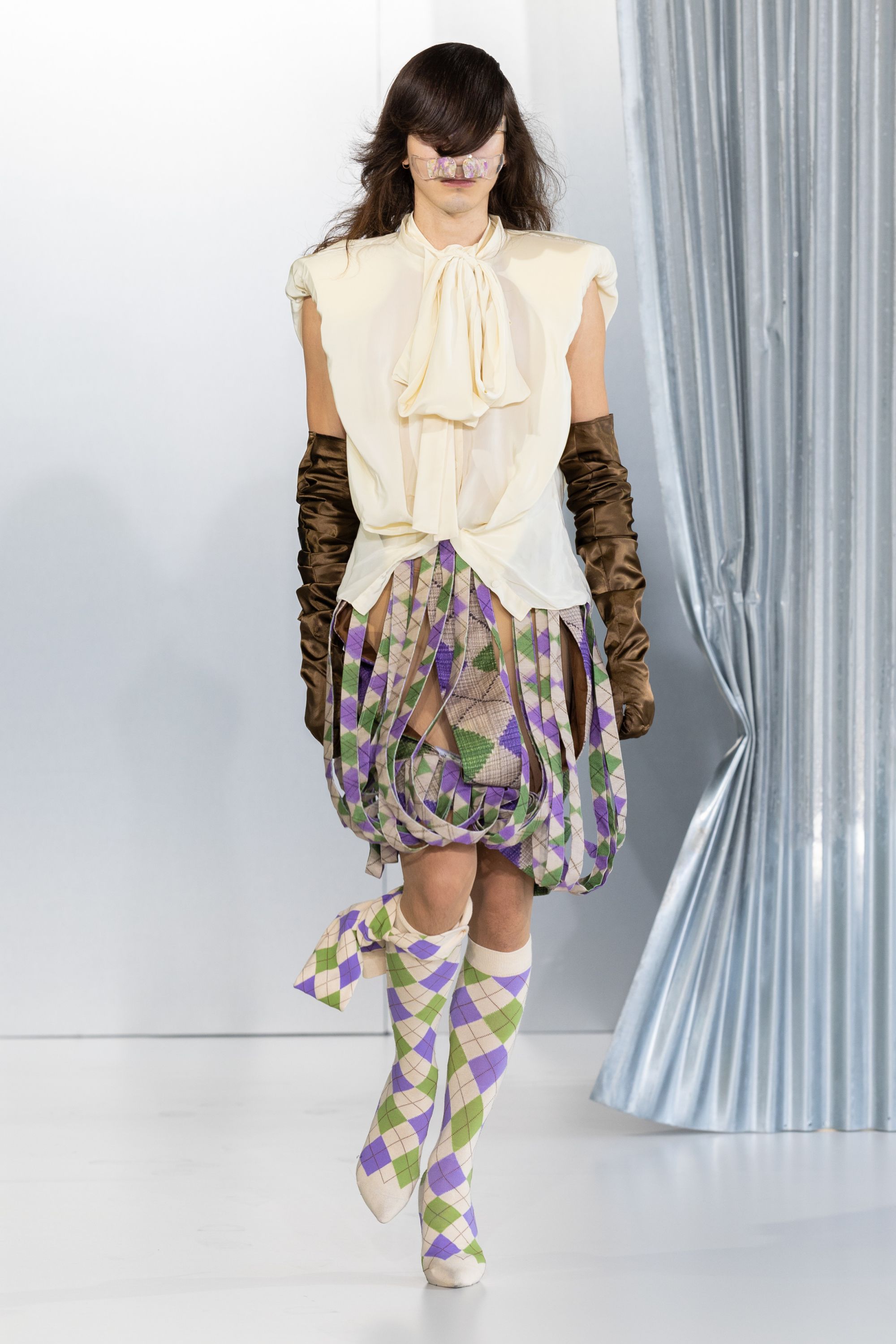
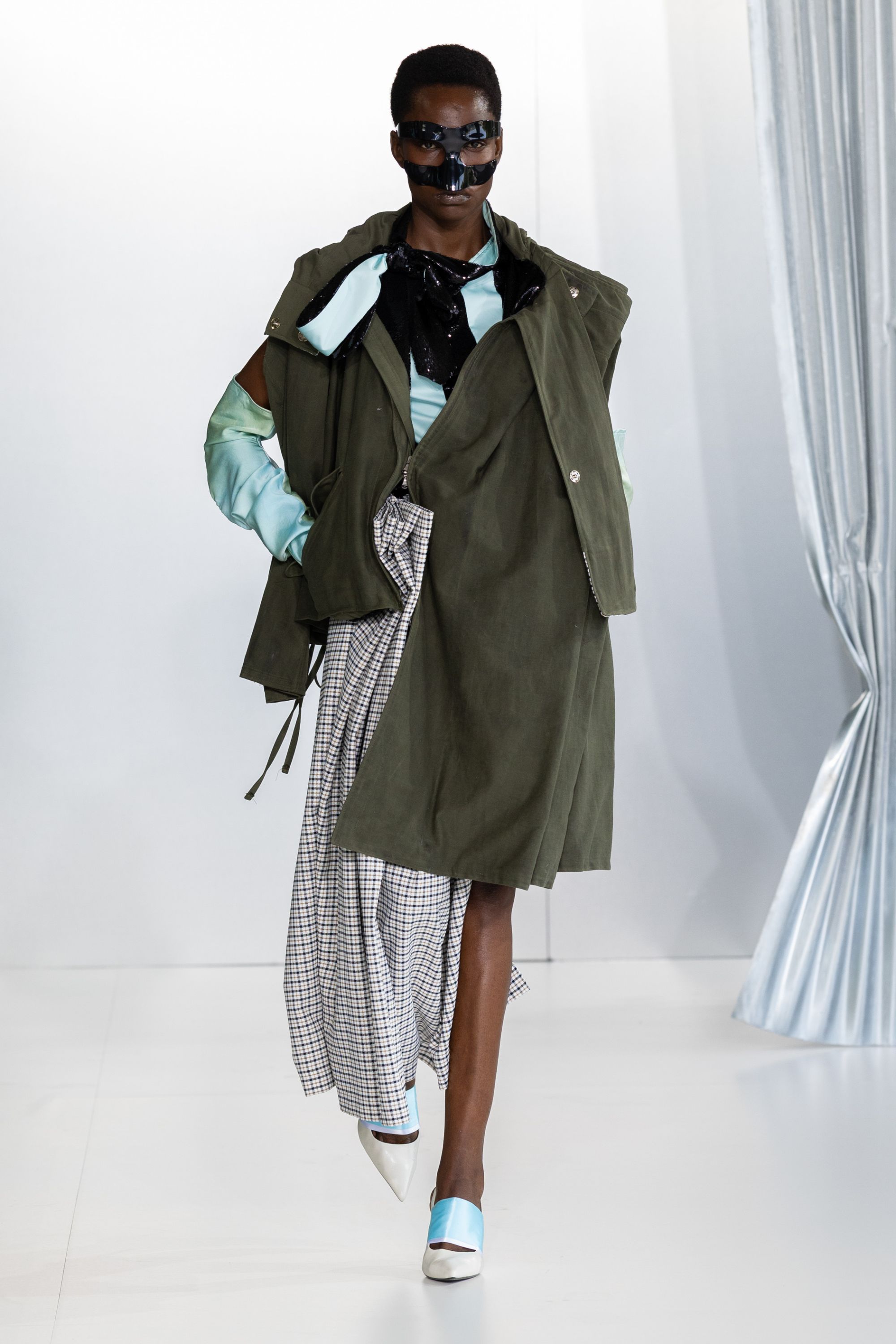
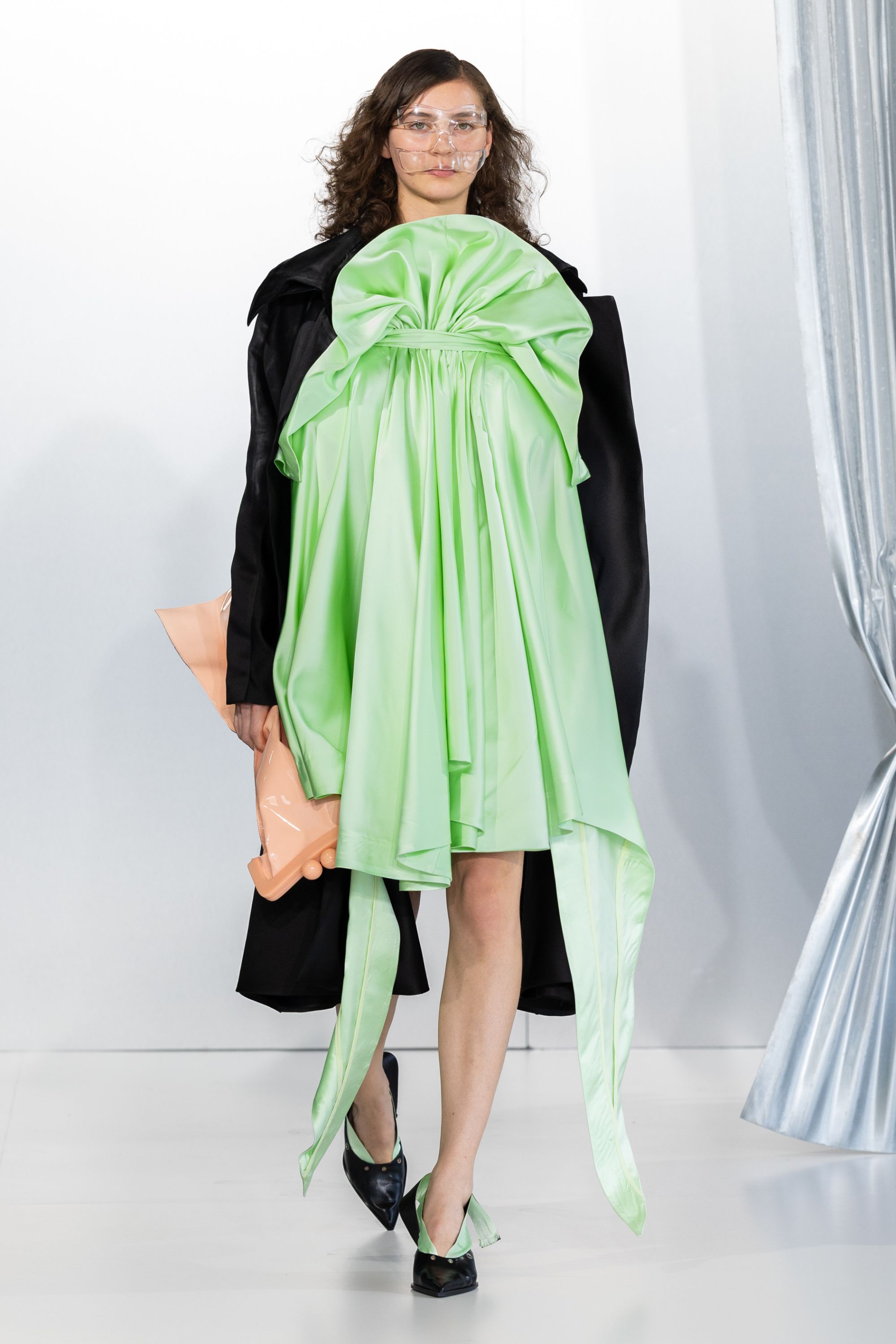
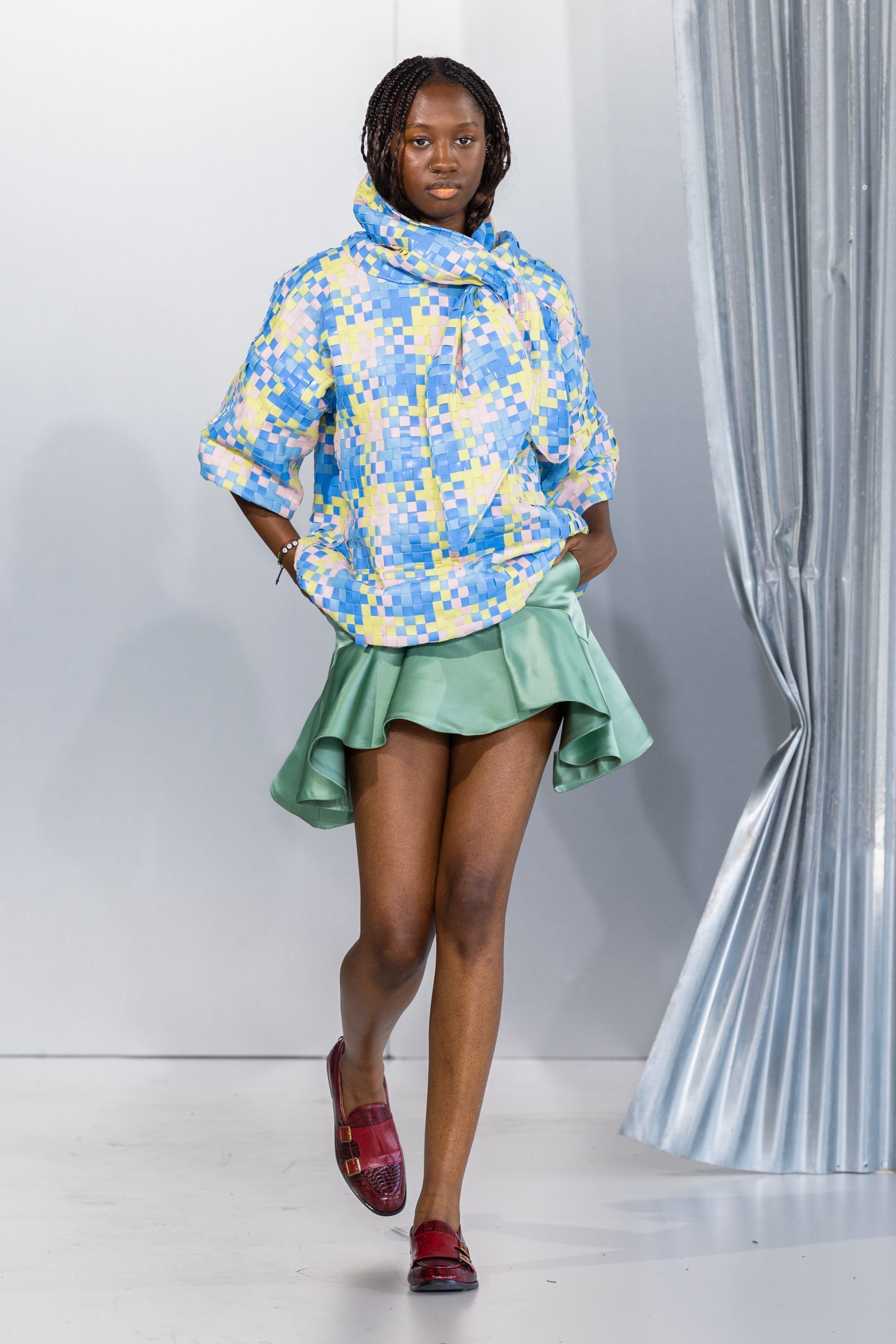
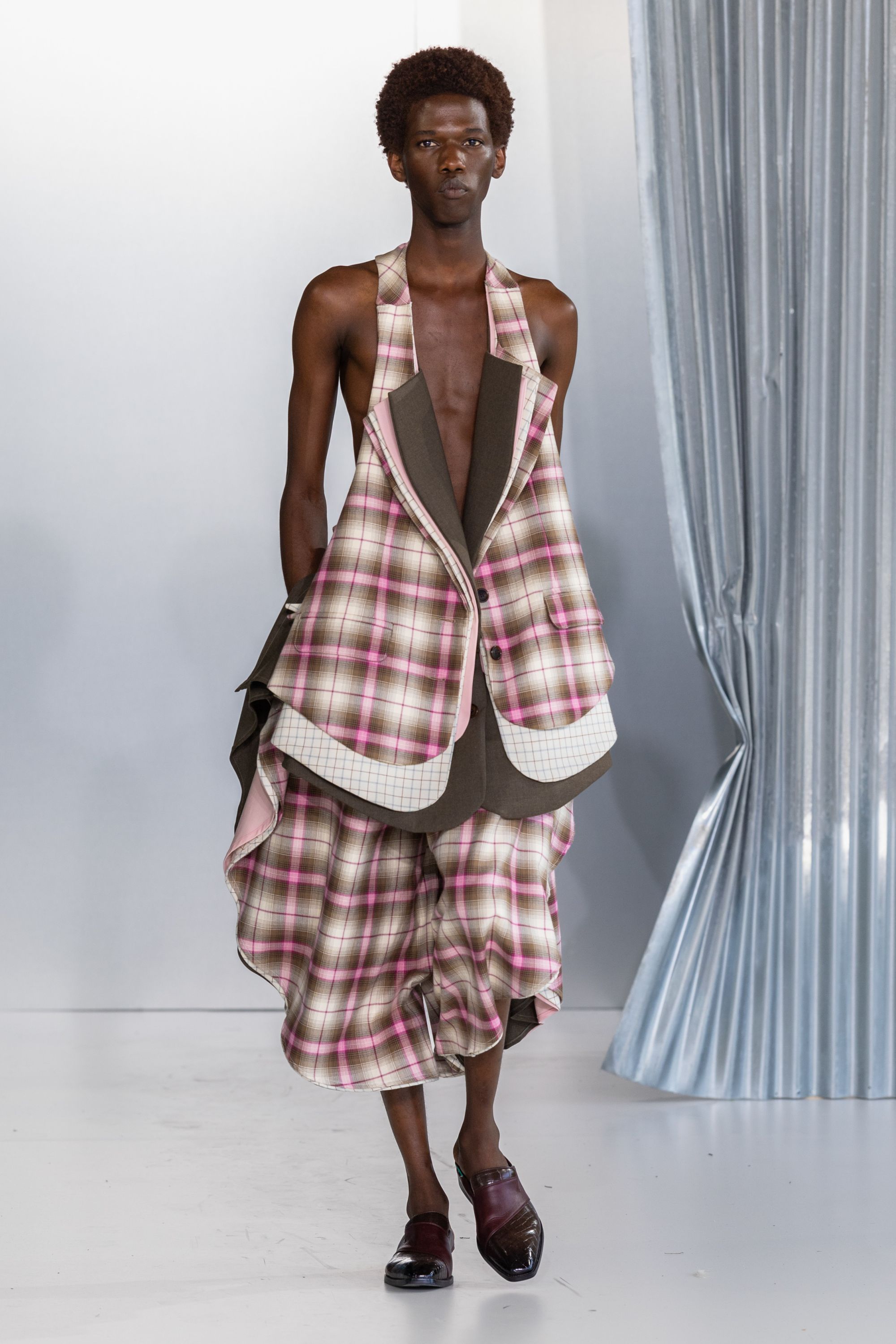
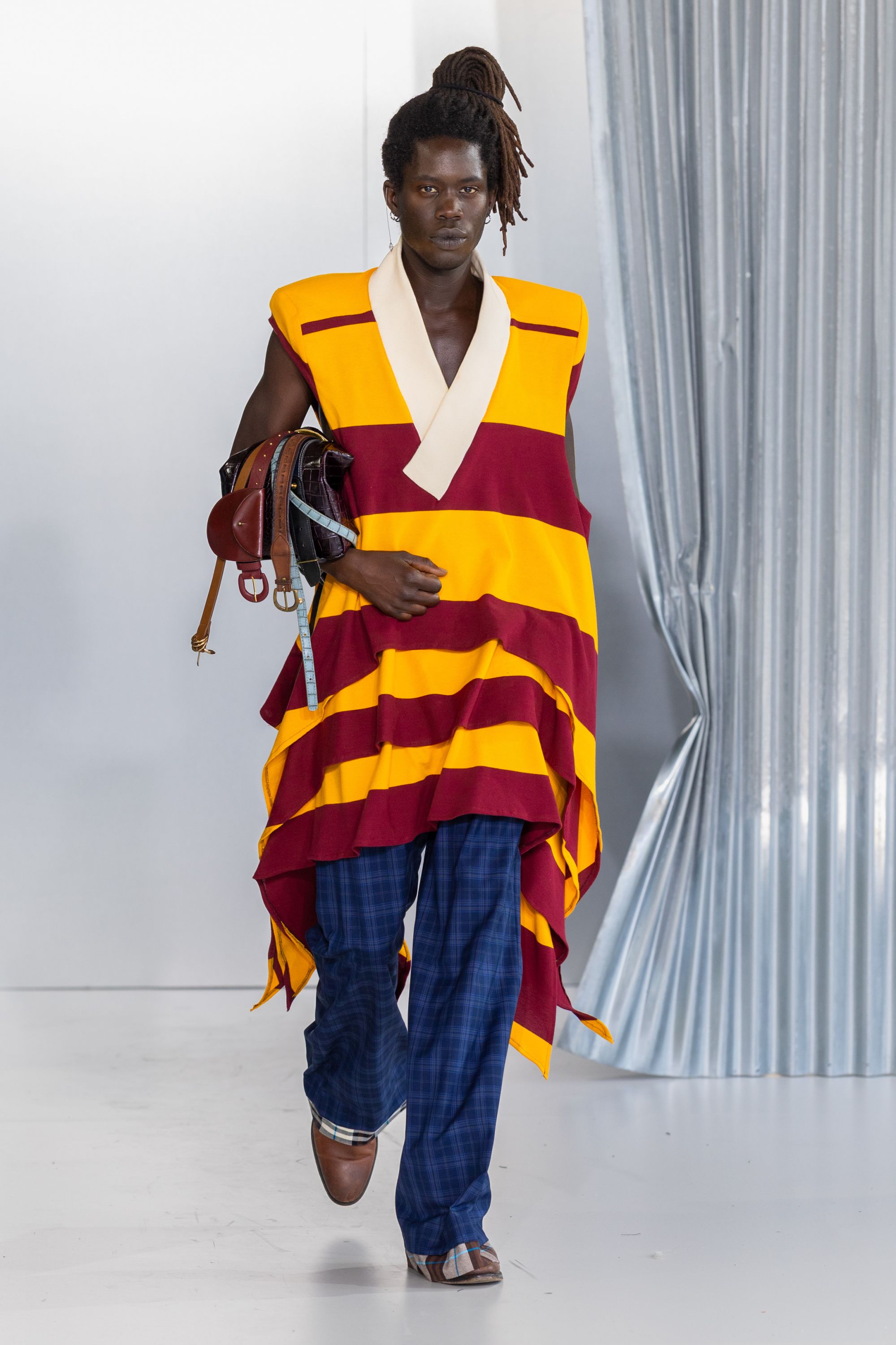
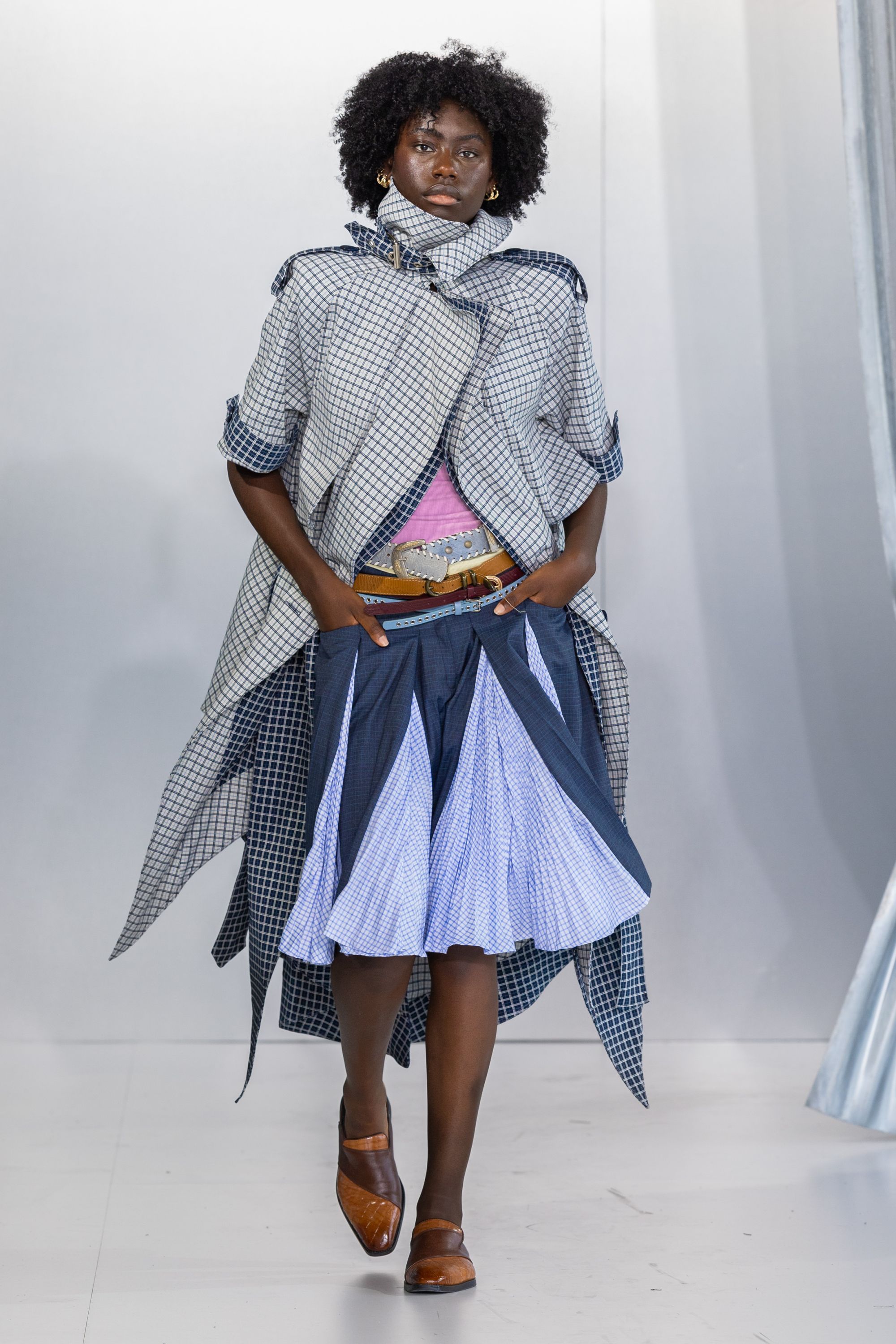
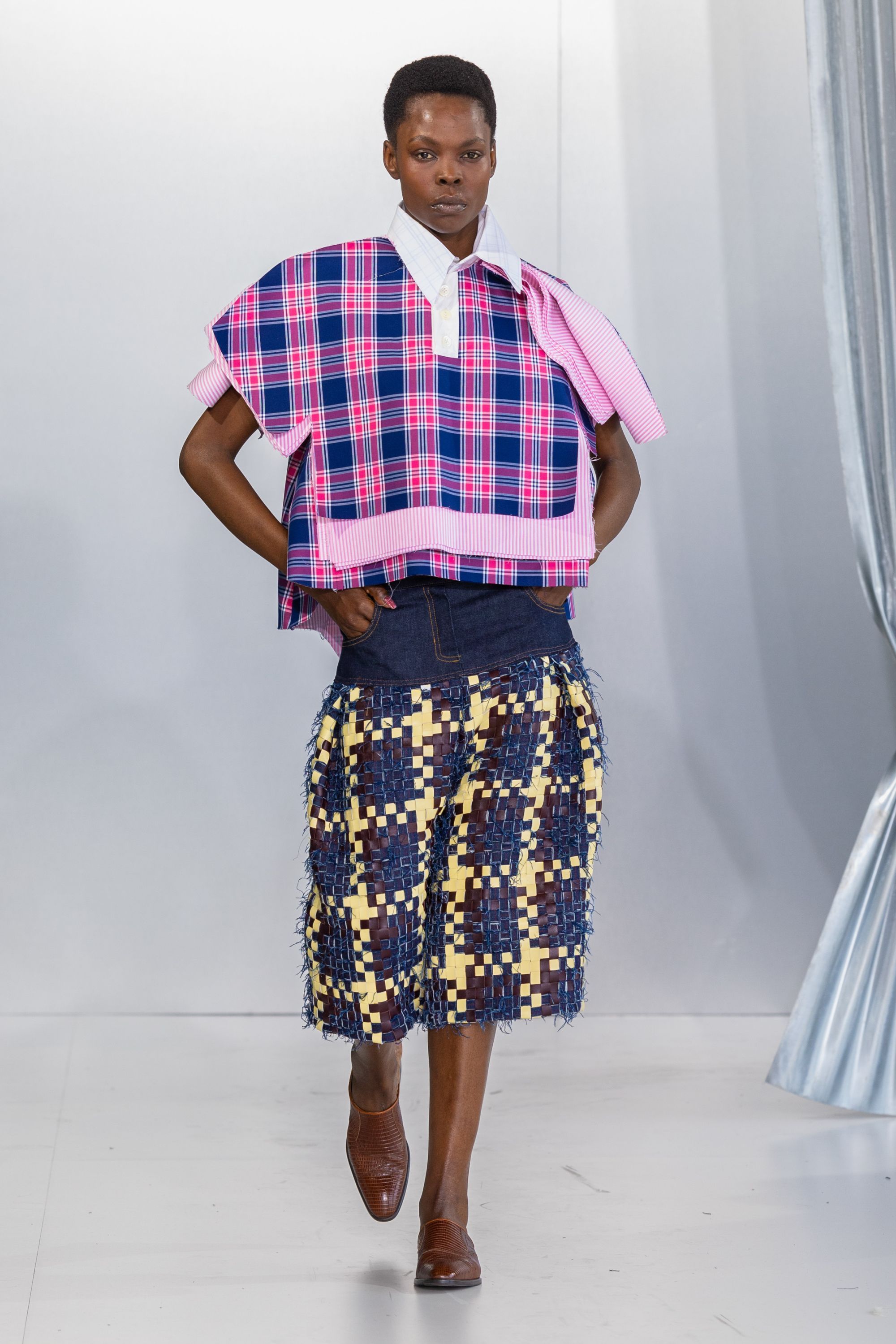
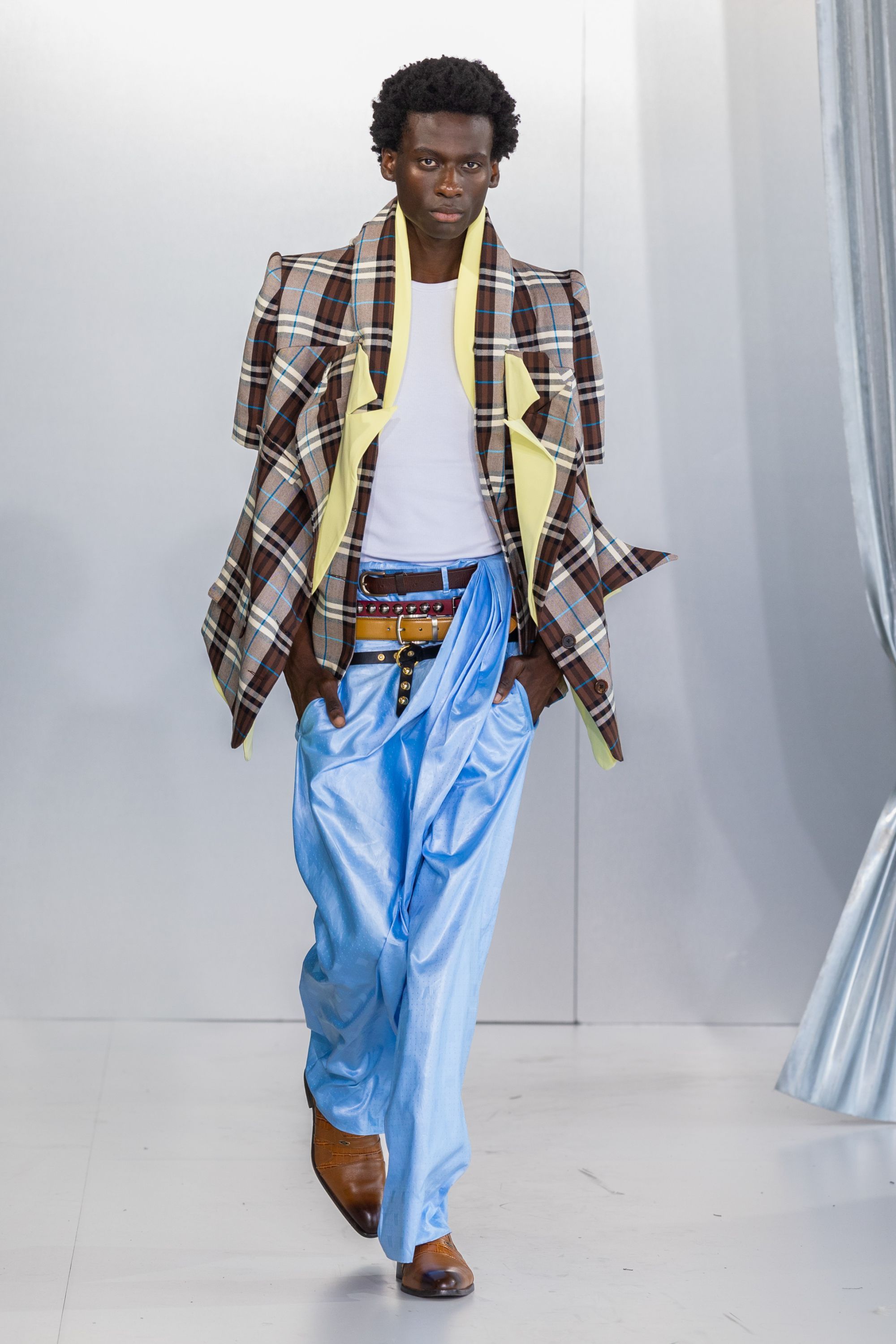
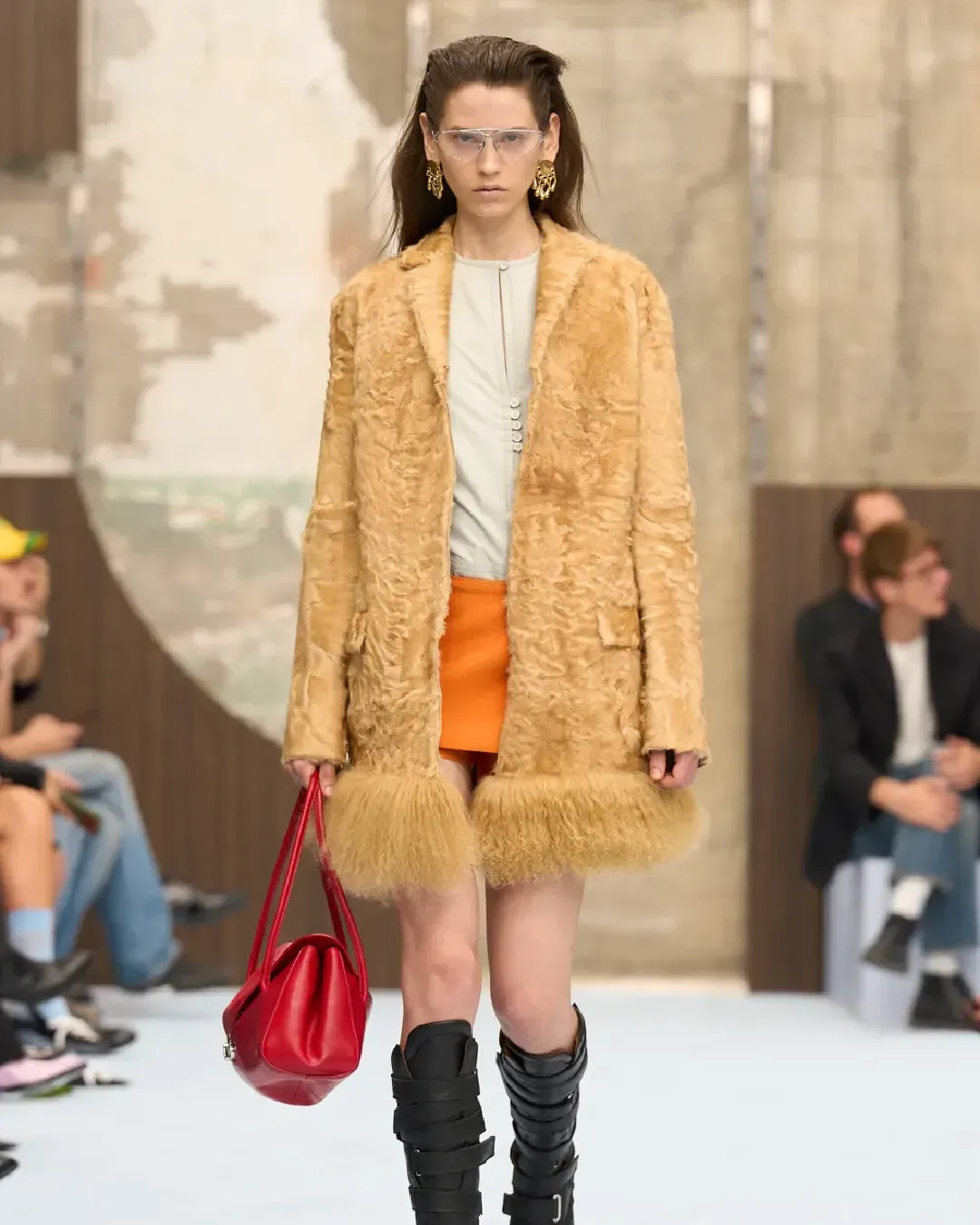
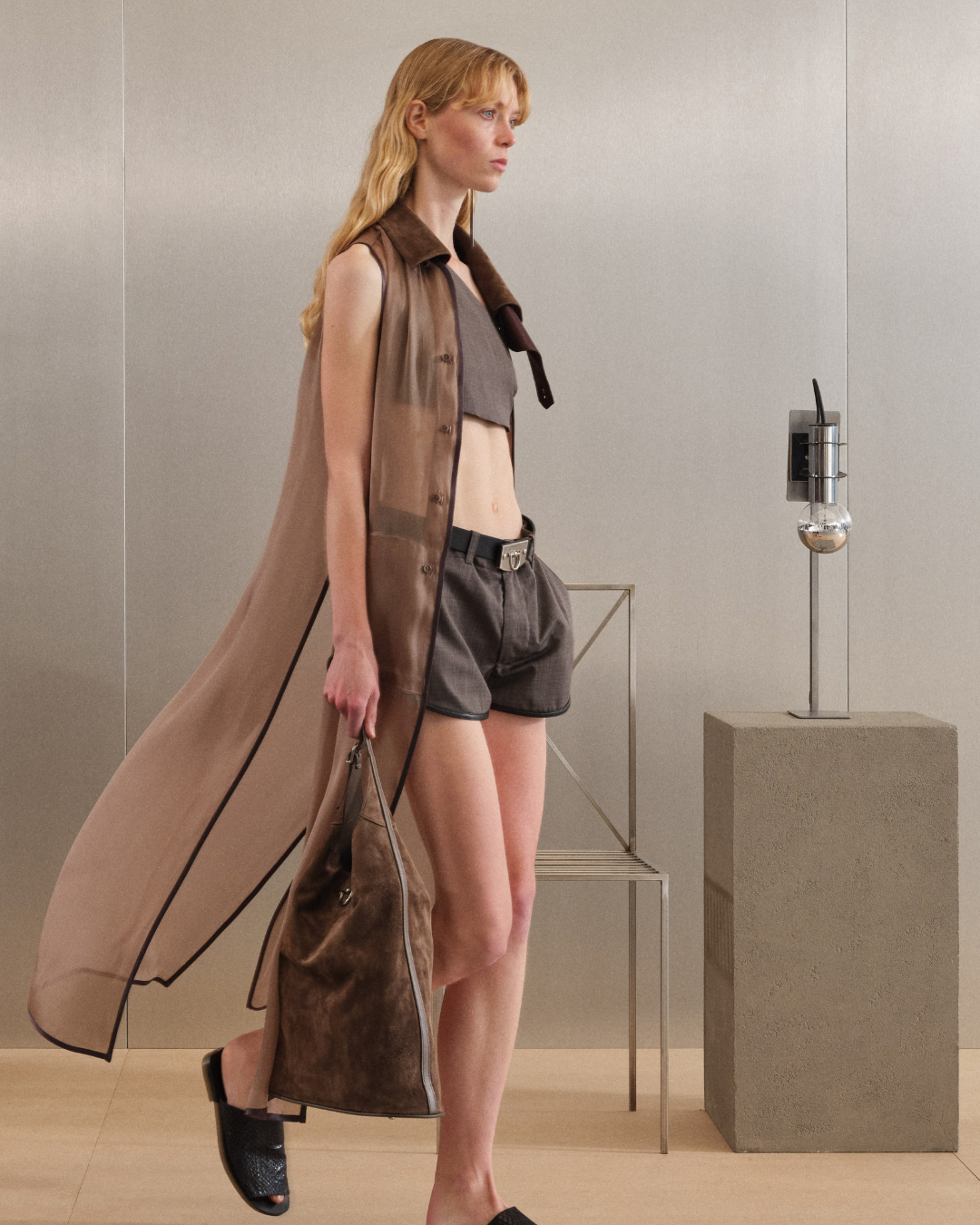
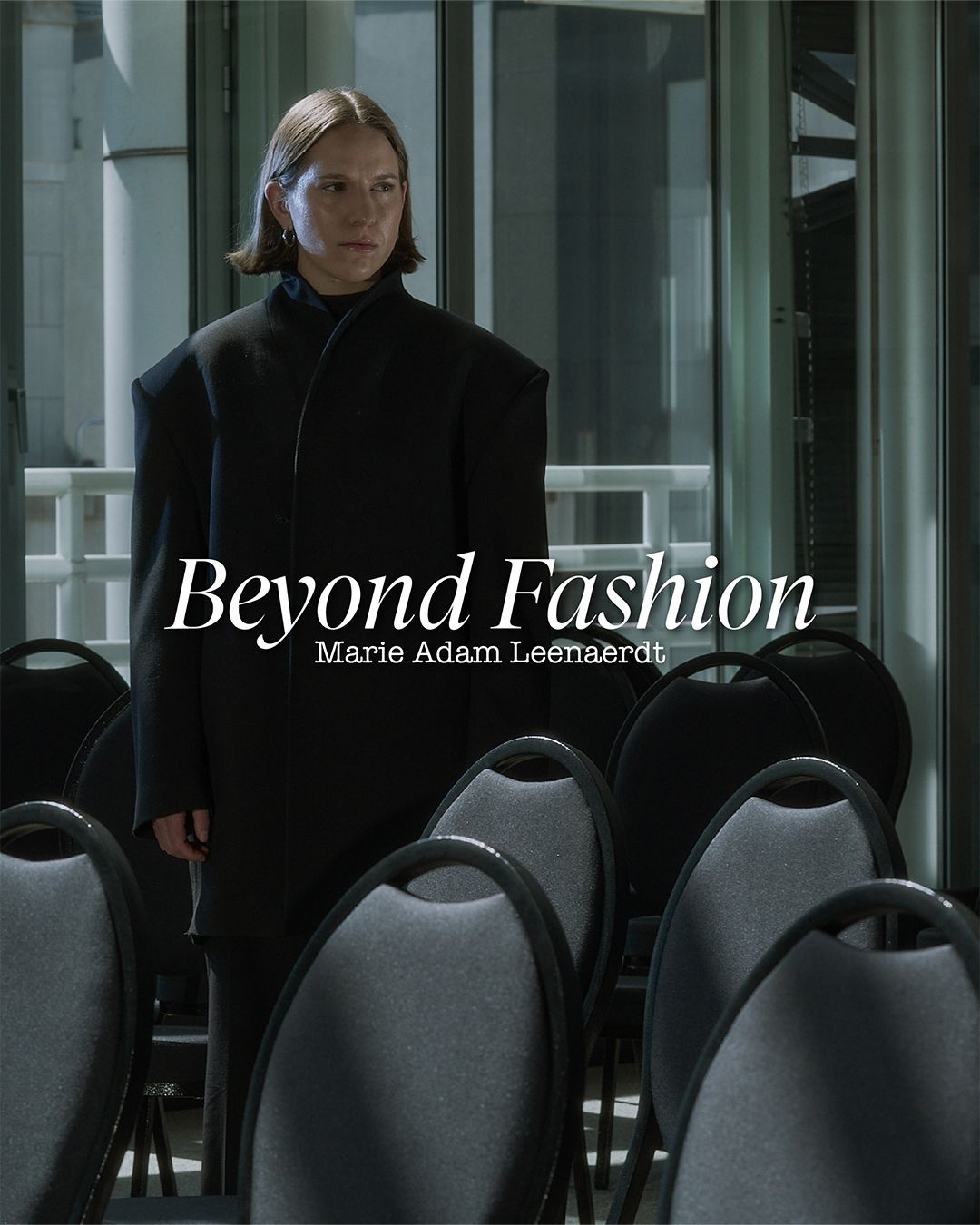
As is tradition, students from the Bachelor of Arts in Fashion Design at the Institut Français de la Mode (IFM) officially kicked off Paris Fashion Week. Under the scorching heat looming over the capital, a refreshing breeze came to blow over contemporary creation.
This year, the graduating class benefited from high-flying sponsorship with the support of Michael Rider, Celine’s artistic director—who will present his highly anticipated debut collection for the house this Saturday. The 27 selected students unveiled their end-of-year silhouettes before an electric audience, composed as much of their loved ones as industry professionals and talent scouts. In addition to the valuable mentorship from the American designer, the stakes are high: one of the graduates will have the opportunity to join Celine's design studio for an exclusive internship.
Show notes: A window into the intimate
In the fashion world, there are two camps. Those who consult the show notes before the first look hits the runway, like a path to be traced, and then the others, who read through them once they get home, letting their senses do the talking first. In any case, these indications provided by the designers are precious. Written by their own hand, they open a direct window into the psyche and the creative process.
The IFM students were no exception to this rule, each attempting in their own way to put words to long months of research and hard labor. Paul Molina, who had the heavy task of opening the floor for these 162 silhouettes, chose to recreate an intra-family dialogue between a brother and a sister. Behind the apparent banality of this daily vignette, the entire complex question of identity surfaces: "My collection explores the gap between the identity we inherit and the identity we fantasize about."
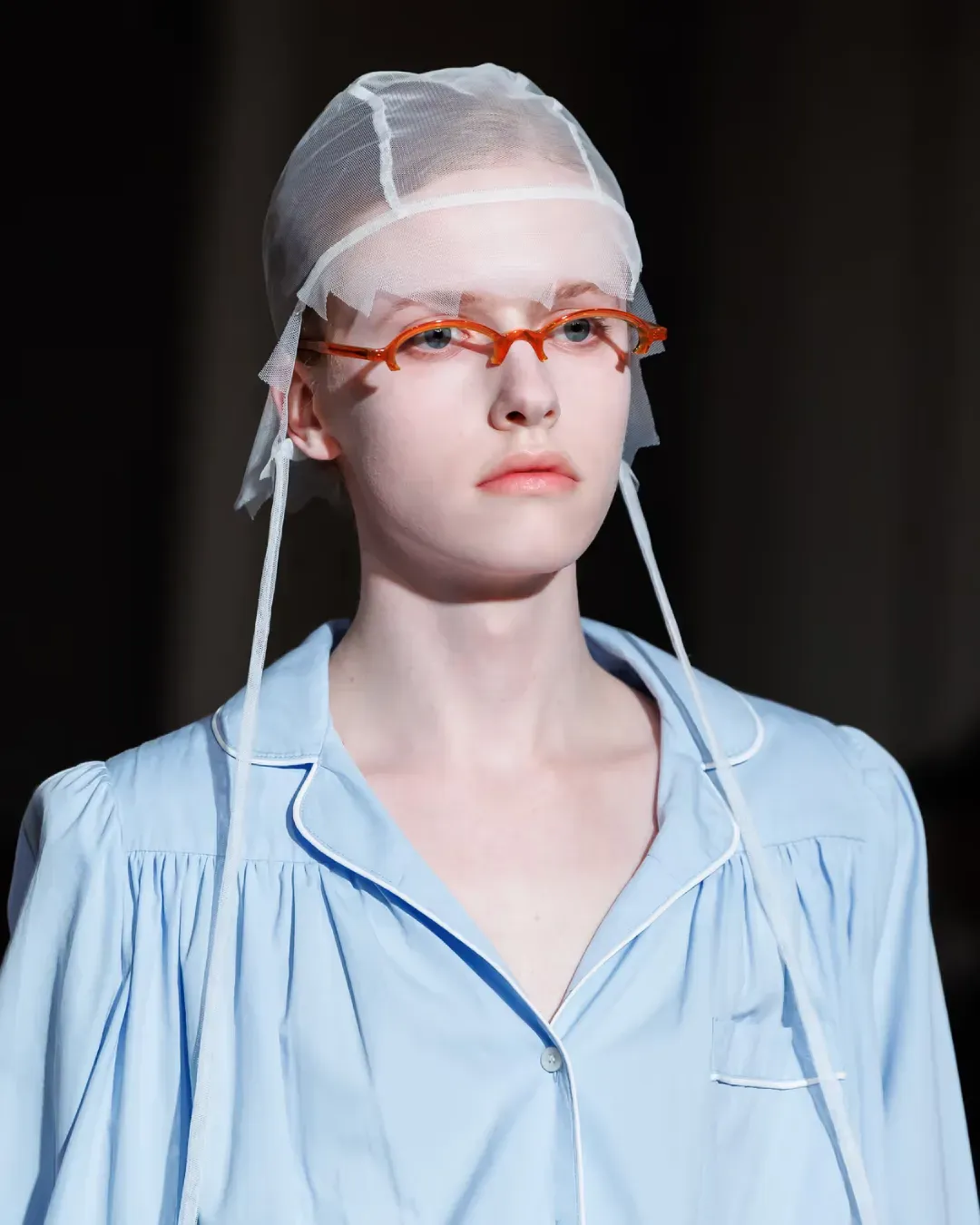
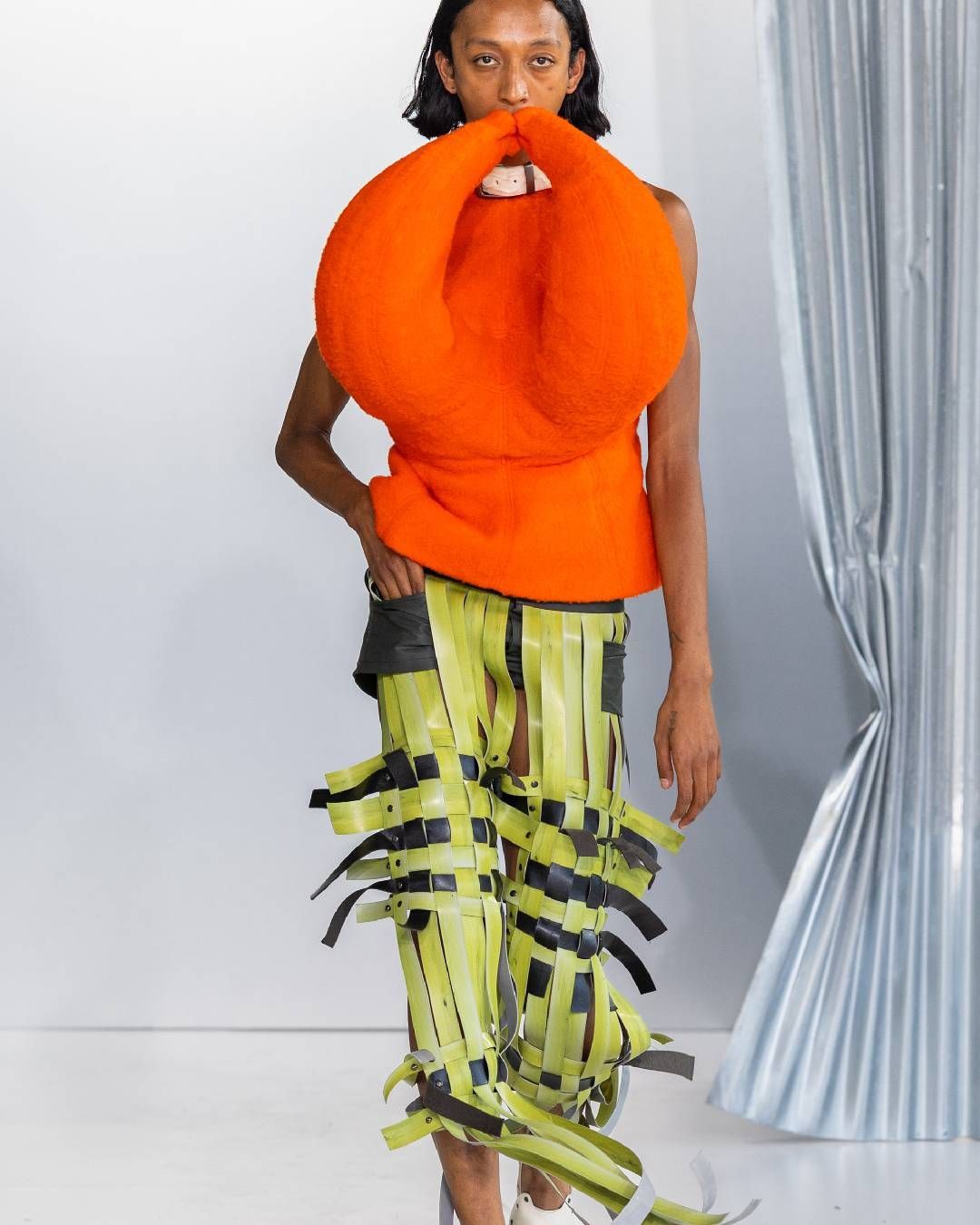
To illustrate this tension, and rather than shouting "down with the masks," the young designer takes a different route. He completely covers the faces of his six models and offers maximalist silhouettes where fabrics and patterns overlap in a perfect mastery of volume.
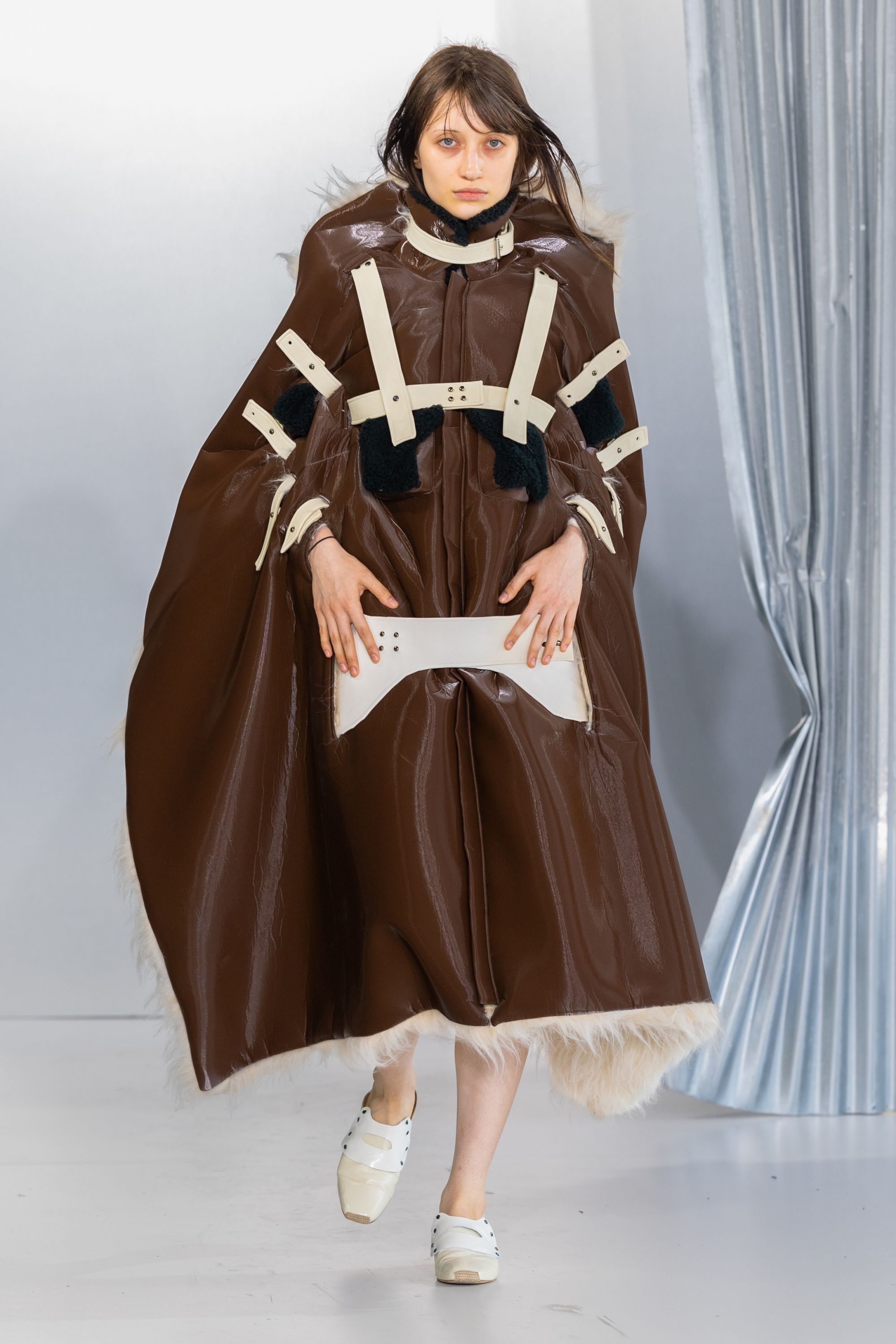
The mask motif - already widely spotted last March during women's fashion week - runs through the show until its closing, orchestrated by the silhouettes of Adony Bigueur. His collection, entitled "Entre-deux" (In-Between), seeks precisely to embrace what lies in the middle, this not fully defined interstice that directly echoes the liminal space mentioned by Paul Molina. For Ella Maillard, the mask becomes part of an architectural and constraining whole:
"Through harnesses, bindings, and structured constructions, the body is partially framed and reshaped through tension. This transformation creates a new presence, where body and garment exist in constant interaction."
Clothing as a political and cultural manifesto
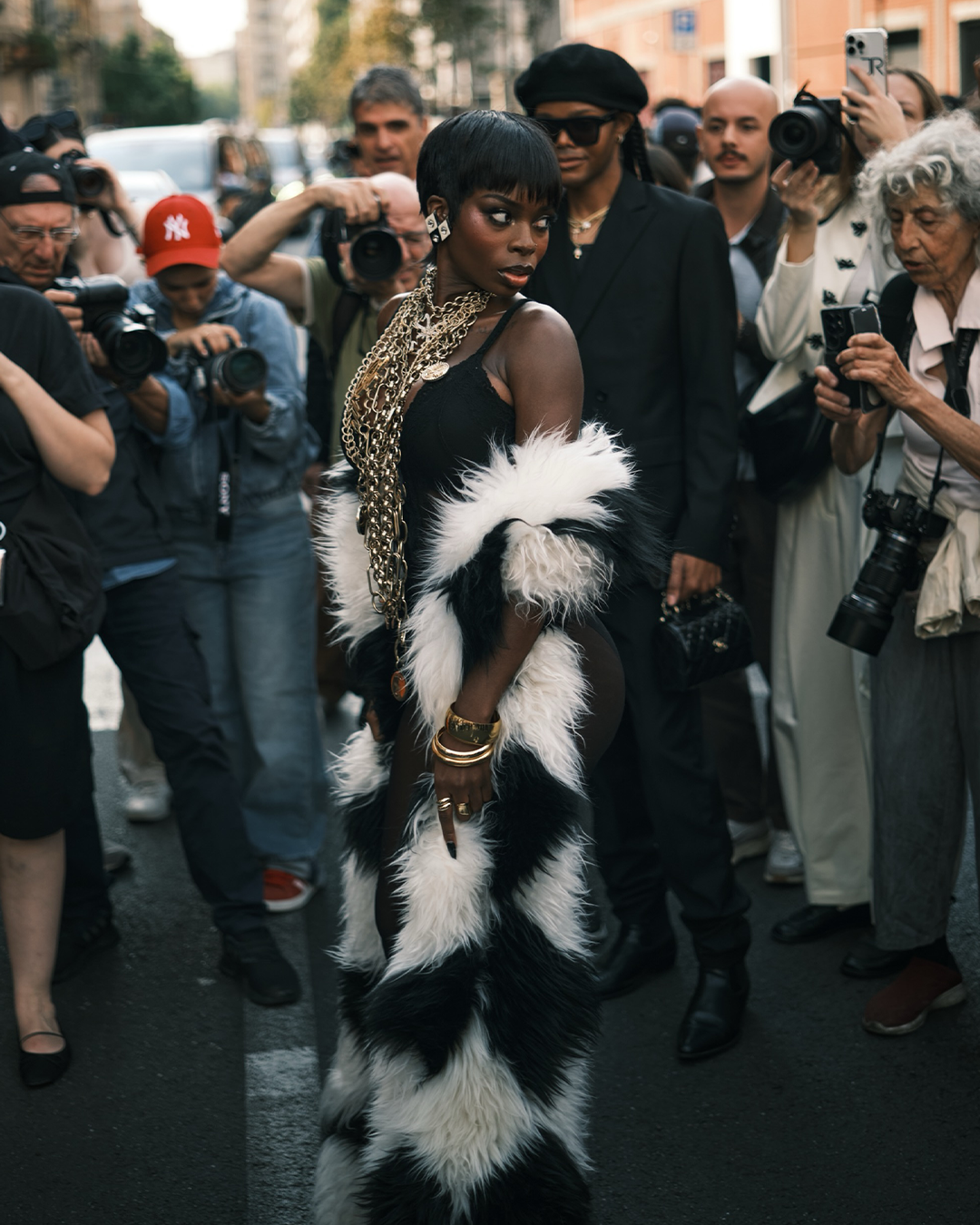
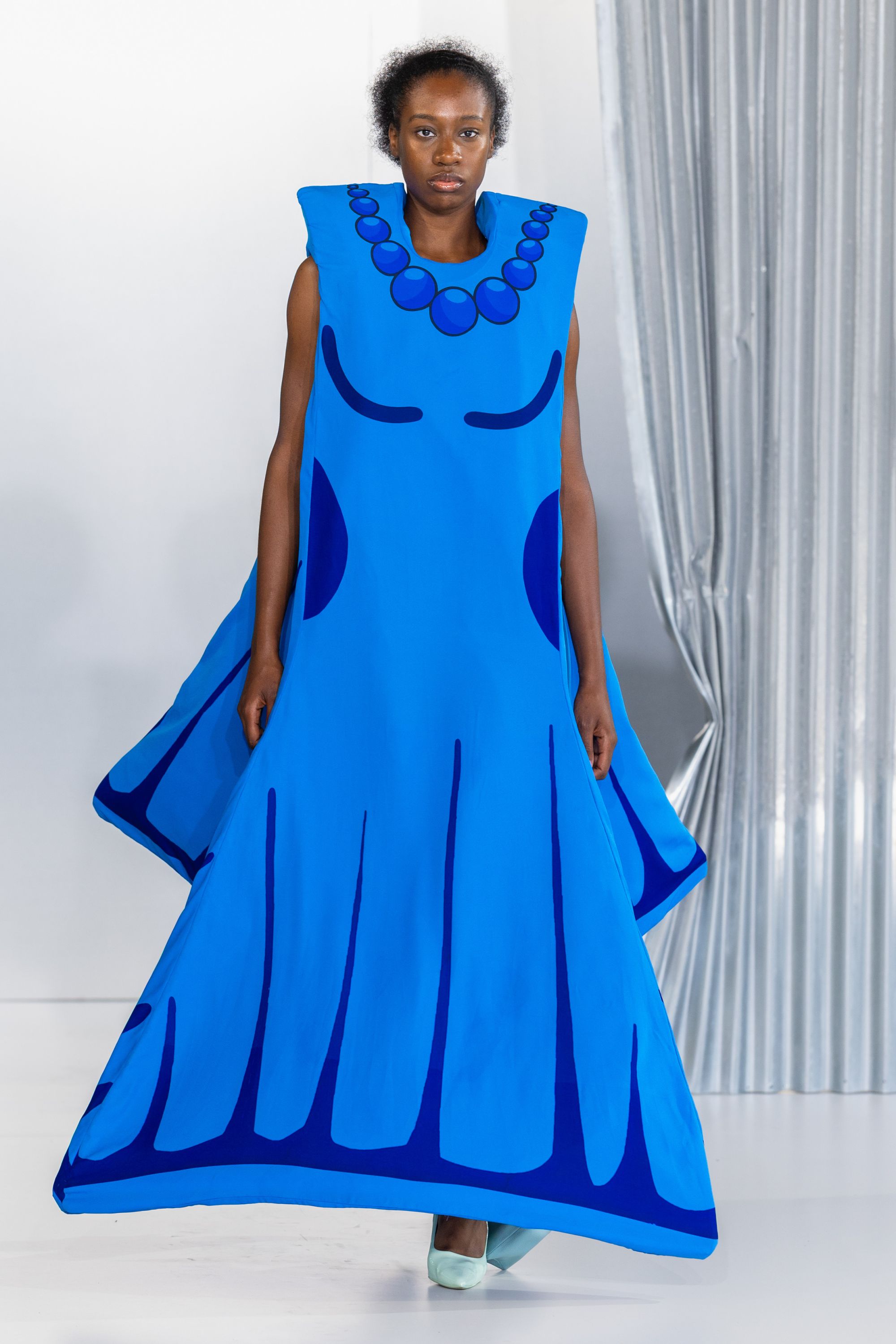
While Ella Maillard explores the physical constraints of clothing on the anatomy, Elona Clement chooses to tackle head-on the social norms imposed on women. By drastically exaggerating proportions - massive shoulder pads framing the face, ordinarily discreet buttons pouring down the bust like XXL pearls, and shoes looking straight out of a cartoon - the designer infuses a subversive humor to better arm her silhouettes:
"I want to bring visibility to these attributes of femininity and seek to challenge the way they are perceived. I transform these feminine details, often not taken seriously, into genuine instruments of power. The goal is no longer simply to be looked at, but to assert a presence that cannot be ignored."
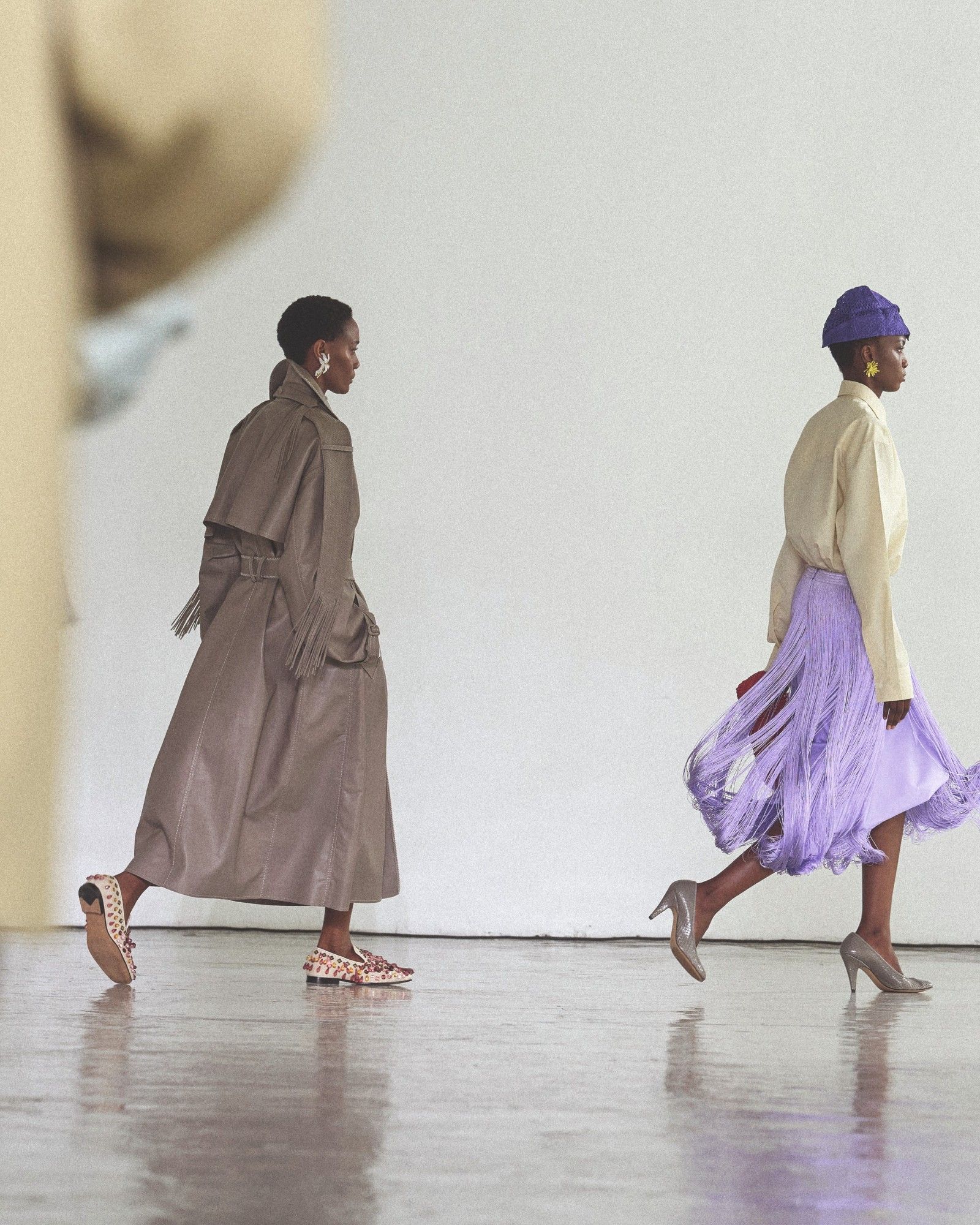
Lauriane Lauthin also addresses this urgency of representation with her collection "Black-ish," a vibrant homage to the work of legendary African photographers such as Malick Sidibé or Jean Depara. Her fashion becomes a tool for cultural emancipation:
"Between cultural heritage and modernity, every stylistic choice becomes a way of existing, distinguishing oneself, and defining oneself through one’s own codes. Through this approach, appearance becomes an act of emancipation, celebrating creativity, pride, and the power of an identity that is both deeply rooted and fully embraced."
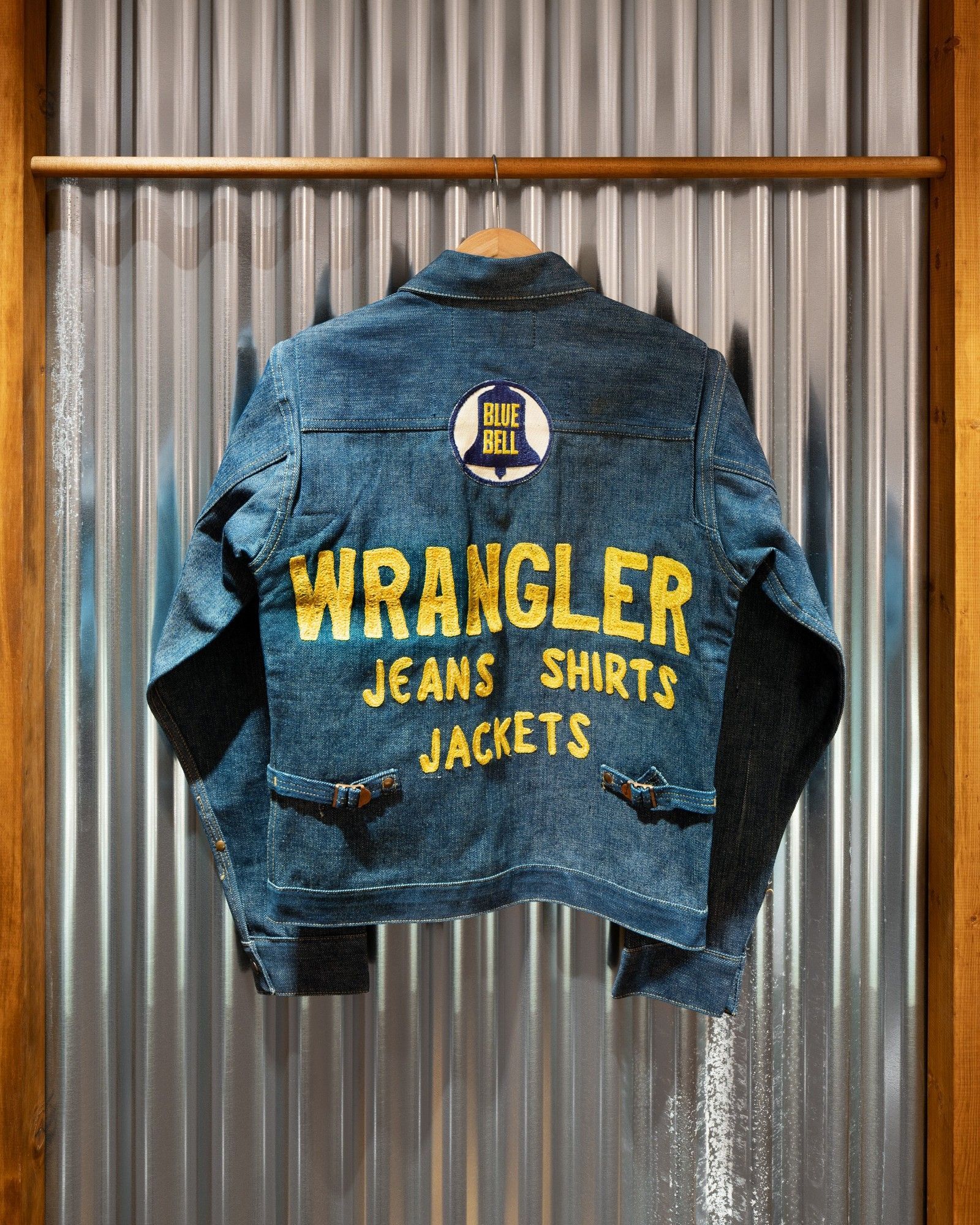
In a register just as respectful of memory, Davide Bruggisser turns his gaze toward transmission and heritage: "The collection treats of rural life, fading traditions, and the preservation of handmade techniques through a contemporary approach to materials. The collection reflects on transience, transformation, and the elegance found in traditional processes."
Just like Lauriane Lauthin, Davide Bruggisser uses clothing to bring to light forgotten savoir-faire, proving that the fashion of tomorrow can only be built by dialoguing with its past.
By revisiting the notions of volume, identity, and craftsmanship, this new graduating class from the IFM proves that student fashion is anything but amateur. It does not merely follow trends: it questions them, disrupts them, and establishes itself as an essential laboratory for political and aesthetic ideas. Under the benevolent gaze of Michael Rider, these 27 creators have brilliantly demonstrated that the upcoming Paris generation is not only ready, but definitively ahead of its time.