



















Lucca Fashion Weekend is the project celebrating creativity and craftsmanship Discover Italy's new cultural destination
For three days, Lucca was transformed into a citywide creative laboratory where fashion, craftsmanship and culture occupied squares, historic palaces and everyday spaces. From 29 to 31 May, the fourth edition of Lucca Fashion Weekend once again placed the relationship between cultural heritage, manufacturing excellence and new forms of creativity at the centre of the conversation, strengthening the city's role as an increasingly relevant platform for dialogue between local identity and the fashion system.
More than a simple programme of events, Lucca Fashion Weekend confirmed itself as a cultural project capable of building connections between very different realities. Designers, artisans, institutions, brands and industry professionals came together within a programme that alternated exhibitions, talks, workshops, installations and performances, giving shape to a collective reflection on the value of memory and contemporary creative practice.
Unsurprisingly, the theme running throughout this edition was that of the archive. Not understood as the mere preservation of the past, but as an active tool for research and cultural production. Particularly emblematic in this regard was the Fondazione Armani Archive Exhibition, hosted at the Teatro del Giglio, which offered insight into the creative process and aesthetic legacy of one of the most influential names in Italian fashion through a selection of original sketches. Alongside this reflection on heritage, the event devoted significant attention to the industry's future perspectives. Villa Bottini hosted Qhlype, the luxury circular fashion hub created by Cecilia Rodriguez and Ignazio Moser, while meetings and roundtable discussions addressed themes related to sustainability, innovation and the transformations shaping the contemporary fashion industry.
Among the most compelling moments of the event, the presentation by Antonina Poppy offered a vision of fashion as an interdisciplinary practice. The Polish designer, who has lived and worked in Florence for years, brought her creative universe to Lucca through Primavera, a couture collection composed of nine entirely handmade looks. More than a traditional runway show, the presentation took the form of an immersive performance that made the creative process itself visible: draping, dialogue with fabric and the construction of form. Accompanied by live music from Marc Chouarain and an audiovisual project developed together with Anima Studios AI, the experience transformed the sartorial gesture into a performative act, restoring fashion to its most artisanal and experimental dimension.
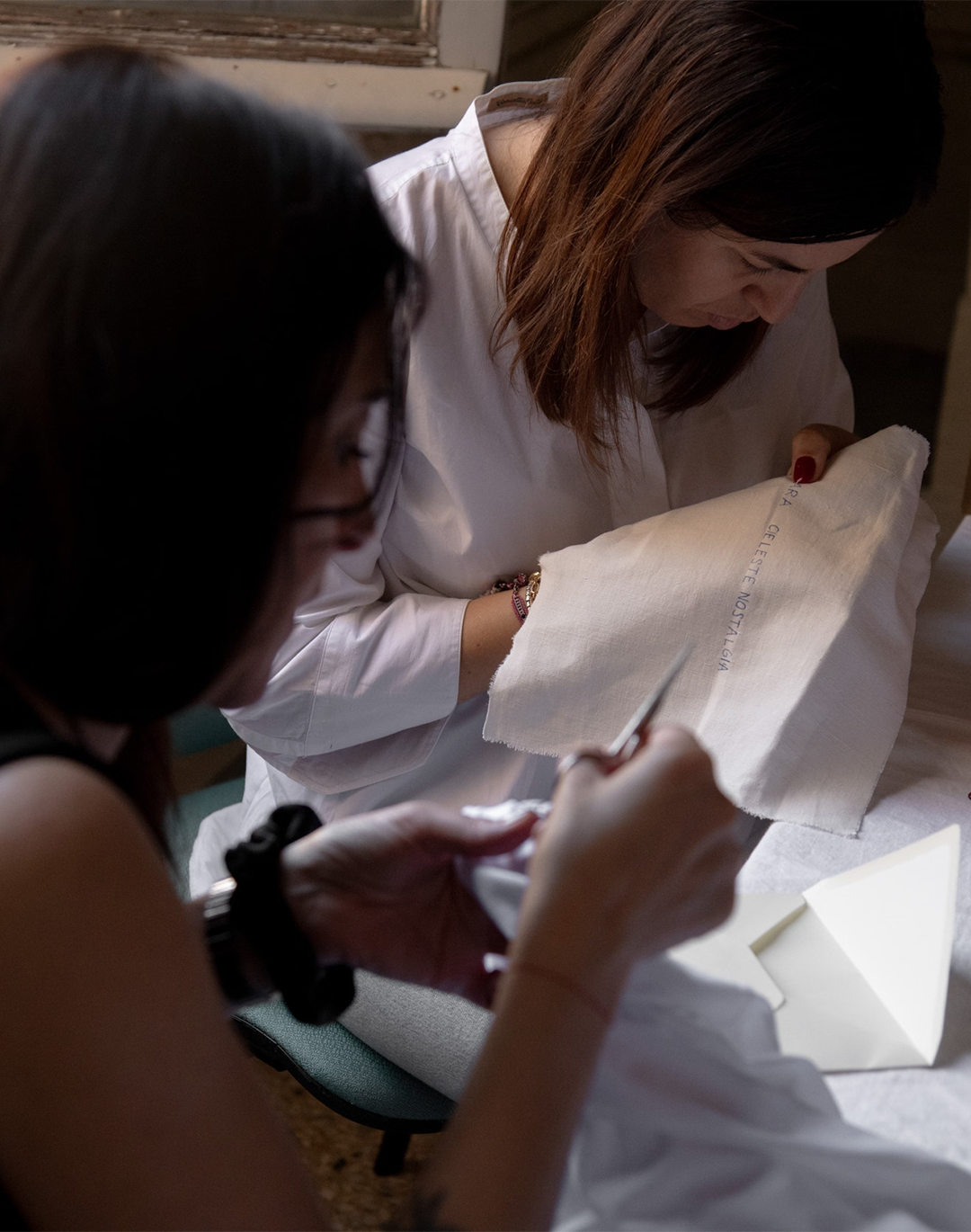
At the same time, the programme highlighted the local manufacturing and craft community through workshops and initiatives dedicated to artisanal excellence, while events such as Verso Turandot, celebrating both the centenary of Puccini's opera and the fiftieth anniversary of Atelier Ricci, reinforced the connection between the festival and the city's cultural history.
At a time when the fashion landscape is increasingly dominated by the speed of images and the spectacularisation of events, Lucca Fashion Weekend proposed a different narrative of fashion: one less focused on the product and more attentive to the processes, people and stories that make it possible. An approach that allowed the event to stand out within the Italian landscape, helping position Lucca not only as a cultural destination, but as a place where contemporary creativity can find new forms of expression and dialogue.