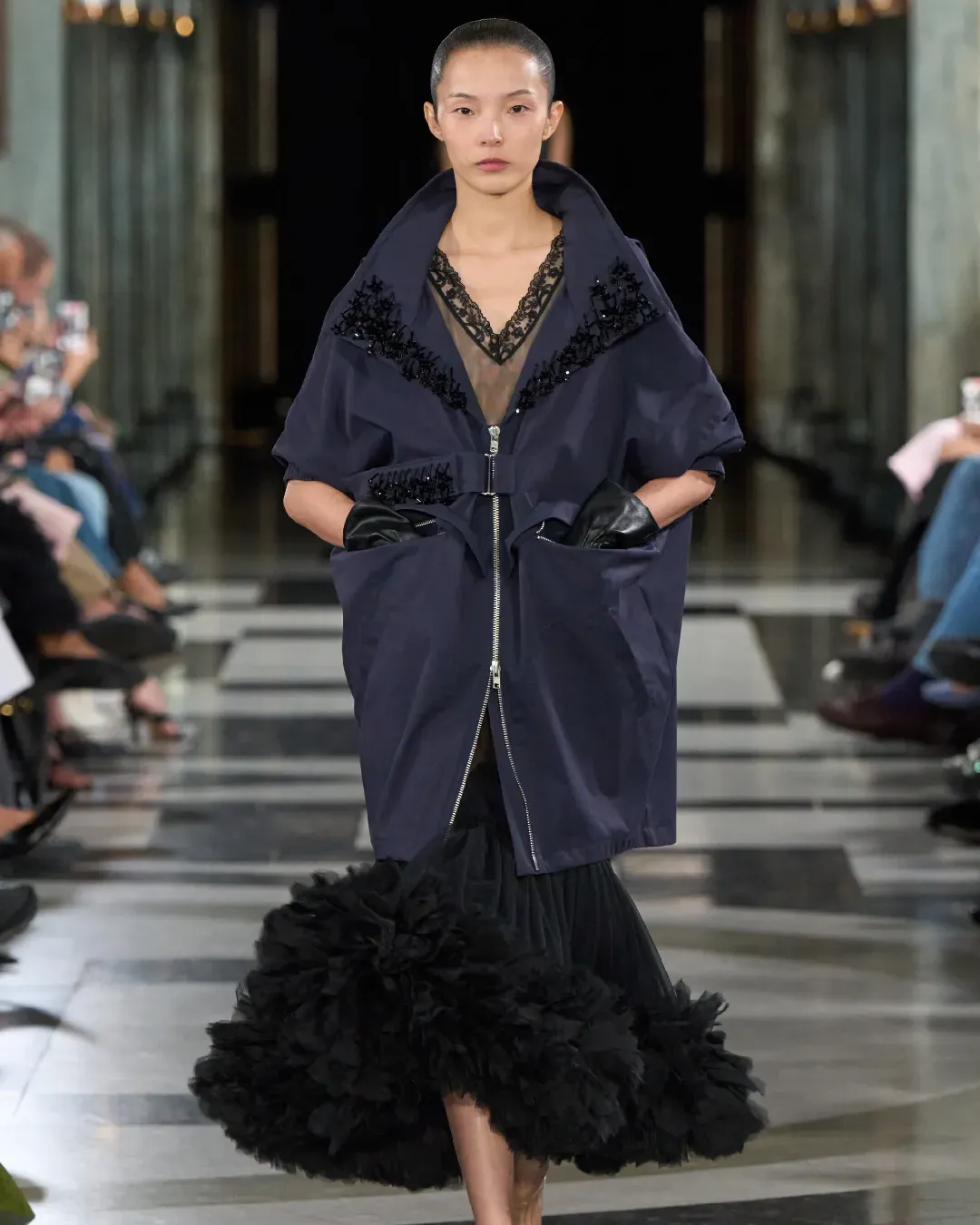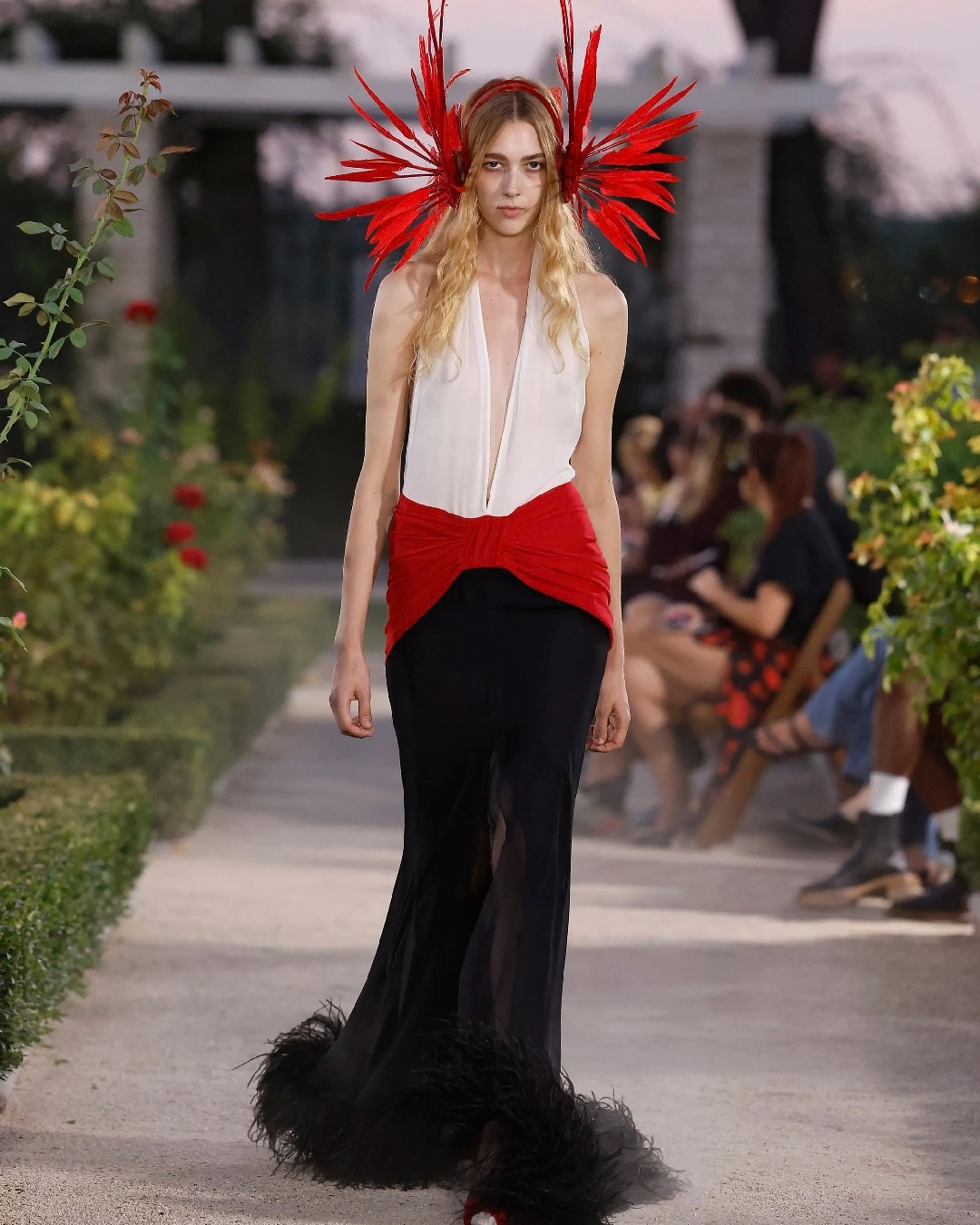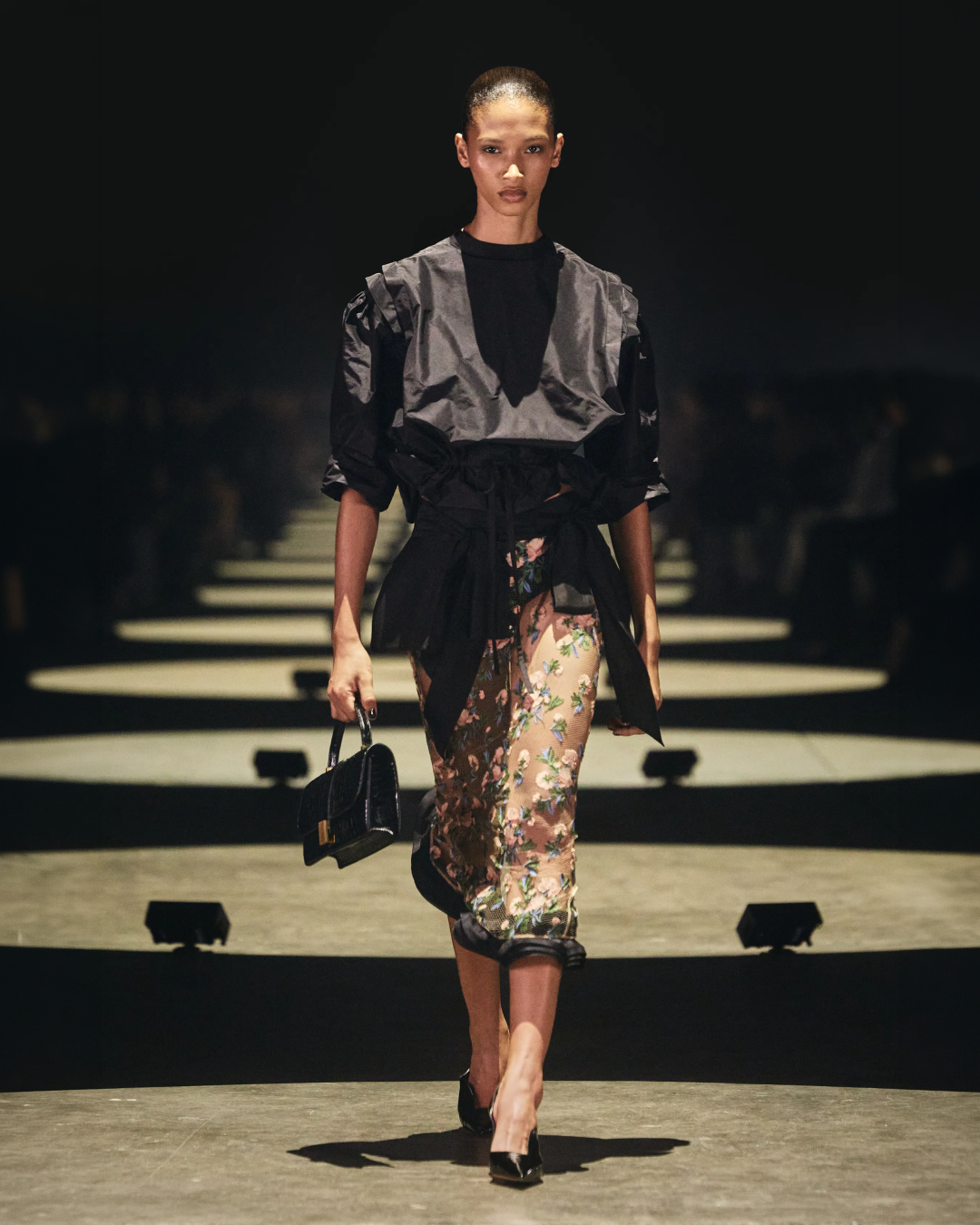



















It was a year of great soundtracks on the catwalk 5 shows where the soundtrack made (almost) more noise than the clothes
Fashion week runways have always shown how much of an impact music can have on a brand’s narrative. In an era where fashion is also consumed through a screen, the right song can become the defining trait of an entire season, make it into fashion week playlists, be googled by thousands of users, and generate memes and reinterpretations. Supporting this idea, in an interview for 10magazine, Honey Dijon, one of the most in-demand producers and DJs in fashion shows, who has long worked alongside designers to build a synesthetic experience for their collections, stated that «it’s about bringing the collection’s movement to life.» The soundtrack becomes a mirror of the designer's creative identity, and a good soundtrack doesn't just involve picking nice songs—it’s crafted with surgical precision: micro-editing, volume tweaks, rhythmic overlays, and silences timed to the millisecond. The relationship between the creative director and sound designer is crucial: legendary sound designer Michel Gaubert, in a conversation with Claire Koron Elat for 032c, emphasized that when there's true exchange, something unique and collaborative can be built. «What interests me most when there’s an exchange of ideas is building something together. Sometimes I have complete creative freedom, other times it’s a back-and-forth. […] When people have a specific vision, I enjoy being a complementary part of that vision.» Based on these observations, here are five shows from the latest fashion weeks where music played a key role.
Maison Margiela SS24
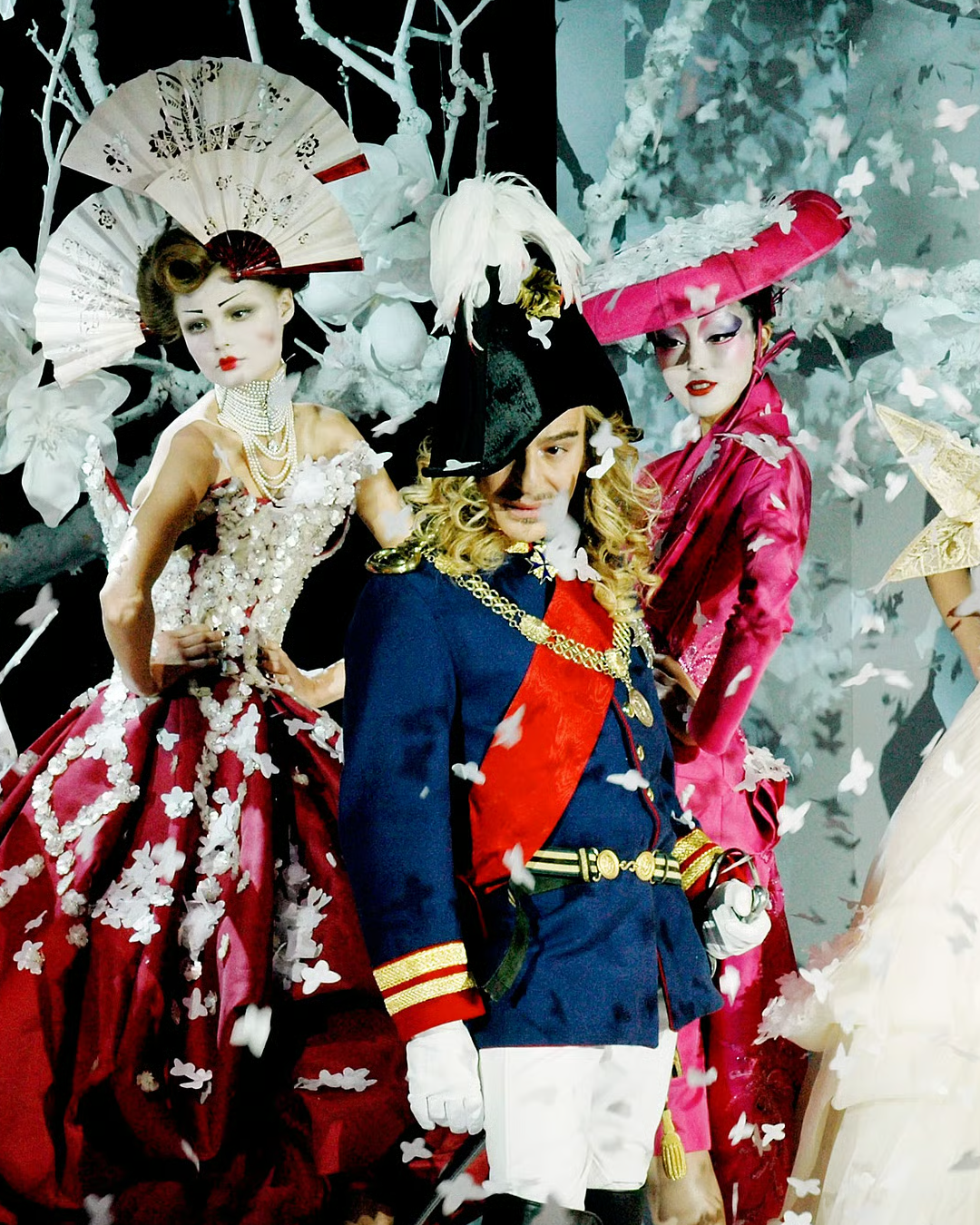
For his latest staging during Paris Couture Week, John Galliano composed a sensory opera where music didn’t just accompany—it led. The Artisanal 2024 collection by Maison Margiela, presented under the Pont Alexandre III, was much more than a show. A descent into the underground of memory, amid dim lights, broken tables, and ghostly figures. The sound design, conceived as a multi-act drama, turned the runway into an emotional stage. Distorted classical music, cabaret-style gospel, noir cues, and calculated pauses marked every gesture. It opened with live choral vocals and Lucky Love singing her Now I Don’t Need Your Love, followed by the slow entrance of Adele’s Hometown Glory—filling a desolate Paris of suburbs and rejection, and staying through the entire show. The sound, unlike the burlesque-doll-like models, felt like a living body, capable of amplifying and shaping the entire show. Galliano didn’t use music as background—he turned it into a narrative structure: it set the pace of the garments, guided the acting of the models, made the silhouettes tremble. Every note was part of the script. In this decadent ritual, the soundtrack was the only script to follow.
Dsquared2 FW25
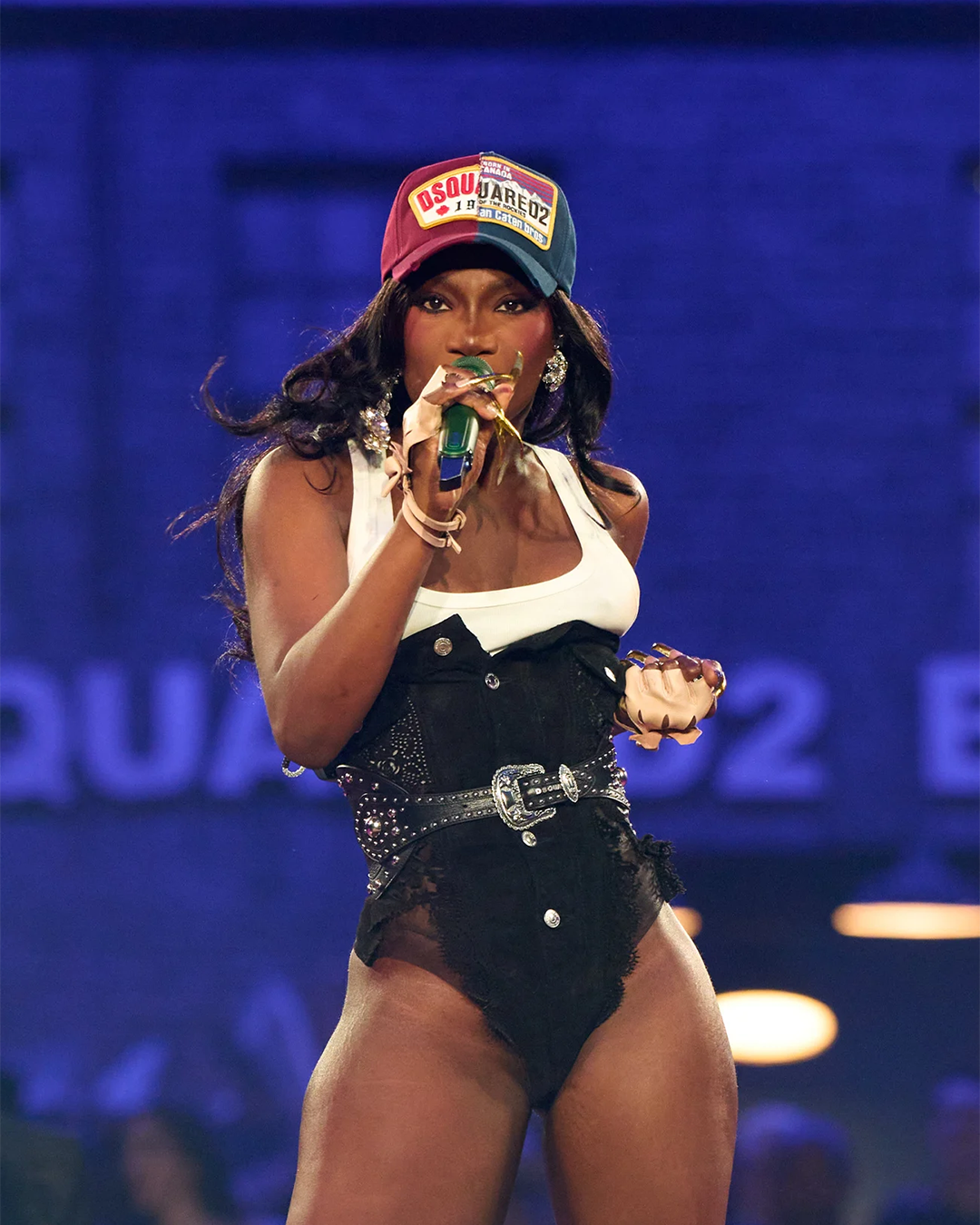
Let’s move on to what was the most spectacular event of the first day of Milan Fashion Week in March. Dsquared2 celebrated its 30th anniversary with a show that was, rightly so, much more like a Y2K-style party. The guest of honor was Doechii, the American rapper fresh off a Grammy win (Best Rap Album with Alligator Bites Never Heal), who opened and closed the show. Doechii arrived on the runway in an armored vehicle, then launched into a fearless catwalk performance to the beat of Nissan Altima, while money flew from a built-in corset-backpack. Mid-show, a style change: three models dressed as the Kiss to officially unveil the brand’s new collaboration with the American rock legends. In the grand finale, Doechii returned with a new outfit and performed alongside JT to Alter Ego, a 2024 hit. The highlight? The lyrics of the song were altered to include a direct tribute to Dsquared2. The performance ended in a big collective dance involving Dean and Dan Caten, Naomi Campbell, and the entire front row in a perfectly nostalgia-driven choreography.
Willy Chavarria SS26 Men’s
The SS26 Men’s by Willy Chavarria continued his narrative journey of queer romanticism, oversized tailoring, and political tension. But it was the sound that gave form to the emotions on the runway. Music direction was handled by Marco Neves, a DJ and composer active in the New York scene since 2021, already behind the sound direction of the adidas x Willy Chavarria capsule last February. For SS26, Neves created a soundscape through HURON, a perfect mix of melancholic loops, suspended bass, and vocal samples like inner whispers. Not just a background, but a collective breath. The music guided every look as if it were part of the silhouette itself, bringing out the full poetic vulnerability of Chavarria’s work.
Louis Vuitton SS26 Men’s
Since Pharrell Williams became the creative director of Louis Vuitton Men, the soundtracks have always been events of their own. But for the SS26, presented on the Seine, he outdid himself. The soundtrack was a multisensory experience, featuring live performances by Voices of Fire, Tyler, the Creator, and A.R. Rahman, in a fusion of gospel, jazz, and electronic production that reflected the collection’s cultural hybridization. Closing the show was Get Right, an unreleased track produced by Pharrell with Doechii and Tyler, the Creator, conceived as a true sonic "closing statement." Pharrell didn’t just pick songs: he built a fluid, narrative musical journey that visually and sonically embraced the collection’s energy. More than a fashion show, it was a concert with a couture dress code.
Kenzo SS26 Men’s
Nigo transformed Maxim’s—an iconic Art Nouveau venue in the heart of Paris—into a metropolitan nightclub halfway between Tokyo and Paris for the SS26 Men’s Kenzo show. The SS26 presentation blended strict tailoring, raw denim, and graphic irony, but it was the music that led the rhythm of the narrative. The soundtrack, curated by Hiroshi Fujiwara, a key figure in Japanese streetwear and a pioneering DJ, created a soundscape made of breakbeat, electronic funk, and minimal techno. The musical sequence opened with a slowed-down ambient jazz track, then escalated with pulsing grooves and glitch references that mirrored the collection’s cultural clash: between uniform and rebellion, between East and West. The sound design turned the runway into a truly immersive experience, where the line between fashion show and clubbing dissolved into a collective energy. In an acidic yet controlled finale, the music faded—almost suggesting that outside Maxim’s, Kenzo’s party was still going on.