

























"Possible Love" is the best film at Venice 83 Lee Chang-dong's work is in competition at the Festival and arrives on Netflix on November 6
We all look at the same moon. Not everyone, however, does so from the same place. The family of Mi-ok (Jeon Do-yeon) and Ho-seok (Sol Kyung-gu) in Possible Love, premiering in competition at Venice83, watches it from their low-roofed home, seated at a table the man had handcrafted with dreams of spending his free time there alongside his work colleagues. A distant chimera, predating the layoff that brought him low, into a state of paralysis that has ensnared his wife and son along with him. Sang-woo (Jo In-sung) and Ye-ji (Cho Yeo-jeong), on the other hand, gaze at the celestial body from the comfort of their luxury residence, with the feigned cordiality of the wealthy class that claims to welcome anyone into its halls, while moving through the streets of ordinary men and women in expensive clothes and luxury cars — they who have nothing ordinary about them.
The two couples are the protagonists of the new film by Lee Chang-dong, returning eight years after the haunting Burning. The film is co-written with Oh Jung-mi and is largely inspired by Krzysztof Kieślowski's Dekalog 10, to which is added the mass layoff of more than two thousand workers from SsangYong Motor Company, which occurred in 2009 and left a deep impression on the South Korean filmmaker.
Narrative threads that overlap just as the lives of the four characters do, further enriched by the documentary element that the character of Ye-ji brings with her. A filmmaker with a past as a student in the United States who married her wealthy schoolmate, the woman's camera will be one of the vessels through which to tell the story of Ho-seok's personal and professional decline — the former employee encouraged by his wife to speak in front of the lens, which becomes at once a psychoanalytic tool for liberation and a trap for exploiting others.
This is the great bias of the documentary genre: to what extent am I distorting reality? But also: how far am I willing to go for a good story? For someone like Ye-ji, who has obtained everything in life, being unable to reach the one thing that matters to her at that moment seems like a laughable obstacle. It is certainly a challenge for her art, but she has no qualms about bending reality, even if it means making other people's lives her own. A behavior corrupted by the mindset of those who have often had everything and had it immediately, especially when they have never thought to ask permission, justifying themselves behind the idea that any means can be used to frame reality, caring neither for empathy nor for ethics.
‘Possible Love’ Cast Sobs as Lee Chang-dong’s Epic Embraced at #VeniceFilmFestival With 6-Minute Standing Ovationhttps://t.co/pDp3O3Sl8O pic.twitter.com/ETkOQnKe6T
— Variety (@Variety) September 6, 2026
At first, in Possible Love, the couple formed by Mi-ok and Ho-seok makes themselves available to the documentarian, but it is then the power dynamics imposed by class difference that undermine this game. If initially the camera appears to Mi-ok as an outstretched hand, capable of helping her husband bring out what he cannot even say in therapy — of confronting that sense of insignificance his unemployment has imposed on him — the film gradually leads to a place where the camera's lens can become distant and merciless. From a bridge of connection, the camera can become obsession and the pursuit of one's own desires, a means to achieve one's ends — which is precisely what Ye-ji intends to do at any cost.
The camera has the power to reveal reality, and sometimes it can do so through its very nature. The possible love of the title is the caress that an unexpected friendship and an outlet can represent for characters pushed to their limits, but in truth it is even more their illusory essence that is called into question — the same essence that so often characterizes cinema itself. The yearning for reality, yet the occasional inability to resist bending it. An illusion on which the characters feed, whether to escape their social condition or to see a project through to completion.
If Ye-ji believes she can be of help, it is above all the completion of her own documentary that drives her; Mi-ok, on the other hand, believes she can gain access to a world beyond her reach (not coincidentally, she calls her new friend's husband Steve Jobs), yet she will come to understand that something is wrong with those who never feel the need to ask permission, taking for granted that everything belongs to them.
It is above all the female leads who dictate the film's turning points — the tremendous and magnificent Jeon Do-yeon and Cho Yeo-jeong: it is they who take charge of and redirect their husbands, indulging each other in a rapport compromised by the innocent and constant presence of recording equipment. What both women crave is right there: to see and to be seen, giving too much or too little of themselves. But where does the claim of either action begin, and where does it end? How much are we willing to give, and how far can we go to take?
Possible Love, in the tradition of a Korean cinema that can't get enough of class struggle, constantly shifts its focus, leaps between timelines, and then brings us all back there — to film and gaze at the moon, free and belonging to everyone, fixed and the one concrete thing amid the fantasies the two couples have spun for themselves. It has no owners, is untainted by sorrow, is not the preserve of millionaires, and even if someone tries to colonize it, the fight will go on to keep it a common good. Much as cinema is, when it knows how to reach anyone. When it tells of what we do not say and do not see, yet which exists nonetheless — and is capable of capturing it.
What to read next
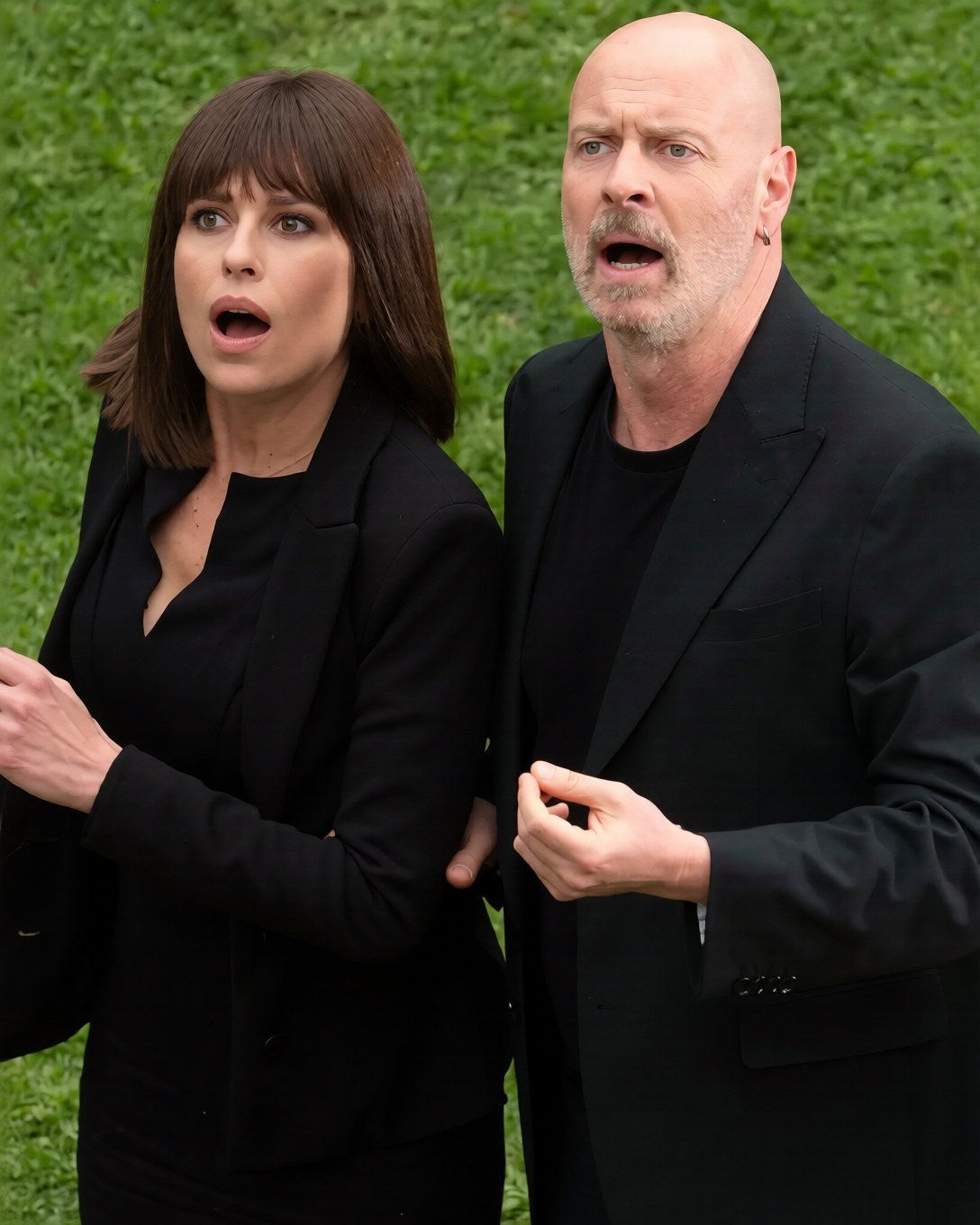
"Un tranquillo funerale di famiglia" is everything comedy should not be today
Massimiliano Bruno's film had its premiere at the Rome Film Festival
«Club Kid is a once-in-a-lifetime opportunity», interview with Jordan Firstman
Everything about the directorial debut of the American actor and screenwriter
"Cambogia" teaches actors that you have to care about your own characters
Valerio Lundini's directorial debut premiered at the Rome Film Festival