



















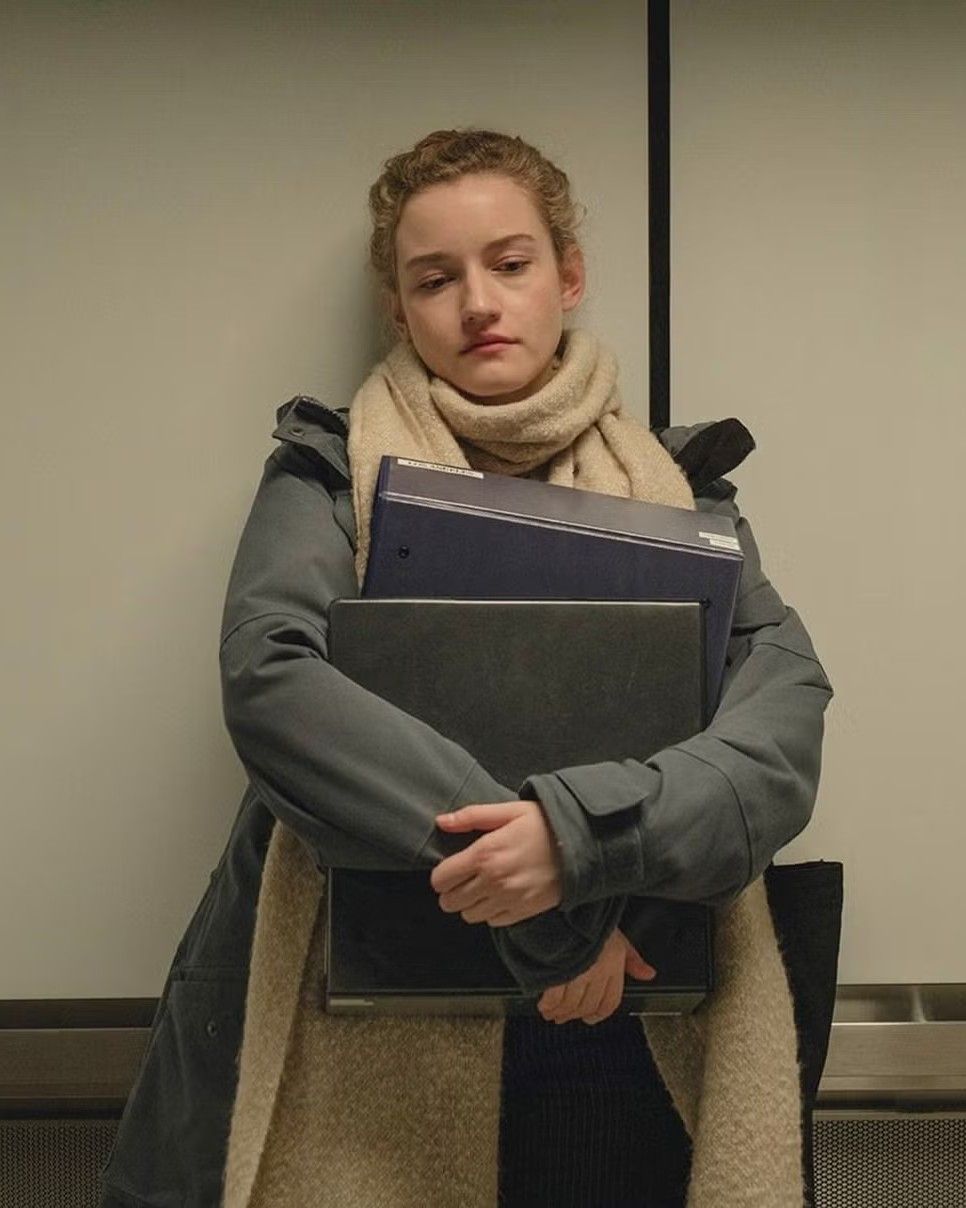
Are Millennials facing a pre-midlife crisis? The inevitable shock felt by optimists in the face of a society in decline
In recent days a popular article from The Cut asked whether Millennials have entered a kind of pre-midlife crisis in the face of a world where everything is noticeably getting worse. The essence of the piece, whose themes have spread in a sort of existentialist drumbeat on social media, is the sense of shock and disillusionment felt by Millennials upon realizing that the idea of living like their parents, in a fixed and stable world, had no basis in reality.
Making things worse is the fact that the world is actively becoming an increasingly horrible place. And while we must undoubtedly agree with the author Amil Niazi, who in her article specifically refers to young Americans, we should also put her reasoning into a broader historical perspective: what Western and Italian Millennials are experiencing — is it the result of a unique historical event or simply the unexpected repetition of a cycle that, quite simply, we had underestimated?
Why a “pre-crisis” of middle age?
@katina.bajaj The millennial midlife crisis is a world crisis - and when I first shared this 6+ months ago I could have never guessed how much more unstable our world would get But, even though it’s so painful and so hard - I do think that our capacity to be creative, flexible and resilient is going to be what gets us through / propels us forward. Are you feeling this? What feels unstable in life right now? #uncertainty #creativity #mentalhealth #learnontiktok #psychology #exhausted #millennials #midlifecrisis #creatorsearchinsights original sound - Katina Bajaj
The psychological dictionary of the American Psychological Association defines a midlife crisis as «a period of psychological distress that is believed to occur in some individuals during the middle years of adulthood (approximately from 35 to 65 years). It can be triggered by significant life events, health problems or work difficulties. It often involves a reassessment of one’s life, with feelings of disappointment for unachieved goals and awareness of the remaining time limits». We are therefore talking about a “pre-crisis” because many Millennials have not yet reached the minimum threshold of middle age, yet they are experiencing the sense of disappointment and awareness of remaining time limits typical of much older people.
The causes of this crisis are related to work, love, family and physical changes due to age. In the case of work, love and family, the causes can also concern their absence. And this is the point: the difficulties in finding work, the ever-increasing cost of living, the impossibility of finding a home, the crisis of sociality and also of romantic relationships are all social problems that can be the collective motivations for a crisis that presents with all the aspects of a classic midlife crisis. However, their roots are primarily social.
The breakdown of the intergenerational pact in Italy
Writing in the pages of Huff Post, Vanna Iori pointed out that in the ISTAT Annual Report 2026, with reference to Millennials, downward social mobility has reached 27.1% while upward mobility has remained stuck at 25.1%. In short, the number of people becoming poorer is increasingly higher than those becoming richer: a metric that indicates that the so-called social elevator has definitely broken down. But Iori takes her argument further, saying that Millennials are precisely the generation that grew up with the cultural premises of that economic boom which taught their grandparents’ and parents’ generation that hard work and academic study could guarantee a stable life. But that didn’t happen.
Iori therefore speaks of a «breakdown of the intergenerational pact» which, when applied to the economic and social reality of Italian Millennials, often translates into a strong resentment towards the economic boom generation — that of their grandparents — who retired at relatively young ages and received pensions that for Millennials themselves will be unthinkable, ending up today becoming the highest item of public spending in the country. Scrolling through social media, the boomers who found often humble and ordinary jobs but which were enough to support entire families, homes and degrees for all their children are figures quite disliked by young people, who project onto them the sense of frustration resulting from finding themselves in a toxic and inaccessible job market and a series of economic policies that have disadvantaged them.
To these issues are then linked the discontent towards migration policies, the toxic culture of SME entrepreneurship always involved in some “scam” at the expense of young workers, and the distrust towards a political class that has not been able to introduce reforms ranging from the most basic (the introduction of Uber and NCCs in the country or the legalization of cannabis) to the more structural ones on economy and justice.
According to ISTAT, political parties rank at the bottom of the institutional trust ranking: only 22.4% of Italians give them a passing grade and more than 1 in 5 people give them a zero vote, i.e. total distrust. Other data, also from ISTAT, show that in recent years the percentage of “distant and excluded” from politics in the 25–44 age group has grown by 9.1%. Other surveys indicate that 30% of under 50s do not see credible leadership in politicians while others show that among under 35s about 30% declare they have no confidence in democracy as a form of government.
The wheel of history
Europe is still behaving as if Francis Fukuyama's "The End of History" was correct...and clinging to the post-1990s illusion of inevitable, irreversible liberal democratic convergence, technocratic consensus, and the withering away of great-power conflict
— Gummi (@gummibear737) March 7, 2026
Wake up!
Stepping away for a moment from the Italian or European situation alone, and embracing the entire West, since the trend of the Millennial midlife crisis started in the USA in response to the increasingly shocking political interventions of the Trump administration, we must consider another aspect. The “intergenerational pact” that has been broken (and among whose guarantees there was also the conviction that the elderly were automatically wiser) is also the illusion that Europe and the USA had exited the dynamics of history: the idea was that we were in an enlightened era where the post-WWII status quo would be preserved forever in perfect homeostasis. A feeling that political scientist Francis Fukuyama defined in the 1980s as the “end of history”.
The point is that history has not ended: wars continue, global crises multiply, alliances change and cultures clash. In this sense, the predictions of Samuel P. Huntington and his Clash of Civilizations are perhaps closer to coming true, where it is hypothesized that «the most important conflicts will take place between nations and groups of different civilizations. The clash of civilizations will dominate world politics».
The bewilderment and even the shock that many Millennials feel in these years upon discovering that society is not the one described by their parents, that wars and geopolitical conflicts can break out even near Europe and that authoritarianism can still return to the political world now that the functioning of democracy is creaking, is nothing more than the pain of those who wake up inside history, after decades in which they had been promised they had exited it.
More than a midlife crisis, therefore, the turmoil that Millennials feel derives from having believed, in good faith, in a fairy tale. The wheel of history never stopped and Millennials, who grew up in the longest and most anomalous interval of Western stability of the 20th century, are the first generation to pay the price for having believed in the myth of a forever stable world. Perhaps the real challenge is not to recover the world that had been promised, but to find the courage to build a new one without the guarantees that their parents had taken for granted and which were never, in the end, anything more than a pious illusion.
What to read next
What does the return of “Girls” mean today?
Lena Dunham has announced a reboot of the cult series, here's why we're excited

Even the snack industry is being affected by the Iran war
How the energy crisis is impacting many everyday goods and consumer products

How should we prepare for the impending energy crisis?
A guide with top tips for times of rationing