

































Are cities learning to live on the water? Between renders and ancient practices, amphibious architecture is still a work in progress
For years, floating cities have been portrayed as images of the future. Perfect artificial islands, self-sufficient platforms, neighbourhoods suspended over the ocean, full of walkways, greenhouses, solar panels and homes overlooking the water. In renderings they always look light, clean, quiet. As if rising sea levels could be solved simply by moving the city a few metres further along, onto a blue surface.
The reality, however, is more complex. Living on water is not a new idea and does not belong exclusively to large international firms. In many parts of the world there are communities that have been building houses on stilts for centuries, inhabiting lakes, rivers and deltas, travelling by boat and adapting their lives to the cycles of water. Long before it became a vision for climate conferences, amphibious architecture was already an everyday practice.
The question, therefore, is not simply whether floating cities are truly the future. The more interesting question is who is actually designing that future: those who produce spectacular images of self-sufficient cities, or those who have always lived alongside water without calling it innovation?
OCEANIX Busan does not fight the ocean
OCEANIX Busan by BIG Bjarke Ingels Group#urban #plannin #project @big_builds https://t.co/uhQiZciFOv pic.twitter.com/75X6wHEyqO
— AAsArchitecture (@aasarchitecture) August 10, 2023
The issue has become urgent because coastal cities are increasingly exposed. According to the IPCC, around one billion people living in low-lying cities and settlements could be exposed to coastal climate risks in the medium term. Without adaptation and mitigation, the risks for many coastal settlements are set to increase significantly by the end of the century. In this scenario, water is no longer merely a boundary to be held back with dams, embankments and barriers. It becomes an element to be incorporated into design.
This is where the major contemporary floating projects come into play. OCEANIX Busan, presented by UN-Habitat together with the South Korean city of Busan and OCEANIX, has been described as the first prototype of a sustainable floating community. The project is built around three platforms designed to accommodate residential, research and hospitality functions, with dedicated systems for energy, water, food, waste and mobility. In other words, a city that does not fight the ocean, but rises and falls with it.
What gets left out
In the Maldives, the Maldives Floating City takes this vision into an even more symbolic context. The country is among the most vulnerable to rising sea levels, and the project, developed by Waterstudio.NL and Dutch Docklands, envisions thousands of floating units in a lagoon near Malé. The idea is compelling because it speaks not only of tourism or luxury, but of territorial survival: if land becomes increasingly fragile, perhaps cities must learn to no longer depend entirely on it.
And yet these very projects reveal the main risk in the debate around floating cities. The renderings often promise a total solution: new land, new homes, clean energy, slow mobility, self-sufficiency, a harmonious relationship with nature. But the more perfect the image, the more naturally one wonders what gets left out.
Who will actually be able to live in these neighbourhoods? How much will they cost? Will they be accessible cities or new enclaves for the few? And above all: can they become a replicable response for the most vulnerable communities, or do they risk turning the climate crisis into a new real estate product?
A slow transformation
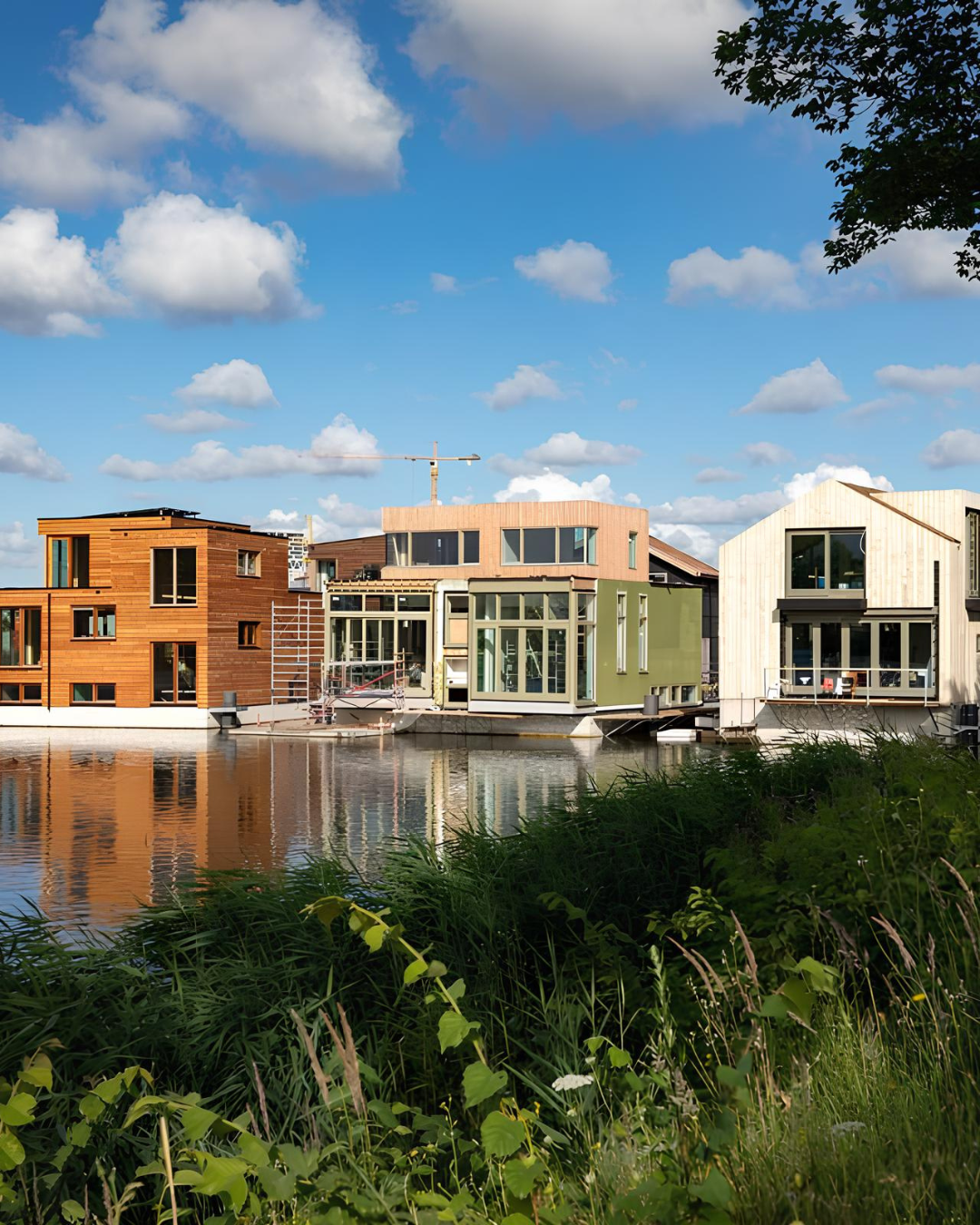
In Amsterdam, Schoonschip is a floating neighbourhood that is far less spectacular, but far more lived-in. Located on the Johan van Hasseltkanaal in the north of the city, it consists of 46 homes spread across 30 platforms. It was developed by the residents themselves, with particular attention to shared energy, sustainable materials and community life. It is not an autonomous city in the ocean, but an urban fragment that accepts water as part of its infrastructure.
Schoonschip does not try to sell the idea of escaping the existing city. It extends it, corrects it, makes it more flexible. It shows that living on water need not necessarily coincide with an extreme gesture or an absolute new beginning. It can also be a slower transformation, embedded in a real urban fabric, with neighbours, networks, permits, technical problems and people who every day need to go shopping, work, cook, argue and live.
The Netherlands also offers another fundamental example: the amphibious houses of Maasbommel. Built as part of the Room for the River programme, these homes are anchored to the ground but can rise during floods by several metres, following the water level before returning to their original position. Here, the architecture does not always float. It floats when it needs to. It does not replace the city with a futuristic vision: it modifies the way a home can respond to an extreme event.
An increasingly blurred boundary
The Floating Village
— HΞZΞKIAH (@htvtc21) August 20, 2023
about 500 years ago at the peak of slave trading in West Africa, there was a group of people that evaded being captured and sold into slavery by seeking refuge in the sacred waters of Lake Nokoué in the Kingdom of Dahomey (now Benin) which were believed… pic.twitter.com/DtV0guQ9L6
Further back in time, and far removed from any rendering, lie vernacular water-based architectures. In the Amazon region, palafitos are houses built on stilts, designed to function both during the dry season and when the river rises and transforms the landscape. In Ganvié, in Benin, stilt buildings and waterways have organised daily life on Lake Nokoué for centuries. In the Mekong delta, some recent prototypes are instead attempting to combine local materials, floating systems and climate adaptation, drawing on housing practices already rooted in flood cycles.
Living on water can also mean vulnerability, lack of services, sanitation problems, precariousness and the risk of exclusion. But that is precisely why they matter. They remind us that climate adaptation is never solely a question of form. It is not enough to design floating houses if access, maintenance, infrastructure, rights, transport and social relations are then lacking.
The idea that any city can simply start floating risks turning a political, social and ecological problem into an architectural fantasy that is far too convenient. How do we inhabit a planet where the boundary between land and water becomes ever less stable? The answer will not come from international firms alone, or from the most shareable images online. It will come from dialogue between technology and local knowledge, between new infrastructure and ancient practices, between grand visions and small everyday adaptations.
What to read next

Architects you need to know: Rem Koolhaas
The designer who read the city before it became an algorithm
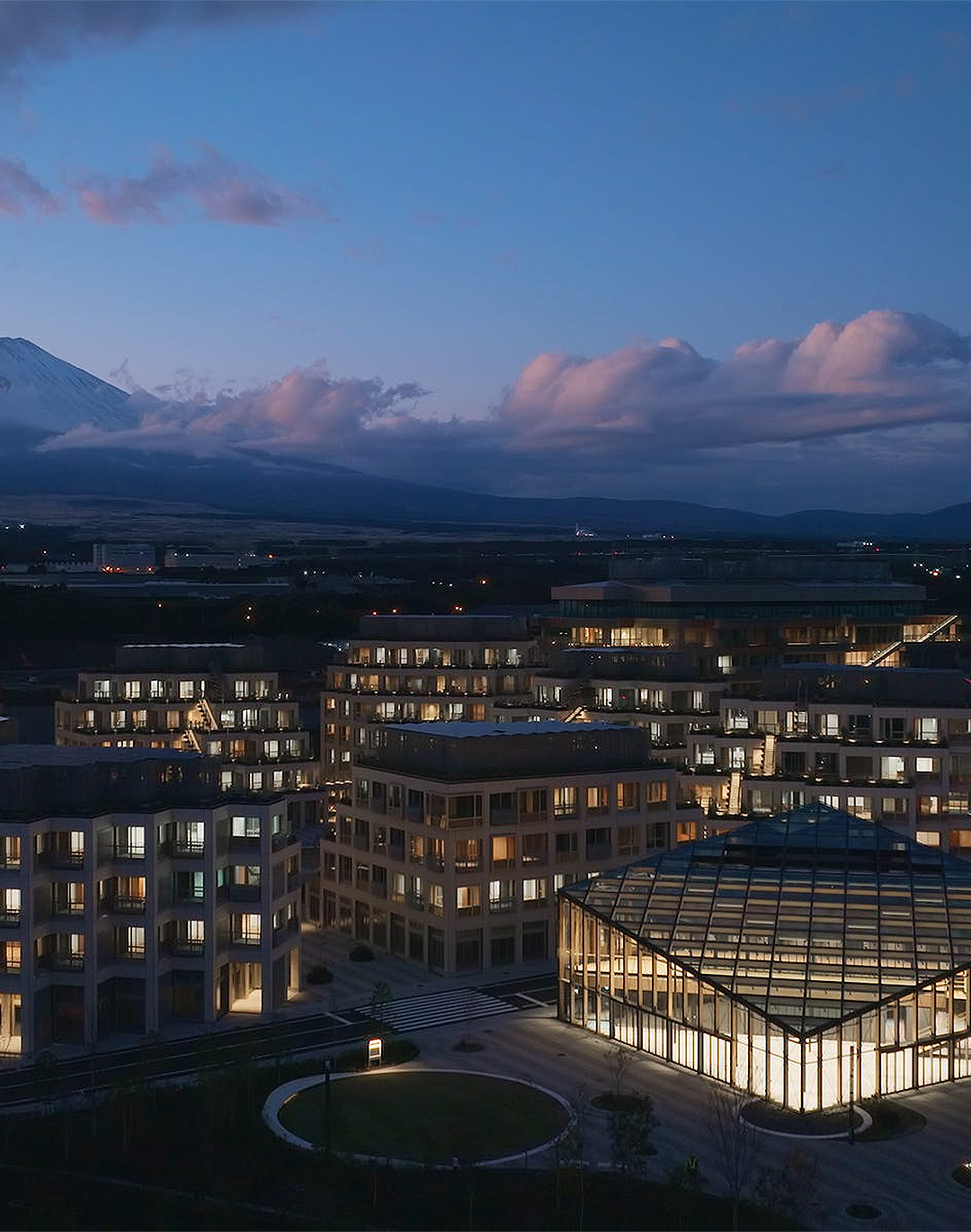
Can a city belong to a company?
"Company towns" are coming back into fashion, but the price to pay is steep