

















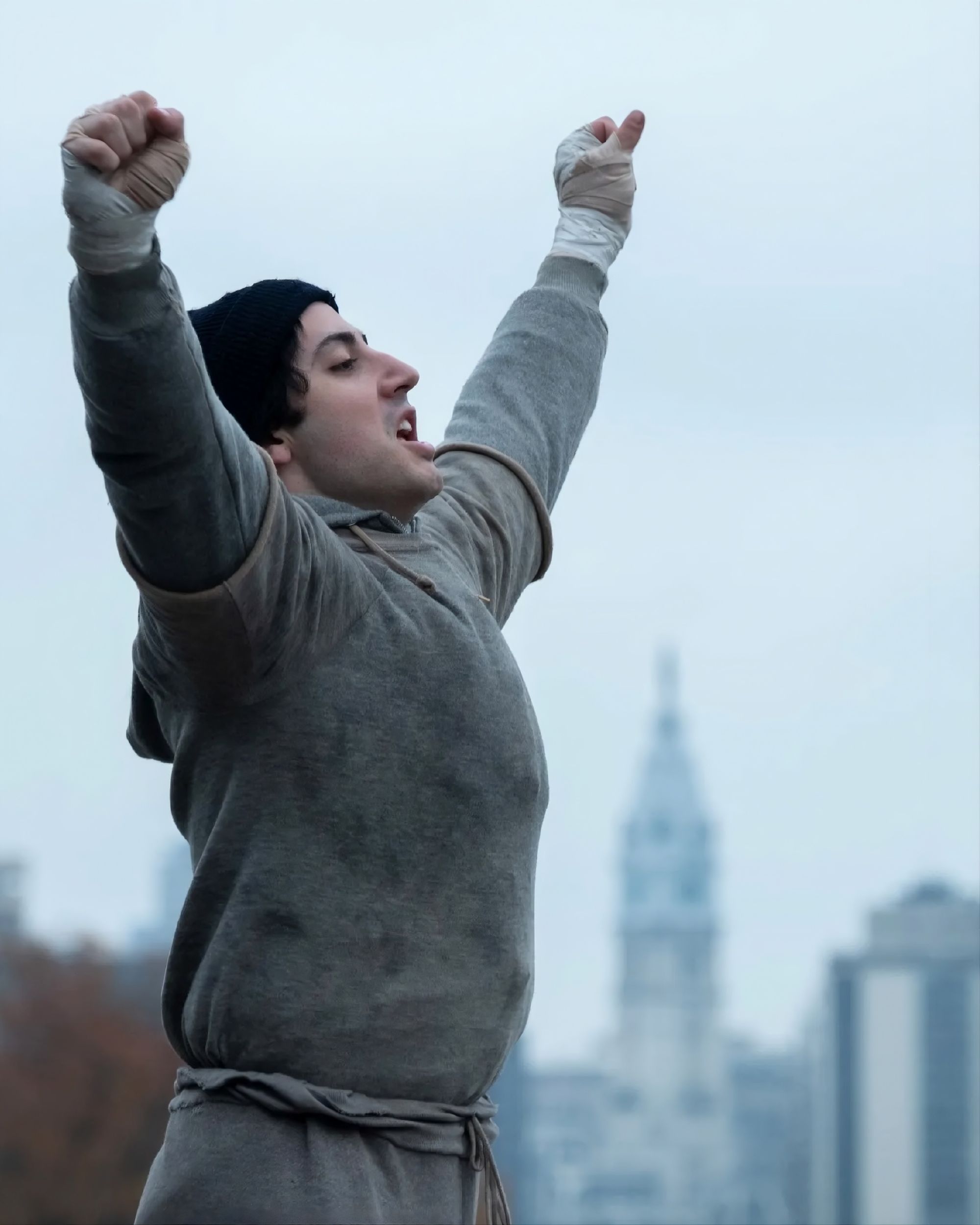
"I Play Rocky" is more than just a film about Sylvester Stallone Peter Farrelly's work had its premiere at the Rome Film Festival and will be in cinemas from December 31
If Rocky was the story of Sylvester Stallone, I Play Rocky is the story of how Rocky is the story of Sylvester Stallone. The most interesting aspect of Peter Farrelly's film is not merely the tenacity with which the young New Yorker—so poor he had to sleep on the streets, with a child on the way—turned down an offer he couldn't refuse. And bear in mind that The Godfather plays an important role in the film's account of how Rocky came to be made, with producer Sandy Maddox letting Francis Ford Coppola's masterpiece slip through his fingers by giving the green light to Paramount, which ended up holding the greatest mob movie ever made in its hands.
When you look at I Play Rocky in this light, you realize just what a jolt Sly's screenplay delivered to the industry, which in the mid-1970s was beginning to show signs of change with the release of New Hollywood films—not coincidentally, the first title visible outside a Manhattan cinema in I Play Rocky is The Long Goodbye by Robert Altman, released in 1973.
The decisive clause
As framed by Peter Gamble's screenplay, I Play Rocky shows just how difficult it was for an outsider to make his way in a landscape governed by rules and studios so tightly sealed as to make breaking into the profession nearly impossible—where getting a project approved required having a guarantee, and where perhaps only by bending the rules could you get anything done at all. For Rocky's producers, Irwin Winkler and Robert Chartoff, it meant invoking the one-million-dollar clause as a maximum budget in order to freely choose their own lead actor. In this case, the Stallone who in 1977 was nominated by the Academy as both Best Actor and Best Screenplay—something that at the time had happened only twice before in cinema history: to Charlie Chaplin for The Great Dictator and to Orson Welles for Citizen Kane—two categories in which Sly did not win, even though his Rocky took home the Oscar for Best Picture.
From Stallone to Xavier Dolan
If Rocky, as its director John G. Avildsen believed from his very first reading, is not a film about boxing but an analysis of character, then I Play Rocky is not a film about the backstory of the Stallone cult classic, but rather about how the modes of film production took a step forward after the release of a work about an underdog made by an underdog. A way of breaking the rules in an industry where you had no choice but to operate from within, since outside it there were no makeshift means available—the very means that, two decades later, would allow so many other talents to carve out their own path, using video cameras or phones to shoot their own stories. The same perseverance shown by Sylvester Stallone—who wrote himself a role in order to get ahead—can indeed be found in Xavier Dolan, the world-renowned auteur who at twenty wrote J'ai tué ma mère simply to give himself the lead role.
The new era of "films about films"
While behind-the-scenes and backstage films about titles that changed the cultural landscape are a common sight at the cinema, in recent years attention has focused above all on the driving impulse and the tension toward change that animate films about films—or about television programmes, as in the case of Saturday Night by Jason Reitman, a film released in 2024 that recounts the first, chaotic night of the show, broadcast live from Studio 8H at 30 Rockefeller Plaza in New York.
A desire for transformation and revolution that in 2025 Nouvelle Vague by Richard Linklater captured through the debut of a subversive Jean-Luc Godard, grappling with the overturning of everything that had been known about cinema up to that point—and that, with Breathless, would be rewritten entirely. Figures who loved what they did (or what they wanted to do) to the point of fighting to the very limit, even at the risk of going down for the count—and who, instead, simply had to wait for the right moment to prove their worth, like boxers waiting for the decisive round.
What to read next

Clayface is the first truly horror superhero film
The lead is Tom Rhys Harries, and the story concept comes from Mike Flanagan of "The Haunting"

"Klara and the Sun" by Taika Waititi is a complete misfire
The film starring Jenna Ortega had its premiere at the Rome Film Fest and is in cinemas from October 22
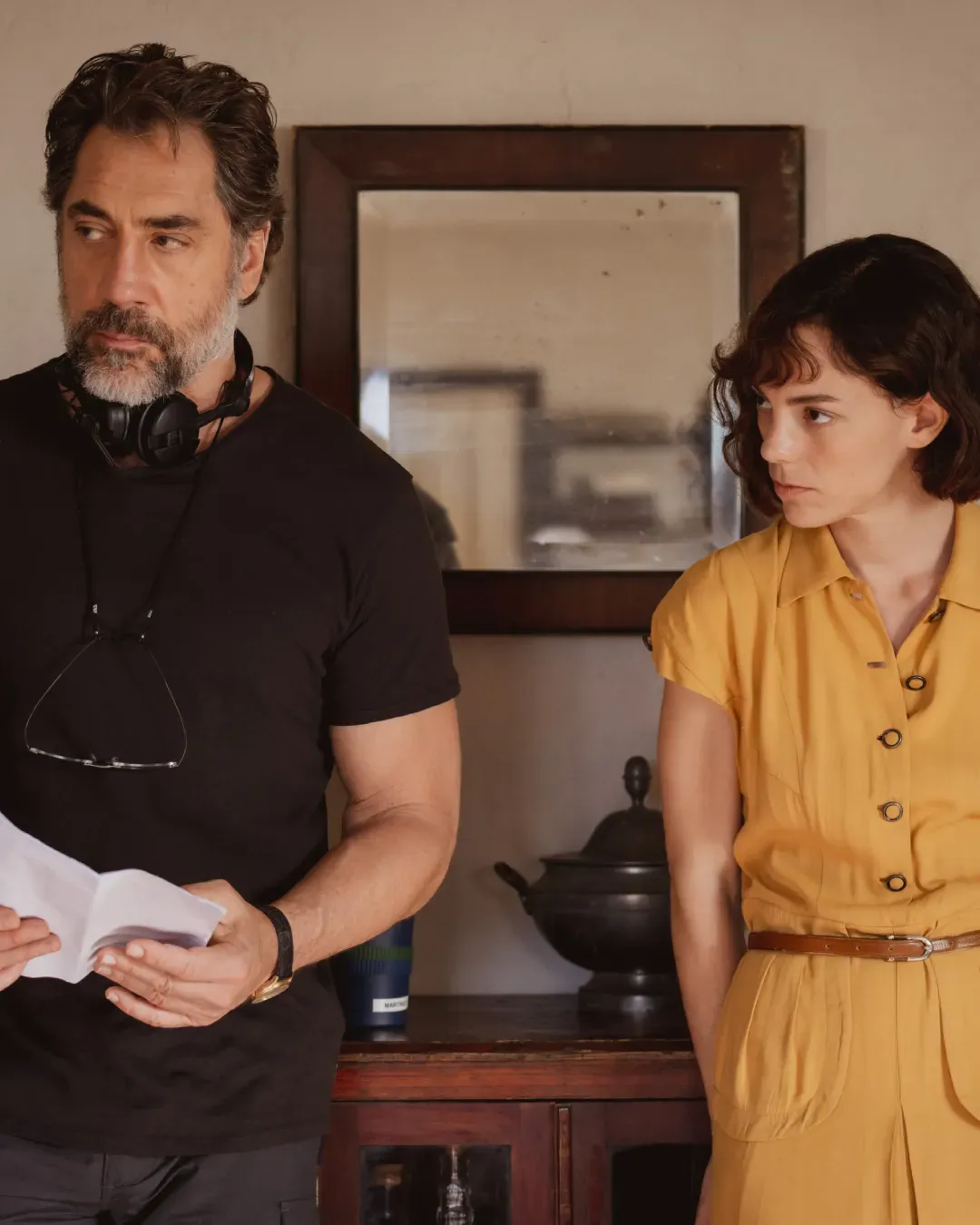
There is a scene in El ser querido that explains how the world is changing
The film is directed by Rodrigo Sorogoyen and stars Javier Bardem and Victoria Luengo