
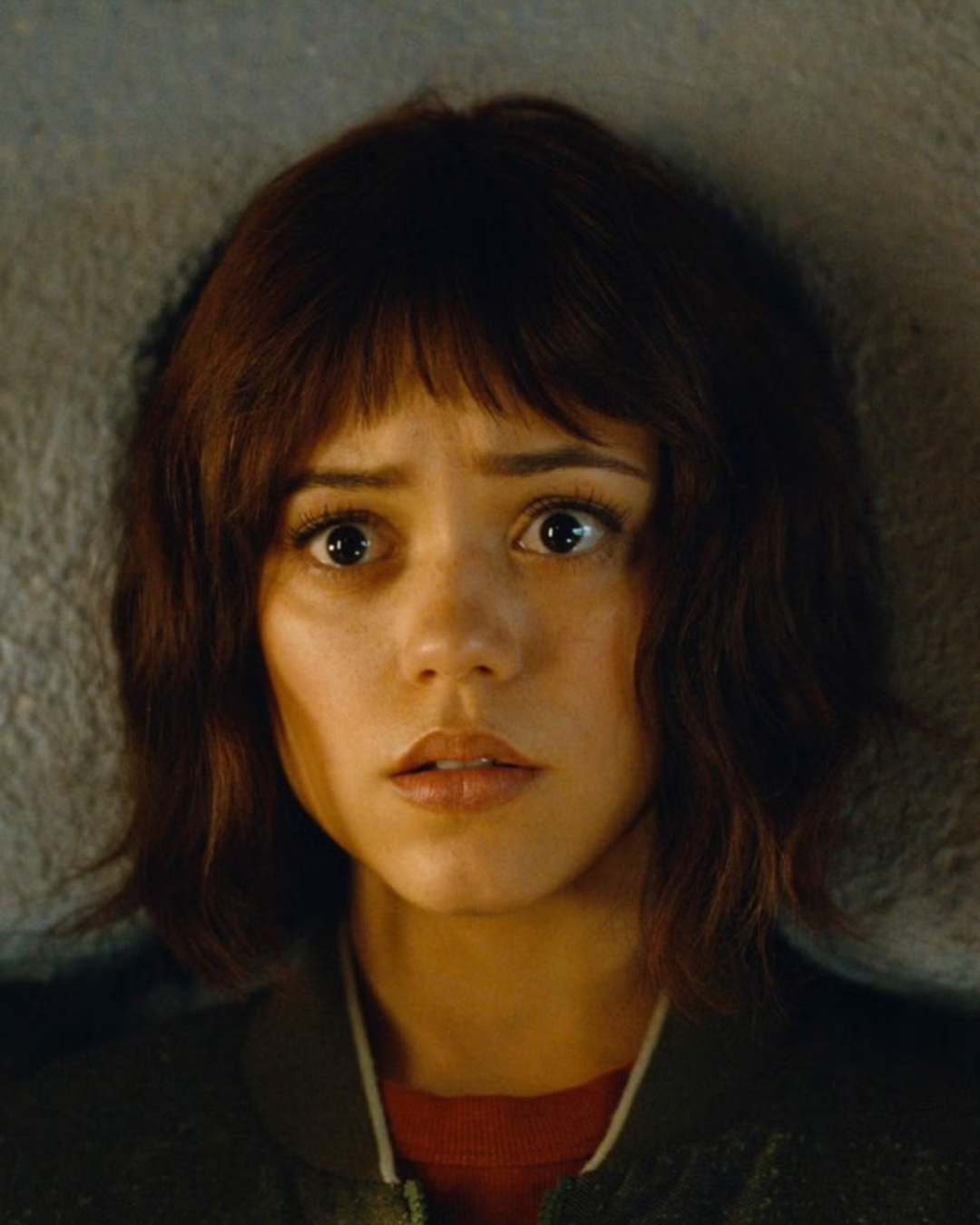
"Klara and the Sun" by Taika Waititi is a complete misfire The film starring Jenna Ortega had its premiere at the Rome Film Fest and is in cinemas from October 22
Klara and the Sun is the book by Kazuo Ishiguro published in 2021. The Nobel Prize-winning author's novel has been adapted by Dahvi Waller and Taika Waititi, the latter also serving as director, returning to cinema three years after his last film Next Goal Wins in 2023, and having previously helmed two films in the Marvel universe featuring Thor. The noble idea of adapting the work of the Japanese writer — whose works have already made their way to the screen, as with James Ivory's The Remains of the Day and Mark Romanek's Never Let Me Go — is more admirable in its intentions than in its execution. The story follows a robot created to be a friend to any teenager who chooses her, and who will grow close to young Josie, a girl who has been enhanced and lives in a future with distinctly dystopian features.
Klara and the Sun, Taika Waititi's film: plot and Jenna Ortega's role
Klara, the robot protagonist played by Jenna Ortega, is an A.F. — an Artificial Friend. And while the film could have said so much about the times we live in today, about our reliance on new technologies and how it is our human qualities we ought to be concerned about, it unfortunately settles for cramming itself full of ideas and narrative turns that barely carry it through to the end. A makeshift universe from the outset, which only gets worse when, from the very first glance, it seems to want to imitate the many works of science fiction that have made the strange and the "weirdo" their defining trait — a quality that has at times belonged to Taika Waititi himself, though here it feels too derivative and contrived, a copy devoid of verve or taste in its sci-fi inspiration.
This immediately takes its toll on Jenna Ortega's performance. The actress from Tim Burton's Wednesday reaches several peaks of oddness which, while more defined and personal in the Netflix series — even if quite elementary — here merely confine her, making her seem more artificial than a robot built to be your friend already is. A performance that could have cast a brighter light on an actress whose career is currently tied to roles considered more dark — from the aforementioned Addams Family character to the cinematic Burtonesque offering she gave as Astrid Deetz in Beetlejuice Beetlejuice, the 2024 sequel in which she plays the daughter of icon Winona Ryder. Instead, the film marks a strained turn for her, weighed down as much by the writing of her lines as by the direction of her filmmaker.
A film about artificial intelligence that forgets about human beings
Taika Waititi’s ‘KLARA AND THE SUN’ debuts with 20% on Rotten Tomatoes The lowest score of the director’s career. https://t.co/JxPTJQpt32
— The Hollywood Handle (@HollywoodHandle) October 16, 2026
Like a young, revisited version of the 1999 Bicentennial Man with Robin Williams, Klara and the Sun does not demonise artificial intelligence, but rather brings it into contact with our needs, turning it into a kind of vessel. A tool for providing comfort, a tool for preserving memory, a tool that nonetheless cannot replace human beings — one that stands to the side and tries to offer support, beginning to experience feelings of its own and helping people to process theirs. And yet Waititi's work is too much for what it manages to express. Too much, and also confused. In its style, in its writing, and at times within individual scenes — such as the party sequence featuring the enhanced children, which, in terms of both staging and tone, marks the film's lowest point.
The one bright spot is the appearance of young performer Mia Tharia, who has already worked on a few smaller productions and is here taking on her first significant role on the big screen. A performer whose centrality fades as the film progresses — a sign that the work never quite found its own centre of gravity — and whose performance itself suffers from the thinning out of her character, but who makes you eager to discover what other parts she might take on in the future. A film that, for Taika Waititi, sets out to explore the human condition rather than artificial intelligence, but that ultimately speaks meaningfully of neither.
What to read next

"Masterplan" is everything a heist movie shouldn't be
The film starring Stanley Tucci, Simona Tabasco and Victor Belmondo is available on Prime Video
"Fjord" is an impressive piece of writing
Cristian Mungiu's film, winner of the Palme d'Or at Cannes, arrives in cinemas on November 19
Clayface is the first truly horror superhero film
The lead is Tom Rhys Harries, and the story concept comes from Mike Flanagan of "The Haunting"