






























The history of Scampia's Vele What will remain of the brutalist complex?
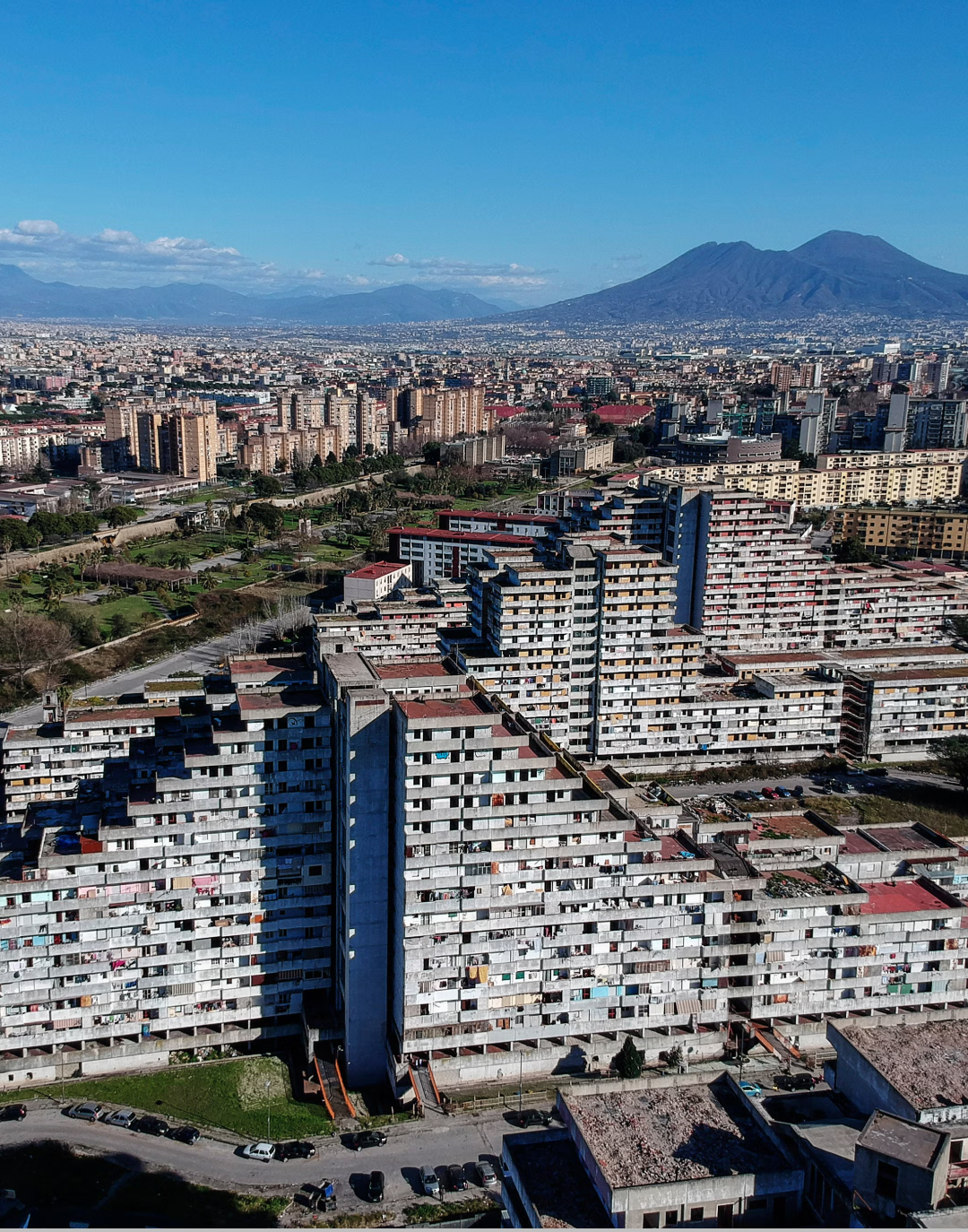
After the demolition of the Vela Gialla in September 2024, today, December 17, the demolition of the Vela Rossa is completed, the second-to-last building still standing in the former Scampia housing complex. Over the years, the Vele have been discussed at length, perhaps excessively so. Politicians who have never truly set foot in north-eastern Naples have described them as the ultimate symbol of the city’s decay, a hotbed of organized crime, even a “cancer” to be removed in order to allow Naples to be reborn.
And yet, the Vele were born with an entirely opposite intention. They were meant to represent a new beginning for one of Naples’ most historically complex neighbourhoods. Built along Viale della Resistenza, they stood as one of the most ambitious and radical projects of what today could be described as an idea of urban utopia, designed by architect Francesco Di Salvo.
The history of the Vele of Scampia
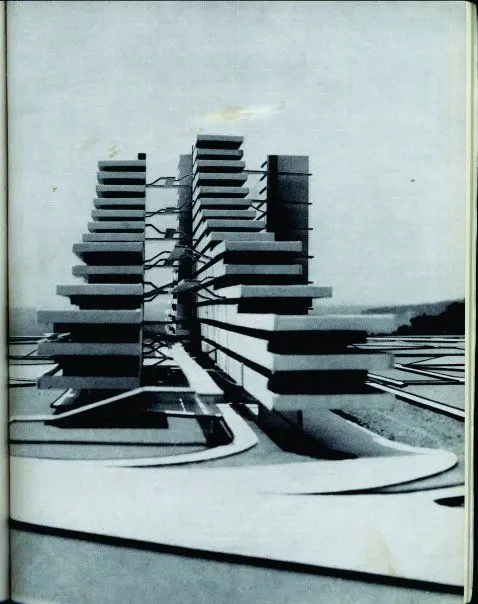
Plastico del progetto di Di Salvo
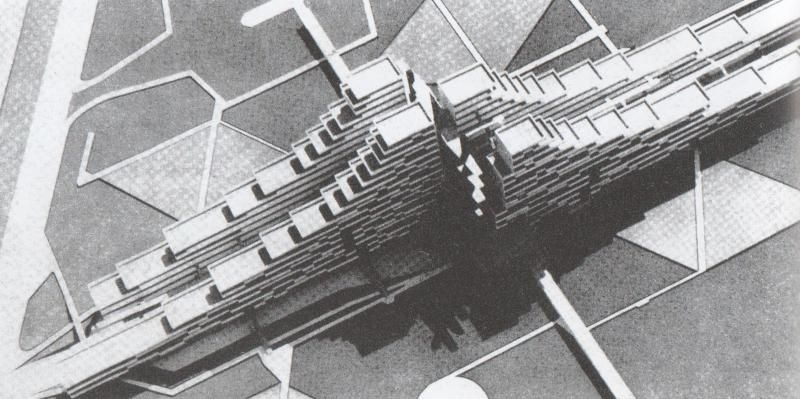
Plastico del progetto di Di Salvo
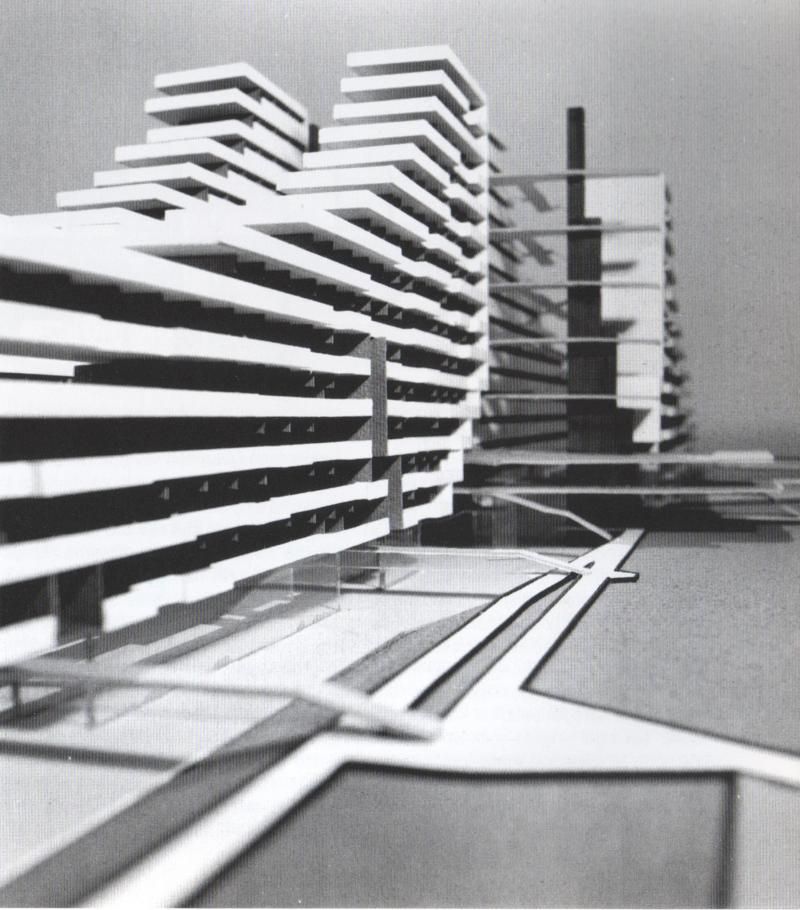
Plastico del progetto di Di Salvo
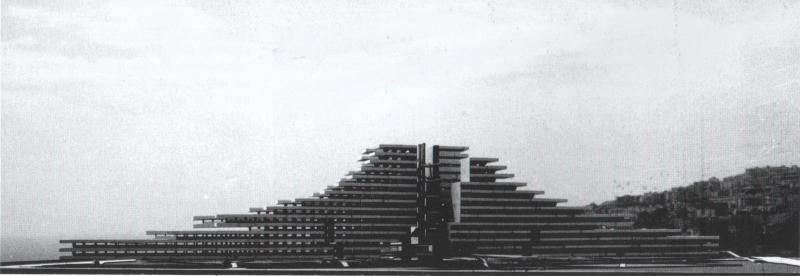
Plastico del progetto di Di Salvo
The Vele project took shape between the late 1960s and the early 1970s, in an Italy marked by a strong drive toward public housing and architectural experimentation. Francesco Di Salvo envisioned a residential complex capable of moving beyond the traditional model of social housing, drawing inspiration from major European modernist housing developments and theories of collective architecture.
The original plan envisioned seven buildings, constructed between 1962 and 1975. Each Vela rose to 14 storeys, featured a triangular floor plan (resembling the sail of a boat), and reached a height of approximately 40 metres. The complex as a whole was designed to accommodate between 6,000 and 8,000 people, distributed across roughly 1,200 apartments, all connected by an extensive network of elevated walkways, commonly known as ballatoi.
In Di Salvo’s vision, these routes were meant to function as suspended streets, replacing the traditional urban fabric and encouraging encounters among residents. The project also included shared spaces, neighbourhood services, green areas, and public facilities, all intended to make the Vele a self-sufficient ecosystem.
The first evictions between the 1980s and the 1990s
The idea was clear and, at least on paper, ambitious. The Vele were conceived as a urban organism, in which architecture became a social tool, a concrete project of urban regeneration. The construction phase, however, soon collided with a very different reality: work progressed slowly, funding was gradually reduced, many of the planned services were never completed, and just a few years after their inauguration the project was left unfinished.
Starting in the 1980s, the Vele were progressively abandoned by public policy, while the complex became affected by illegal occupations and Camorra control. The process of demolition officially began in the 1990s. Vela F was demolished in 1997, followed by Vela G in 2000 and Vela H in 2003. As decay became increasingly evident at the turn of the new millennium, the Vele had turned into one of the largest drug-dealing hubs in Europe and a battleground for clan warfare, making the area one of the most dangerous neighbourhoods in Naples.
The Vele in pop culture
In the 2000s, the complex ceased to exist solely as a physical place and became an imaginary, a visual scapegoat capable of condensing, in just a few seconds, an entire narrative about Naples, marginality, and criminal power. A process accelerated and made irreversible by Gomorra, first as a book by Roberto Saviano, then as a film by Matteo Garrone, and above all as a TV series by Stefano Sollima.
The media exposure generated by the success of the story in all its iterations has had an undeniable impact on pop culture as a whole. On the one hand, it helped turn the Vele into one of the world’s most recognisable examples of Brutalist architecture; on the other, it reinforced a single, often reductive narrative that almost definitively associated the complex with organised crime, obscuring its contradictions, individual stories, and the forms of cultural resistance that emerged within the neighbourhood.
With the rise of the Neapolitan rap scene, the narrative of the Vele also entered the Italian musical imagination. From Geolier to Co’Sang, and even the French collective PNL, the buildings became a recurring reference, almost narrative muses for identity-driven storytelling.
What will become of the Vele of Scampia?
With the demolition of the Vela Gialla and the Vela Rossa, only the Vela Celeste remains standing, the last survivor of Di Salvo’s original project. This building will not share the fate of the other six; instead, it will play a central role in the ReStart Scampia urban regeneration programme. The plan includes the redevelopment of the Vela Celeste, which will be reinterpreted as a multi-purpose civic space designed to host public functions and neighbourhood services, rather than remaining a decaying relic.
The project aims to combine sustainable housing, green areas, community services, and new infrastructure, with the Vela Celeste acting as the symbolic and infrastructural heart of this transformation. At the 2025 Venice Architecture Biennale, the concept «Vela Celeste: Reimagining Home» was presented, a project that draws on technologies such as artificial intelligence to translate the memories and aspirations of former residents into visual and architectural forms, turning the Vela Celeste into an archive of collective memory and future-oriented visions, without ever losing sight of the past.