





















How creative is your denim? Last season, luxury brands decided to embellish every pair of jeans
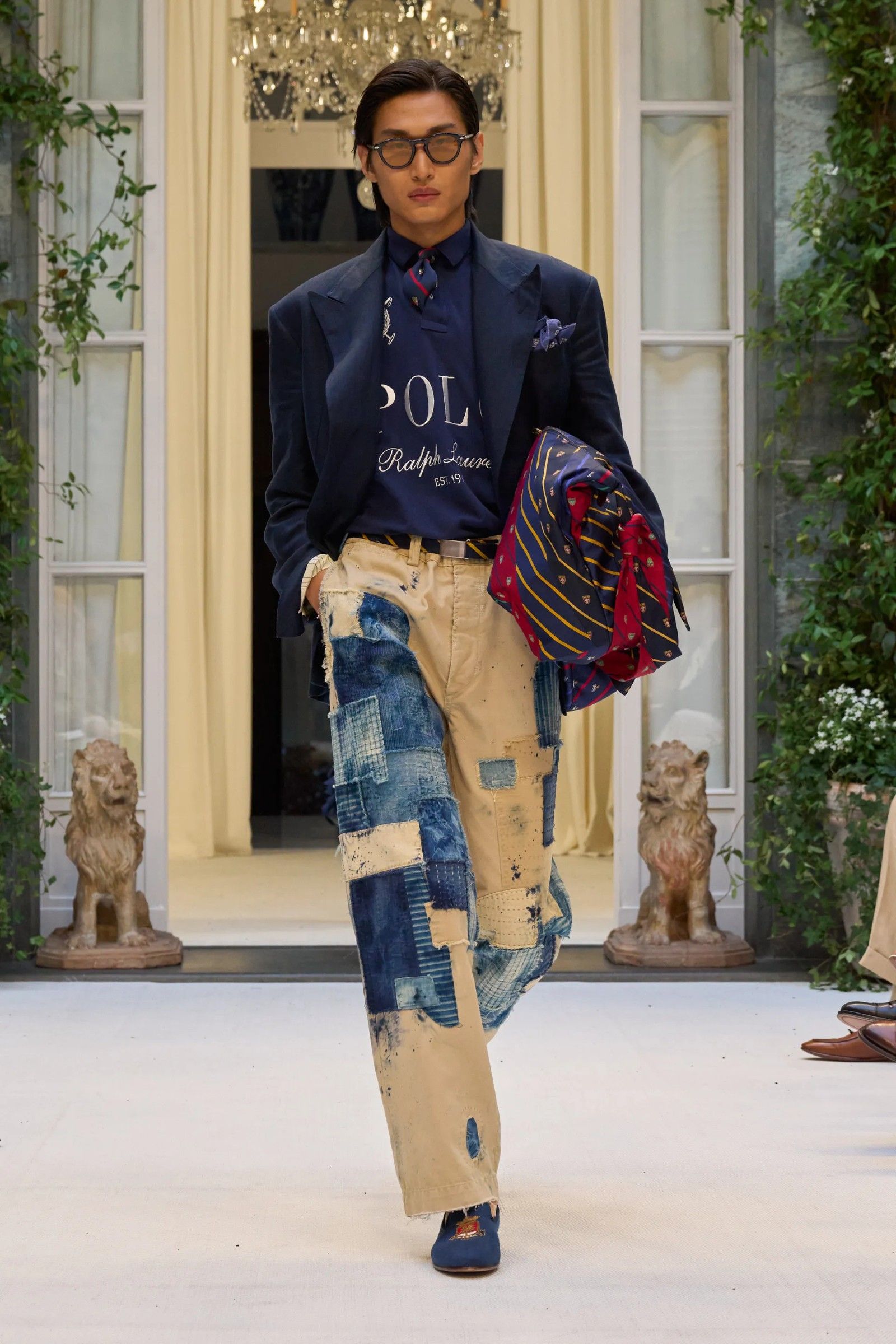
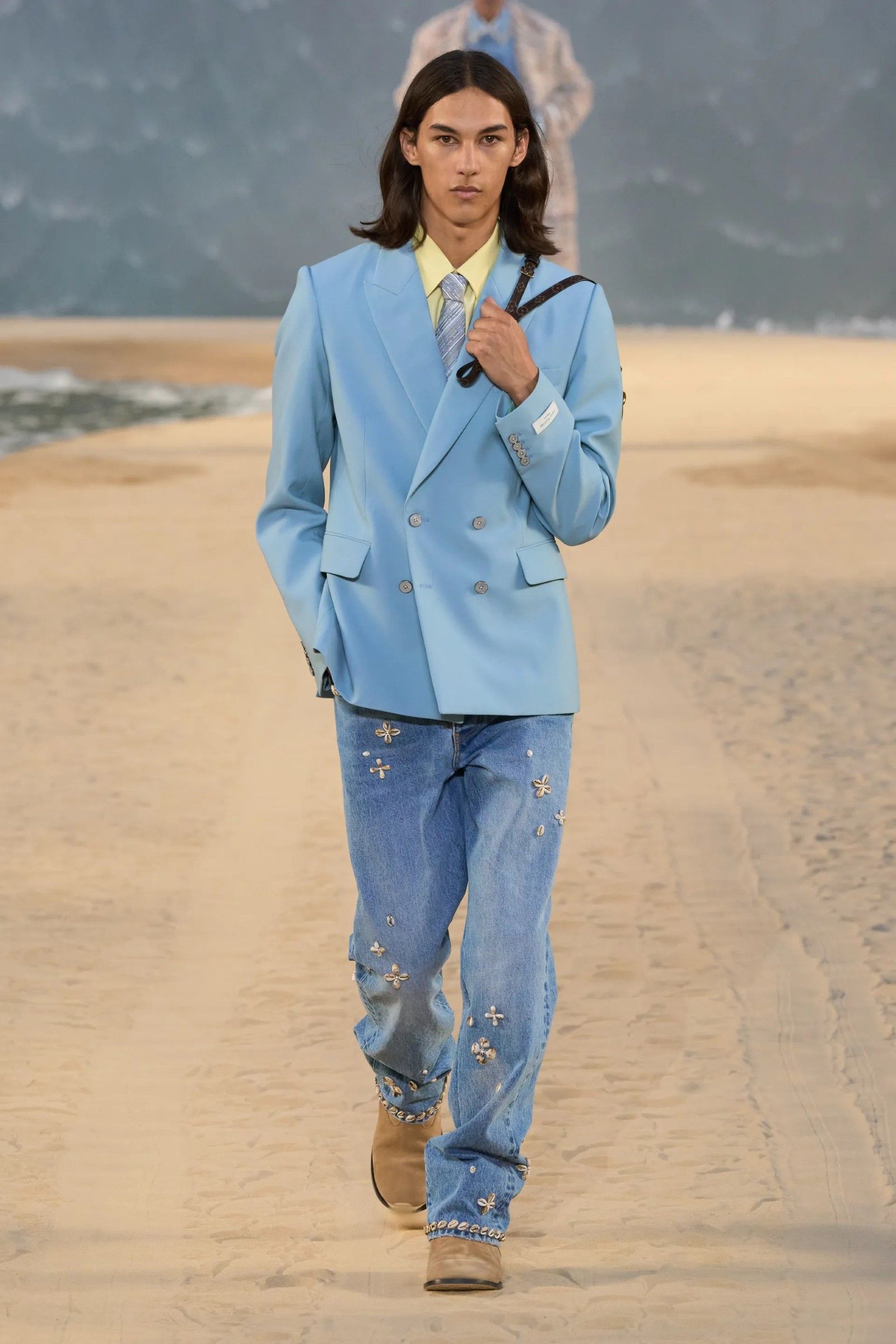
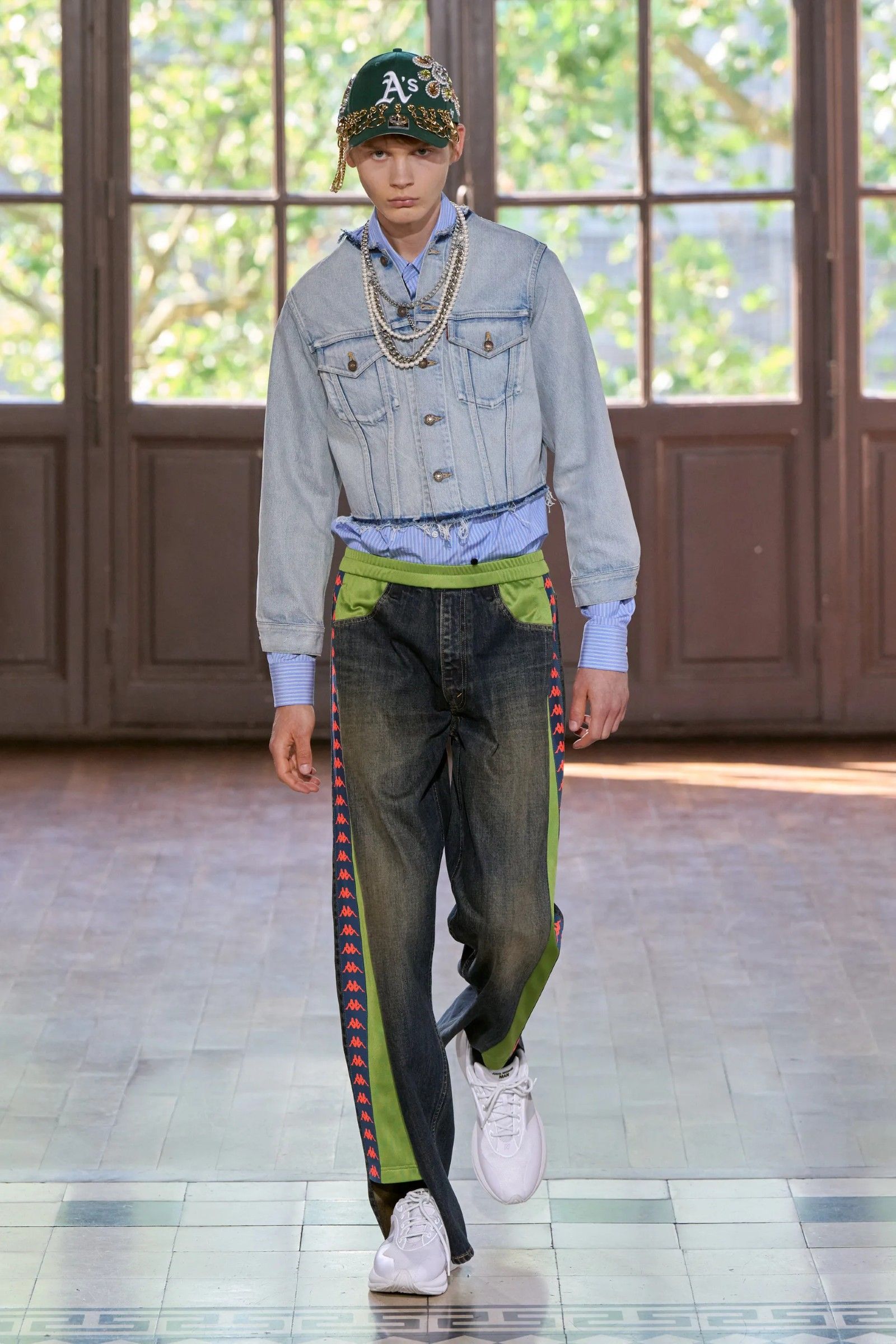
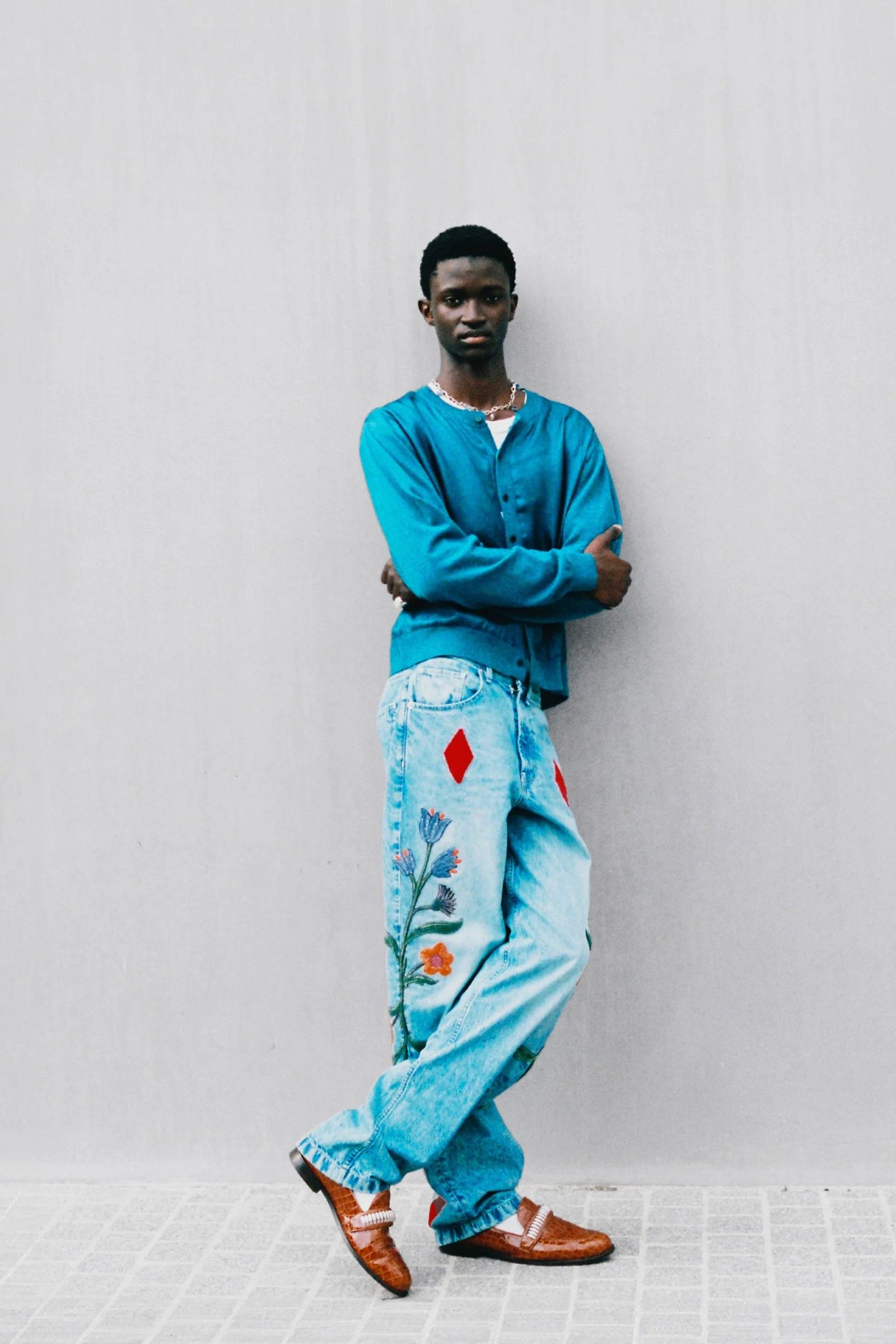
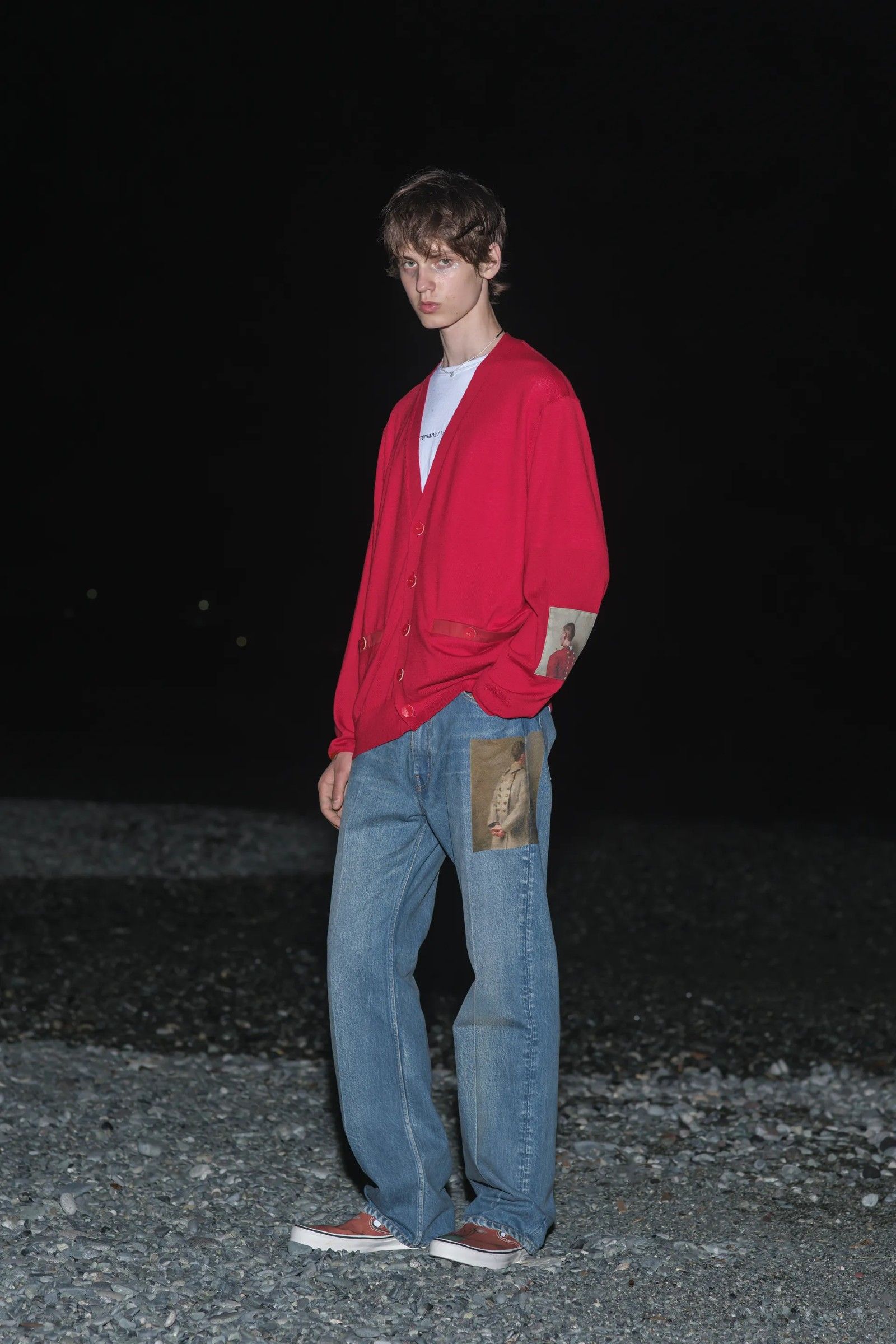
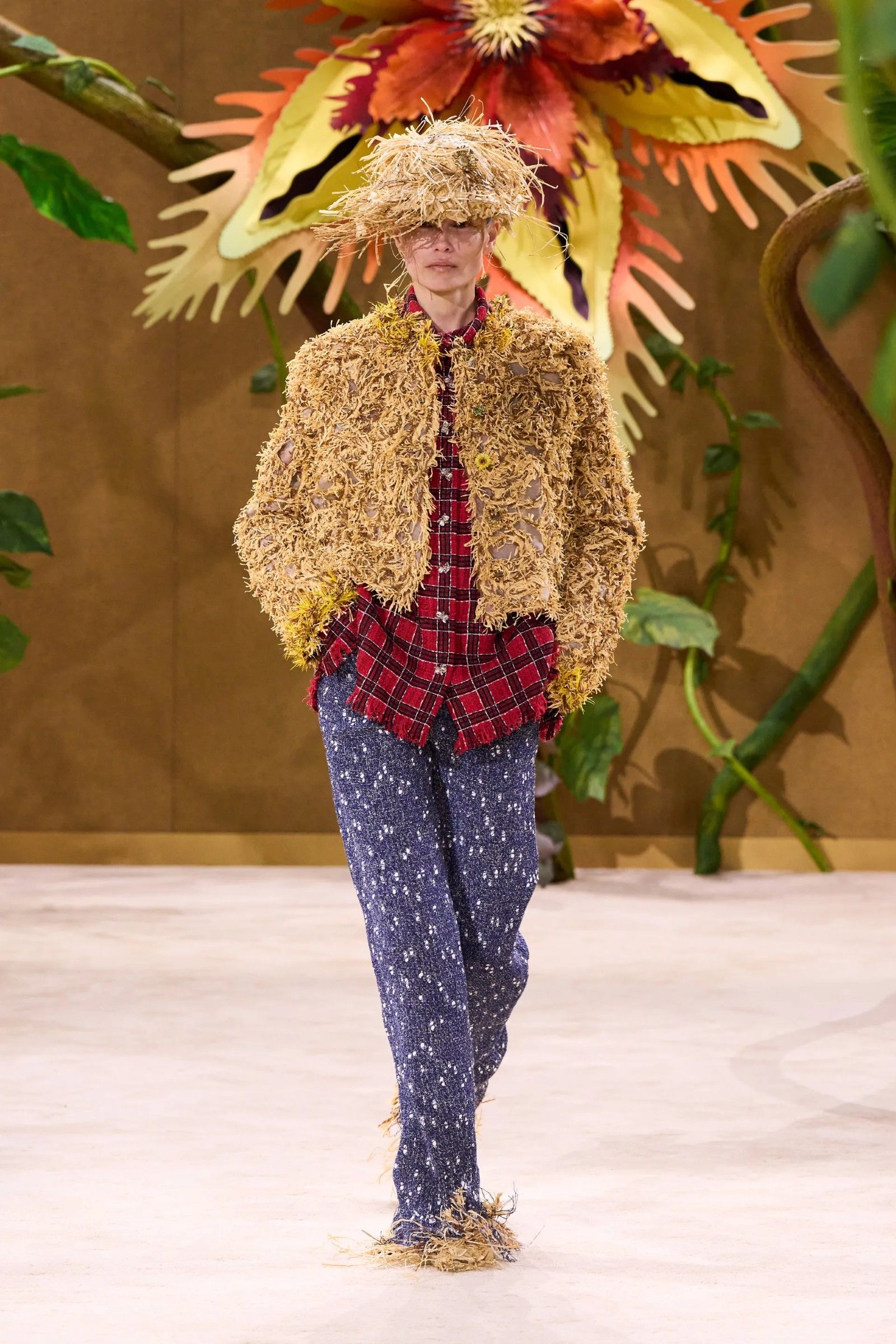
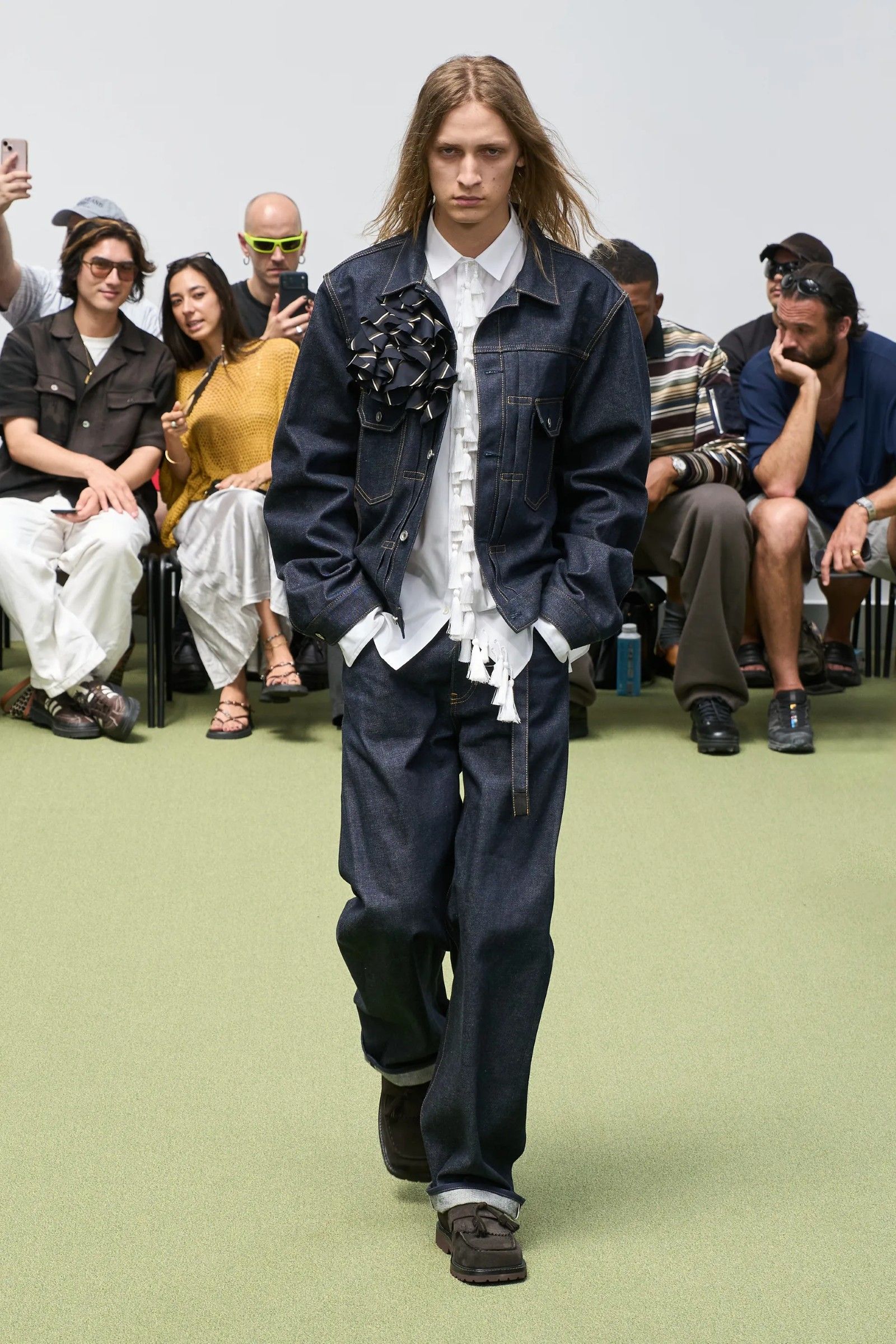
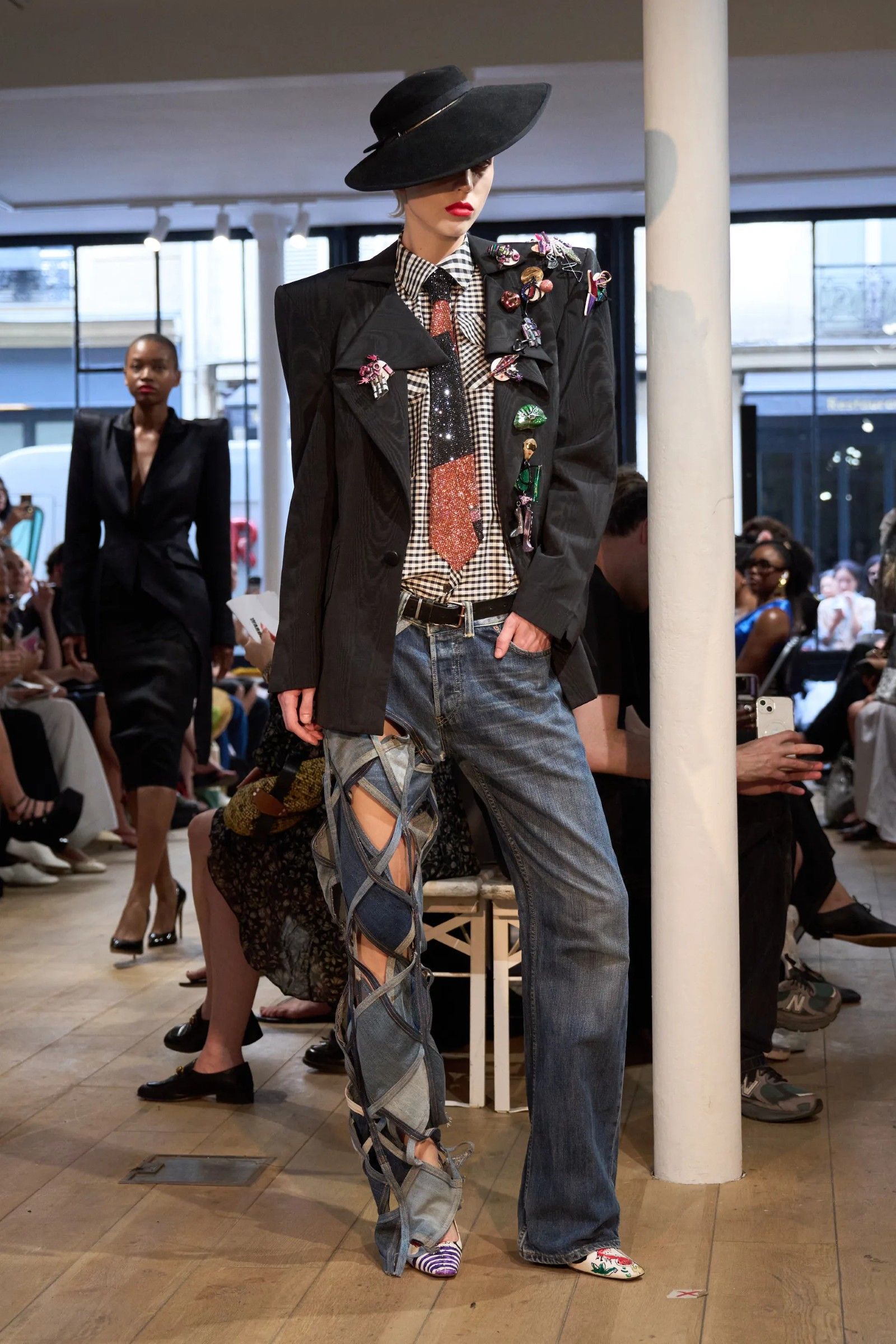
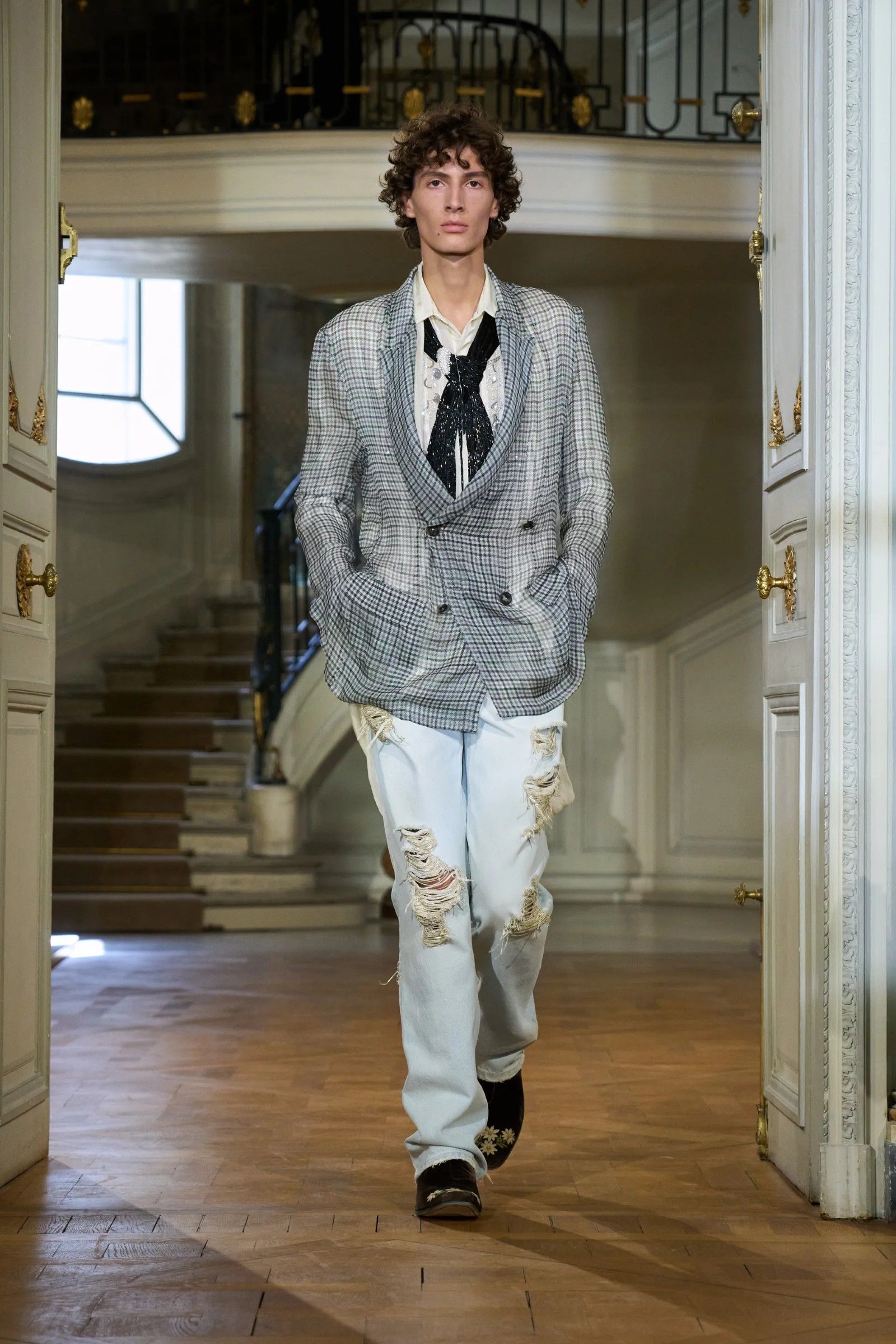
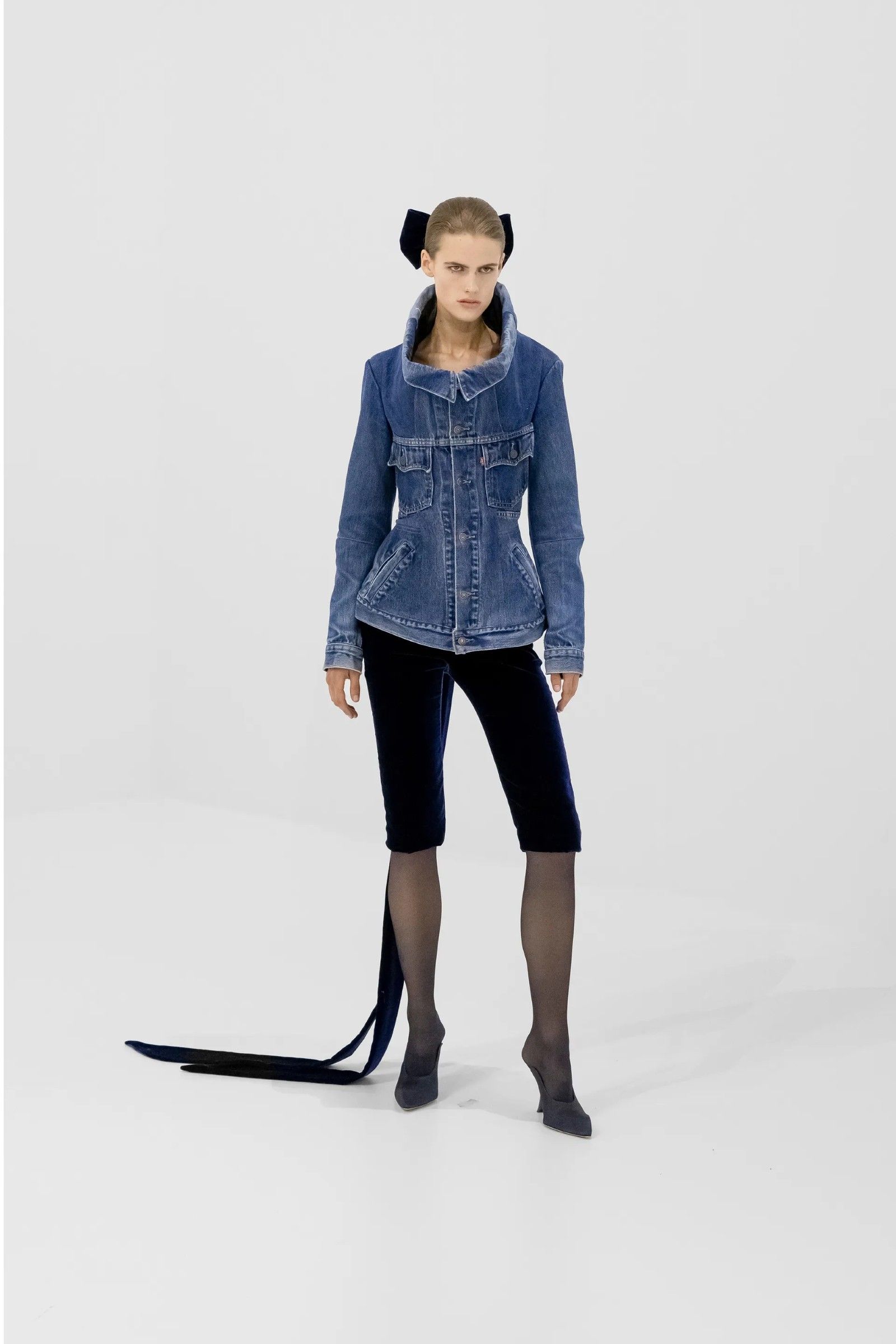
In the last cycle of Haute Couture presentations, we saw a considerable amount of denim on the runway — a strange thing, given that it is a fabric at once so humble and so ubiquitous. Fashion reflects this ubiquity, and the market feeds it. So much so that denim, in its new and unusual forms, has made its way into Haute Couture: it matters little whether, as at Chanel, it is merely a simulacrum of denim — now rendered in organza as in the January show, now simulated with Lesage-embroidered tweed — or whether it is denim transformed into a retro jacket by Duran Lantink for Jean-Paul Gaultier, or the many reworked denims by Ronald Van Der Kemp.
But these couture examples were the most visible manifestation of a trend that, throughout the last fashion month, saw multiple attempts by brands to "elevate" the jeans category. But how?
Decorating the Decoratable
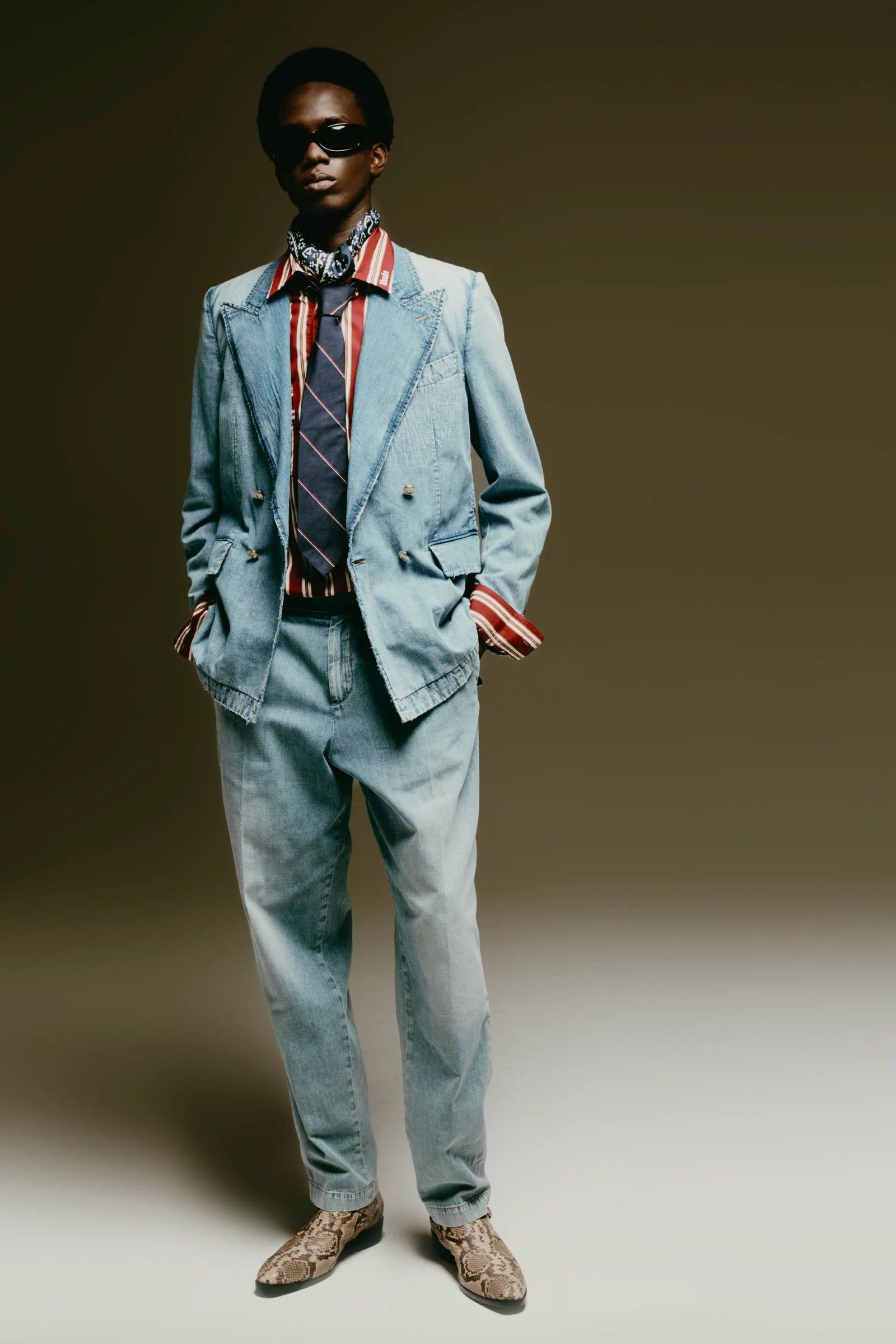
Every fashion month, denim abounds on the ready-to-wear runways. That's hardly surprising: it is the most sellable category of all time, one that can be revisited each year in a thousand different cuts, used to construct every conceivable garment (Rhude made a full suit out of it this year, while Dior made a smoking jacket), and above all it represents a world-within-a-world in the realm of fashion.
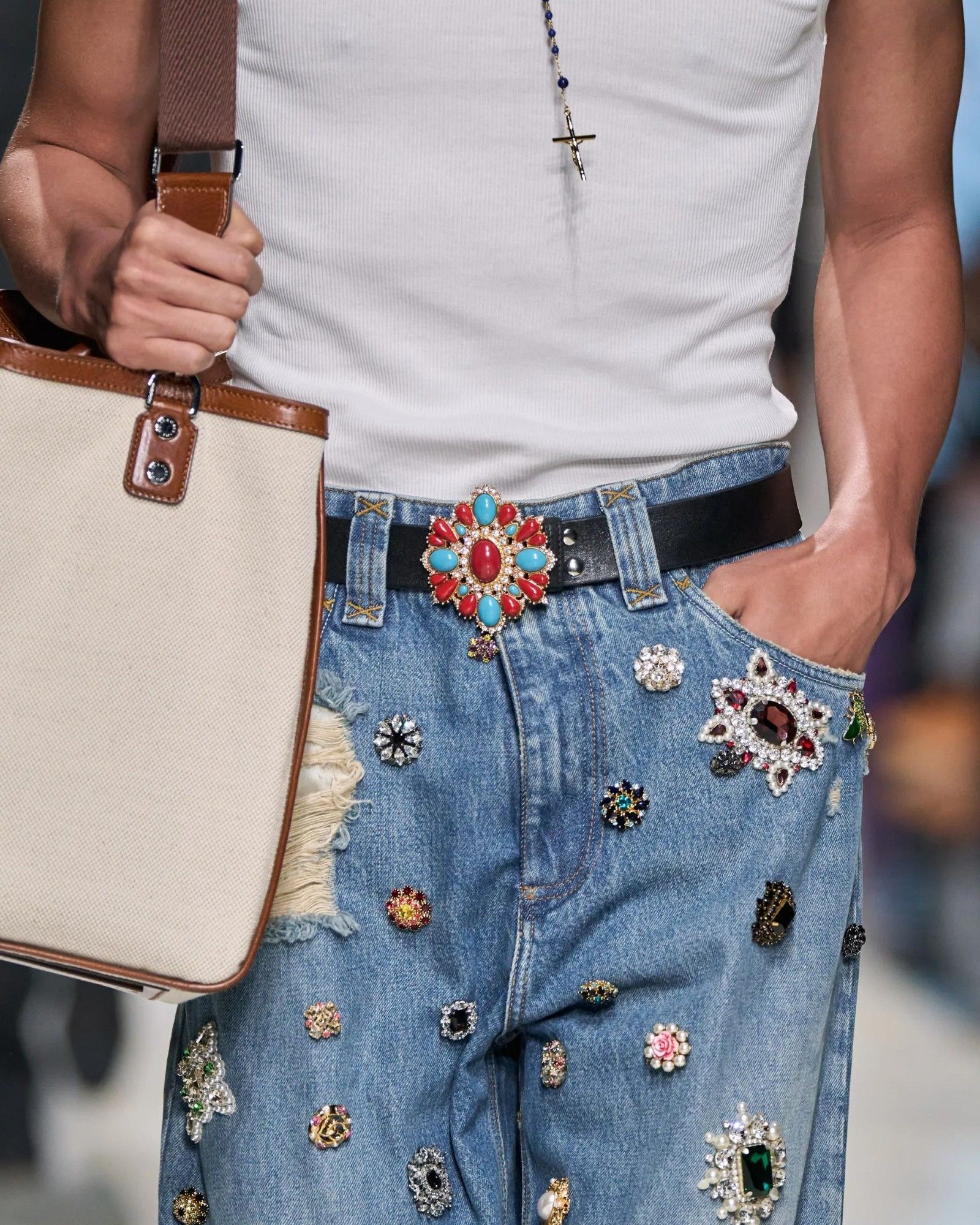
The designation "Made in Japan", selvedge, fabric weight and washing, applied treatments, and the materials used for zips and rivets are all characteristics that have created a "kingdom of denim" within which status signifiers operate differently from the rest of clothing. That is why, in order to set their denim apart, luxury houses have begun to decorate it.
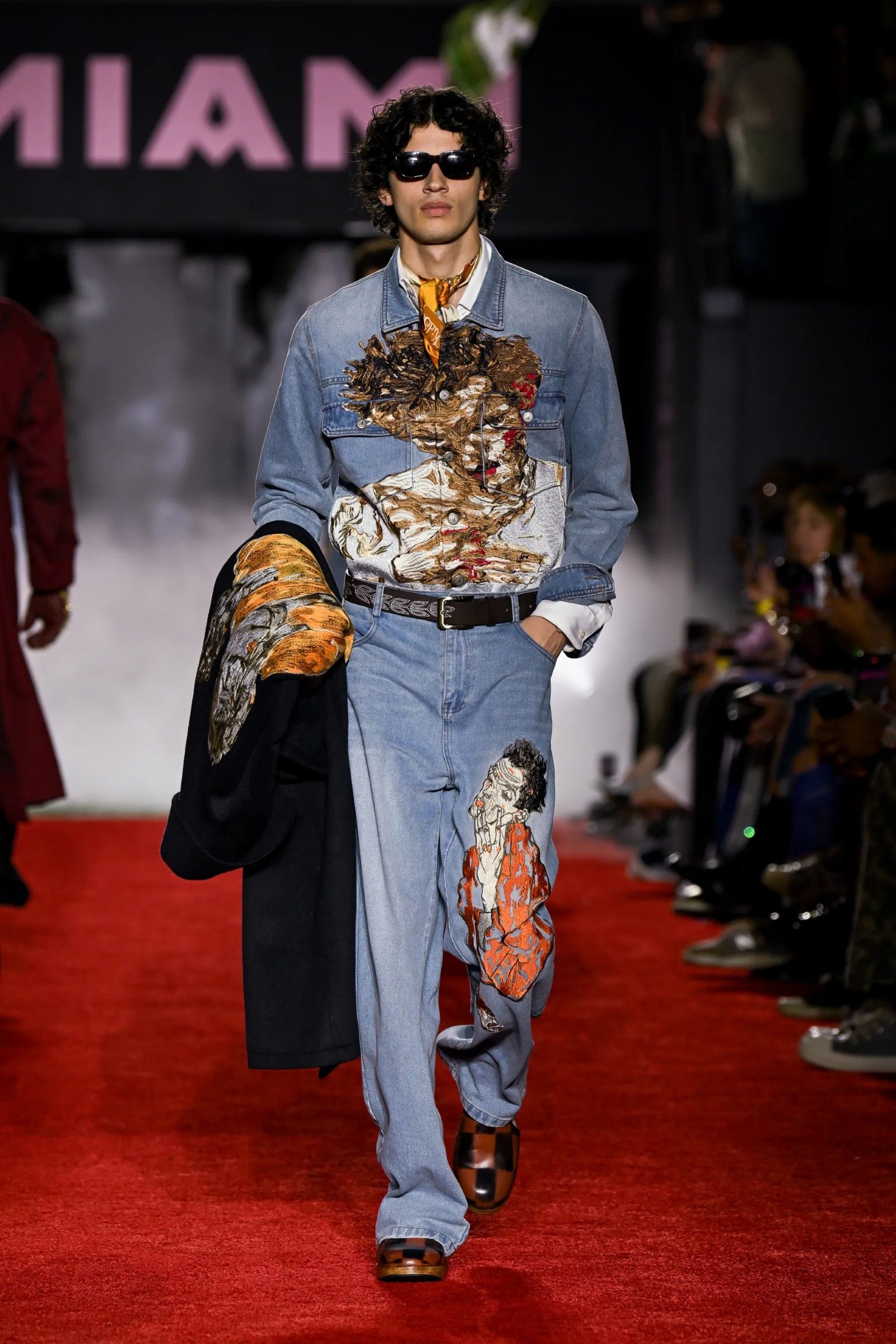
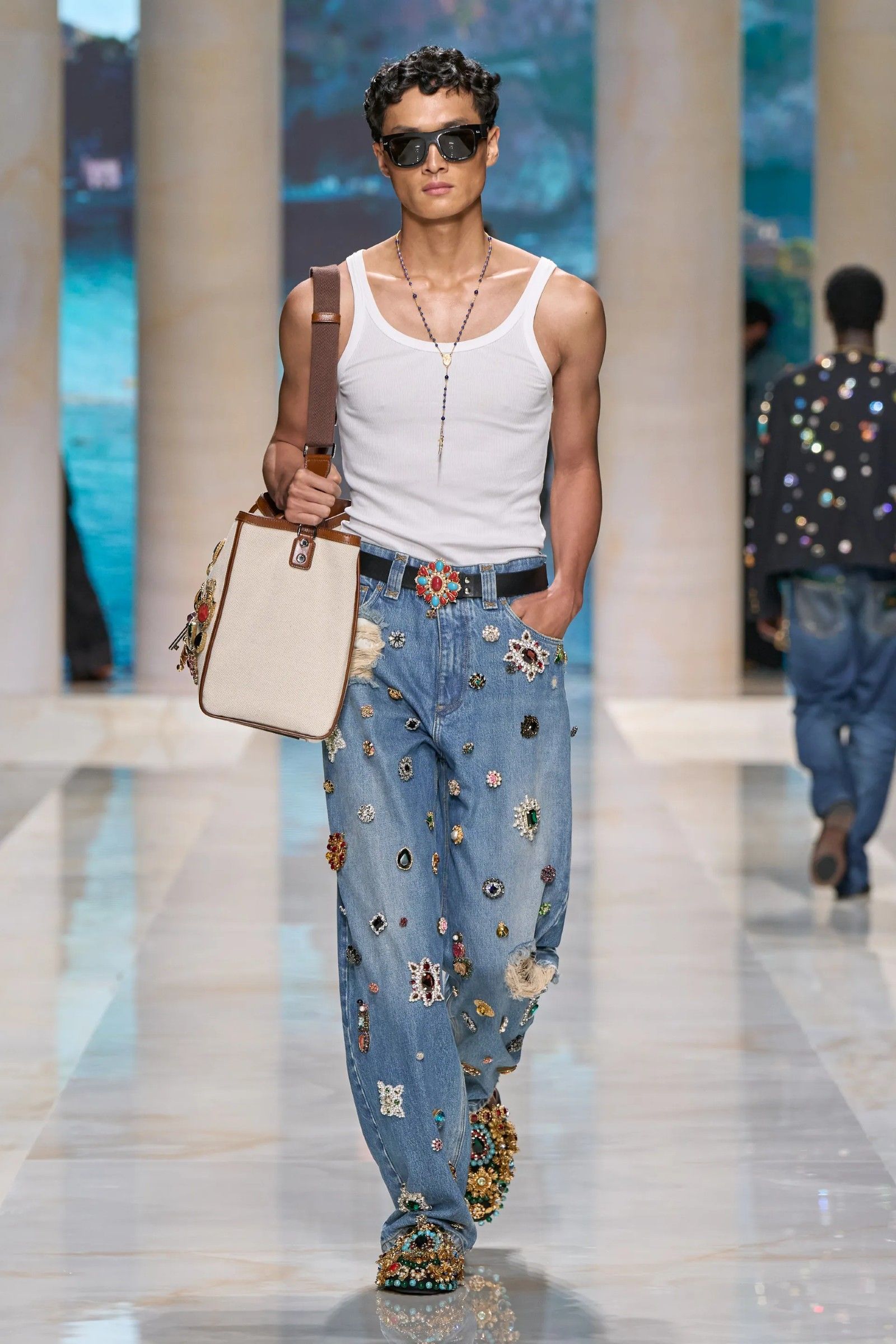
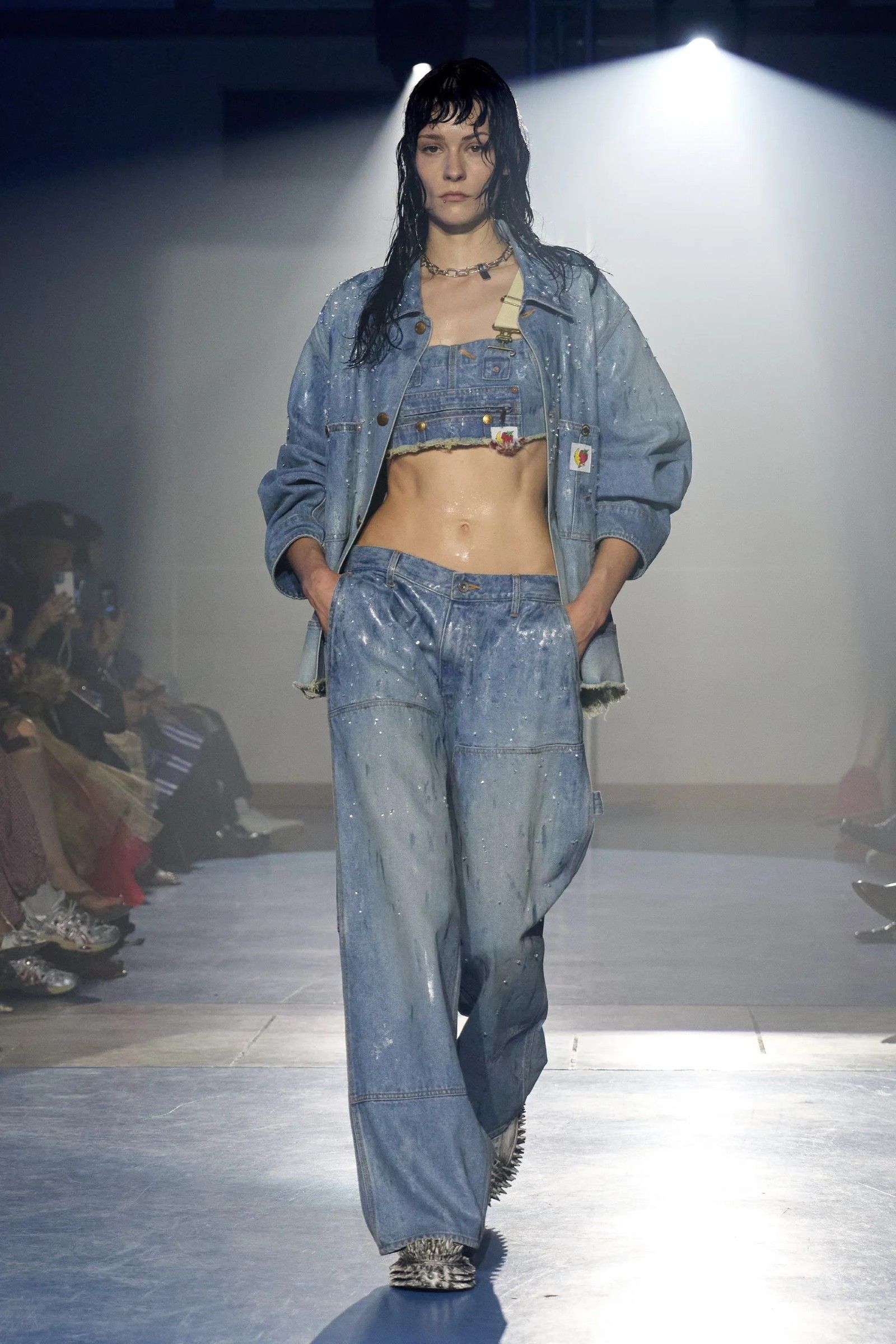
From Louis Vuitton's shell-embellished jeans to Dolce&Gabbana's jewel-encrusted denim, to Dior's distressed versions where the holes are patched with glittering chains, to Kidsuper's painted denim, Doublet's embroidered pieces, Junya Watanabe's hybrid styles that look fused with a boilersuit, and Blumarble's crystal-covered jeans — countless attempts have been made to play on denim's popularity by creating versions that are truly distinctive (among the first things Demna did with his relaunch of Gucci) and, above all, immediately precious.
Because, let's be honest, denim as a universe has one very big problem: many customers have come to realise that, all things considered, provided the fit is good and the quality acceptable, there is no enormous difference between a designer pair of jeans and one picked up at a vintage store. If Celine's Japan-made jeans or Demna's Couture denim suits from his Balenciaga days — with their silver buttons and silk linings — carried their value hidden within their very fibres, luxury now wants to make that value explicit.
Cult Denim, Luxury Denim
In recent years, many now-beloved brands have built a following on the strength of their jeans. Calvin Klein, Dsquared2, Diesel and Our Legacy are the perfect examples; but in reality, Uniqlo x JW Anderson's denim has also become a minor viral cult, as had COS's Column jeans, Anovair's, and Gap's. The same is true in luxury: Helmut Lang and Acne Studios have celebrated jeans to their names; wherever Hedi Slimane goes, denim represents a significant part of his creative capital; ERL and Public School are celebrated for their denim, and an entire ecosystem of Japanese brands exists solely by virtue of their obsessively crafted jeans.
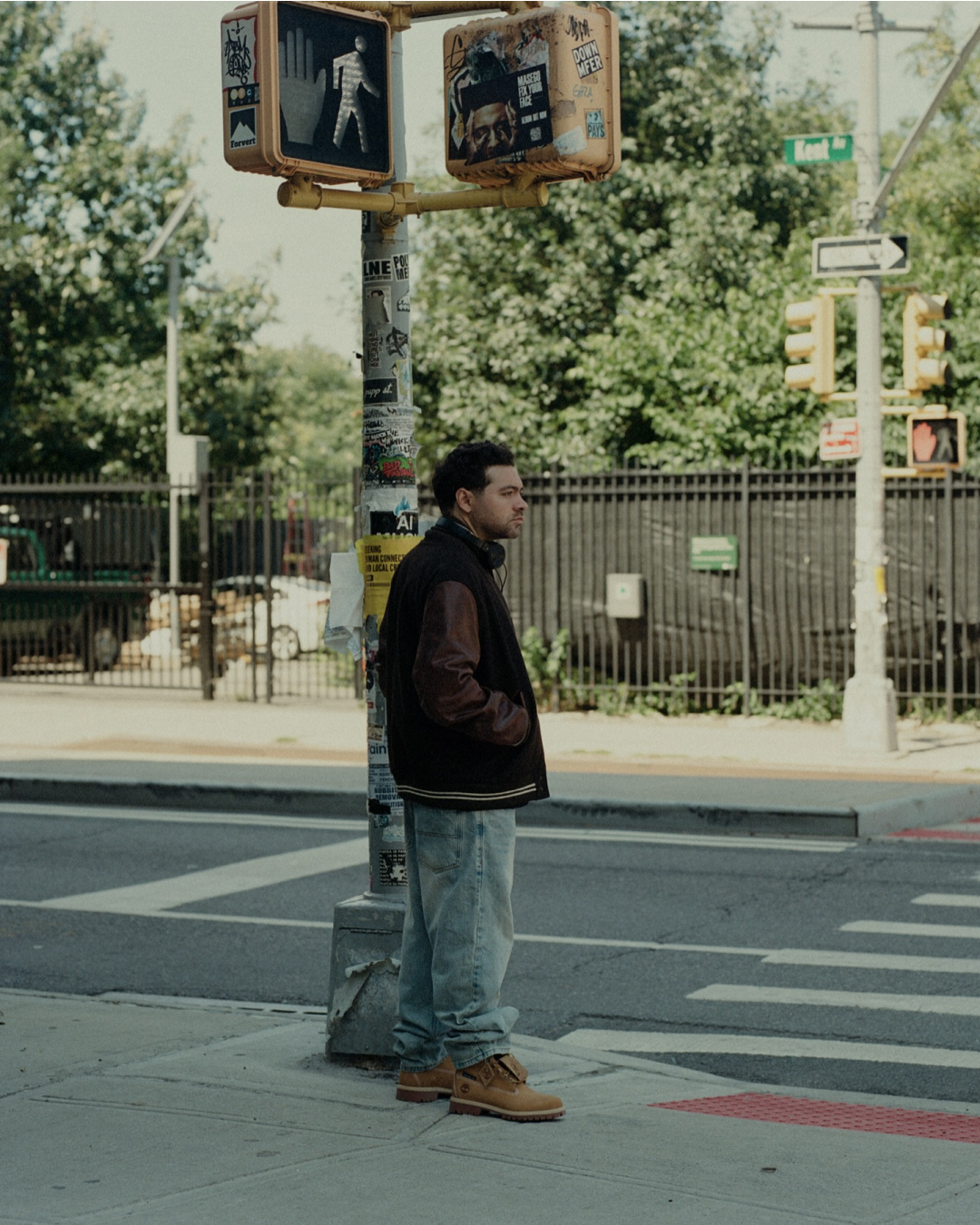
The most interesting recent case of cult denim on which a brand has been built is, however, that of Raimundo Langlois, a designer not yet thirty who founded his label in 2022. The entire brand started from a pair of unisex low-rise jeans made with the prestigious Cone Mills denim. The idea was to recreate the jeans styles that were popular in the early 2000s, adapting them to modern tastes and building the brand's identity around a visual language that reinterpreted, through a queer lens, the fresh, sexy aesthetic of Bruce Weber's Abercrombie & Fitch campaigns. Recently, A$AP Rocky was spotted wearing the brand's cargo styles, and Charli XCX wore them in the video for Playboy Bunny.
In very little time, thanks to an excellent reputation, the simplicity of the offering, and a strikingly strong visual identity, Langlois has become a niche hit in America. A success also driven by a series of campaigns whose simmering erotic charge is reminiscent of Tom Ford's Gucci — the same trick used extensively by a more popular brand (and one equally rooted in denim) like Scuffers in its own communications.
The point here is that, in the world of denim, luxury must compete on very uneven terms against a host of "lower" rivals whose products are visually identical but often more innovative, whose campaigns are more provocative and viral, and whose appeal speaks to a young audience that buys a pair of jeans far more impulsively than it spends in the luxury sector.
A World with Its Own Rules
Alongside the presence of these middle-market brands whose products can be considered equal to or even superior to those of luxury houses, one must also factor in the enormous ocean of second-hand jeans — which represents a luxury-within-luxury (try getting a jeans nerd to explain the concept of Levi's Orange Tab and you'll see) — as well as the world of Japanese denim, all handmade, dyed using ancient techniques, frequented by true connoisseurs and representing a passion entirely unto itself for fashion bros. And then there are the more mainstream brands that, already last year, through campaigns featuring KATSEYE, Sydney Sweeney and Addison Rae, established that the most relevant denim brands are those found in shopping malls, not in luxury boutiques.
We find ourselves, then, facing a "divided" world where the normal rules of ready-to-wear no longer apply. The problem is that denim is perceived as a very democratic category — no one is willing to spend beyond a certain amount on a pair of jeans — and so brands must create value for the consumer and make it visible: Japanese brands have unquestionable artisanal quality on their side; Our Legacy's jeans were famous because the wash was done by laser and "printed" onto the fabric; Raimundo Langlois's because they are made entirely in the United States and presented as the most damnably sexy thing you could possibly wear.
The challenge for luxury, then, is differentiation. The category is lucrative — just look at how insistently Dior and Louis Vuitton pursue it — and above all, consider how a brand like Chanel has pushed hard on distinctive jeans since Blazy's arrival (both the ones that went viral on TikTok with their double-C closure echoing that of the bags, and the pseudo-jeans that have made their way into its Haute Couture collections, which, let us remember, are among the few of their kind that are actually sold). But will decorations and appliqués be enough to motivate luxury customers to buy luxury jeans, or will the fundamental democraticness of the category ultimately prevail?
What to read next
Now Phoebe Philo Wants You to Dress Avant-Garde
With Collection F, the designer plays with silhouettes in an entirely new way
5 trends that Trainspotting anticipated Back in 1996
There is much more to the film than the famous Helmut Lang tank top
5 key trends from Paris Fashion Week SS27 Women's
What we'll be wearing next summer, according to the fashion of the Ville Lumière