




































The garage is where everything begins Many important ideas are not born in places where everything is designed, but where there is still room to fail
The garage has never been a beautiful space. It was not designed to be photographed, visited, or presented in a portfolio. It is a side space, often cold, full of boxes, tools, old furniture, cables, dust, and objects that have not yet found a destination. It is not home, but it is not outside the home either. It is not a studio, not an office, not a real workshop. It is an in-between space, private enough to protect an idea and rough enough not to judge it.
Perhaps this is exactly why the garage is one of the most creative places we have. Not because it has any particular aesthetic qualities, but because it demands nothing. It does not ask for order, coherence, or immediate results. It can hold an amplifier, a dismantled computer, a prototype, a drum kit, an improvised table, a crew trying something without yet knowing what they are doing. The garage works because it is the space of the “not yet”: not yet a company, not yet a band, not yet a studio, not yet a product.
Where ideas begin before they take shape
On this day in 1939: Hewlett-Packard was launched in this Palo Alto garage.
— Jon Erlichman (@JonErlichman) January 1, 2025
It’s considered the birthplace of Silicon Valley. pic.twitter.com/xwJUCVewkD
When we think of creativity today, we often imagine spaces designed specifically to produce it: coworking spaces, hubs, incubators, modular studios, meeting rooms with glass walls, shared laboratories, offices with colorful sofas and motivational slogans. Places that declare themselves creative before anyone has even done anything. The garage, instead, belongs to another category. It does not promise innovation, it does not organize networking, it does not build a community around a visual identity. It is simply available. And this availability, today, is one of the rarest qualities in urban space.
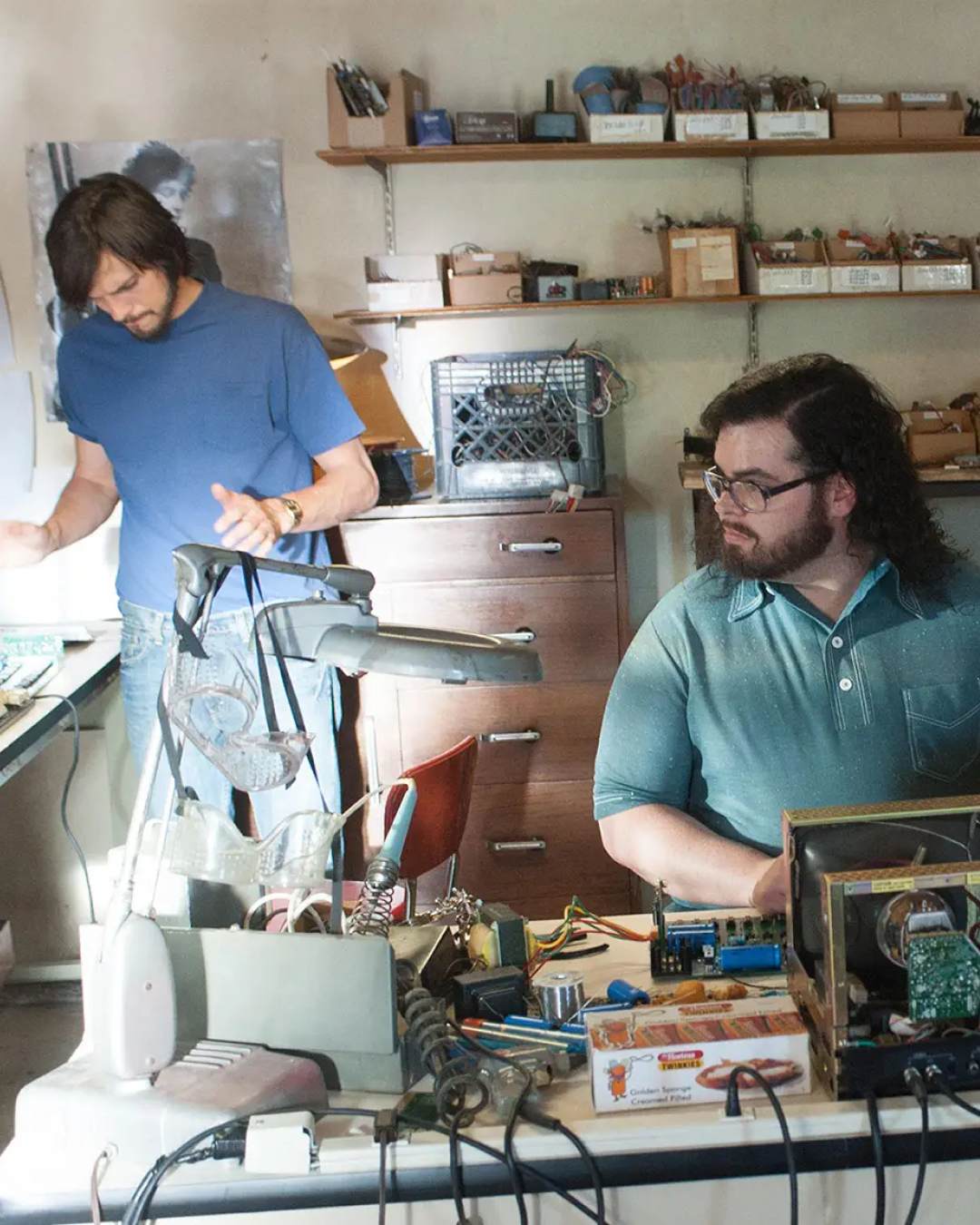
The history of innovation has built a huge mythology around the garage. Hewlett-Packard was founded in 1938 in a small garage in Palo Alto, now remembered as the “birthplace of Silicon Valley”. Google took its first steps in a garage in Menlo Park, rented from Susan Wojcicki. Amazon is associated with the garage of Jeff Bezos’s house in Bellevue, where the company began as an online bookstore. Apple is also part of this narrative, with the garage of Steve Jobs’s parents’ house in Los Altos becoming one of the most recognizable symbols of Silicon Valley.
But the point is not to repeat the usual motivational tale according to which all you need is a garage to build a multinational company. That narrative erases capital, social networks, education, economic context, and luck. No great company is ever truly born “from nothing”. The garage is not magical. It does not create ideas on its own. It serves another purpose: it offers a space where something can begin before it is recognizable, presentable, or professional.
Where does spontaneity begin if every space has to generate profit?
The same applies to music. The garage is not only the place of the startup, but also of the band. Garage rock comes precisely from the imaginary of young, often amateur groups rehearsing in domestic spaces, with limited means, cheap instruments, dirty sounds, and imperfect technique. The result is raw, urgent, sometimes confused. But it is precisely that imperfection that makes it fertile. A drum kit where a car should be. A microphone next to shelves of tools. An amplifier near boxes and paint. Not everything that becomes culturally relevant is born in a suitable space. Often, it is born in a space used badly.
Today, however, these informal spaces seem increasingly fragile. Contemporary cities have become very good at optimizing everything. Every room can become a source of income, every ground floor can become a concept store, every warehouse can become a loft, every empty space can be converted, rented out, branded, and monetized. Even disuse is aestheticized. Even roughness is cleaned up. Even the informal is turned into a format.
This is where the garage stops being only an American image and becomes an urban question. Where can something spontaneous begin when every space has to generate profit? Where do bands rehearse if rehearsal rooms are too expensive? Where does a crew build if every free room becomes a coworking space? Where does a young designer make mistakes if even a shared workshop requires a subscription, a presentation, a project, an identity?
Low cost, low expectations, high freedom
@thewallstreetarchives In 1998, two Stanford PhD dropouts—Larry Page and Sergey Brin—launched a search engine out of a garage in Menlo Park. Their mission was simple but radical: organize the world’s information and make it universally accessible. That garage project became Google, now one of the most valuable companies in history. As of 2025, its parent company Alphabet Inc. commands a market cap of over $2 trillion, making it one of the “Magnificent 7” tech giants driving global markets. Google processes over 8.5 billion searches per day (that’s more than the global population). Its dominance in search is staggering, holding over 90% market share worldwide. Beyond search, it owns YouTube (the 2nd most visited site in the world), Android (the world’s most used mobile OS), Google Cloud, and Waymo (self-driving cars). Larry Page and Sergey Brin, once two students tinkering with an algorithm called PageRank, now sit among the wealthiest individuals alive—each worth $110B+. From garage startup to global empire, Google reshaped how humanity accesses knowledge. Follow @thewallstreetarchives for more stories behind finance and tech empires.
original sound - The Wall Street Archives
In recent years, the creative city has often been described through highly recognizable spaces: districts, hubs, residencies, festivals, incubators, temporary stores. These places are useful, sometimes necessary, but they do not replace informal spaces. Because they host creativity when it is already legible enough to be programmed. The garage, instead, welcomes what does not yet have a language. It does not ask for a pitch, it does not ask for a call, it does not ask for an audience. It allows the beginning.
The problem is not that garages are literally disappearing everywhere. In many homes they still exist, just as cellars, storage boxes, depots, back rooms, and small unused rooms still exist. The problem is that in denser and more expensive cities these spaces are becoming increasingly less accessible or increasingly functionalized. Their ambiguity is perceived as waste. An empty garage is not a possibility, but a missed income opportunity. An unused room is not a margin, but an asset to be valorized.
For this reason, the garage should not be idealized as an architectural type, but as a principle. Today, its equivalent might be a cellar, a rehearsal room, a school workshop open after hours, a civic center, a former repair shop, an affordable maker space, a library, or a neighborhood space that is not too clearly defined. What matters is not the shutter, but the condition it produces: low cost, low expectations, high freedom.
The spaces that allow beginnings
Steve Jobs in front of the garage where he and Woz started Apple. Los Altos, 1996.
— RetroBayArea (@RetroBayArea) April 13, 2026
These photos of Steve were taken in 1996 for a story in Fortune Magazine to commemorate the 20th anniversary of Apple.
Exactly twenty years earlier in 1976 Steve Jobs and Steve Wozniak, along… pic.twitter.com/RienZWoDOY
A city that wants to be creative cannot simply build ready-made creative places. It must leave zones of indeterminacy. Spaces that are not completely designed, not completely profitable, not completely controlled. Places where value is not immediately measurable and where people can try something before knowing whether it will work.
The garage matters because it reminds us that the beginning of things often needs much less elegant conditions than we imagine. Sometimes everything begins where there is a cold neon light, an extension cord, a stained floor, an old table, someone trying something without knowing whether it will become anything. And perhaps a truly alive city is also measured by this: not by how many creative spaces it manages to inaugurate, but by how many imperfect spaces it still manages not to eliminate.
What to read next
Design is also a matter of ego
Because it’s not just what you design that matters, but also who gets to take credit for it
The evolution of mural art according to Federico “Iena Cruz” Massa
As the practice doesn't just tell stories and starts acting

A guide for freelancers with difficult clients
How to navigate the complex creative market of 2026