.gif 2000w)


























The dream of a job in design and the reality that no one talks about «So what do I do now?», the collective cry of a generation of creatives
Everyone wants to work in design. It’s a vocation that often sparks already during high school, when the idea of becoming a stylist, interior designer, product developer, or creative director takes shape through meticulously curated Instagram profiles, the glittering runways of fashion weeks, photorealistic renderings, emotional videos, and universities that promise a future made of iconic projects and international collaborations. Design, in our collective imagination, has always been a fun job: synonymous with boundless creativity, dynamism, and immediate visual impact. But few really tell what happens once you leave the university classrooms and face the concrete reality of the market, trying to turn that burning passion into a sustainable career. So what happens today to young people who choose to work in the world of design and fashion, now that the relationship between education and work has radically changed? What are the skills truly required by companies, and why – between the relentless rise of artificial intelligence, the saturation of some market segments, and the growing importance of personal storytelling – is it no longer enough to just be talented? We asked designers and professors who have been supporting young creatives with big dreams for years.
Let’s start with the bigger picture: according to the Design Economy 2024 report promoted by Symbola, the design system in Italy involves over 352,000 professionals, with an added value of 3.2 billion euros that places our country at the top in Europe for the number of active businesses and the cultural and commercial value produced. Yet, behind these encouraging numbers lies a significant divide. Master’s graduates in design, although finding employment within five years at a solid rate of about 89%, see this percentage drastically cut in half: only 46% manage to work steadily and consistently in the specific field they studied for. Meanwhile, youth unemployment in Italy still hovers around 20% and, paradoxically, more and more companies declare that they cannot find qualified profiles for the new creative roles that are emerging, especially in digital, hybrid design, and complex project management. This means that opportunities exist, the market exists, but the leap from university to the job market remains full of obstacles. There is a general misalignment between offered and required skills. Companies often report the need for profiles with more practical experience, relational skills, and a problem-solving mindset, which are not always fully developed in traditional academic paths.
virgil abloh talking to the lvmh 2021 finalists who didn’t win pic.twitter.com/uWPXDf3WHW
— andrianaシ (@BOTTEGAHOENETA) June 7, 2023
According to Cristian Visentin, designer and respected professor at the Politecnico di Milano, today’s young people are undoubtedly more aware and proactive compared to 20 years ago. «Before, there was a strong gap between universities and companies, almost two parallel worlds. Now students choose more targeted paths, they are more enterprising, but they often struggle to understand that learning does not end with graduation.» For Visentin, working in the design world corresponds to «a continuous process, an investment in oneself that goes far beyond technical discipline, [that] also shapes resilience, self-awareness, and adaptability to the changing demands of the market.» One of the deepest transformations concerns precisely the way you present yourself: «A beautiful, technically perfect project is no longer enough. You need a strong identity, visible even in your portfolio, that tells not only what you can do, but who you are. The image you build for yourself matters, but it must be authentic and consistent with what you want to say – a real personal brand that communicates your values.»
@jessie.garcia27 convincing you to major in the best major industrial design #industrialdesign #design #ux #productdesign #industrialdesignstudent original sound - jessie
For Simone Riva, architect and professor at the Nuova Accademia del Design, difficulties should not be ignored but analyzed. «The retail world today is complex and requires a 360-degree vision. It’s not enough to know how to draw or have good ideas. There are dozens of highly specialized figures who must work in synergy: from lighting design to ambient scenting, from data-driven distribution strategy to regulatory safety. A young designer who learns to coordinate these different skills has enormous growth potential.» According to Riva, there are two main gaps in emerging junior profiles: on the one hand, a lack of relational skills – the ability to work in a team, listen, discuss constructively, find shared solutions, and negotiate – and on the other hand, limited knowledge of materials and production techniques. «It’s the material side that often lacks, that deep understanding of the limits and possibilities of a material, the constant curiosity for what changes in the manufacturing market and for new technologies. Without this solid foundation, design risks remaining just an idea on paper instead of becoming a tangible and functional reality.»
@barbianaliu Another day, another things no one told me before I became a #graphicdesigner #branddesigner #freelancedesigner #comicsans #nycdesigner Club Penguin Pizza Parlor Theme - TootyMcNooty
But today there is also another element overturning the rules of the game and redefining skills: artificial intelligence. Visentin is clear on this point: «Young designers should not fear AI, but learn to use it as a powerful ally. It’s a tool that can create enormous added value, especially in more structured corporate contexts, where process optimization is crucial. Understanding how it works and how to integrate it into your workflow can generate opportunities even in the most traditional sectors.» The message is clear: in contemporary design, the isolated and ‘romantic’ figure of the ‘creative genius’ working alone has given way to a new professional identity. Young people must learn to work in teams, know how to present themselves effectively, navigate digital worlds with agility, but also have a solid, updated, and cross-disciplinary visual culture. It’s not about choosing between extreme specialization or generic versatility: it’s about building a strong personal vision, capable of blending with other disciplines and the most innovative tools.
how it feels like working in the creative industry pic.twitter.com/gM30zjCWoW
— (@perpetualsparks) July 18, 2025
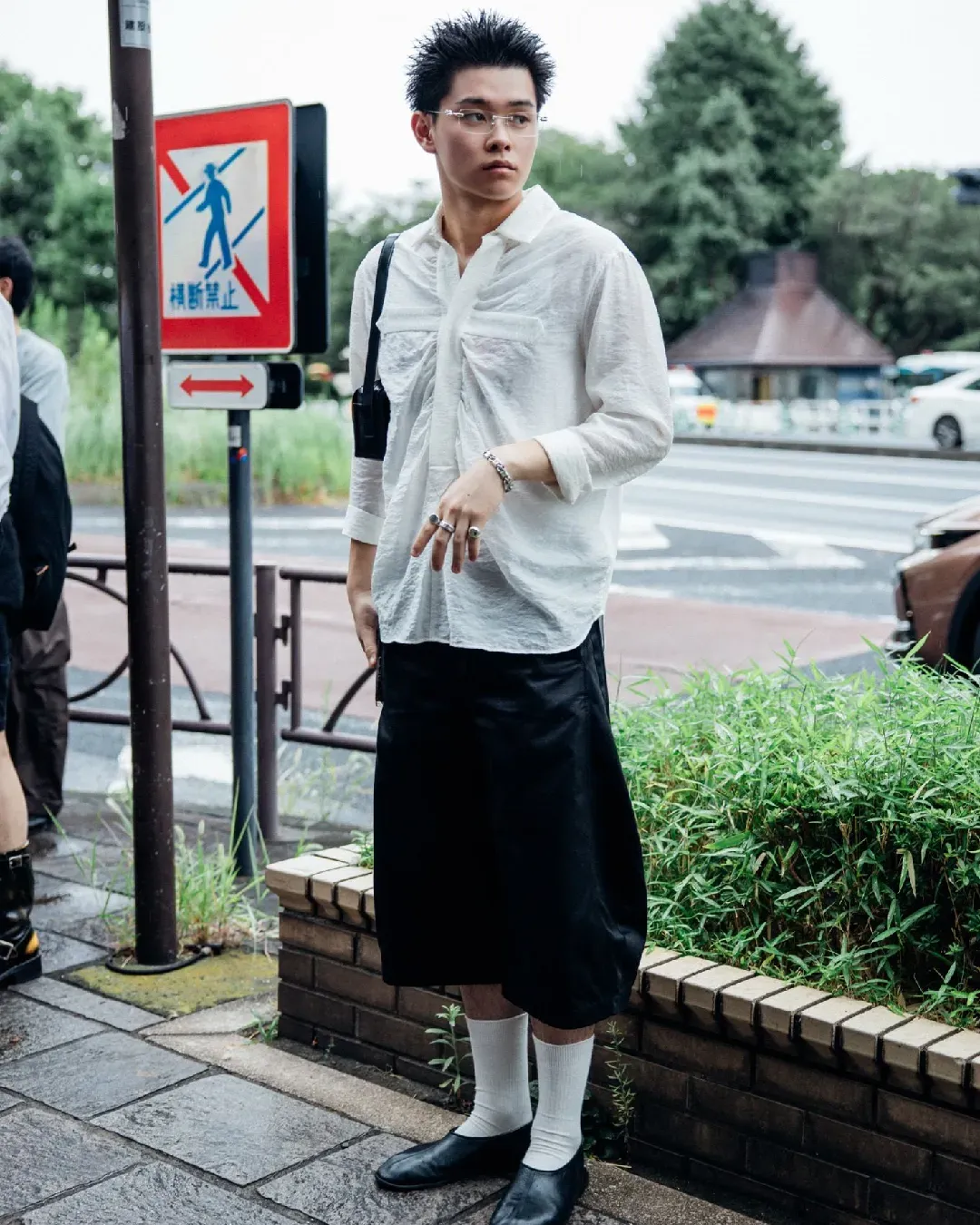
This need for concreteness and awareness becomes even more evident when looking at the fashion system. Among the most alluring and most talked-about sectors – thanks also to the amplifying influence of social media, which shows only its glossy façade – fashion is today one of the favorite destinations for creatives. But is it really an inclusive and meritocratic sector, or just a mirage neatly wrapped in glitter and influencers? According to Giorgio Ripamonti, a recent Fashion Design graduate from the Politecnico di Milano, the answer is clear and disenchanted: «Today, working in fashion has become fashionable. Social media gives a utopian image, where everything seems within reach and where fame is just around the corner. But the reality is radically different: it’s an ultra-competitive environment, saturated with aspirants, where rather than elitist I would say it is ruthlessly selective. And the selection is brutal.» Ripamonti recalls starting to take an interest in fashion through the sneaker phenomenon, between 2016 and 2018, when they had become a symbol of social belonging, a true aesthetic language. From there came the curiosity for the product, drawing, the first attempts at creating an amateur brand, and finally the decision to enroll at university. «During my journey I realized that passion alone is not enough, no matter how strong. It takes daily sacrifice, transparency in intentions, and a great ability to withstand pressure and disappointment. Everyone wants to stand out, but not everyone accepts the merciless competition, the harsh criticism, and the failures that are an integral part of the path. For me, the dream is still alive, burning, but I know this won’t be the path for my entire life in absolute terms. It’s the work of my life, but not necessarily forever.»
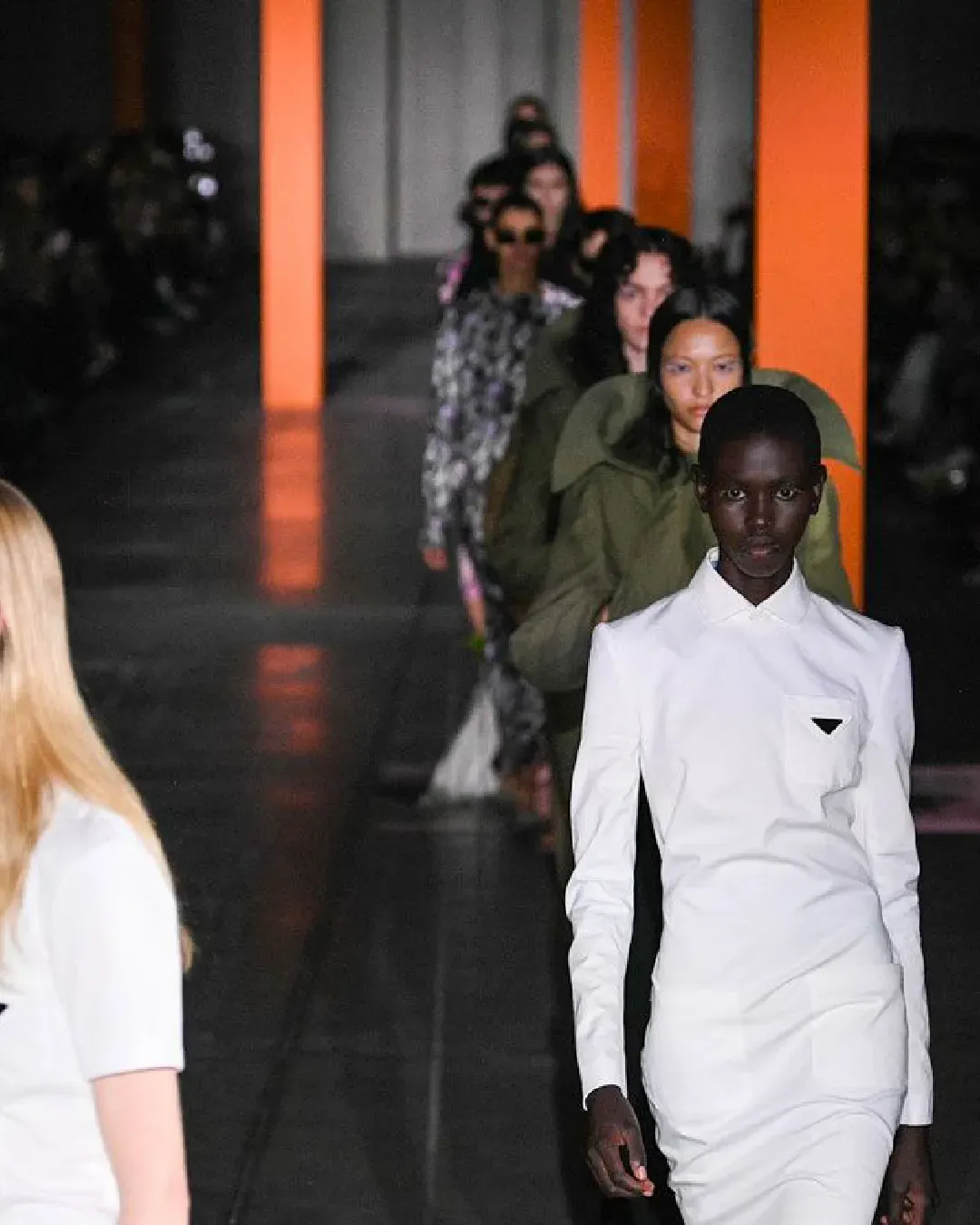
Beyond aesthetics, today the fashion system is dominated by complex dynamics concerning algorithmic visibility, brand storytelling, and building a corporate identity. But often the big groups – such as LVMH or Kering – seek more executors of creative directives than true visionaries, more the effectiveness of well-oiled marketing campaigns than aesthetic disruptions capable of real innovation. The result? Little originality, a lot of homogenization, and an obsessive chase for the trend of the moment, which suffocates creativity. In such a context, young people could truly be the key to unlocking a new phase of innovation and authenticity, but they struggle to find space. Universities are increasingly crowded and prepare talents, but the number of real opportunities to emerge remains low, and while studying fashion has become mainstream, actually entering the system and leaving a mark remains a titanic task. Thus, in Italy, those with an unconventional voice often find more room elsewhere, in emerging capitals of fashion and design such as Berlin, Barcelona, Shanghai, or Seoul. Because Milan, although central to luxury and tradition, is still too tied to established models to embrace the new.
@studiojonssonig Need this filled before the end of ‘24. #designinspiration #design #graphicdesign #graphic #poster A Little Closer - Diffrent
So then, what does it really take to succeed in design today? Not absolute talent, which is only a starting point, but a clear personal vision. A solid, updated visual culture that crosses multiple disciplines. Strong relational skills, the ability to work in teams and to negotiate. And the tireless willingness to learn even outside canonical paths. Design – whether product, interior, or fashion – requires the same thing: tenacity, insatiable curiosity, and the courage to carve out a space even when the market seems saturated and there appears to be none. Talking with professors, listening to the voices of those truly trying to make it, you realize that the question «And now what do I do?» has become the silent cry of an entire generation of creatives chasing a difficult ideal. Design is still a dream, yes, but it must be rewritten every day with pragmatism and passion, without forgetting the importance of a support community – not by chance, this article was written with the support of Gaia Turboli, a recent graduate in Fashion Styling and Communication.