



















Are jazz shoes the new ballet flats? From Serge Gainsbourg to Michael Rider's Celine
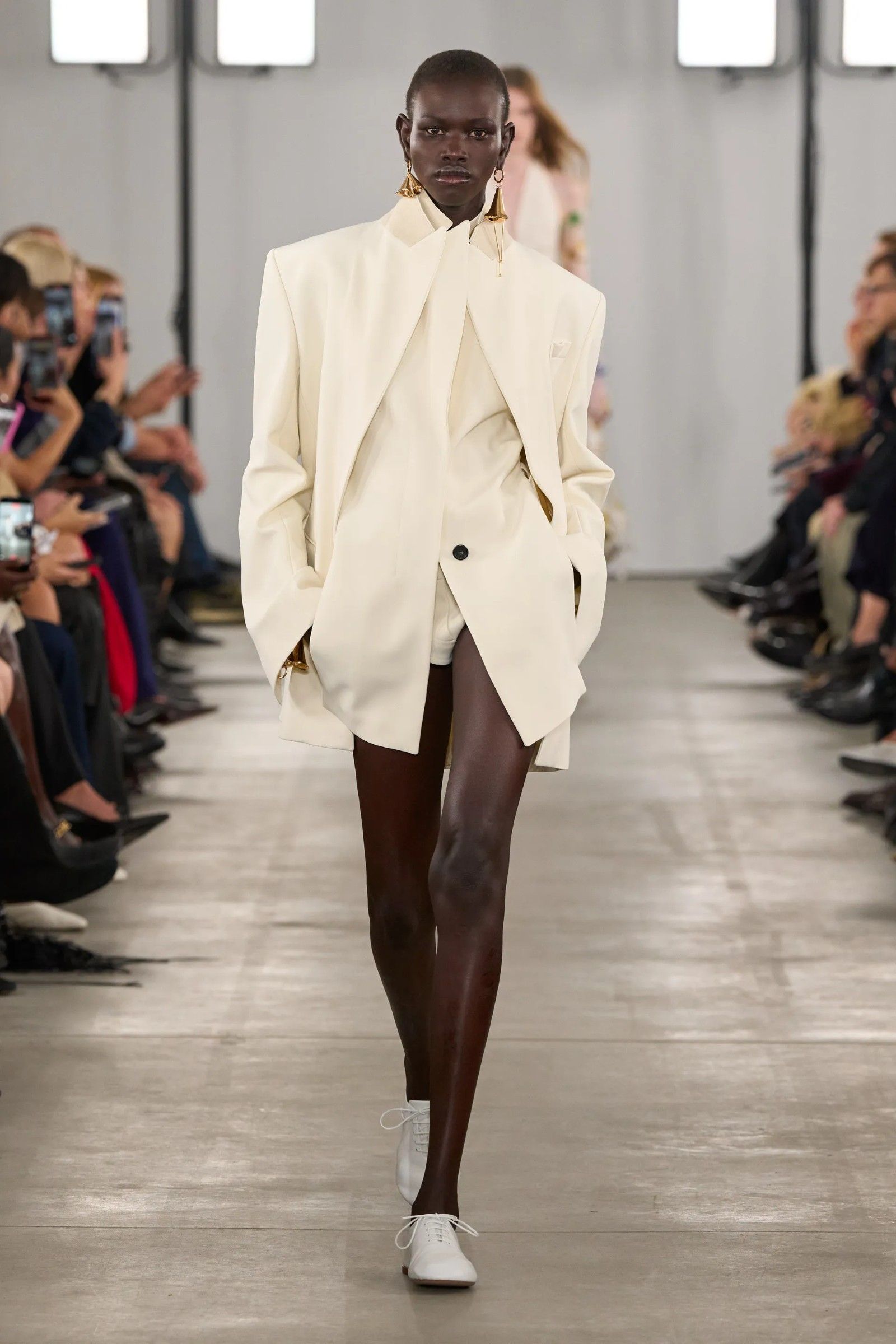
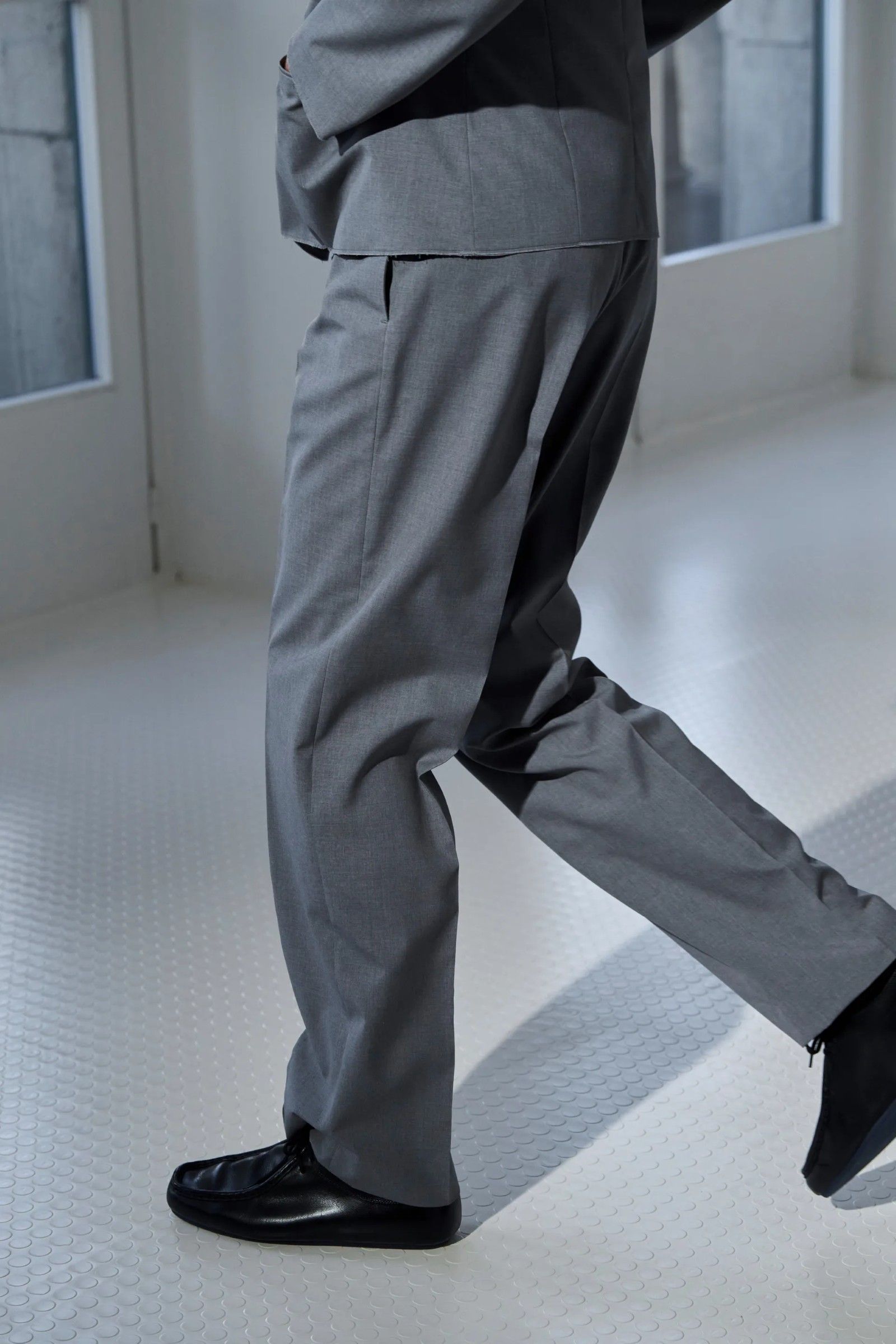
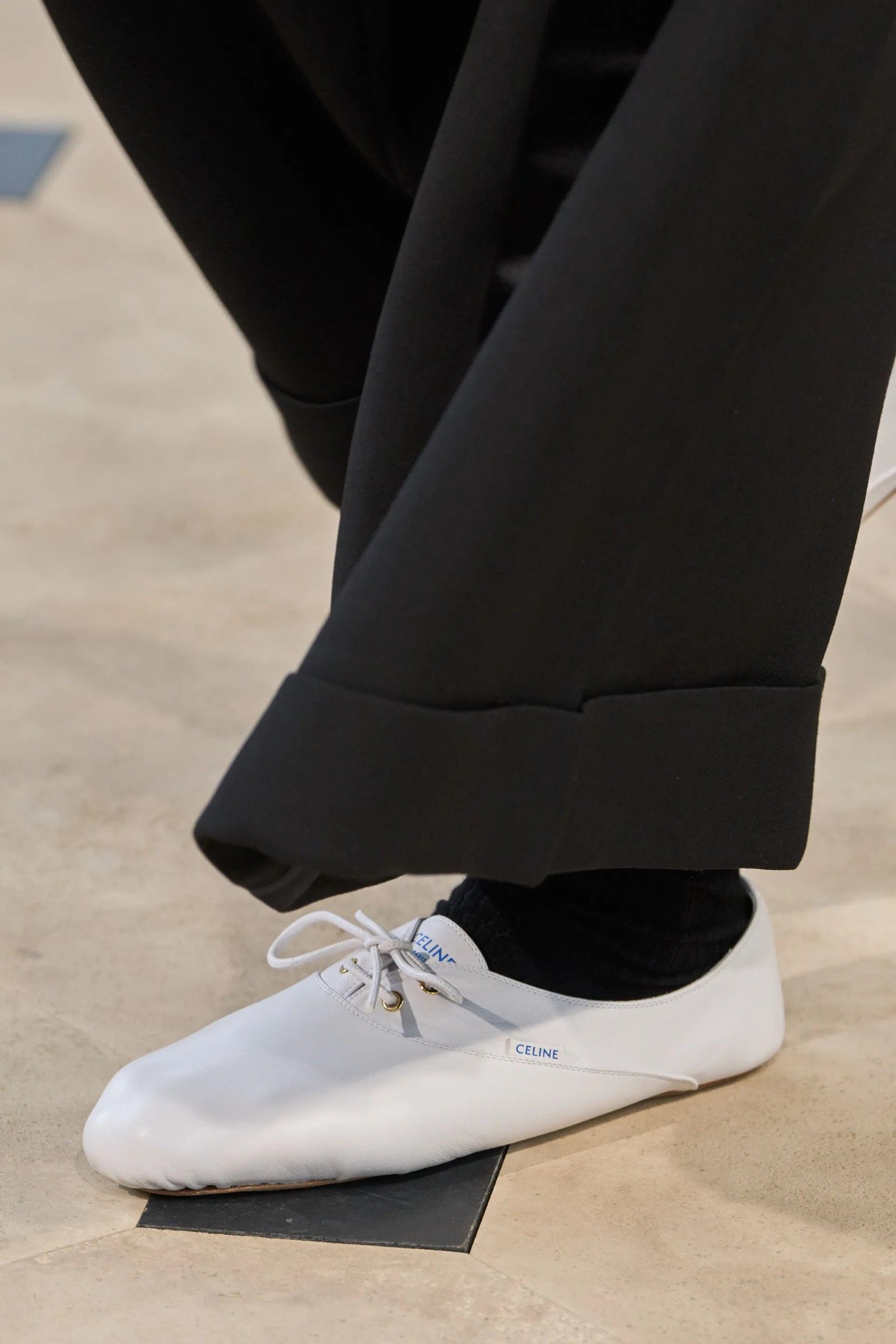
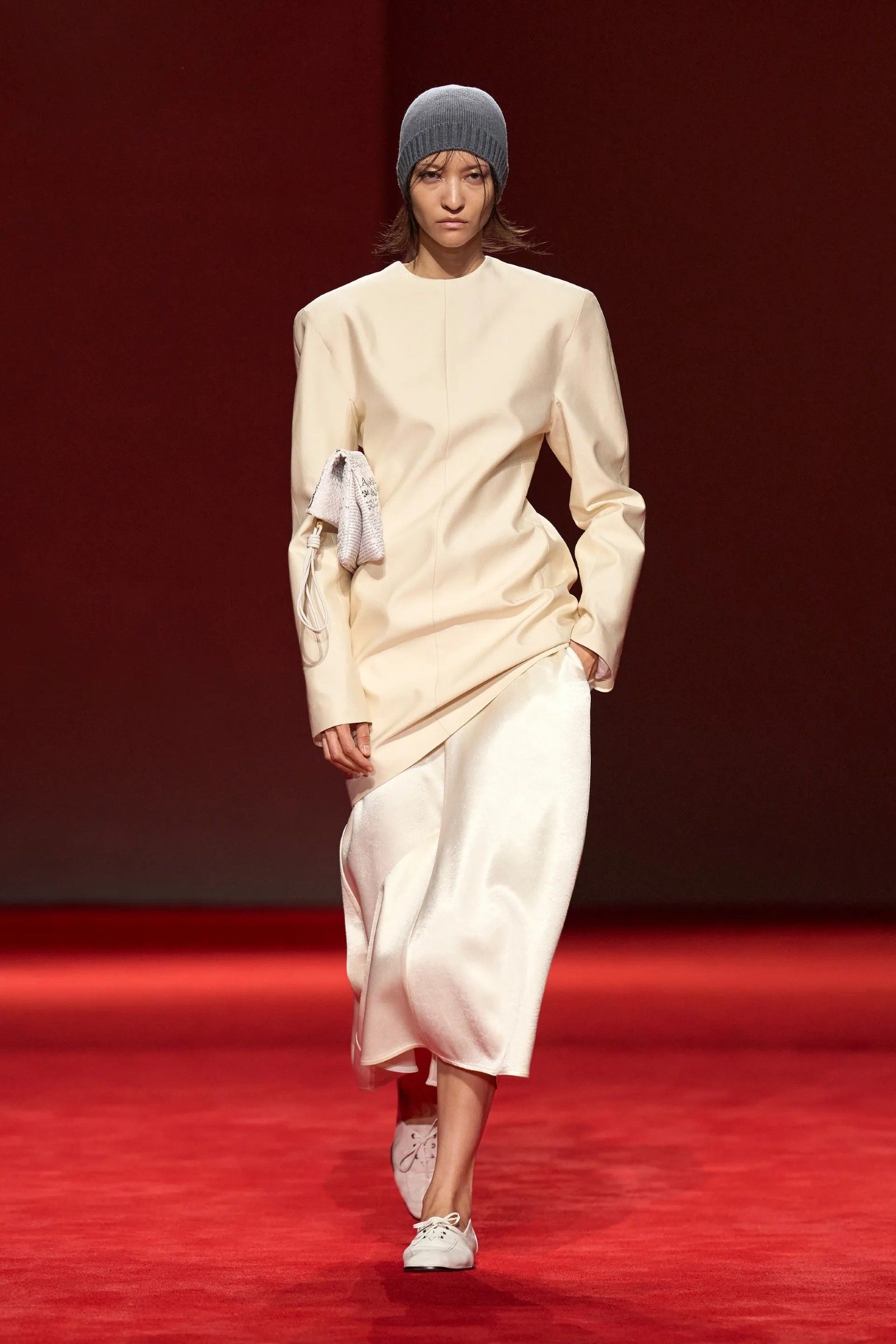
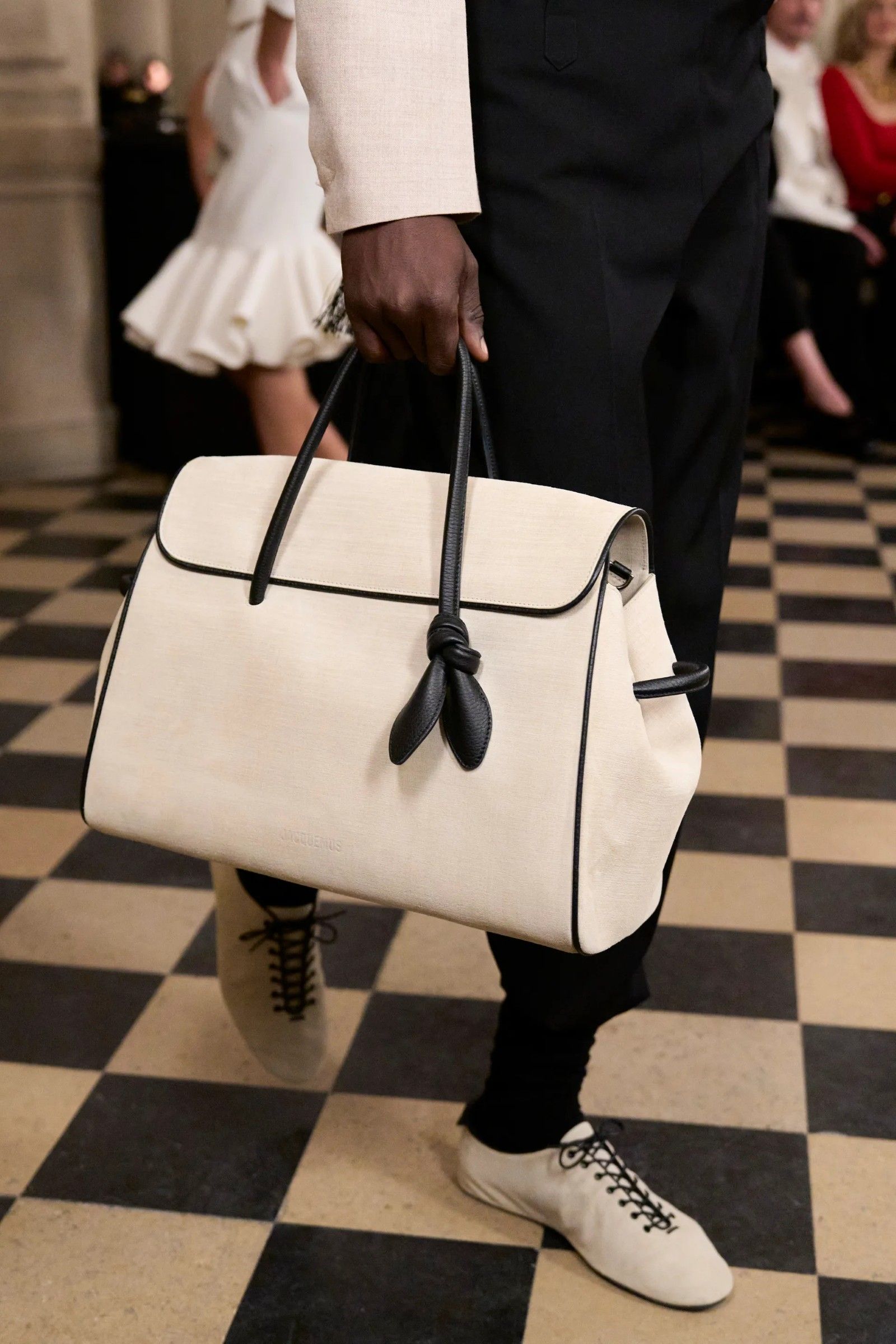
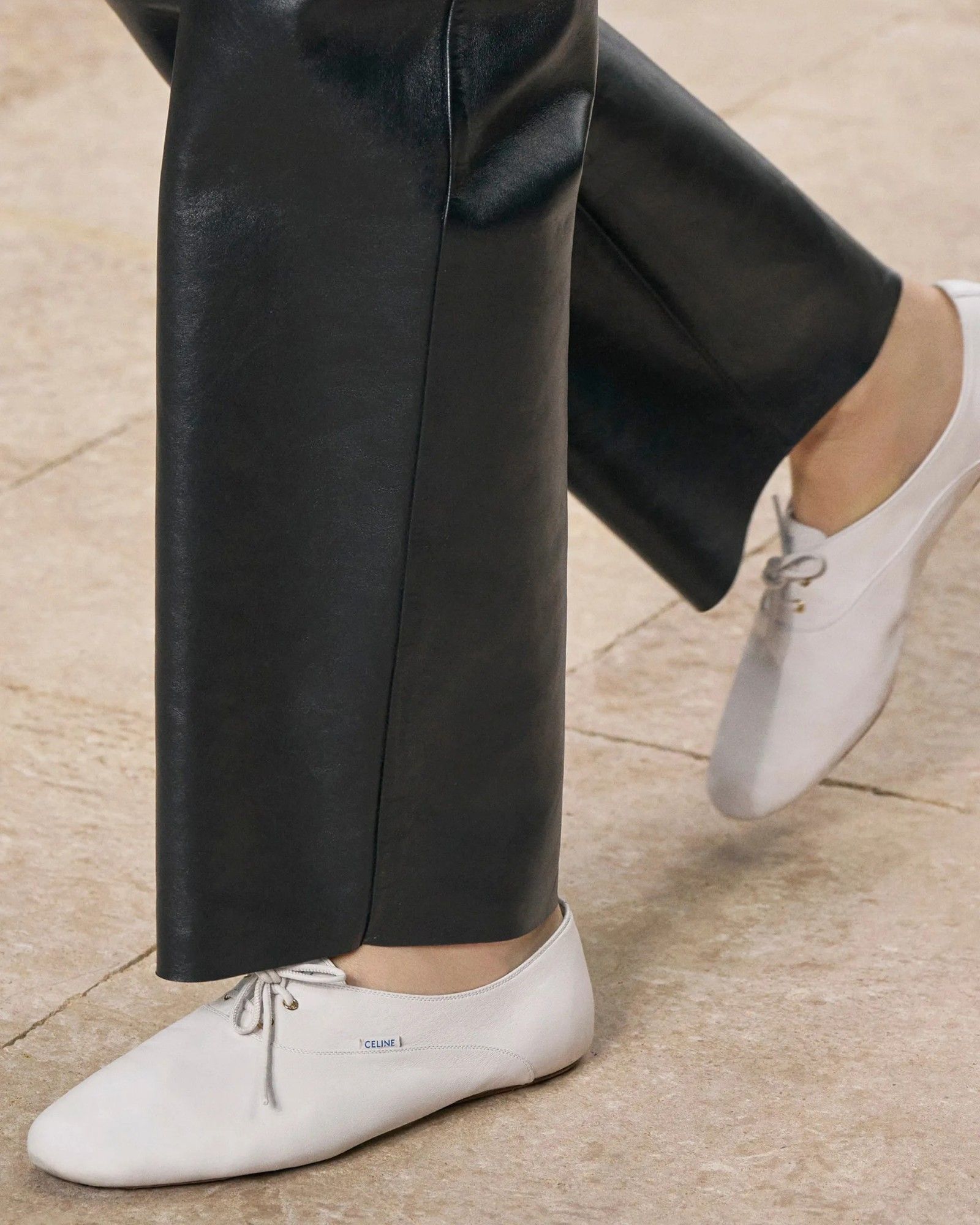
Every fashion season has its it-shoes. These are the shoes that attract the most attention and that, in some ways, define the period and the culture of the moment. In the past, there were Balenciaga's Triple S, Out Legacy's Camion Boots, New Balance x Miu Miu, adidas x Wales Bonner's Samba, Birkenstock x Dior. All different models, children of their own times, yet sharing the fact that they combine a classic and recognizable silhouette with a certain dose of freakiness that makes them special. This year, those shoes are Celine's lace-up leather ballet flats.
Introduced in Michael Rider's first collection for the brand, these shoes recall classic Oxfords but in a deconstructed version: extremely low-cut, with two fewer lace holes; made from a white lambskin as supple and elastic as a glove; practically soleless. They come in several colorways and are already virtually sold out everywhere, because they have genuinely captured the zeitgeist of the moment: luxurious yet nonchalant, beautiful when worn in (at the Paris showroom a few weeks ago, they were presented already scuffed) and so sleek they make you feel like you have wings on your feet.
The style is widely imitated — Zara and Massimo Dutti have already posted the first dupes on their e-shops (the "real" ones are expensive, but it's a sacrifice we'd be ready to make) — yet in truth Celine's lace-up ballet flats are a reinterpretation, albeit a brilliant one, of a dance shoe known as the jazz shoe, whose most celebrated version was immortalized by Serge Gainsbourg in the 1970s: Repetto's Zizi.
The history of the jazz shoe
@hnns.vncnt the original flat flat shoes. repett after me, I love Michael Rider’s Celine, but I am gonna get the original Repetto ones Also, GAINSBOURG IS GOD.
original sound - Hannes-Vincent Krause
Jazz shoes were born in the United States between the 1920s and 1930s as technical footwear for jazz dances such as the Foxtrot and the Boogie Woogie, as well as tap dance. Back then, no one danced in sneakers, and satin ballet flats were reserved for classical dance, so these new social dances called for shoes that were formal yet allowed a freedom of movement that classic Oxford shoes (more formal than Derbies due to their closed lacing) did not permit.
In the early 1910s, during the vaudeville era and the very first years of cinema, dancer-turned-comedian Joe Frisco popularized precisely those dance moves that would become worldwide phenomena in the following decade. He made his Broadway debut in 1918 and was so famous that he is mentioned by name in The Great Gatsby; in the 1930s he appeared in dozens of films. It is said that, for dancing, he began using the historic ghillies — traditional Irish shoes originally designed for folk dancing — but with a lower heel, which then spread alongside the dances he himself popularized. The jazz shoe had been born.
While in America they would later be immortalized in Bob Fosse's choreography, in France they gave rise to the brand that would become the most important historical producer of the style: Repetto. Founded in Paris in 1947 by Rose Repetto, the brand began as a dance shoe atelier for the dancers of the founder's son, choreographer Roland Petit. To create her shoes, Repetto developed the "cousu retourné" technique (stitched and turned), a manufacturing method that makes the sole extremely soft and close-fitting, and which remains the brand's signature to this day.
Serge Gainsbourg and Repetto's little white shoes
In the 1970s, Rose Repetto created a new version of the jazz shoe — a low lace-up, as soft as a ballet flat but more structured, almost masculine. These were the Zizi, named after her daughter-in-law, the dancer Zizi Jeanmaire, Roland Petit's wife. Jeanmaire, a dancer and music-hall star, was known for her androgynous style, and this more masculine dance shoe took its character from her. But the leap from the stage to pop culture was thanks to Serge Gainsbourg, for whom Jane Birkin bought a pair she had stumbled upon in a vintage shop in Saint-Germain-des-Prés.
"Serge was looking for gloves for his feet because he hated walking," Jane Birkin once told Les Inrockuptibles magazine. And according to many, Gainsbourg himself often joked about his attachment to the shoes with the wordplay "Repetto à perpet'", meaning "Repetto forever." From the 1970s until the year of his death in 1991, Gainsbourg bought thirty pairs a year and made the shoes a defining feature of his "uniform": unbuttoned shirt, jeans, cigarette, and always the white or black Zizi on his feet.
They quickly became a symbol of a less formal masculine style, beloved by beatniks and at one point worn by Mick Jagger as well. From that moment on, the Zizi ceased to be "merely" a reinterpreted dance shoe and became a symbol: that of effortless Parisian chic — intellectual, slightly dandyish — capable of blending classic French elegance with an almost rebellious informality.
Jazz shoes today
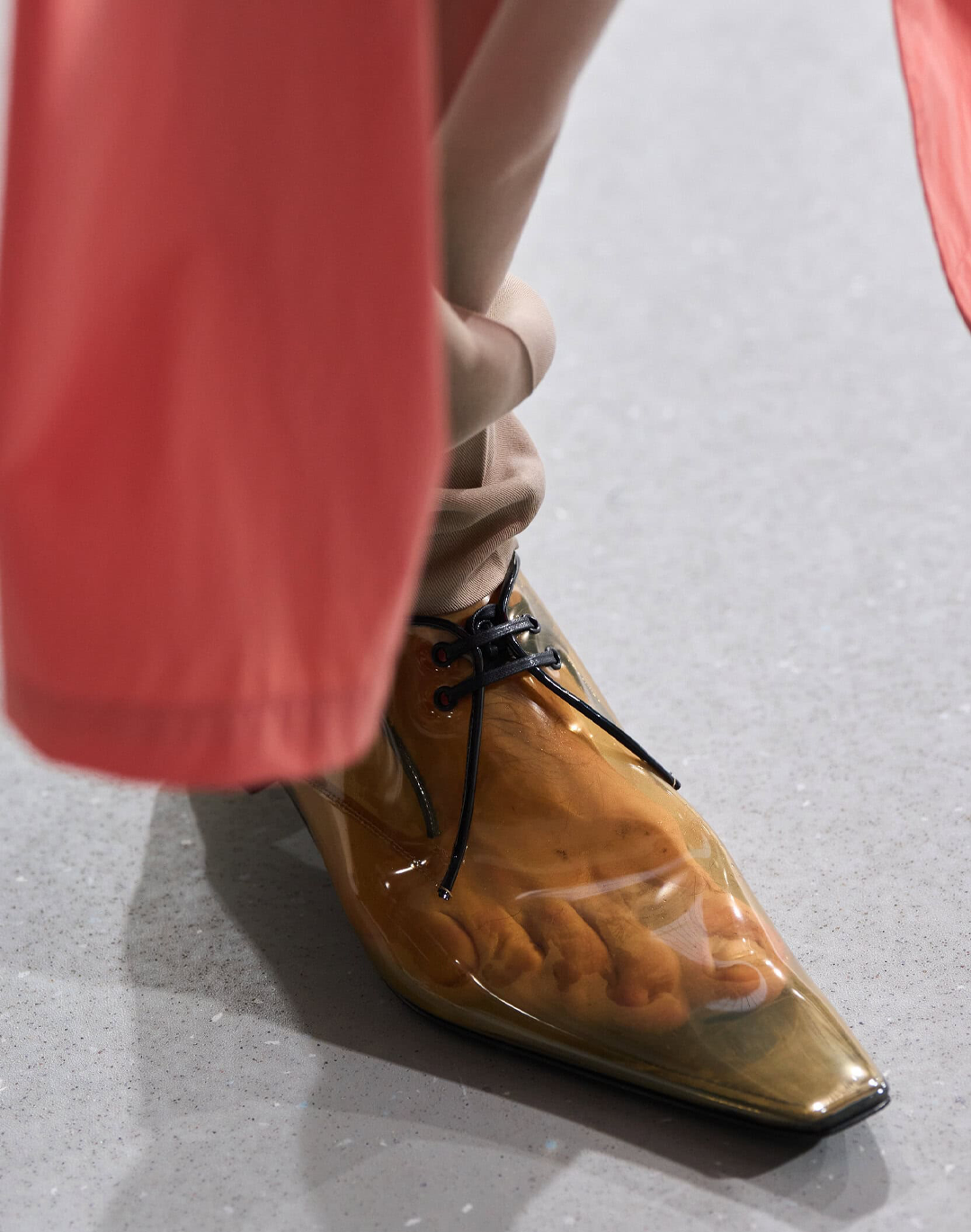
Today, jazz is rarely danced — and certainly not in the expensive shoes offered by Celine, Jacquemus, and also Sportmax and Bottega Veneta. What matters, however, is that this shoe sits at the perfect intersection of the slim shoes trend, the soft shoes trend, and the freaky shoes trend. Much like Serge Gainsbourg in the 1970s, almost everyone today is fascinated by the concept of a "glove for the foot," as demonstrated by another shoe sitting at that same triple intersection: Vibram's FiveFingers, which may be startling at first glance but, precisely for that reason, leaves a lasting impression.
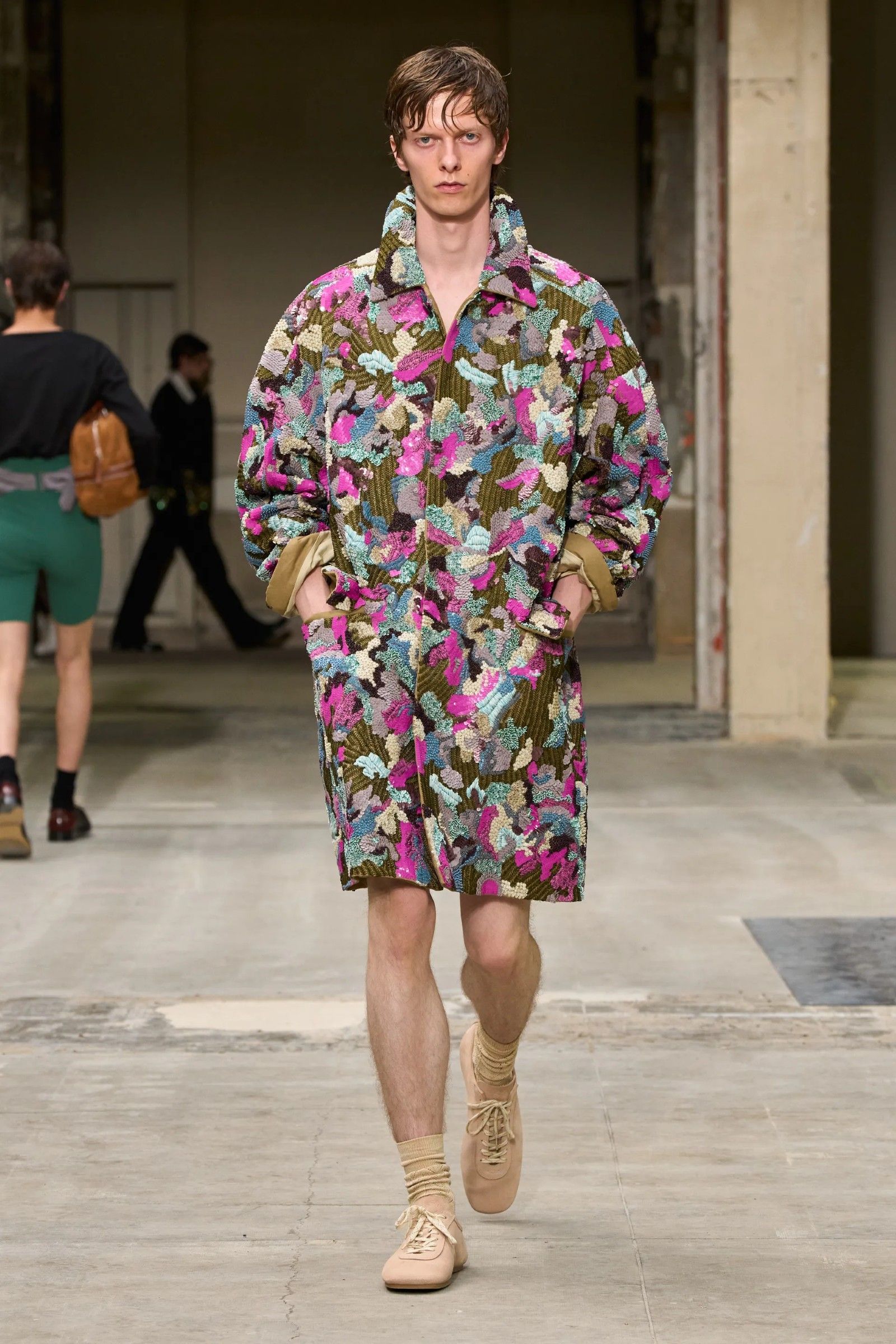
In reality, by taking the Zizi archetype and flattening it, Celine has produced its own shoe. Alternative versions of the "soft derby" can be found across countless websites, but in the luxury world the styles being presented are models called "lace-up flats" — adjacent to the jazz shoe but not identical to it: from Jil Sander's Hood to Dries Van Noten's leather sneakers (not "those" sneakers, but an alternative style shown in the SS26 show). The theme remains that of softened formality, as flat as a slipper yet as thin as a glove. The only choice left is between the more authentic models and the more deconstructed ones. But we already know which ones fashion insiders will be investing in.