

































"Dog 51" is every bit as good as science fiction films from across the Atlantic Or perhaps just its screenplays
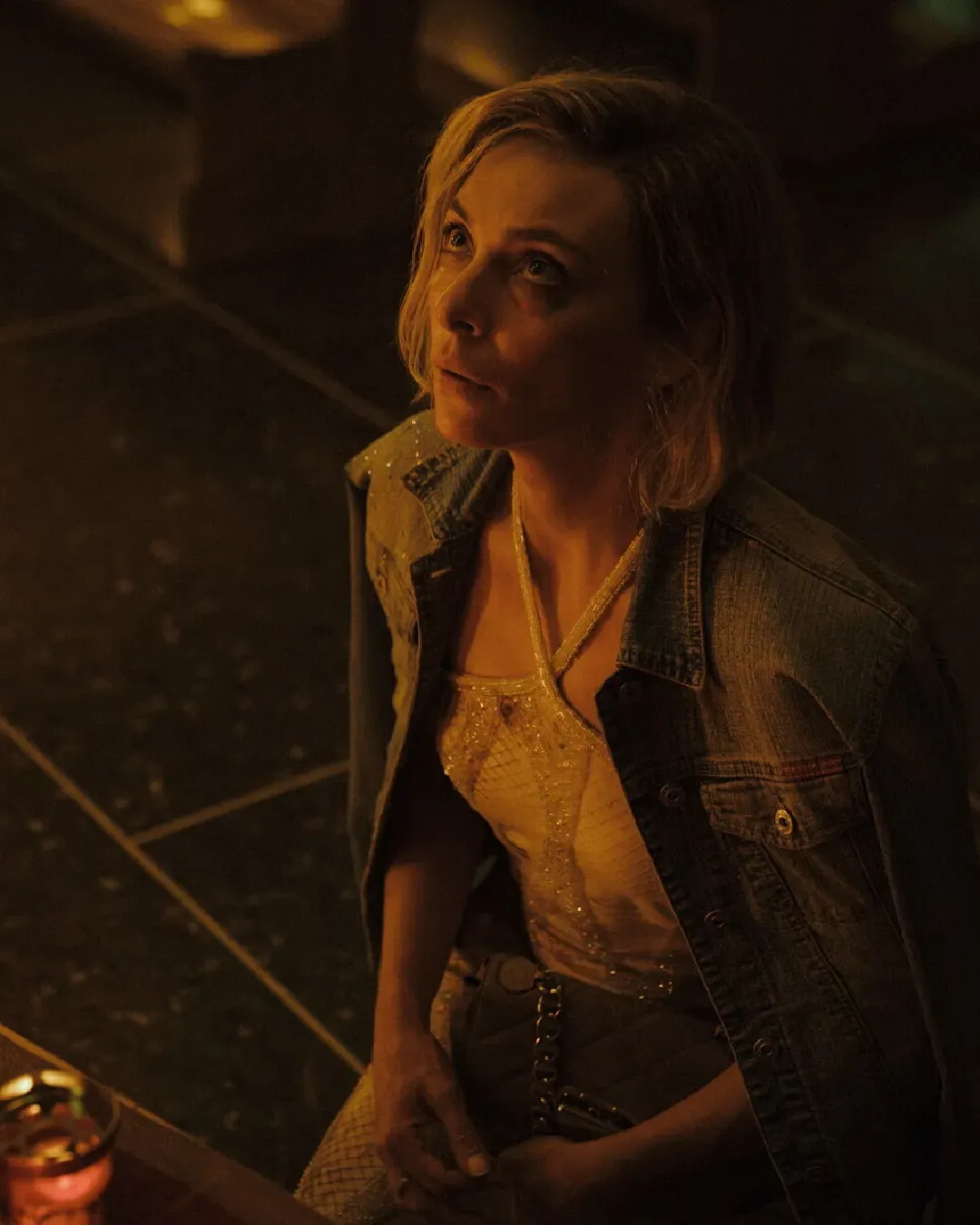
In French cinematography, as in many others, especially European ones like Italian, the actors are often always the same, especially when it comes to highly ambitious projects. This is the case of Dog 51, based on the book of the same name by Laurent Gaudé, closing film of the 82nd Venice Film Festival, which brings together once again Adèle Exarchopoulos and Gilles Lellouche, fresh from the box-office success of L’amour ouf (in which she was an actress and he a director) and joined by Louis Garrel, Romain Duris and Valeria Bruni Tedeschi for a techno-sci-fi experiment on the drifts of post-9/11 control societies.
In a not-so-distant future, Paris is divided into three zones. The first is that of the politicians and those in power, the second is that of the middle classes, sometimes even wealthy, while in the third reign violence, filth and poverty. The city is managed by Alma, an AI whose inventor is brutally murdered, and on which two completely opposite policemen embark on an investigation that will lead them to discover secrets and burning truths likely to jeopardize the entire social balance.
With an excellent opening sequence – a chase on the roads overlooking the Seine where the action is pushed to the maximum as criminals and police clash by pressing the accelerator –Dog 51 immediately evokes the quality of major productions such as those of Netflix – which allowed director Cédric Jimenez to reach an ideal level of plausibility with the rest of international science fiction productions. Although one constantly feels to be in the French capital, the film’s post-technological reconstruction, with drones flying continuously over the city and identification bracelets, never risks appearing as the weakened copy of some sci-fi from across the Atlantic. There is the francophone touch, but also an imagination that adheres without bending excessively either to European rules or, even less, to imitating American productions.
A commendable work, both in terms of investment and result, which does not go hand in hand with the canonicity of a script which, if it had to leave room for the setting and science-fiction innovation, acted by subtraction in the elaboration of a predictable script. Too much even for these enigmas that present themselves as closed boxes, but which, if one is passionate about the genre, are not so difficult to decipher. Even slightly forced and slow approaching the ending, which arrives exhausted to pull the strings of a rather predictable discovery from the start, to which staging and direction can contribute on the level of entertainment and the production value of Dog 51, but which, as a story in itself, as an intrigue and resolution, leaves us somewhat unsatisfied.
Drawing on so many cinematographic references, where the spirit of Minority Report with its preventive police hovers like a mothership and resonates in the terror of a justice that has in turn become violent, Dog 51 is a cinema that attempts what seems possible only in Hollywood studios and which, on the contrary, proves achievable. The most predictable of paradoxes generates a work that does not enthuse, but that adds to the admirable attempts of recent years to make a cinema that goes beyond the golden rooms of French drama: from the revisited musical of the aforementioned L’amour ouf, to the human-animal hybrids of Le Règne animal, up to the dystopian science fiction, albeit flawed, of Dog 51.