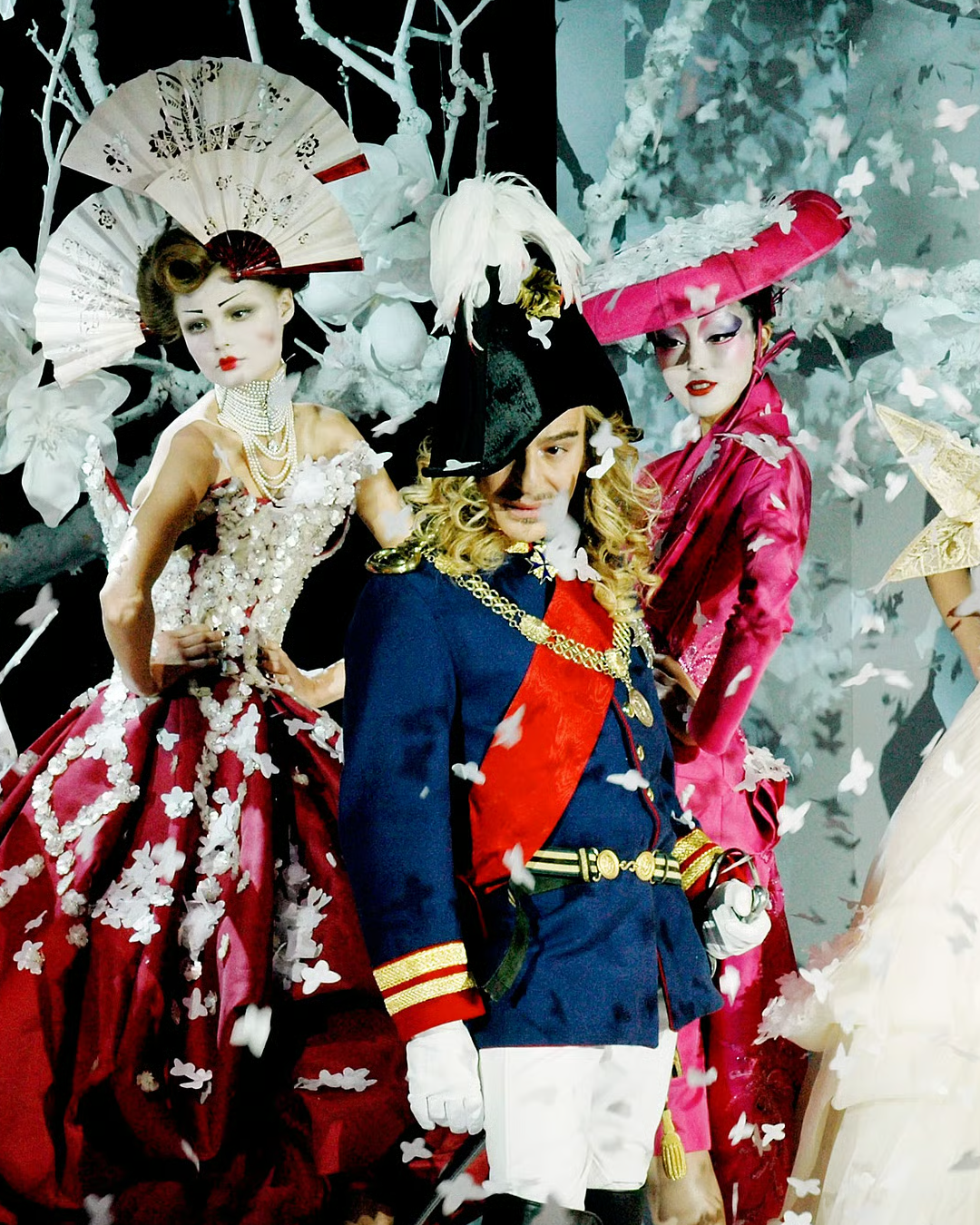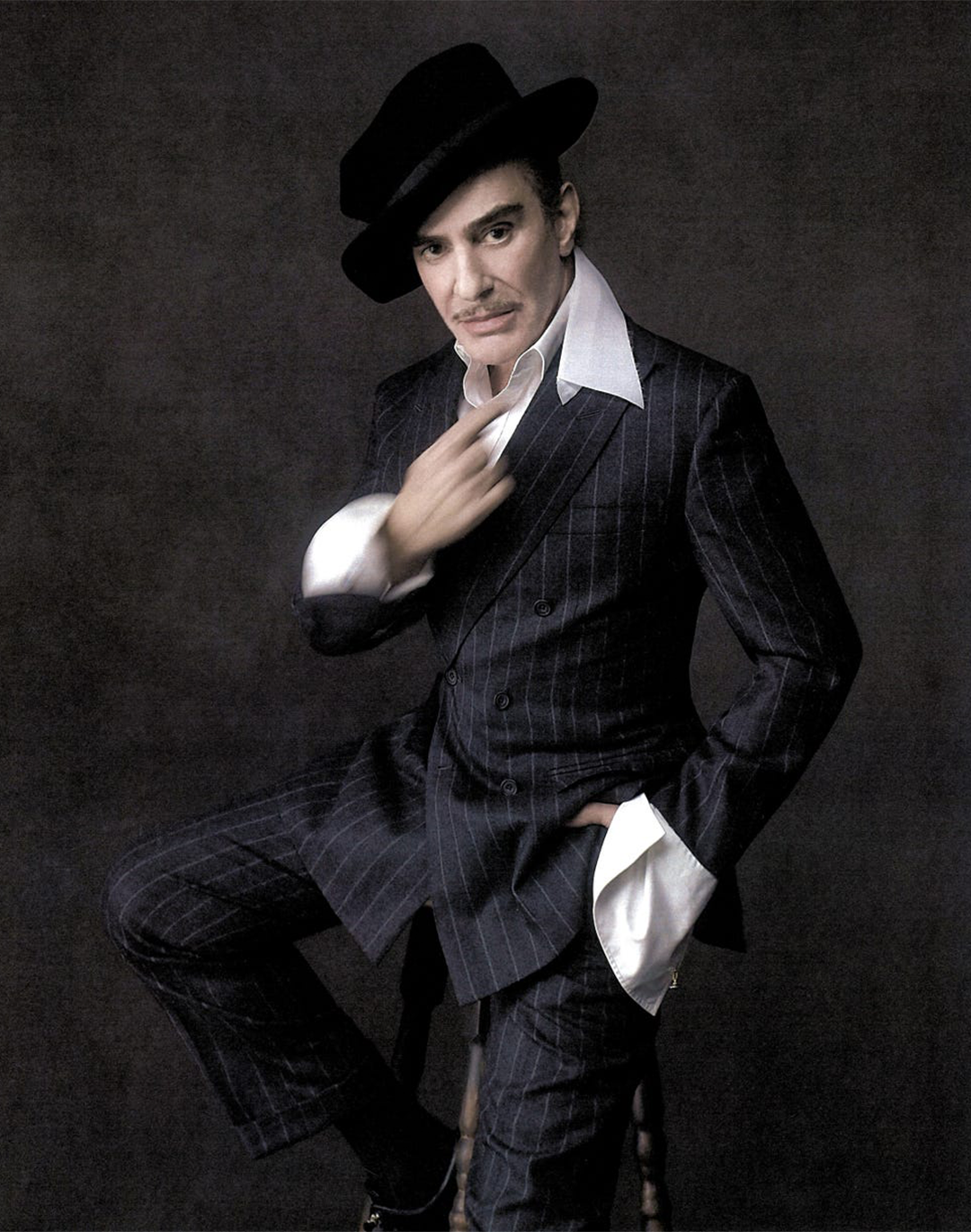





















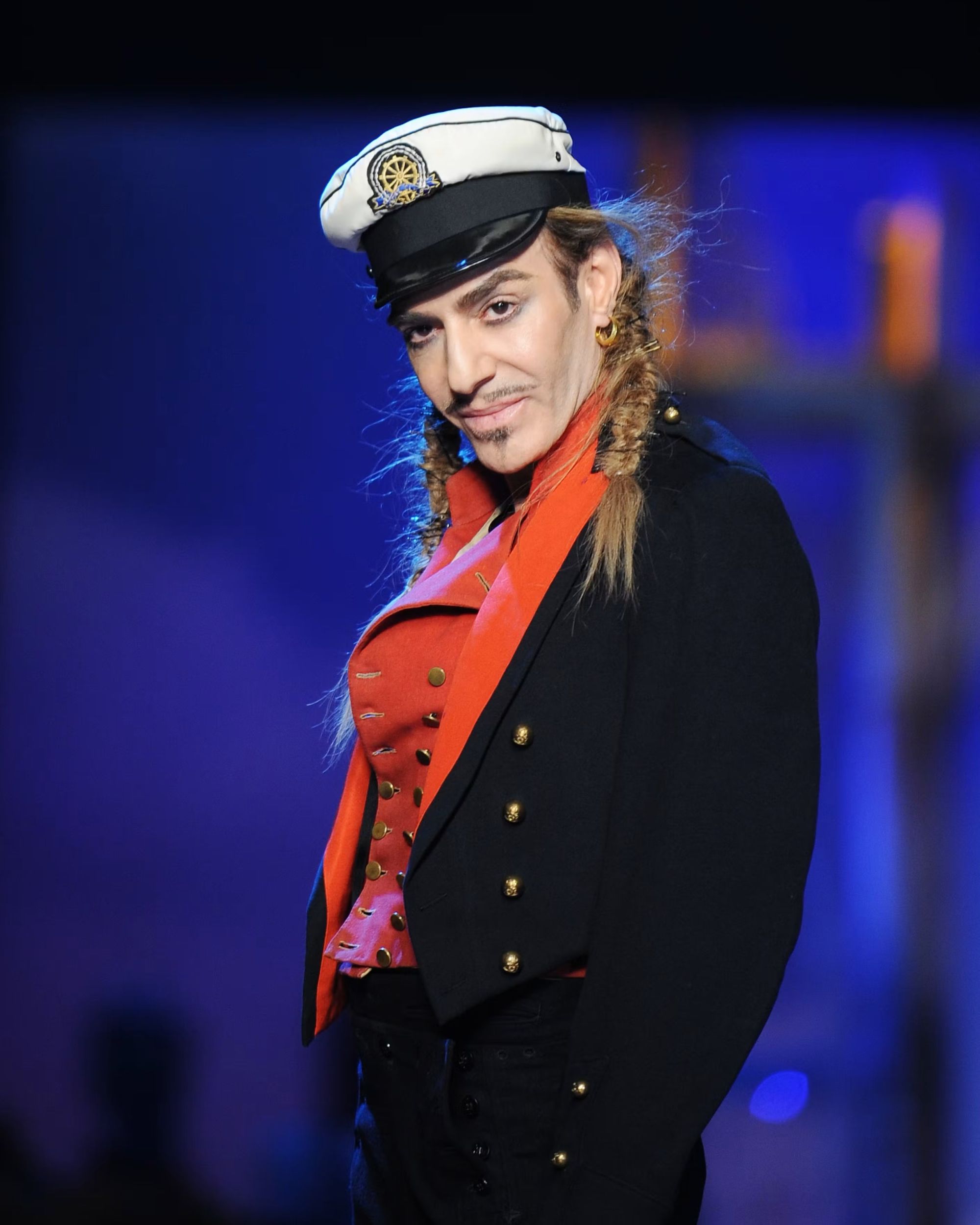
Who comes out on top from the cancellation of John Galliano's Met Gala? The pressure on the designer has been immense, but he is now more popular than ever
In media parlance, the so-called "Streisand Effect" refers to the phenomenon whereby attempts to suppress a piece of information only bring greater visibility to that very information. Transposing this into the terms of the now-defunct cancel culture, one might say that attempts to cancel something or someone only serve to give it further notoriety. And this seems to be precisely the case with the cancellation of the exhibition John Galliano: Horizons at the Met in New York. The entire fashion world had embraced almost without reservation the idea of such a significant tribute to the most beloved living designer of all — except that some reservations did exist. They came from the donors, patrons and benefactors of the Met Gala who, outraged, threatened to suspend their vital contributions, prompting both the designer himself and the museum's directors to backtrack.
Certainly, the point that the Met's financiers almost certainly pressed concerns a fairly serious social transgression by today's standards (the story of which we recount in this article). More than a decade after the designer's infamous outburst at La Perle in Paris, one is left wondering whether media suppression is truly preferable to a deeper process of recontextualization. Cancelling John Galliano: Horizons, after all, will only enhance the designer's fame and intensify the desire to see him honoured with a monumental retrospective celebrating his impact.
Apologies, doubts, exiles
@gowneyedgirl Is it still considered taking accountability if it’s court ordered? #metgala #johngalliano #dior #vogue #fashiontiktok Chopin Nocturne No. 2 Piano Mono - moshimo sound design
When the terrible incident occurred, Galliano was a broken man. Burned out by work and in the grip of addiction, he watched his career crumble, found himself an untouchable pariah, and saw everything he had built dragged through the mud. That Galliano managed to recover was because he started from scratch, thanks in part to the gamble taken by Renzo Rosso, who, after three years of semi-exile from fashion, handed him the creative directorship of Maison Margiela.
The designer apologised countless times, undertaking a full rehabilitation process — both from his addictions and in relation to the Jewish community he had so gravely insulted — through educational programmes with Rabbi Barry Marcus and with Anti-Defamation League director Abraham Foxman. In 2015, he issued a public apology at a London synagogue, one that was later immortalised in the documentary High & Low, enshrining it permanently in the historical canon of fashion. The stigma left on the designer's reputation is indelible, encoded forever into every narrative that surrounds him.
And yet there are two significant "buts" to be raised in this affair. The first concerns Galliano himself. Both journalist Louis Pisano and fashion publicist Lauren London have claimed that the designer's offensive behaviour was not an isolated incident but part of a repeated pattern. The incident mentioned by Lauren London, allegedly occurring in 2019 at a spa in Merano, was declared false by Galliano's representatives, leaving the entire situation at an impasse in which it is her word against the designer's. A Twitter user by the name of Isabel Corneille wrote that Galliano's offensive behaviour allegedly continued even after the 2011 incident, though here too the evidence provided is purely anecdotal.
The second "but" concerns Galliano's reputation. Met exhibition or not, the designer enjoys the more or less public esteem of virtually everyone in fashion. His exile lasted, in the end, just three years, during which he continued to teach at Central Saint Martins and even designed a seasonal collection for Oscar de la Renta as a guest designer. Throughout this period, his collections — and above all his archival pieces — were never banned but continued to earn praise, and in recent years, between vintage pieces and modern reinterpretations, they have featured prominently both on the most prestigious red carpets and in online moodboards. Was this truly an exile?
What effect will this cancellation have?
My brain is refusing to let me think Anna wintour could be this naive follow me light conspiracy theory: she knew he was never realistically getting both Zara & the Met, but if she played her cards right, she could turn the whole thing into leverage. Let him make the step down… https://t.co/kqJZGecMQV
— Hifashion (@HifashionPages) August 31, 2026
It seems clear that Galliano will not, in his lifetime, see a Met exhibition dedicated to him. And indeed, dedicating an exhibition to a living designer — however deserving, at least on an artistic and cultural level — is an honour so great that perhaps it ought to be posthumous. The real diplomatic defeat, perhaps, belongs to Anna Wintour, who attempted to make the exhibition happen only to discover that there are powers greater than her own: she still wields considerable influence, but she no longer holds hegemony. Yet who will seize this opportunity? The point is precisely that there are other museums that could host a Galliano retrospective.
Just as the world's most famous fashion exhibition, Alexander McQueen: Savage Beauty, was organised at the Met before being significantly expanded and enlarged at the V&A Museum in London, a potential Galliano retrospective could equally be hosted by any number of major institutions without the whole affair becoming a scorching media and political controversy. The very fact that the exhibition was cancelled has made it all the more desirable, more epoch-defining, more controversial. This is the Streisand Effect mentioned earlier.
Fashion is hardly short of brilliant figures who have committed more or less unforgivable mistakes. There are designers who have put racist accessories on display, who have nearly destroyed themselves by insulting entire nations, who have sent turbans and straitjackets down the runway and been forced to issue profuse apologies. Yayoi Kusama, who recently passed away, is remembered for several racially charged remarks, as is Karl Lagerfeld. And as for Coco Chanel's associations during the Second World War, there is little room for denial — at most, the moral interpretation of the facts may vary.
The point is that separating the art from the artist is something the public, historically, does regardless. Anyone approaching fashion today and studying John Galliano will encounter his collections, his work, and his problematic tendencies (the designer produced cultural caricatures left and right throughout his collections, including Native American and Taliban costumes), but unless reminded, they will know nothing of that night at La Perle in 2011. One can therefore punish the man Galliano, and one can justifiably deny him the world's most important pedestal — but if his condemnation is already pronounced and sealed, so too is his fame. The punishment he receives today will only serve, in the long run, to make him a martyr. And the public will always love an underdog fighting for redemption.
What to read next
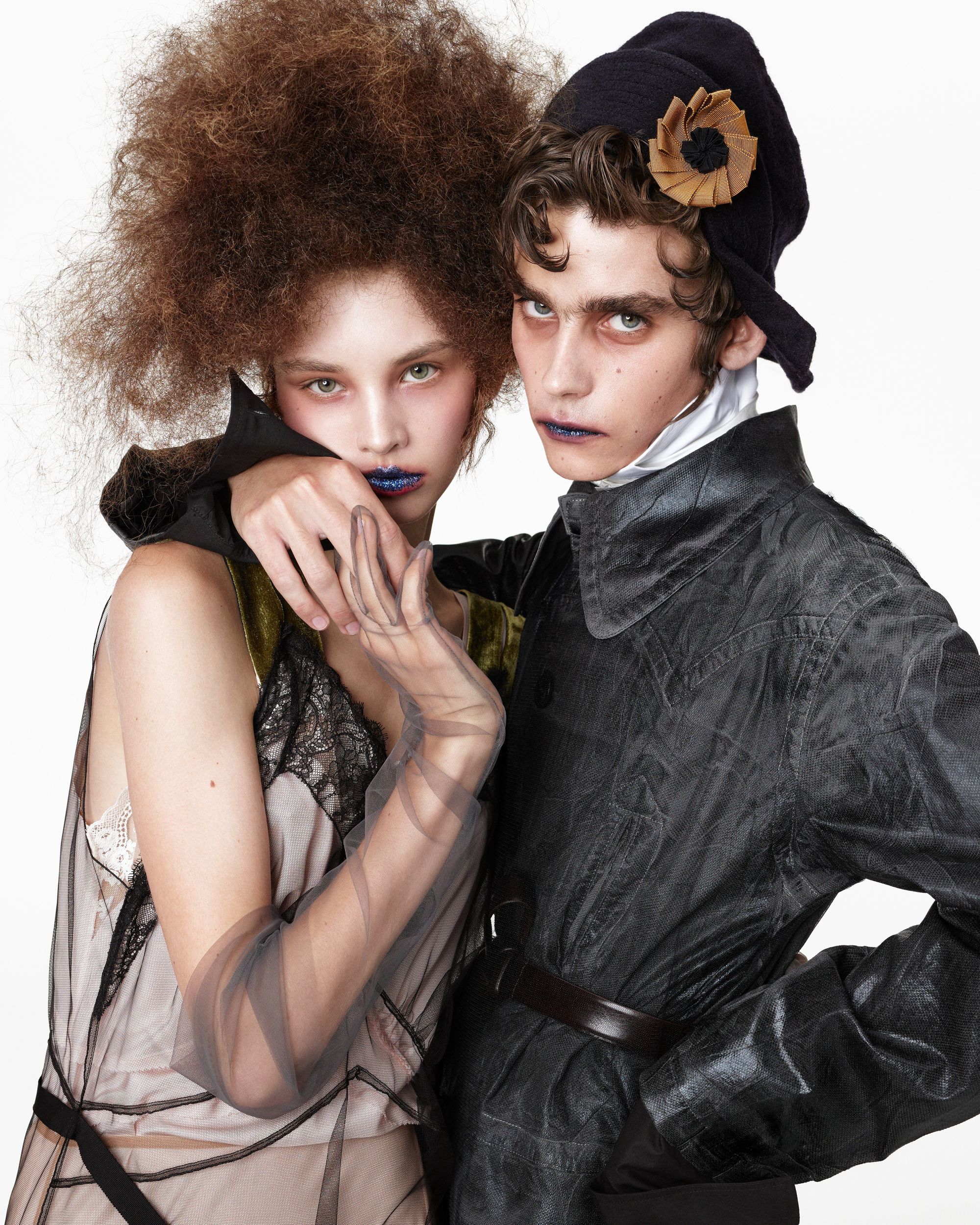
The first Re{form} Zara collection signed by John Galliano has finally arrived
And it's as beautiful as we expected
Dior to present its cruise collection in Shanghai next spring
Setting Sail for the Paris of the East