
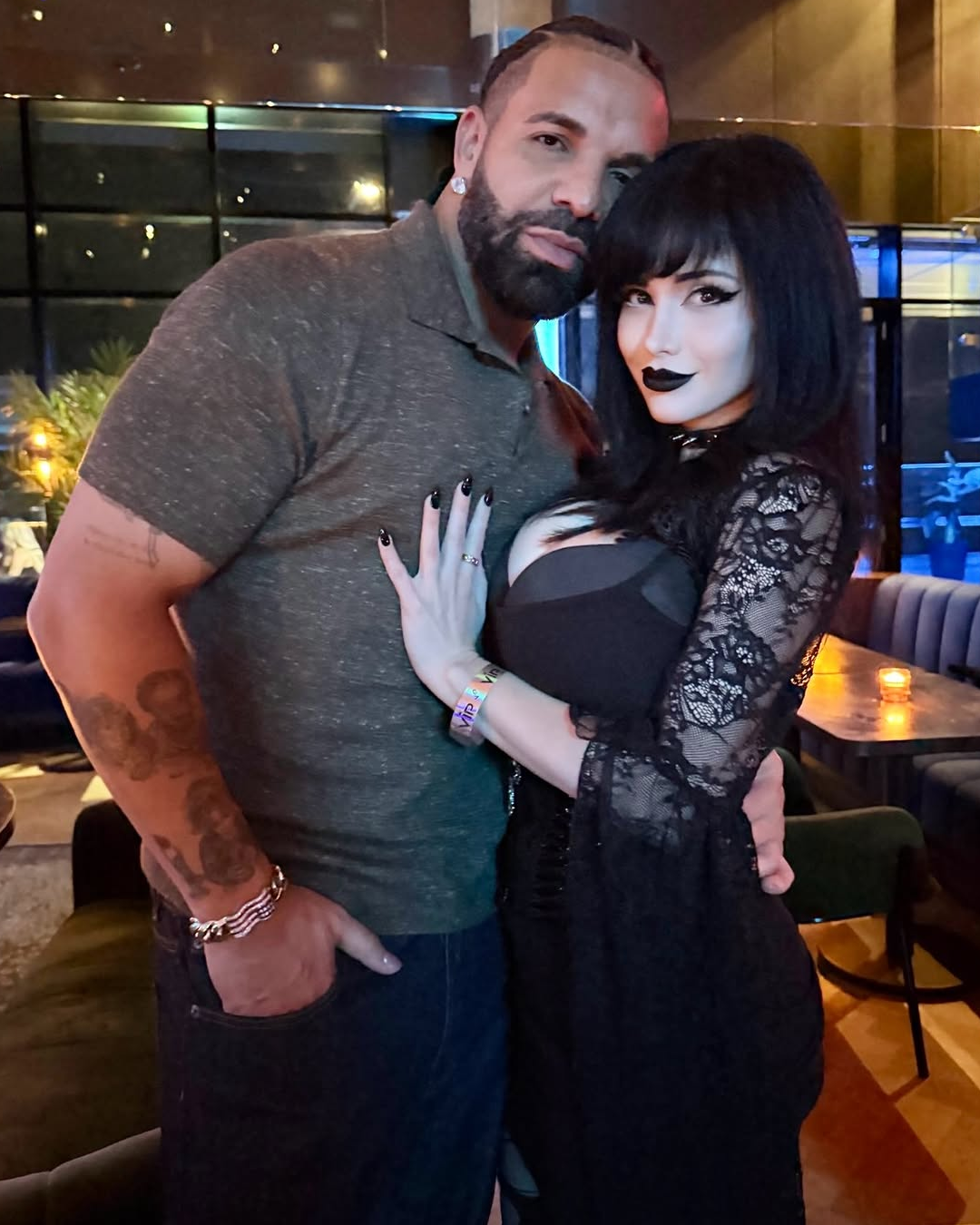
What does it mean to be goth in 2026? Yet another subculture that has entered the mainstream imagination
There was a moment when dressing in black from head to toe meant making a statement — not necessarily one of sadness: it meant belonging to a scene, identifying with a shared imaginary. Goth was born as a subculture and for decades built its identity precisely through what set it apart from everything else. Today, however, that same aesthetic has become one of the most instantly recognizable languages of pop culture. The question is no longer why goth entered the mainstream, but how much of the mainstream has now become goth.
A recent piece of data perfectly captures the scale of this transformation. Following the release of Drake's video with Pinkchyu, Pornhub shared research with its Insights team recording a sudden surge in searches associated with the creator and, above all, with goth and alternative imagery. Starting August 8, searches for Pinkchyu reportedly increased by a total of 3,041%, reaching a peak of approximately +4,500% above average. But the most significant figure concerns what happened around the individual herself: "Goth" grew by 90%, variations of "Goth Girl" by an average of 261%, with a peak of +460% on August 12, while "Alt Girl" and "Alternative Girl" registered a +42% increase. The phenomenon tells us something that goes beyond the virality of a single piece of content. One search leads to another. It is the journey goth has made over the past forty years: from alternative identity to global visual repertoire.
Goth before fashion
@bigbackdiaries89 Real Trad Goth #tradgoth #goth #80sgoth #fashion #culture som original - mortal’s
The movement's origins lie in the British post-punk scene of the late 1970s and early 1980s: a world of literature, fashion, and fascination with the macabre, the supernatural, and melancholy. Black, velvet, leather, lace, fishnet stockings, corsets, boots, and silver jewelry constructed an immediately legible aesthetic.
Elements drawn from punk blended with Victorian, Romantic, and even occultist references. The body thus became a surface on which to make an identity visible. It is precisely this aspect that makes goth particularly interesting to fashion: even before it was absorbed by the runways, it had already developed an extremely sophisticated aesthetic system.
Goth imagery in the fashion system
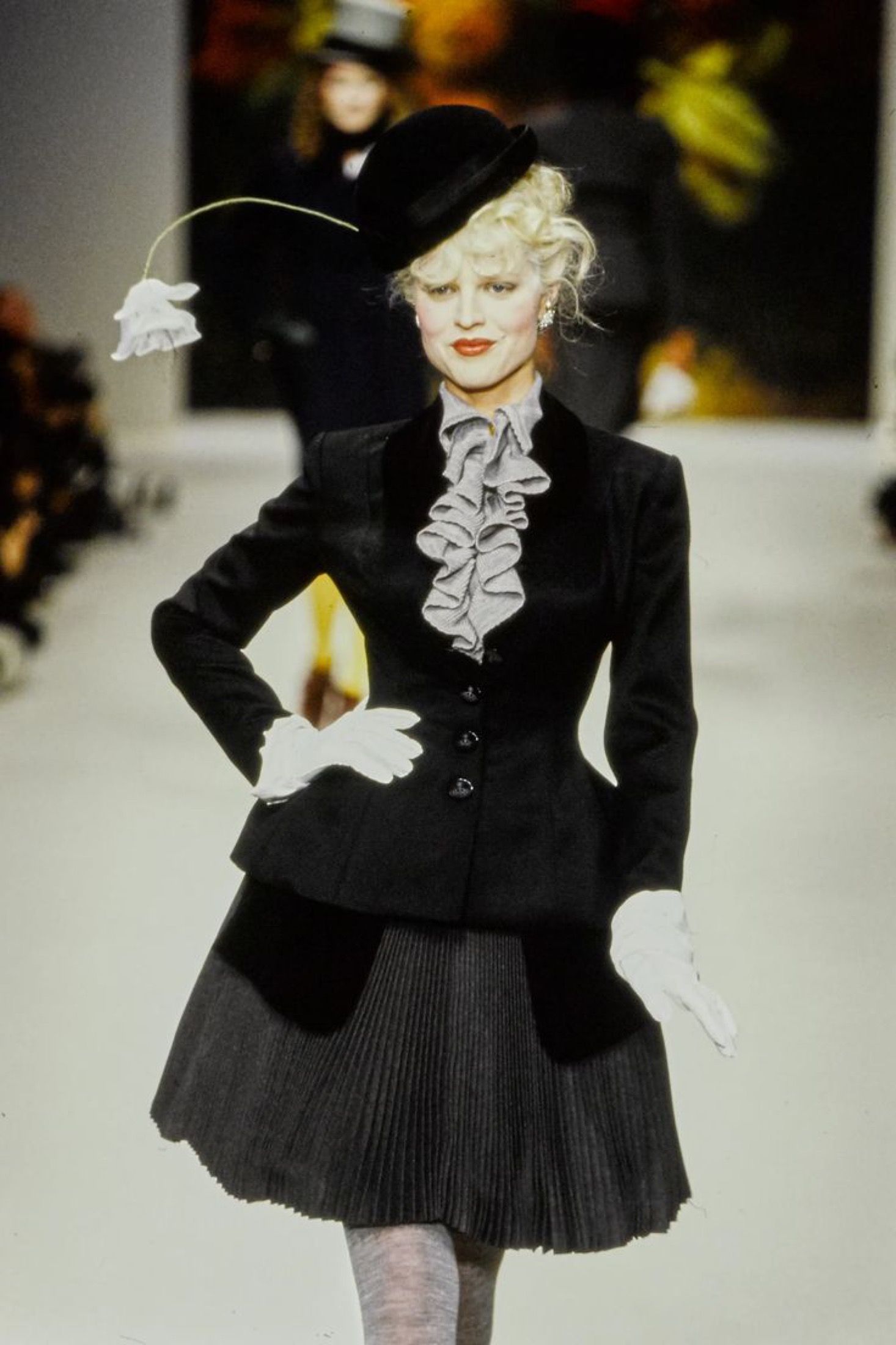
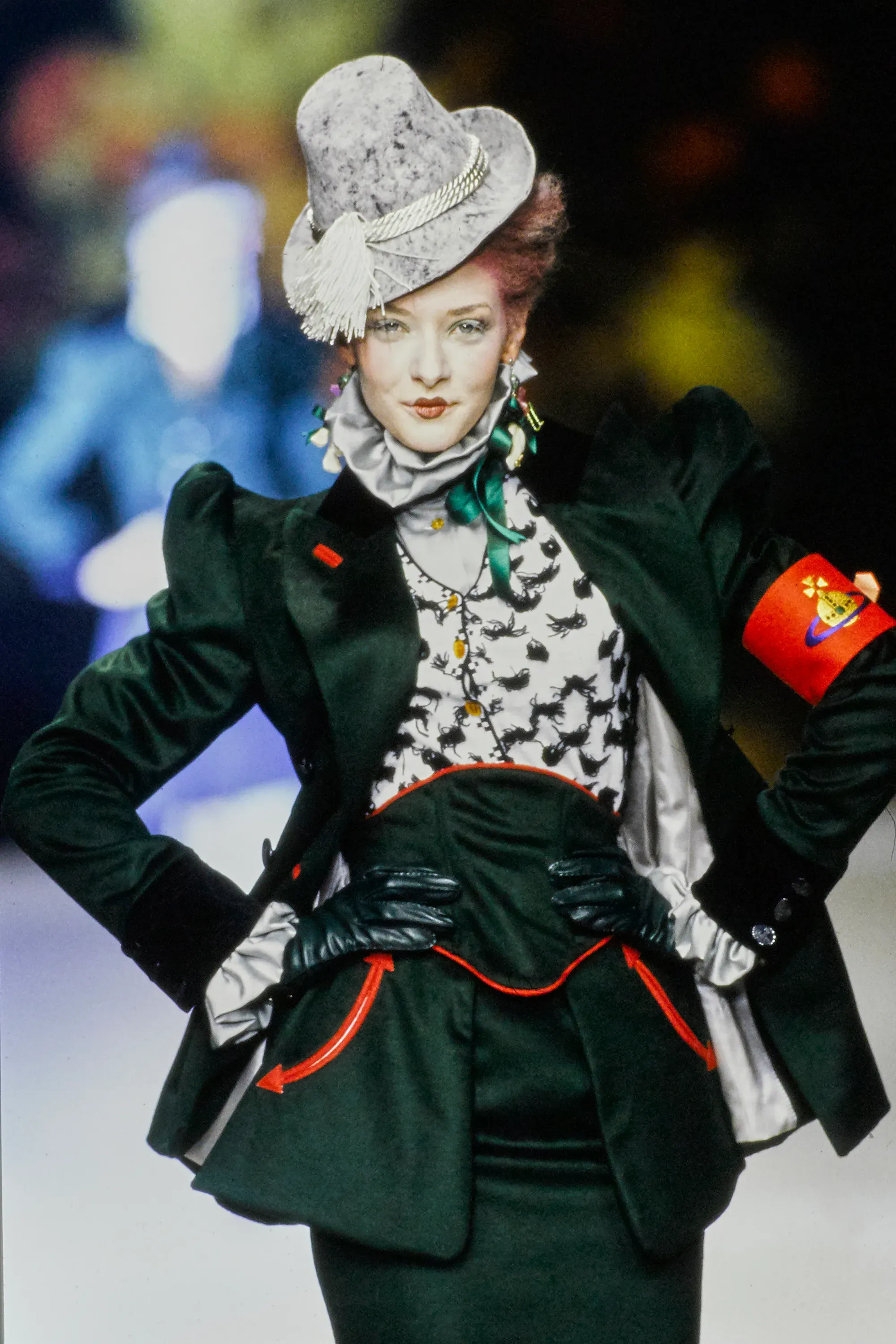
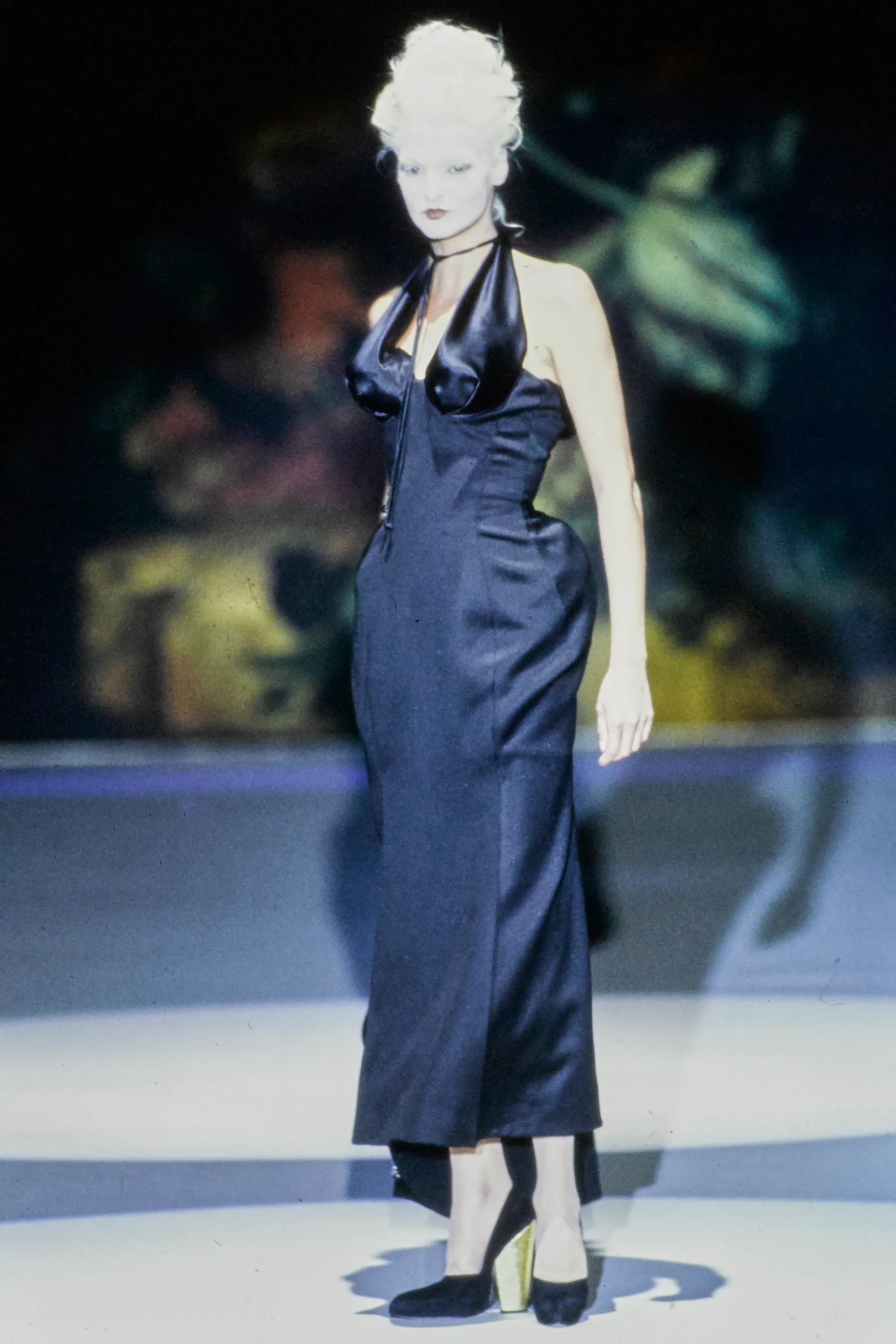
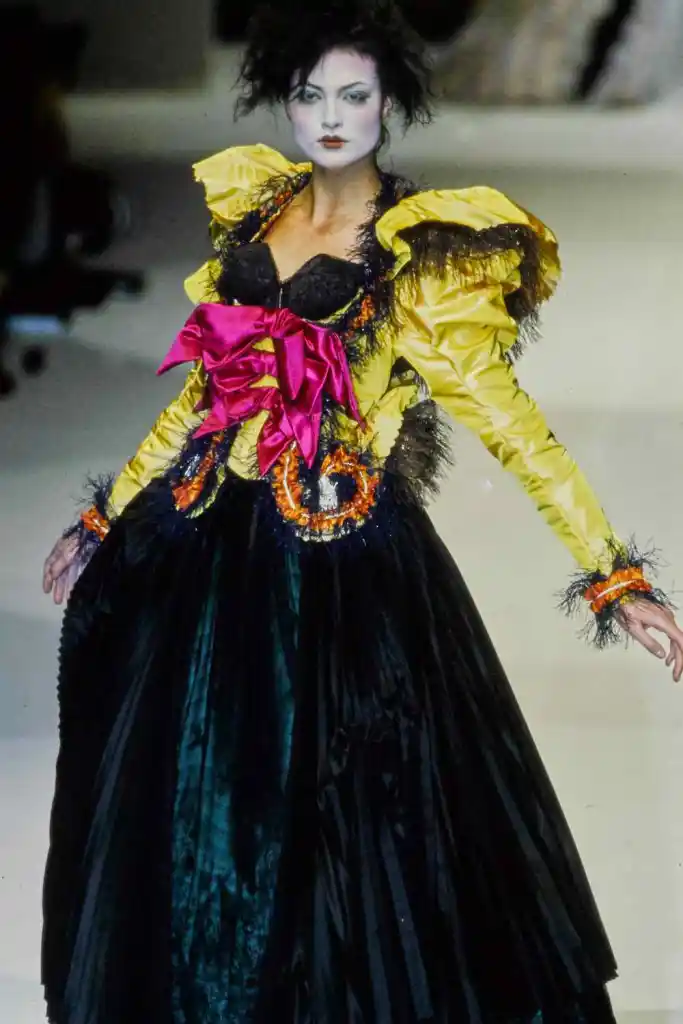
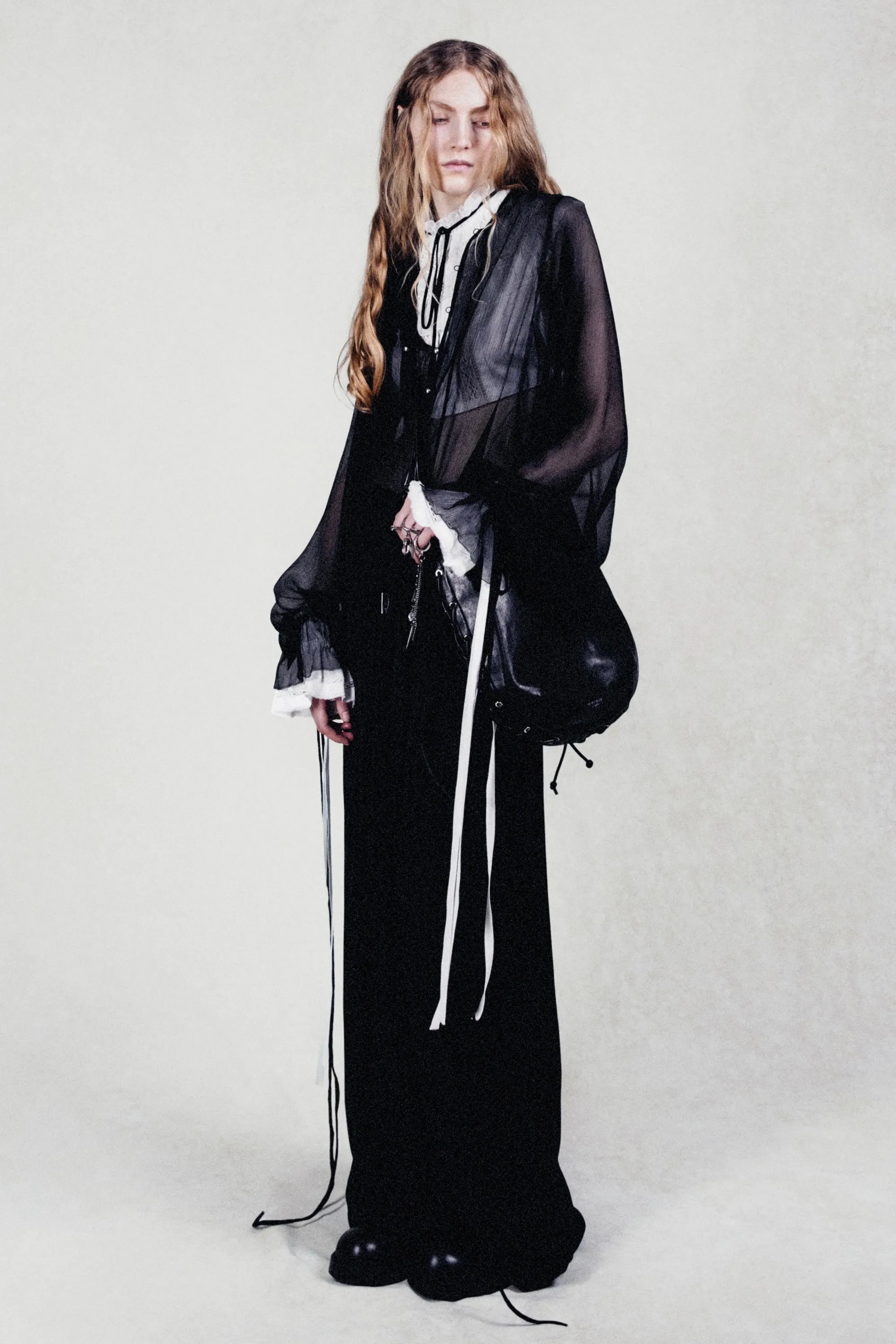
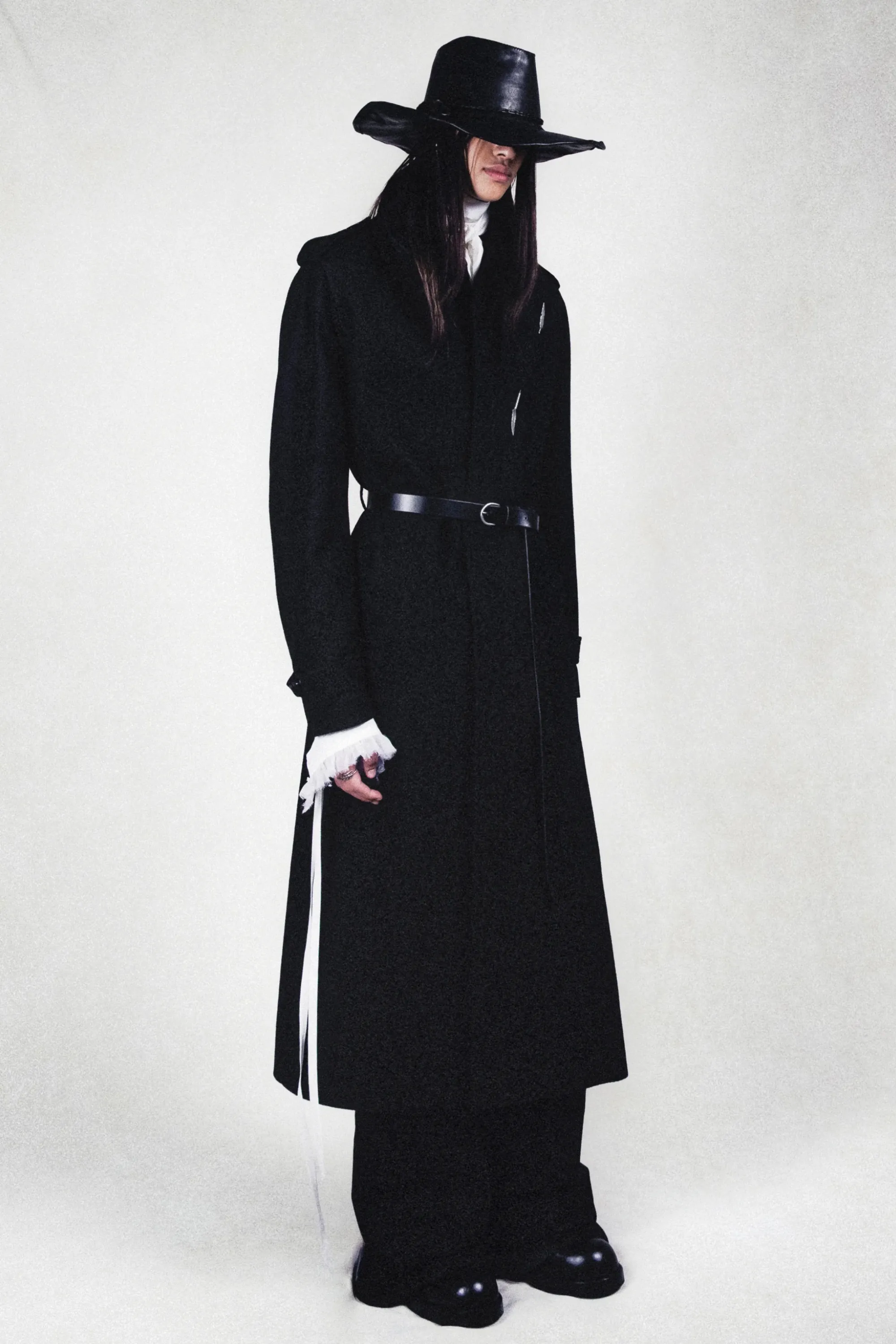
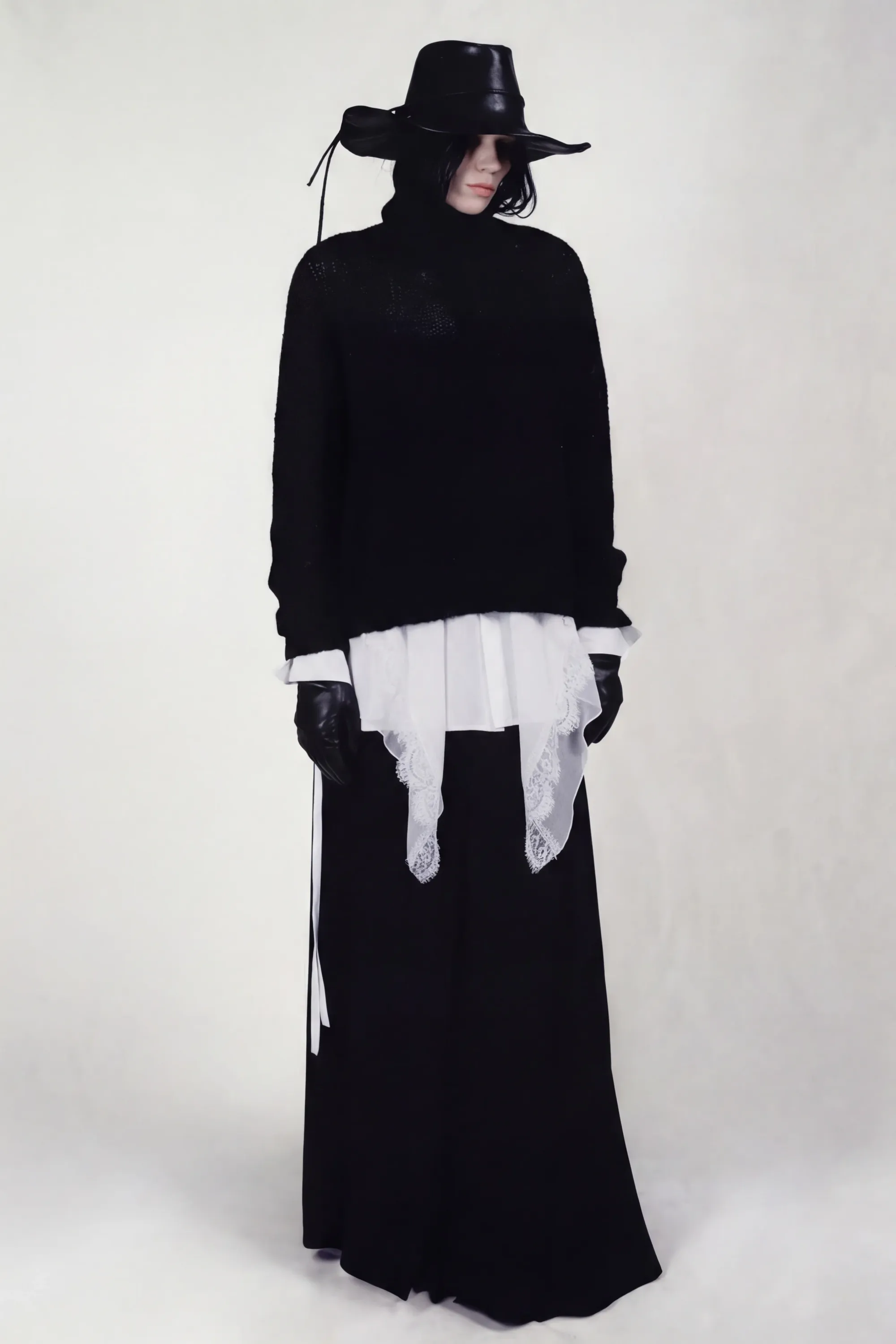
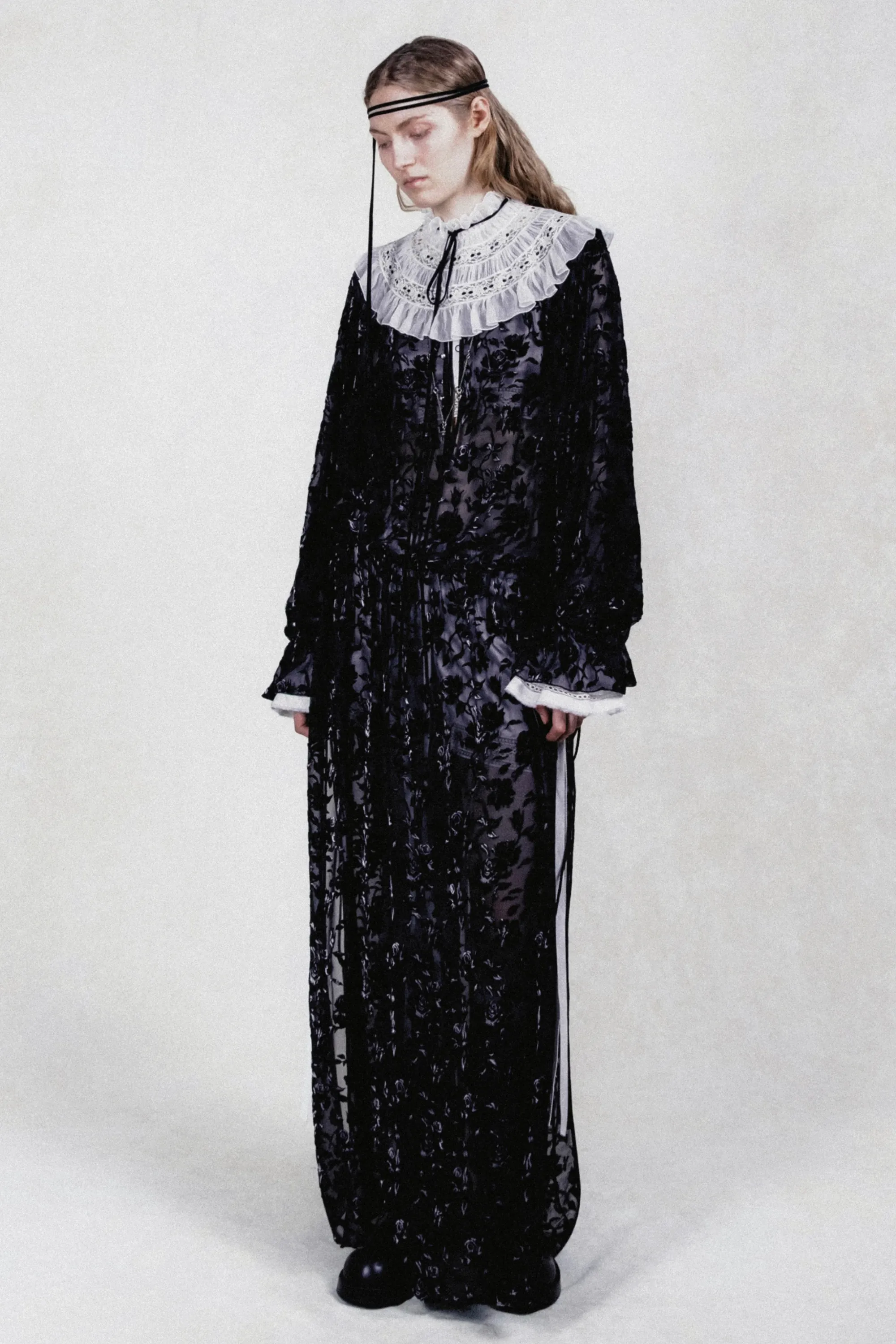
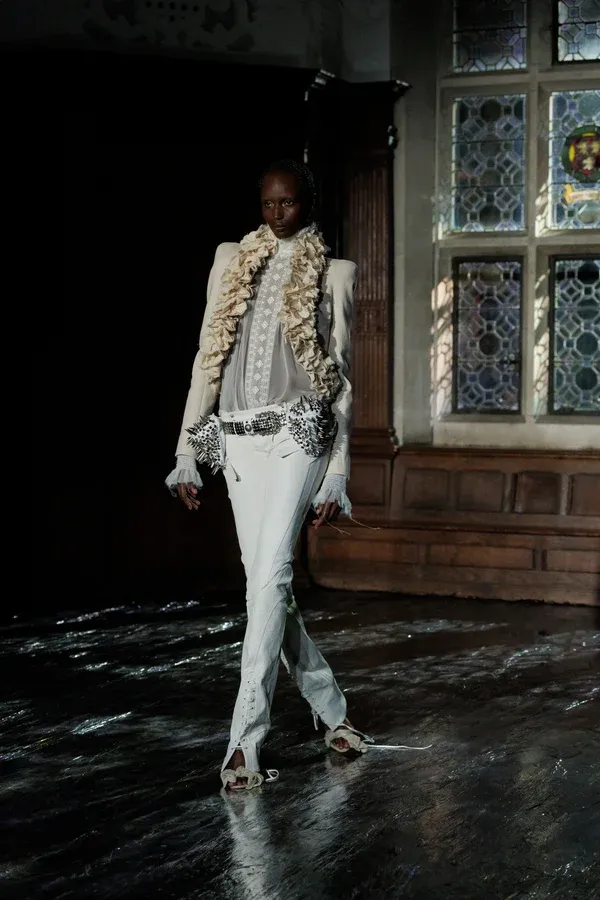
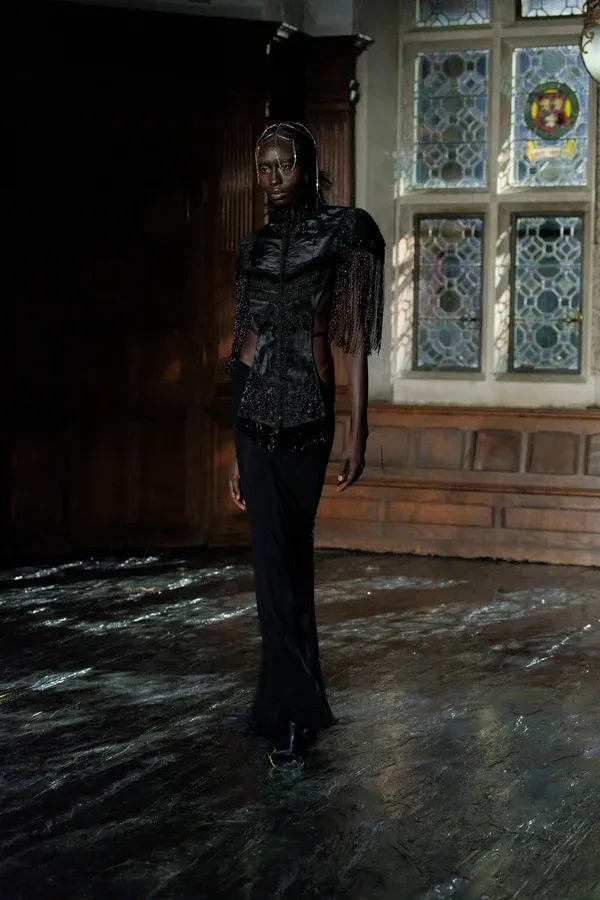
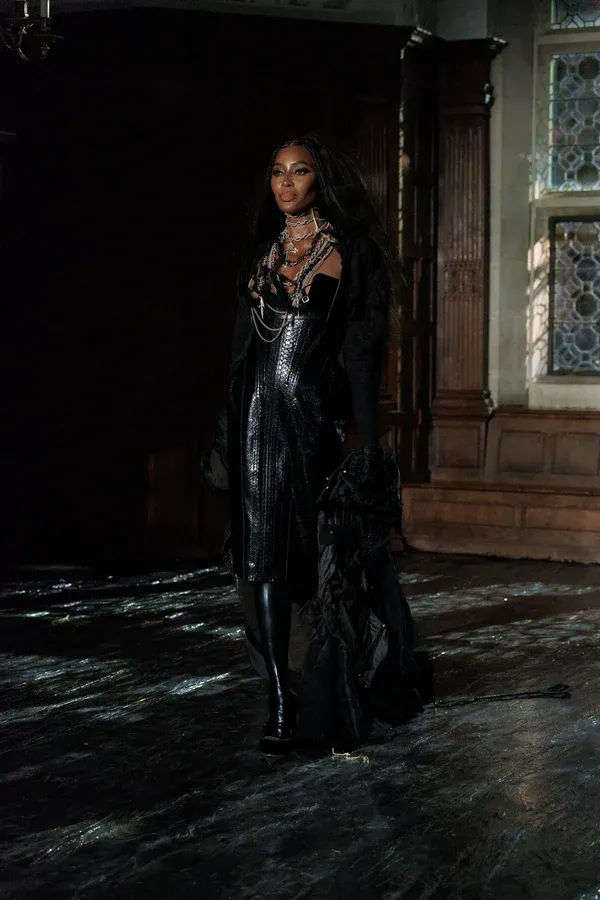
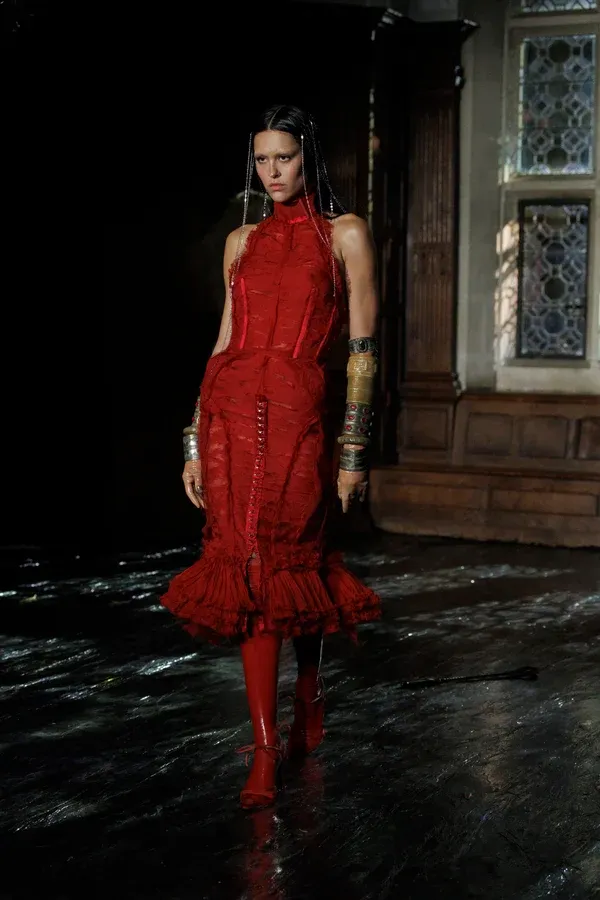
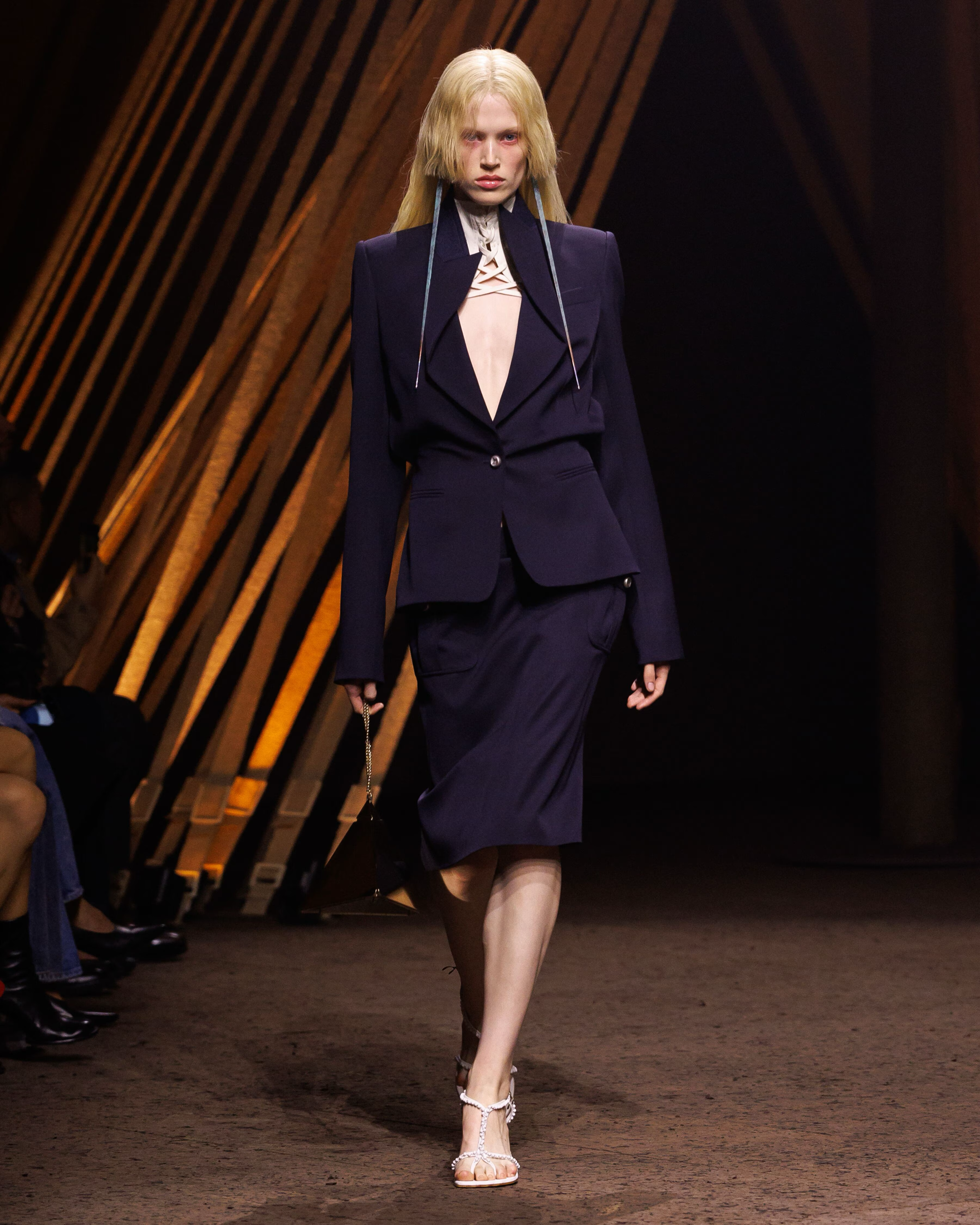
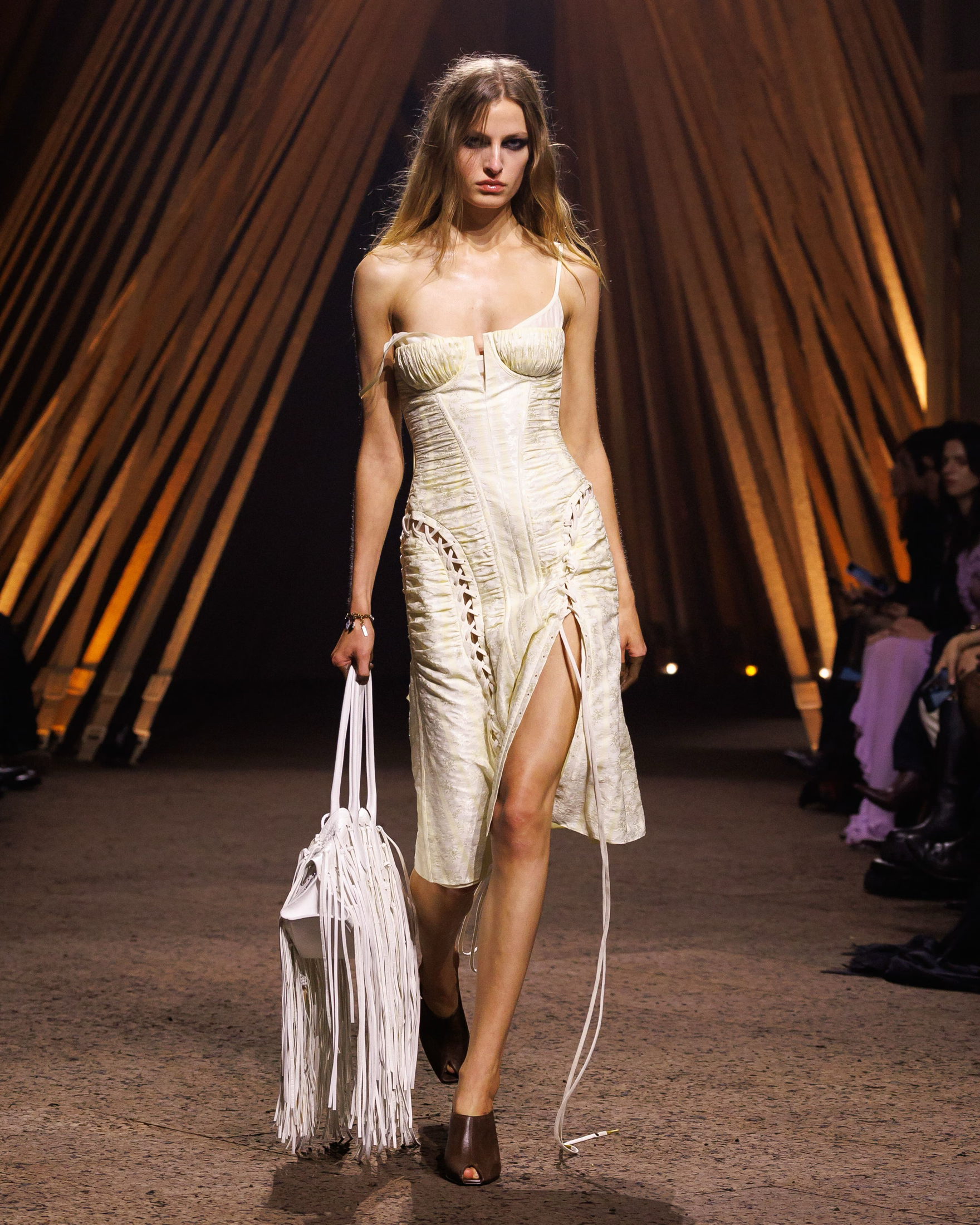
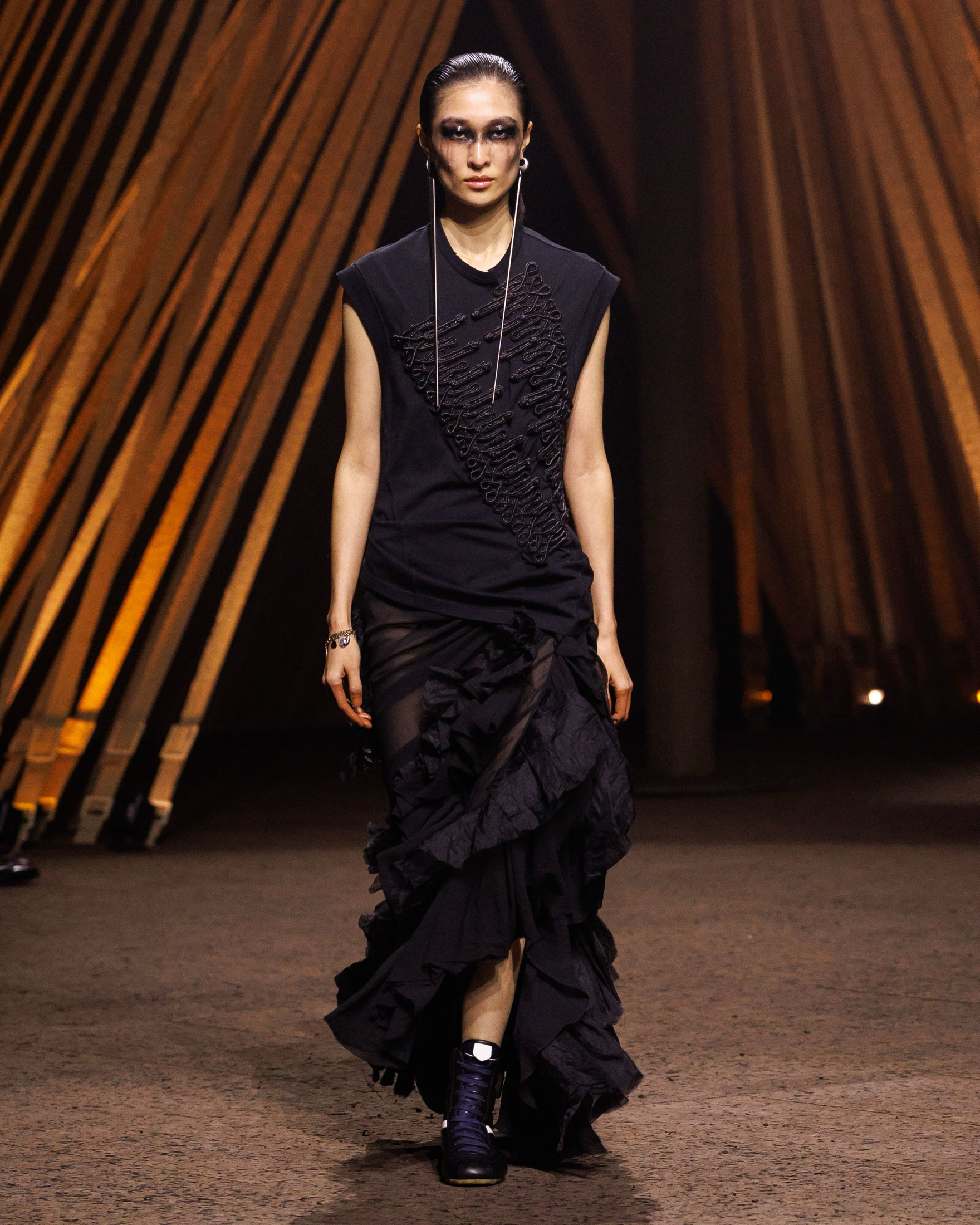
The relationship with mainstream fashion did not, in fact, begin only in recent years. Designers like Vivienne Westwood had already demonstrated how punk, romanticism, and theatricality could be transformed into a language capable of entering fashion's institutions. A prime example is the aesthetic of the FW95 collection, in which Westwood drew on elements of historical dress, eighteenth-century silhouettes, bold colors, and a theatrical romanticism.
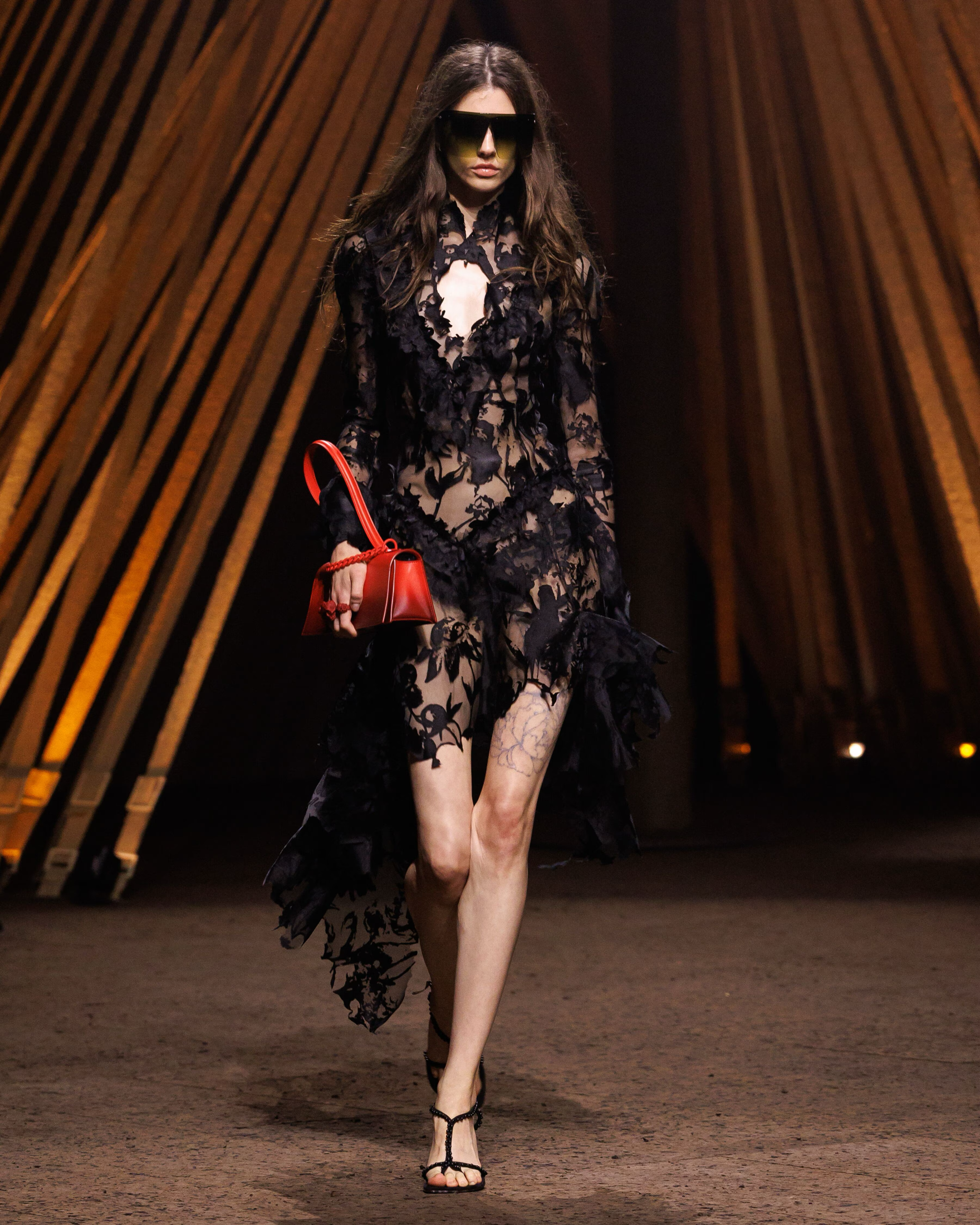
Ann Demeulemeester's Pre-Fall 2026 is probably the most precise case in point. Vogue explicitly speaks of "Victorian dark-romantic flourishes": removable lace collars, fluid and transparent devoré velvet dresses, tailoring inspired by Nick Cave, Napoleonic jackets, and references to the 1996/97 archive. Meanwhile, Dilara Findikoglu's SS26 is the most explicitly subcultural reference. The show was attended by goths and rockers, while the collection moved between dark romanticism, sensuality, leather, and corseted constructions.
McQueen's SS26 presents no longer an aesthetic provocation but a grammar of the contemporary. Details become tools for interrogating identity, vulnerability, and power. Darkness is not represented: it is transformed into language. Fashion has thus begun to borrow elements from the subculture without necessarily adopting its identity.
When black becomes luxury
Fashion has a particular relationship with subcultures. It observes them, absorbs their codes, modifies them, and ultimately returns them to the public in the form of a product. It happened with punk, with streetwear, and with grunge — and it happened with goth too. Black, once associated with the underground scene, becomes a luxury choice. The result is a far more fluid aesthetic. Goth, emo, punk, grunge, alternative, and even Y2K end up in constant dialogue on social media. TikTok and Instagram accelerate the process further: subcultures are broken down into individual elements, tutorials, moodboards, and microtrends. Belonging gives way to the possibility of constructing one's own style through disparate references. Contemporary goth does not therefore necessarily require listening to gothic rock, frequenting a scene, or identifying with a community. One can simply love black, dramatic makeup, leather, romantic silhouettes, or dark aesthetics.
The most immediate face of this evolution is perhaps Jenna Ortega: having transformed Wednesday Addams into a new dark icon, she brought that same imagery into the fashion system. Alongside her, Amelia Gray interprets goth through total black and a punk attitude, while Gabbriette Bechtel renders it more sensual through heavy makeup, leather, and body-hugging silhouettes. Three different expressions of the same phenomenon.
From subculture to algorithm
@pinkchyu The favorite goth girl has arrived #goth #gothgirl #germany Судно (Борис Рыжий) - Molchat Doma
The Pinkchyu phenomenon did not emerge from a vacuum — it exploded on August 8 during the format 20 Women vs. Drake, when the creator was chosen by Drake as the winner of the dating show, and subsequently invited to Toronto for a second date. Pornhub identified among the goth creators on the platform names such as Joanna Angel, Lana Bee, Alma Bohler, Leah Meow, and Millie Millz. The list is interesting because it shows how the "goth" label has today become so broad: it no longer necessarily identifies a single aesthetic, but a territory encompassing gothic, alternative, punk, cosplay, horror, and dark romanticism.
This is the point at which the Drake case becomes truly interesting. When a mainstream piece of content produces a sudden spike in searches for "Goth Girl," it does not necessarily mean that thousands of people have suddenly embraced a subculture — rather, it means that the imagery has become recognizable. The algorithm does not need to explain what goth is; it recognizes it as a category and, above all, knows that an audience interested in that category exists. A subculture can become a search query, a hashtag, an outfit, a trend, or a viral piece of content. Belonging has become accessible, modular, and above all commercializable. The fate of subcultures may be precisely this — to be born in order to stand apart, and to end up being imitated. Goth, however, has managed to do something particular. It can be embodied by someone who lives the subculture every day, or by someone who borrows only a single detail from it. So if goth is now everywhere, can it still be considered a subculture?
What to read next

Seán McGirr has left the creative direction of McQueen
The announcement comes from Kering, the group that owns the British Maison
Westwing and Victoria Beckham have collaborated on a tableware line
The English designer explores the world of the table
Acne Studios announces a collaboration with Hussein Chalayan
A capsule inspired by the designer's most iconic collections and a dedicated volume published by Acne Studios