
































Zara's pants and other items that went viral for being defective Killer trousers, crumbling soles, and mutant lipsticks
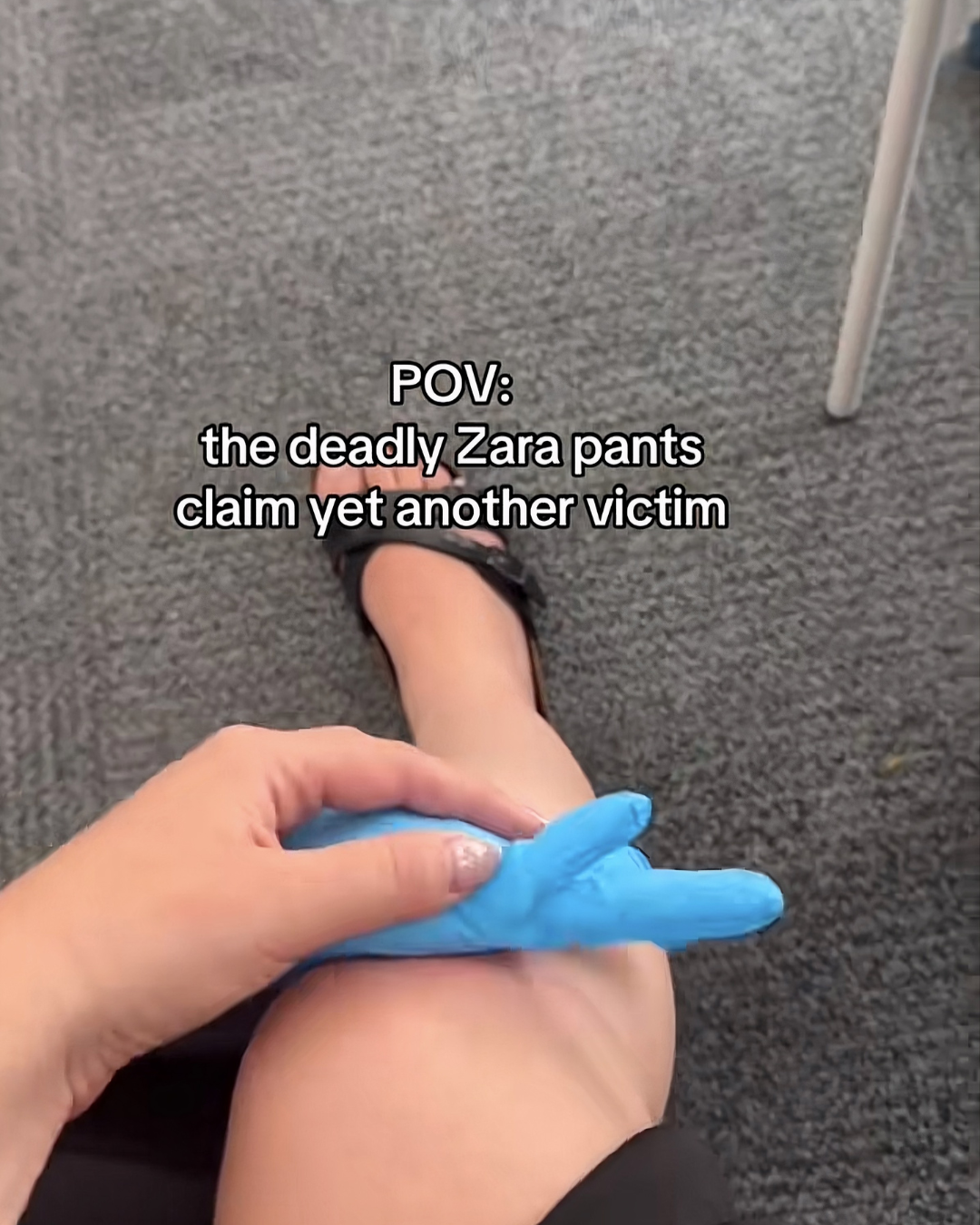
We've been telling you for a while now that fast fashion is dangerous for your health and for the planet. Admittedly, our warnings didn't quite extend to broken femurs and stitched-up chins (excessive polyester sweating was about as bad as it got), but, as they say, there's no limit to how bad things can get. The internet recently went into a frenzy over a pair of trousers from Zara's Full Length line in faux satin (100% polyester), promptly labelled "the deadly pants" (or "the hazard trousers"), accused of causing accidents to anyone who dares wear them.
The problem is as mundane as it is dangerous: the garment's slippery, lightweight fabric lacks enough weight or structure to fall predictably, and the excessively long hem gets caught under the opposite shoe sole while walking, causing genuine accidents. To borrow a TikTok neologism, "the saxophones are getting louder" (a reference to the soundtrack of the 1991 film Boyz n the Hood).
Hundreds of survival diaries have appeared on TikTok, with girls recounting how they slipped on escalators or were forced to gather up the fabric like they were wading a river just to get down the subway stairs without falling. It's not the first time a product has failed to work as intended, triggering a corporate crisis or spawning thousands of memes online.
Here are some other cases — spanning different eras and product categories — that show how a manufacturing flaw can become a viral phenomenon.
The Fitbit Force contact dermatitis cases (2014)
I miss wearing my #fitbit but the #fitbitrash just won't go away. :(
— Carol Hope (@run_carol_run) August 16, 2015
A textbook case of spontaneous digital activism, born even before the TikTok era. In January 2014, users of the Fitbit Force fitness band began posting photos of redness, blisters, and what looked like genuine "burns" at the point of contact between their wrist and the device.
One user, Kim Reichelt, created a public database for tracker victims, fuelling a real online mobilisation: in no time, the list grew from 198 to nearly 800 testimonials, with close to a thousand people having reported similar symptoms on the official Fitbit forum. The culprit? According to statements made by James Park, the company's chief executive and co-founder, some users may have been reacting to the nickel present in the device's stainless steel. Others, again according to Park, may have experienced a more specific allergic reaction to the band materials or the adhesives used to assemble the product. The incident led to a recall of one million units in the US, a refund for buyers, and the complete discontinuation of the product.
The adidas Yeezy Boost 350 soles
@sunnyutkvy4 I haven't worn it for more than a year, and I can't bear to lose it #shoes #sneakers #diy #fashion #asmrsounds #asmr #shoerepair #CleanTok #cleaning #shoeswashing #yeezy #yeezy350 #fyp original sound - sunny_bee
The sneaker community, right at the peak of the streetwear boom, split across Reddit and YouTube, between those who condemned (so to speak) their idol Kanye West and those who defended him tooth and nail. The expanded polyurethane sole on certain Yeezy 350 models showed signs of a chemical process called hydrolysis: moisture in the air and ground gradually breaks down the chemical bonds in the polyurethane, turning a compact, resilient sole into a crumbly mass that cracks or disintegrates.
A fate that also strikes shoes never worn and kept perfectly in their original box, because the process doesn't depend on use — only on the passage of time and storage conditions. The same sole also developed other issues, including yellowing caused by oxidation of the material when exposed to light, which led devoted consumers to invent and sell protective sole covers online to slow the deterioration.
The phenomenon spawned a small parallel industry of Yeezy sole repairers — craftspeople or DIY enthusiasts posting sole replacement videos — and became an inside joke among enthusiasts: buying Yeezys as an investment, only to find them decomposing in the wardrobe a few years later, along with their resale market value. This type of malfunction, common to other shoe models and other brands using similar polymers, pushed the community to debate whether to actually wear their expensive purchases (even at the risk of damaging them) rather than letting them silently deteriorate in the box in an attempt to preserve them.
Jaclyn Cosmetics x Morphe: the offending lipsticks (2019)
It’s normal for Jaclyn Hill Cosmetics
— here for the tea (@HereForTheTea2) June 10, 2019
In May 2019, YouTuber Jaclyn Hill announced a collaboration with cosmetics brand Morphe. The creator's involvement in makeup brand partnerships (including, previously, Becca and Morphe itself) had already yielded questionable results, leading companies to pull certain product batches from the market. A track record that should have raised red flags — yet it didn't stop thousands of customers from purchasing lipsticks from the new Morphe x Jaclyn Hill collection, driven by the creator's enormous fanbase. What awaited them were visibly defective products: air bubbles trapped in the formula, lumpy and uneven surfaces instead of the usual smooth finish, and foreign objects embedded in the formula, apparently resembling hairs.
According to some theories, the products had sat in boxes in warehouses for years, waiting for the creator's divorce proceedings to be finalised before being launched on the market. Amid the accusations and conspiracy theories surrounding this production disaster, the brand admitted that some products may have been damaged during the manufacturing process, but maintained this did not affect their safety. The story exploded on Twitter and TikTok within hours, sparking a boycott and months of social media controversy, to which the creator responded in subsequent years by joking about the incident and almost turning it into a defining feature of her personal brand.
Crocs melt
TikTok@ayyyjonathan i guess that’s how that works huh
Formation - Irum Jam
Unlike the other cases, the Crocs story isn't a single datable event but a seasonal, recurring phenomenon — almost a collective ritual that repeats itself every summer. Each year, Crocs becomes the star of the hashtag #meltedcrocs, a pool of videos and adventure diaries from around the world in which people document their clogs reduced to unrecognisable shapes. Croslite, the expanded resin used to make the iconic clogs, tends to soften, warp, and even melt when exposed to excessively high temperatures.
What sets this phenomenon apart from the other cases is the public's reaction: not outrage or safety recalls, but an almost affectionate acceptance, encouraged by the brand itself, which over the years has built much of its identity on self-deprecating humour (just think of the bizarre collaborations and deliberately "ugly" models that have become cult objects). Melted Crocs don't threaten a class action lawsuit: they generate content and engagement, and paradoxically strengthen the emotional bond between the public and a product that, flaw or no flaw, remains one of the most enduring cult objects in contemporary pop culture.