






























Here are a few fun facts about Wile E. Coyote What to expect from the new film about one of the most iconic characters in the Looney Tunes universe
On September 2, Coyote vs. Acme will arrive in Italian theaters, a film directed by American director Dave Green, starring one of the most recognizable characters of Looney Tunes, the celebrated franchise created by production company Warner Bros. Discovery starting in the 1930s and which has become, over the years, a landmark in animated cinema. Among its most famous characters are Bugs Bunny, Daffy Duck, Tweety and, indeed, Wile E. Coyote.
In the new film, Wile E. Coyote decides to sue the Acme Corporation, the fictional company from which he habitually obtains rockets, traps and other ingenious tools used to obsessively and unsuccessfully catch, precisely, Road Runner, a bird found mainly in the desert regions of the southwestern United States. Playing Wile E. Coyote's lawyer is American comedian Will Forte, while actor and former wrestler John Cena plays the attorney defending Acme against Wile E. Coyote's accusations. The film blends animated characters with live-action actors, bringing the world of Wile E. Coyote and Road Runner outside its traditional setting.
Why does Wile E. Coyote have it in for Road Runner?
@coyoteacmemovie The trailer ACME doesn’t want you to see. Coyote vs. ACME. In theaters August 28th.
original sound - Coyote vs. ACME
In 2000, Warner Bros. Discovery released Little Go Beep, an animated short film starring Wile E. Coyote and Road Runner as pups; the work then introduces Cage E. Coyote, Wile E.'s father, who presents his son with hunting as a family tradition and tasks him with catching a "road runner," considered the most prestigious prey, in order to prove himself a worthy coyote. Cage E. Coyote, moreover, forbids Wile E. from speaking until he has succeeded in the endeavor.
From that moment on, the young Wile E. begins trying to catch the little Road Runner using numerous Acme Corporation products. The short thus explained, retroactively, over fifty years after the two characters were created, why Wile E. – who, indeed, does not speak and communicates only through gestures, facial expressions and signs – is obsessed with Road Runner.
To better understand how these stories work, one must consider the work of Chuck Jones, who collaborated with Warner Bros. Discovery for decades and helped define some of the most celebrated Looney Tunes characters. In his autobiography, published in 1989, Jones recounted having defined nine rules to guide the making of the Wile E. Coyote and Road Runner shorts, in order to clearly establish the boundaries of their narrative universe. One of these, for instance, stated that Road Runner could not harm Wile E. Coyote.
How the famous Acme Corporation came to be
In Warner Bros. Discovery's new film Coyote vs. Acme, a key role is played by the famous company that supplies Wile E. with equipment and gadgets that, without fail, turn out to be defective or end up backfiring on him in his relentless and futile attempts to catch Road Runner. The name "Acme" was already in use in the United States, before the birth of the Looney Tunes cartoons, as a placeholder name for fictional companies.
It was thanks to Wile E. Coyote, however, that the Acme Corporation entered popular culture, being used in numerous films, TV series and comics to ironically denote a company or product of dubious reliability. The idea of having Wile E. Coyote file a lawsuit against the Acme Corporation stems from a satirical story by American screenwriter and writer Ian Frazier, published in 1990 in The New Yorker.
Although the narrative device was already considered quite effective on its own, the film's journey was particularly complicated: Warner Bros. Discovery, in fact, had initially decided not to release Coyote vs. Acme for a series of tax-related reasons, even though filming had already been completed. The decision drew significant attention from both the media and the public, not least because the film represented an opportunity to bring the Looney Tunes characters back to the big screen. The film was subsequently acquired by Ketchup Entertainment, an independent American film production and distribution company, which made its theatrical release possible.
What to read next
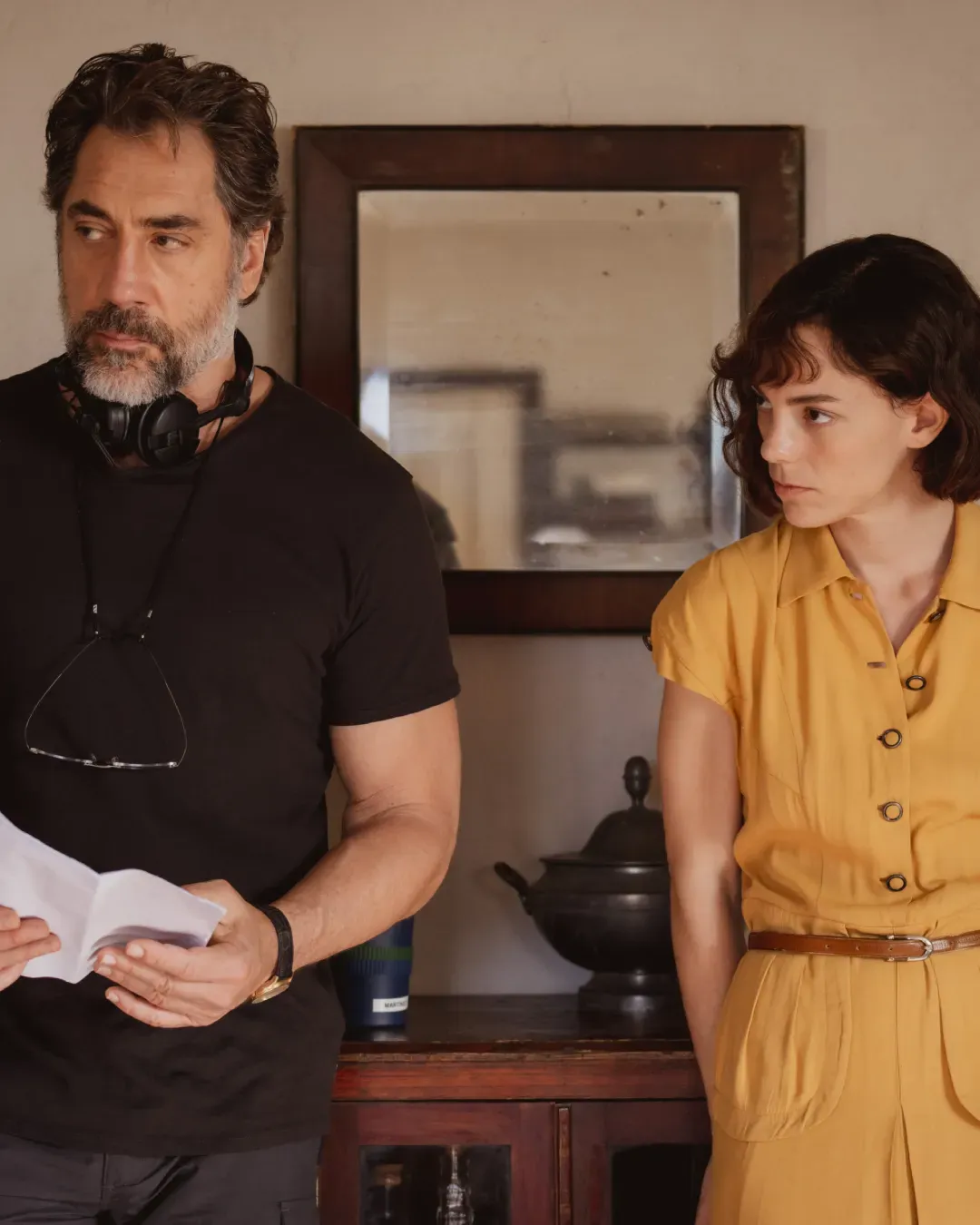
There is a scene in El ser querido that explains how the world is changing
The film is directed by Rodrigo Sorogoyen and stars Javier Bardem and Victoria Luengo

What is VisionQuest, the new Marvel series on Disney+?
Paul Bettany once again plays Vision, although this is not the same character from the films of the cinematic universe
5 trends that Trainspotting anticipated Back in 1996
There is much more to the film than the famous Helmut Lang tank top