




























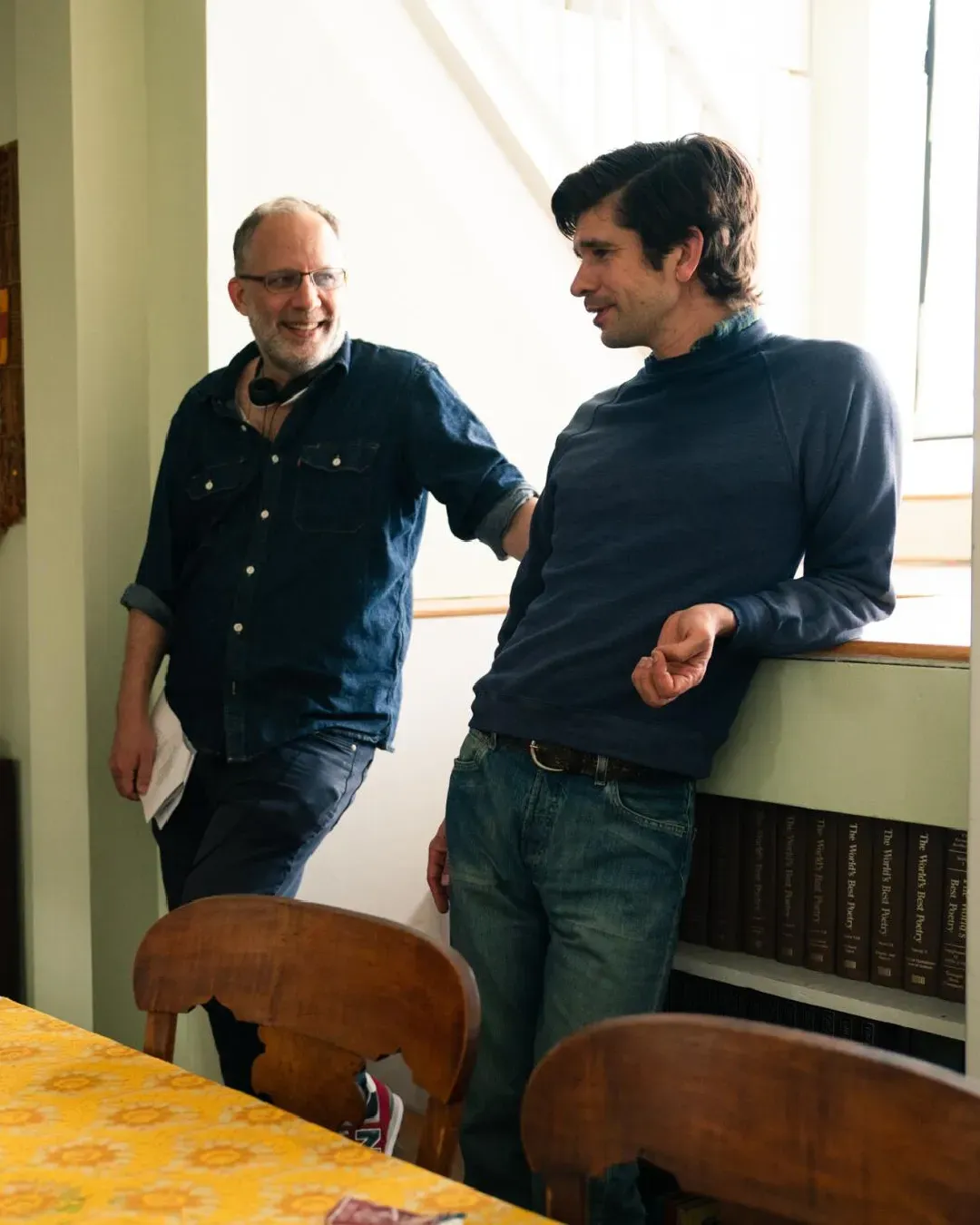
«In cinema I feel like a boxer», an interview with Ira Sachs We had a chat with the director of “Peter Hujar’s Day", coming to Mubi on May 22
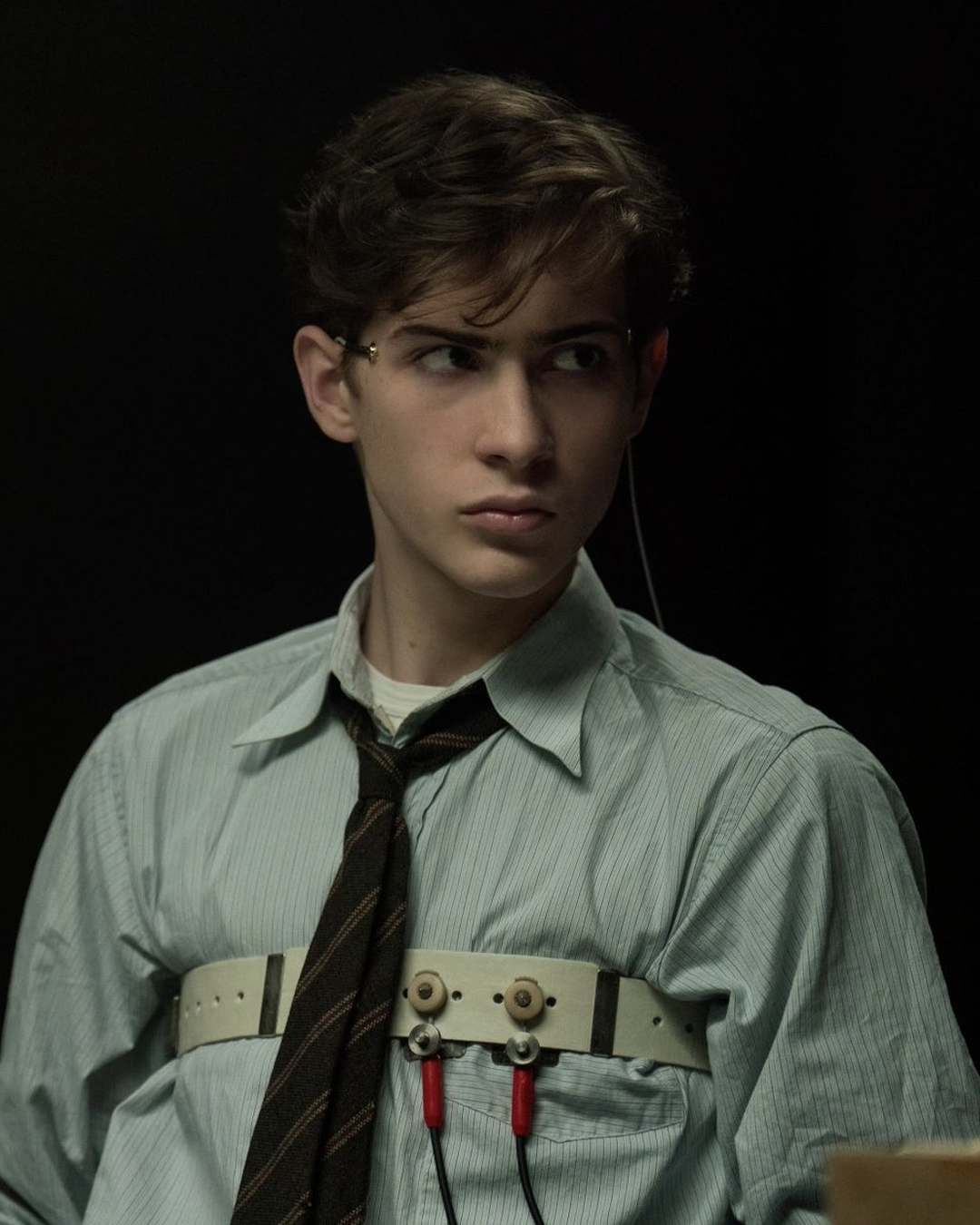
Over the past three years, the cinematic world of Ira Sachs has been inhabited by art: in Passages (2023), one of the protagonists was a filmmaker; in The Man I Love (coming soon), there is an artist devoted to her final major project before facing illness, while in 2025 protagonists Ben Whishaw and Rebecca Hall recount the daily life of a 1970s photographer in Peter Hujar’s Day, available on Mubi from May 22.
More than telling, the protagonists of Sachs’ latest work show. In fact, they give physical form to the words of writer Linda Rosenkrantz, whose text the director and screenwriter adapted, transforming one of her interviews with Peter Hujar into a cinematic object. Materiality is what Ira Sachs focused on while living through the day of the Trenton photographer, known especially for his black-and-white portraits. But how do you give place and form to a conversation between two friends? «I started with the photos Linda showed me, and we became friends», the director explains, discussing the creative process behind Peter Hujar’s Day.
«It’s a different kind of friendship from the one she had with Peter, but together we found our own language. We know each other well, even if not for very long: long enough to build a beautiful bond, which began precisely because she was willing to show me very personal photos like those of her apartment, even though it wasn’t the same one where we filmed. What production designer Stephen Phelps and I included were elements that intrigued us, from candelabras to tablecloths. We knew we didn’t want to bring the past back to life, but rather for the film to feel present. Fragments of a life that no longer exists, but that is unfolding in that very moment on screen.»
What keeps the memory of Peter Hujar’s Day alive is not only the location, but also the dialogues (very often monologues) of its characters. It could not have been otherwise, given the nature of the project: a film based on Rosenkrantz’s interview with Hujar conducted on December 19, 1974, which was originally intended to be part of a never-completed book and whose transcript was only rediscovered in 2019, allowing the writer to publish her original work in 2021. And, to maintain the audience’s attention, the choice of its two performers was fundamental.
«Ben Whishaw’s performance went beyond anything I could have imagined. It’s thanks to him that this story became a feature-length film, because initially I conceived it as a short film», the filmmaker recalls, though he added another element to give rhythm to the screenplay. «I went through a crisis because I like to think of myself, somewhat ironically, as an action film director. And the situation we were staging had none of that at all: it was just two people with a tape recorder talking.» He adds:
«At the beginning of pre-production, I started to believe it was a terrible idea, a thought I overcame only after a rather long process that led me to think of the film as a collection of spaces and images that allowed me to find movement through the use of ellipses, cuts between shots, something that may seem obvious, but wasn’t to me at that moment. And that’s how I worked: one minute seating the characters on a couch, the next taking them onto the terrace together with the audience».
If it was through space that Sachs was able to play, it was the internal logic of the text that he had to remain faithful to, as well as the type of relationship between Peter and Linda, implicit but never explicitly stated. To do so, the director returned to the original transcript housed in the archive of the Morgan Library in New York, where he carefully examined every typed line, allowing him to discover passages that had been omitted from the final interview. «There’s something profound about bringing back to life things that would otherwise disappear forever», Sachs explains. «For example, Linda had left out the conversation about Bette Davis and Joan Crawford. It would have been lost - now it isn’t anymore».
Among the most interesting aspects of a project like Peter Hujar’s Day is the very fact that the title exists as a film production, especially considering the way Ira Sachs presented it to producers in order to secure investment. In fact, the film was pitched as an art project. Partly because at first Sachs himself wasn’t sure how much he could extract from the source material, and partly because he couldn’t admit that he initially envisioned the story as a short film, since that would have implied no commercial return.
Yet overall, the production turned out to be by far the freest of his career, a degree of independence he would like to experience again, even if he knows it may be impossible: «I think all the restrictions and difficulties surrounding money and value are a negative factor for a work of art. In this case, it was a blessing. I had a great deal of freedom, but I don’t need all of that. I feel like a boxer, and I think that creates a different kind of tension, which in turn creates a different kind of film, one that I believe also has value».
First look at Ira Sachs’ ‘THE MAN I LOVE’ starring Rami Malek, slated for its world premiere at the 2026 Cannes Film Festival.
— Film Updates (@FilmUpdates) April 9, 2026
The film is set in the vibrant era of late ’80s New York and has been described as a “musical fantasia of a city under duress.”
(Source:… pic.twitter.com/GgKrShDNZo
And as Peter Hujar’s Day arrives on Mubi, it immediately makes us think about what The Man I Love, competing at the Cannes Film Festival and starring Rami Malek, Tom Sturridge, Ebon Moss-Bachrach, and Rebecca Hall - once again collaborating with the director - will be like. Another document, another photograph, this time of 1980s New York, once again filled with relationships and a hunger for art. Perhaps a more classic film, but still searching for what binds people together and drives their aspirations.