



























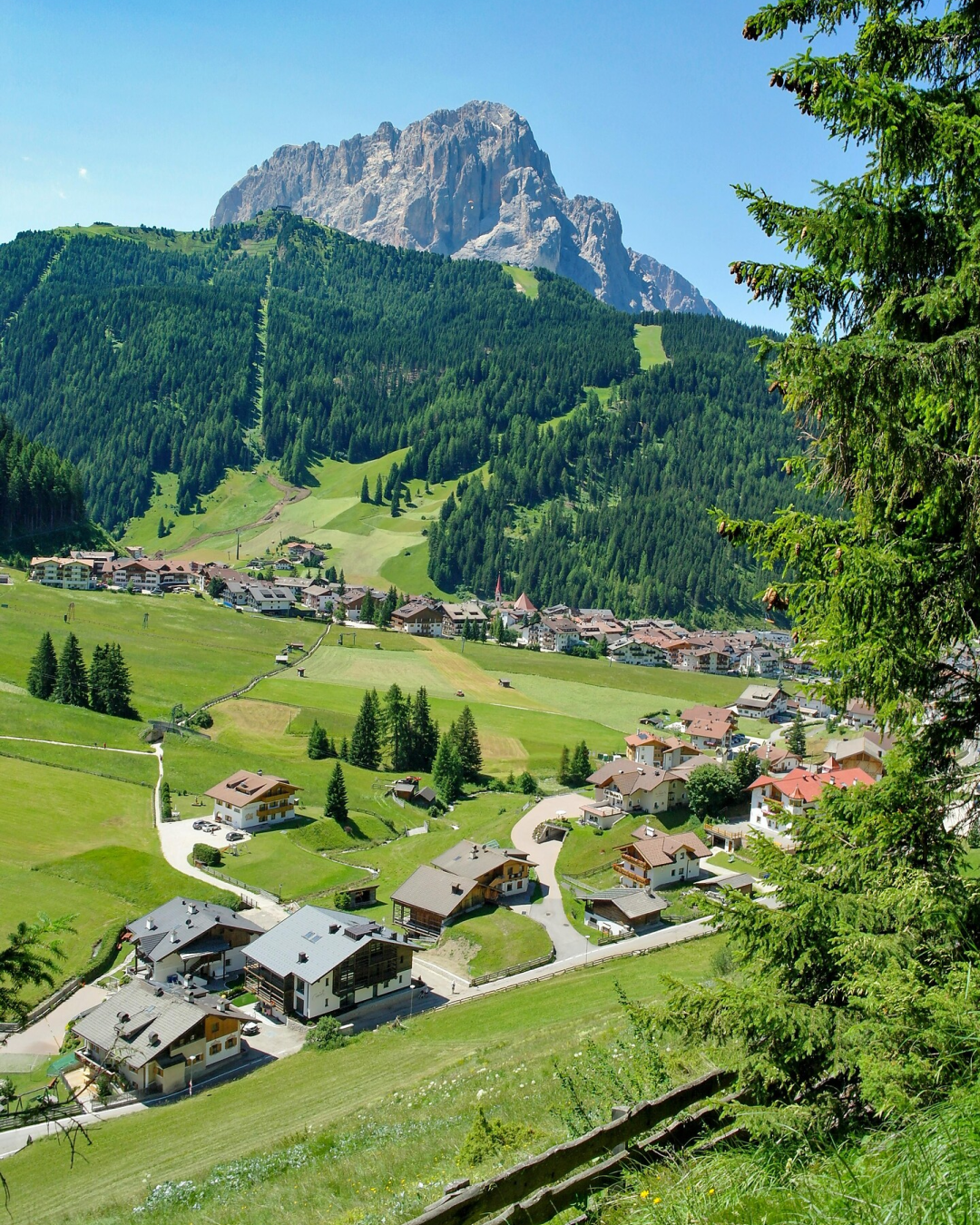
Soon, only 150 cars will be able to access the Dolomites To protect the area from overtourism
When it comes to overtourism, last year the topic was discussed so extensively that the term even made it into our list of the most influential words of 2025. A phenomenon that has affected many countries, from Spain to Japan, but among them all, Italy has perhaps felt the pressure even more strongly than usual. In an attempt to at least curb these new levels of tourism, Italy’s most visited cities, Venice and Rome, have introduced “taxation” systems: tickets to enter the city (as in the case of La Serenissima) or to access monuments that were previously open to the public, such as the Trevi Fountain.
In previous years, meanwhile, the Amalfi Coast had introduced alternating license plate traffic in an attempt to improve road conditions during peak season; despite this, access remained open to anyone with reservations at beach clubs, restaurants, or hotels, so it ultimately proved ineffective.
The latest move against mass tourism is now taking shape in the Dolomites, where, according to a new ordinance, starting from September 2026 a limited traffic zone will be introduced between the municipalities of Val Gardena and Val Badia: only 150 cars per day will be allowed through, via online booking.
The new ZTL in the Dolomites
@jayteylee My final day of skiing in the Dolomites!!! To send it off with a bang, we decided to have a crack at the Sellaronda ski circuit which connects four main areas, Val Gardena, Alta Badia, Arabba and Val di Fassa. The sheer size of this circuit was mind blowing and it was surreal being able to ski into different valleys and villages the whole day! Not only that but the views were absolutely insane, especially when the clouds decided to clear out revealing the most gorgeous mountains #skiing #vlog #dolomites #travel original sound - jayteylee
While on paper the goal is to reduce traffic and pollution, in practice the measure marks an even clearer shift in paradigm: it is no longer just about limiting flows, but about deciding who gets access to a landscape that until now has been perceived as public. The trial set for 2026 moves in this exact direction, turning one of the Dolomites’ main passes into a regulated access point, almost capped, following a logic that feels closer to that of major cities than to mountain life.
For years, tourism in the Dolomites has relied on a fragile balance between total accessibility and sustainability, a balance that has now collapsed under the weight of over 10,000 daily crossings during peak season. At the same time, however, the booking system and its exceptions risk redefining the very concept of alpine tourism, pushing it toward a more selective dimension.
As reported by Corriere della Sera, the president of the Alpenverein sees the ZTL as a necessary first step, while Carlo Alberto Zanella, president of CAI Alto Adige, fears a gradual exclusion; the feeling is that the Dolomites are becoming a testing ground for a model that could soon be replicated elsewhere, making the area increasingly oriented toward elite visitors rather than the general public.
Was this really the message of Milan-Cortina 2026?
Alpine life has been at the center of the conversation over the past year, largely thanks to the Milan-Cortina 2026 Winter Olympics. Yet the Games have developed around a major paradox: opening the mountains to everyone while simultaneously putting pressure on the daily lives of residents in the areas involved in these first “diffuse” Olympics. An issue that had already been raised by Beatrice Citterio, creator of the Giochi Prezioni project.
In an exclusive interview for nss magazine, Citterio had already highlighted the impact of the Olympics on overtourism: «Peak locations are promoted in a highly vertical way, (..) This pressure on territories fails to consider what it means for a town to cope with a surge in visitors of this scale: in the short term for resource management (water, electricity, sewage) and mobility; in the long term for an economic structure increasingly dependent on public funding and on a climate whose direction we already know».
At the same time, the solution does not seem to lie in closing off an entire Dolomites pass to the public; if anything, it risks pushing even more traffic into surrounding areas. And above all, in a year when mountain sports have received so much attention, is it really right for municipalities to shut themselves off?