
















When the third place is your backyard How public housing courtyards are rewriting urban culture
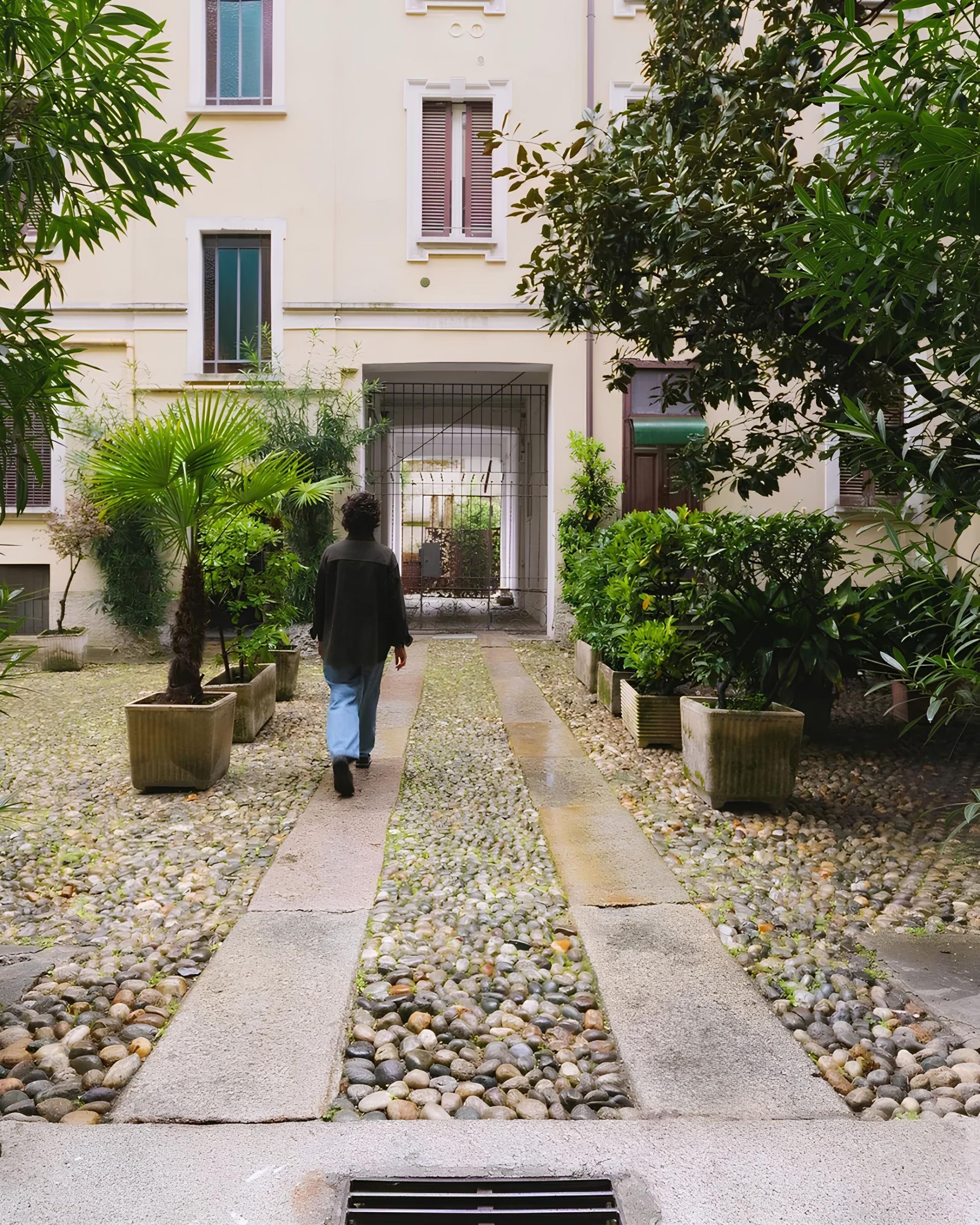
There is a part of the city that never appears on the covers of design magazines nor in the polished renderings of architecture firms: these are the courtyards of public housing. Interstitial spaces, often neglected or left to decay, yet holding a precious and increasingly urgent resource: the opportunity to build culture from the ground up and regenerate the social fabric. In an era where the concept of "third place"—that essential social space which is neither home nor work, but a site for spontaneous encounters and community building—is being discussed everywhere, perhaps it’s time we lift our eyes from our smartphones and look downstairs, where real life pulses more intensely than any glossy image. The shortsightedness of urban design and cultural planning, which for decades systematically ignored these spaces by relegating them to mere service areas, has proven to be a missed opportunity. The strongest signal in this direction came from the City of Milan, with the call for proposals "Il Cortile di Casa", promoted by MM Spa and the Department of Culture. The €80,000 allocated to support cultural, artistic, and social initiatives in public housing courtyards is not merely symbolic: it marks a significant paradigm shift. It shifts political and design attention to where no one has wanted to look for decades, recognizing the intrinsic value of places that, despite being often labeled as problematic, are actually treasure troves of human and creative potential.
This reward for the outskirts beyond the 90/91 ring road is not a mere technical detail, but an act of cultural justice. It acknowledges that access to quality culture should not be a privilege of the city center but a widespread right, fundamental for the well-being and social inclusion of all citizens. Funded projects will be free, accessible, and rooted in the territory, responding to the needs and specificities of local communities. And the signs that this is already working are not lacking: from the Milan Film Festival screenings in Corvetto’s courtyards to the traveling concerts of Piano City, including the Small Widespread Sociocultural Initiatives (PIDS) already underway in various public housing complexes in the city. Courtyards—especially those of public housing—are inherently hybrid spaces: semi-public and semi-private. They are neither fully open squares nor closed, exclusive properties. They are buffer zones where spontaneous, horizontal, daily social life unfolds—shaped by ongoing negotiations between neighbors. In public housing projects of the 1950s and ’60s, courtyards had an explicit and noble function: they were conceived as real "internal squares," the heart of community life, places for children to play and for adults to gather. In recent decades, due to disinvestment, lack of maintenance, and sometimes poorly participatory management, they have unfortunately become simple passageways—if not conflict or degradation zones. This initiative seeks to restore their dignity and original function, enhancing their contemporary potential.
And if the courtyard is the most proximate space par excellence—visible from the windows, accessible without a ticket—then it is also the most powerful. It is estimated that over 800,000 people in Italy live in public housing, with Milan alone managing around 28,000 units through MM. This means that tens of thousands of courtyards already exist and are just waiting to be activated. On a broader urban scale, the conversation expands. If design means "project," why limit it to luxury interiors or Instagrammable squares? Public housing courtyards pose uncomfortable questions to contemporary design: what does it mean to design a public space today? How do we measure the quality of a place: by its aesthetics or by its capacity to foster relationships and give voice to communities? Increasingly in architecture, we talk about relational design—projects that go beyond form and take into account human and social dynamics, placing the user at the center of the creative process. Courtyards are the perfect example of undeclared relational architecture—spaces where design can act as a catalyst for encounters and transformations. Philosopher Michel de Certeau called these “practiced spaces,” spaces that derive meaning not from their form, but from their use. And if the use changes—with concerts, performances, workshops, meetings—then the meaning changes too. Decay becomes presence, distrust becomes connection.
I cortili di Porta Romana, con calle e oleandri#Milano pic.twitter.com/GzxR8dwWTN
— Lady Milano (@LaFrauMi1) May 26, 2021
There’s also an aesthetic question to address. For too long, the courtyards of public housing have been seen as “ugly” or “unworthy” of design attention. Mainstream urban culture has always preferred canonical places—polished, formalized, conforming to a glossy and often sterile ideal of beauty. In truth, we are now witnessing the revenge of raw, real, lived-in spaces that tell stories and layers of history. Courtyards, with their imperfections and “rough” character, become ideal backdrops for alternative narratives—sets for performances and art projects that find their greatest strength in their authenticity. It is a low-threshold culture—accessible and participatory—that celebrates the beauty of the unexpected and the everyday. This is also demonstrated by international projects like Granby Four Streets in Liverpool, a renowned example of bottom-up urban regeneration led by the community, or Superkilen in Copenhagen, a park that celebrates cultural diversity and stands as an example of innovative design that fosters social interaction.
There too, it all started with a simple idea: start again from what already exists. Looking at the courtyards of public housing means stopping designing only with our heads tilted upward—toward skyscrapers and architectural icons—and starting to closely observe the life happening at street level. It means understanding that culture is not just a spectacular event or a closed institution, but an organic, living, and constantly evolving process. A process built on the cement of everyday life, on the chair brought downstairs at sunset to chat with neighbors, on the music drifting through the windows and filling the air. If we truly want a vibrant, inclusive urban culture connected to the real needs of its inhabitants, we must start again from the courtyards. Those places that for too long have been forgotten and marginalized, but that today—thanks to new planning and renewed awareness—can take center stage. Without grandiosity, but with a deep, widespread power capable of reshaping the face and soul of the city.