

































Is Space Age style coming back into our homes? The new space race is influencing interior design
Interior design is witnessing the return of the Space Age aesthetic, which harks back to the era of space exploration during the Fifties and Sixties. This style, characterized by innovative materials for the time, sought to convey a sense of optimism for the future through forms and aesthetic solutions. A contemporary take on this approach to interior design is called California Space Age, and it has recently been adopted by designers like Milanese Giampiero Tagliaferri and American Kelly Wearstler, among many others. Homes designed in this style feature elements such as glossy white spiral staircases – «that wouldn't have been out of place in Stanley Kubrick's 1968 film, 2001: A Space Odyssey,» writes the BBC – or iconic 20th-century pieces, including the famous Soriana sofa and chaise longue by Afra and Tobia Scarpa, as well as the Digamma armchair by Ignazio Gardella. The revival of the Space Age is evident even in cinema. The Marvel movie Fantastic Four – The Beginning, releasing in July and starring Pedro Pascal, also heavily leans on retro-futuristic aesthetics in its set design.
@angelikhi When i tell you i ran. One of a kind, obsessed, space age, exactly what i was looking for, cant believe my luck. #midcenturymodern #spaceage #spaceagefurniture #futuristicdesign #cassina #kartell #homeinterior open water - sped up - TXZZ
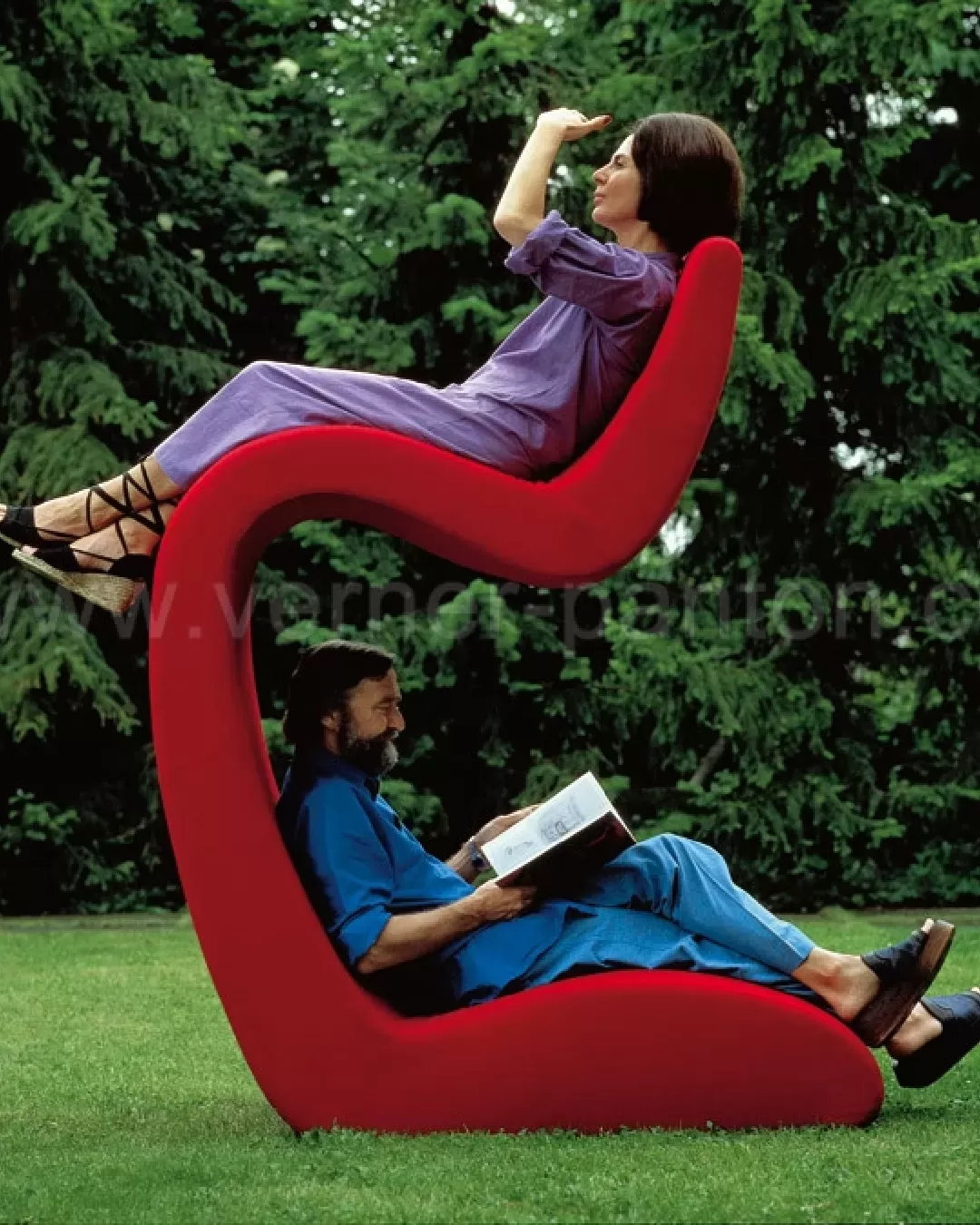
But this trend is also reflected in art and design exhibitions. At the renowned Vitra Design Museum in Weil am Rhein, Germany, until May 2026, visitors can explore the exhibition Science Fiction Design: From Space Age to Metaverse, which examines the influence of science fiction on design, showcasing iconic pieces such as the Djinn seating series by Olivier Mourgue, the Tomato Chair by Eero Aarnio, and the Ribbon Chair by Pierre Paulin. The exhibition also highlights how these very furnishings have been used in films that heavily leaned on retro-futuristic aesthetics, such as Men in Black and Blade Runner 2049. The Space Age style was born out of events like the launch of the Sputnik satellite or NASA’s Apollo program, which captivated the public imagination – with obvious cultural repercussions. «It seemed only natural that objects and spaces should reflect this,» explained Peter Martin, author of the book Space Age Design – Icons of the Movement. During this period, designers like Eero Aarnio, Joe Colombo, and Verner Panton created furniture with innovative forms, using materials such as plastic and fiberglass. Eero Aarnio's Ball Chair, for example – also used on the set of Men in Black – was based on a deliberately futuristic design; the same goes for Verner Panton's Panton Chair, famous for its S shape.
Space age chairs by Finnish designer Eero Aarnio pic.twitter.com/VFcdF5QnxE
— lusso (@luusssso) April 29, 2025
Today, interest in Space Age design is also fueled by a new space race, with various countries and private companies involved in ambitious lunar exploration programs. The Chinese mission Chang’e 6, for example, aims to collect soil samples from the far side of the Moon, a region never reached before for this type of operation. The project is part of the CNSA (China National Space Administration) space program, launched in 2007, and represents one of the most ambitious unmanned missions ever undertaken by China amid growing competition with the United States. In this context, China, which has significantly increased its space activities and built its own orbital station, aims to send a crew to the Moon by 2030. At the same time, the Asian country is collaborating with Russia on a project to create an International Lunar Research Station (ILRS) – an initiative also open to other countries but still little participated by the West. Russia itself, after almost 50 years since its last lunar mission, has embarked on the Luna-25 project, aiming to explore the Moon's south pole, an area believed to hold ice. The design of the lander – a type of spacecraft that descends and lands on the surface of a celestial body, conducting experiments and soil analysis – echoes the Soviet probes of the Seventies. Beyond scientific objectives, Luna-25 holds strong symbolic value for Putin's government. In a context of international isolation due to the invasion of Ukraine and resulting Western sanctions, the mission aims to demonstrate Russia's technological self-sufficiency. Meanwhile, NASA is active with its Artemis program, which plans the next human lunar landing no earlier than 2026, although project delays could favor the advancement of non-Western countries.