.gif 2000w)




















Kering has a new plan to reclaim the luxury market The group's new CEO, Luca De Meo, unveiled it in Florence
The arrival of Luca de Meo at the helm of Kering took place almost a year ago, just a few months after the escalation of the conflicts in the Middle East. The sociopolitical tensions in the region have heavily impacted all the major European luxury conglomerates that have always focused on the commercial hub of Dubai, resulting in a loss of $100 billion in stock market value across the entire fashion industry. The effects of the war are evident in the sales report for Gucci, Kering’s flagship brand, which recorded an 8% decline in the first quarter of 2026. Compared to analysts’ expectations, which predicted a 4.3% drop, this result outlines a recovery phase that is more challenging than anticipated for the French conglomerate.
But yesterday in Florence, the Group’s new CEO finally presented his major strategic plan to bring Kering back to full strength, a plan defined as ReconKering. The idea is to bring together traditional values such as creativity, craftsmanship, cultural relevance and product excellence with new technologies, new client expectations, new markets and new categories. In recent months Kering has already reviewed the organizational architecture, strengthened financial discipline, consolidated the product offering and pricing, optimized the retail network and invested in key strategic areas.
De Meo’s grand plan relies on a holistic approach and, in general, on the creation of a series of high-technology platforms that consolidate and unify various aspects such as industrial production, client management, tech development of functions like AI and cloud, sustainability, and support. The idea is to combine all these functions into a series of hubs that sit above the brands, allowing individual brands to focus on creativity, product excellence and internal development while, for example, industrial logistics and the technical side of manufacturing are managed by these entities for everyone, optimizing operations. However, the road ahead is still long.
Gucci’s slow but steady turnaround
In addition to the tensions in the Middle East and the consequent decline in luxury tourism in the region, another factor that seems to have particularly affected Kering’s sales decline is the restructuring process initiated by de Meo both at Group level and at Gucci. Since taking office, the CEO has changed the company’s management, anticipating the delivery of collections to stores after Fashion Week. In the last twelve months, Gucci has welcomed a new Creative Director, Demna, who held the same position at Balenciaga (another Kering brand) for ten years.
Gucci continues to be the most important brand for the conglomerate, representing 60% of Kering’s total profit. Nevertheless, the Florentine Maison has been facing financial difficulties for much longer than de Meo’s arrival, which explains the radical revival attempts implemented by the Group’s new management. With Demna and the new CEO, Gucci has the opportunity to restart, but according to this quarter’s results, it may take longer than expected.
Precisely because of its importance, Gucci is at the center of De Meo’s strategic review. The recipe here is quite articulated: focus on the heritage side by making the identity more recognizable and culturally relevant; develop the product across the three categories of hero products, core lines and seasonal offers; push hard on leather goods, which is the priority, while “disciplining” both the aesthetics of ready-to-wear and that of footwear and jewelry, and maintaining strong internal consistency during the gradual roll-out of products that we will see throughout the year.
The idea therefore seems to be a brand consolidation after several years of shifting creative directions and internal team interregnums that had made the brand’s identity too multifaceted. Given Kering’s relative urgency to revive a brand that represents 38% of the Group’s total revenue, and which is moving forward even in unfavorable macroeconomic conditions, absolute priority is given to bags and accessories. It will then be necessary to streamline the number of stores, which should go from 600 to 450, to increase exclusivity and rekindle interest in the brand in China.
The other brands
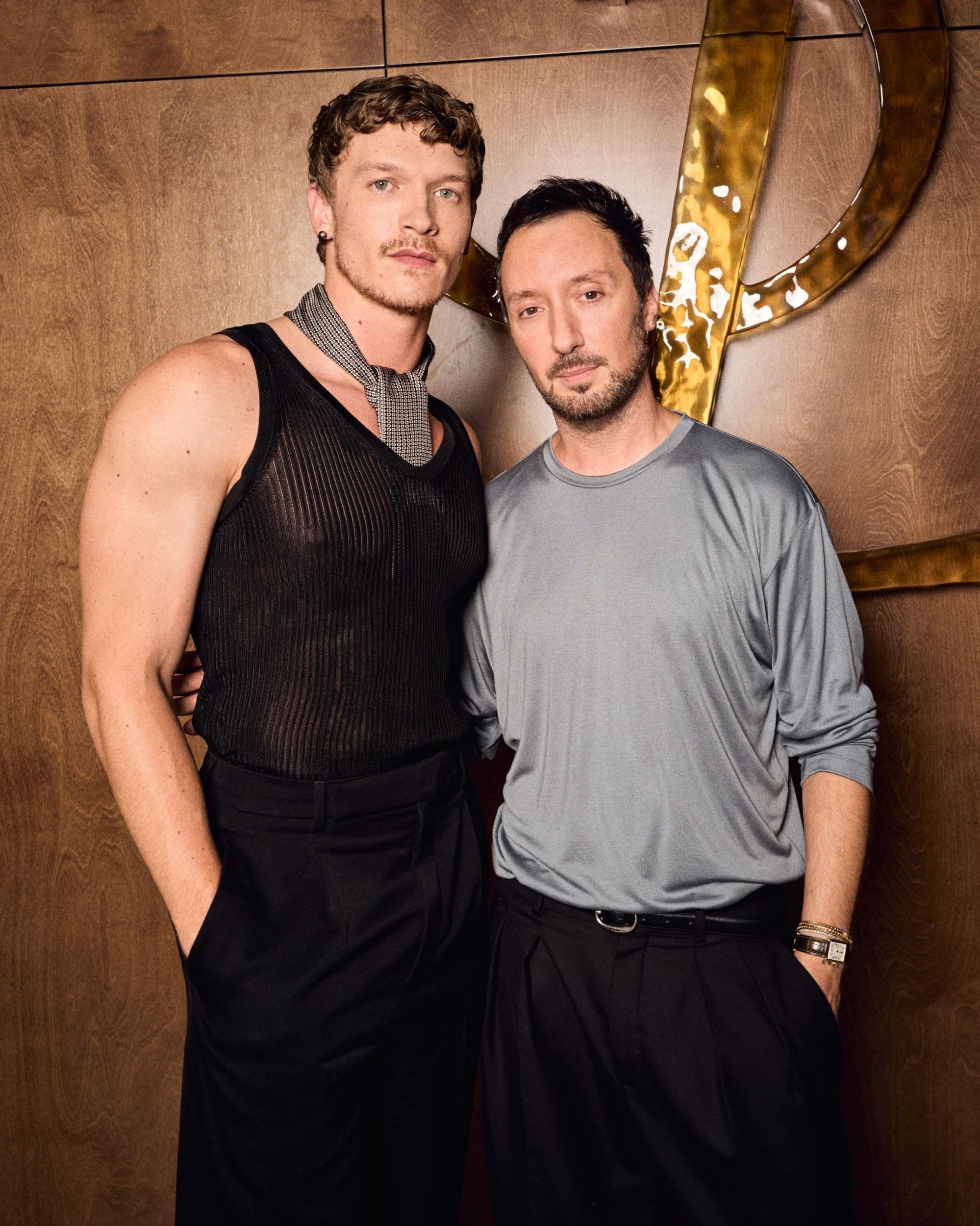
For the other brands the strategies are varied but essentially similar to the “recipe” used for Gucci. Saint Laurent will aim to consolidate its authority by slowly expanding into more “everyday” clothing, will invest in the expansion of menswear and aims to make its bags more luxurious (and expensive) while trying to gain ground in the Asian market. Bottega Veneta, which is currently the “top of the class”, should continue with a narrative that shifts the brand towards ultra-luxury territories just as Brioni should become Kering’s answer to Zegna, Loro Piana and Brunello Cucinelli: made-to-measure tailoring, mega-craftsmanship excellence and a more traditional men’s lifestyle wardrobe.
Balenciaga, another Maison in flux, also aims to return strongly in Asia but has a more complex task: on one hand to maintain and strengthen menswear, which is performing well; on the other it must discipline and better resize the womenswear segment (a move we could interpret as a new balance between the more sporty and the elegant side) and strengthen the leather goods segment, which is already strong. Its role should be that of the youngest brand in the portfolio, capable of addressing new luxury consumers.
As for McQueen, by far the brand in deepest crisis, there will be a strong pruning that brings womenswear back to the center and not its more immediately commercial products, to elevate its perception and make spending more efficient. Therefore, it will be necessary to return to tailoring, evening dresses, bags and essentially better adapt the entire operational structure to its real role (at the moment there were too many stores and too many categories left to themselves) in order to restart from there.
The other divisions
In detail, Kering reported a 2% decrease in physical and online retail sales, compared to 6% growth in wholesale channels. The latter figure seems particularly supported by the eyewear segment, with Kering Eyewear surprisingly recording its best quarter ever with revenues up 3% for a total of 489 million euros. The division that instead reported sales declines is Fashion & Leather Goods, which recorded a 9% drop, although improved compared to previous quarters.
Alongside Kering Eyewear, the Kering Jewelry division is driving Group sales with a record 14% growth, equal to 269 million euros. Direct sales jumped 28% in Japan and Asia, the Group reports, with wholesale up 14% in the region. The best-performing brands were Boucheron and Pomellato, with the former taking the title of the fastest-growing brand in the first quarter of 2026. In the Middle East, the Group reported an 11% sales decline, but according to Kering’s CFO Armelle Polou, the war affected this result by only 1%.
Given the good health of these divisions, Kering should consolidate jewelry and eyewear activities through another internal integrated platform. For jewelry, a single operating entity will be created that brings together all the brands in the portfolio to make them consistent and exploit economies of scale thanks to the gradual integration of Raselli Franco’s jewelry infrastructure, which will be the first building block of the unified and integrated jewelry hub for the entire Group.
The same strategy applies to Kering Eyewear with an integrated platform that aims to become the world reference for luxury Smart Eyewear. There will therefore be a technological investment through a partnership with Google that will also involve connectivity and health-tracking and which can be extended to the eyewear of all brands. Another important point is the Kering Next division, dedicated to new business frontiers, which will start by strengthening Ginori 1735, will handle the partnership with L’Oréal for the development of high-end skincare, makeup and fragrance lines and above all will invest in the long term in the Longevity & Wellness segment; while through the House of Wonders platform, the Group wants to invest in and nurture both emerging brands and new luxury services.
And for the future?
@ysl Backstage at the Women's Winter 26 show by Anthony Vaccarello Soundtrack by SebastiAn #SaintLaurent #YvesSaintLaurent #YSL
original sound - SAINT LAURENT
As for profitability, a gradual improvement in operating income is expected with the objective of more than doubling, in the medium term, the recurring operating margin percentage. On the capital efficiency side, a structural improvement of ROCE above 20% is expected in the medium term, supported by stronger fundamentals, better inventory discipline and more selective investments. Of revenues, approximately 5-6% will be reinvested to support more sustainable organic growth while investments are planned to strengthen craftsmanship, vertical integration and raw materials.
By the end of 2026 the structural reset will be completed, with the restoration of financial discipline, operational efficiency and strategic clarity. By the end of 2028 the Group will enter the reconstruction phase, and thus after restoring the foundations of the Group and the strength of the various brands, Kering will push hard on its brands aiming for improvements in financial performance while, by the end of 2030, Kering should return to the top in the race to conquer the luxury world. The idea however is to build for the long and very long term. It is interesting to see an executive like De Meo tackling the various problems that a group so far devoted only to fashion has faced, but his emphasis on optimizing all processes could, if successful, become a new standard for the industry.