





























Why velvet is so popular during Christmas time It’s not just a matter of elegance
During the Christmas period, and more generally the winter season, it is quite common to see many people wearing velvet garments. Over the years, this fabric has become particularly appreciated during the holidays: soft, warm and enveloping, it has long returned — in the cold season and especially toward the end of the year — to store windows, both physical and online.
According to some observers, velvet is the ideal solution for those who, during the holidays and beyond, are looking for a versatile look, capable of appearing elegant but at the same time “playful.” It is indeed very comfortable and “easy” to wear, yet at the same time it is a fabric capable — on its own — of conveying a somewhat “classic” imagery that in certain occasions, such as Christmas, works particularly well. Slate describes it more ironically as “the cool version of ugly Christmas sweaters.” Moreover, it is a fabric that lasts a long time and generally does not cost much.
What is the “velvet trend”
The velvet suits of Willy Chavarria Fall/Winter 2025. pic.twitter.com/QepS3whh7J
— La Mode Unknown (@LaModeUnknown) January 24, 2025
And yet velvet’s popularity has still been rather fluctuating. Around 2008, for example, it wasn’t very valued as a fabric, partly due to the success of a more minimal style; since 2016 it has regained visibility, and even the most renowned brands were showcasing it in their collections — then its fame faded again. It reappeared on runways in 2021, especially in black versions. Last autumn, given its strong presence on the market and on social media, people even began talking about a “velvet trend” — a phenomenon that continued until the last months of 2025.
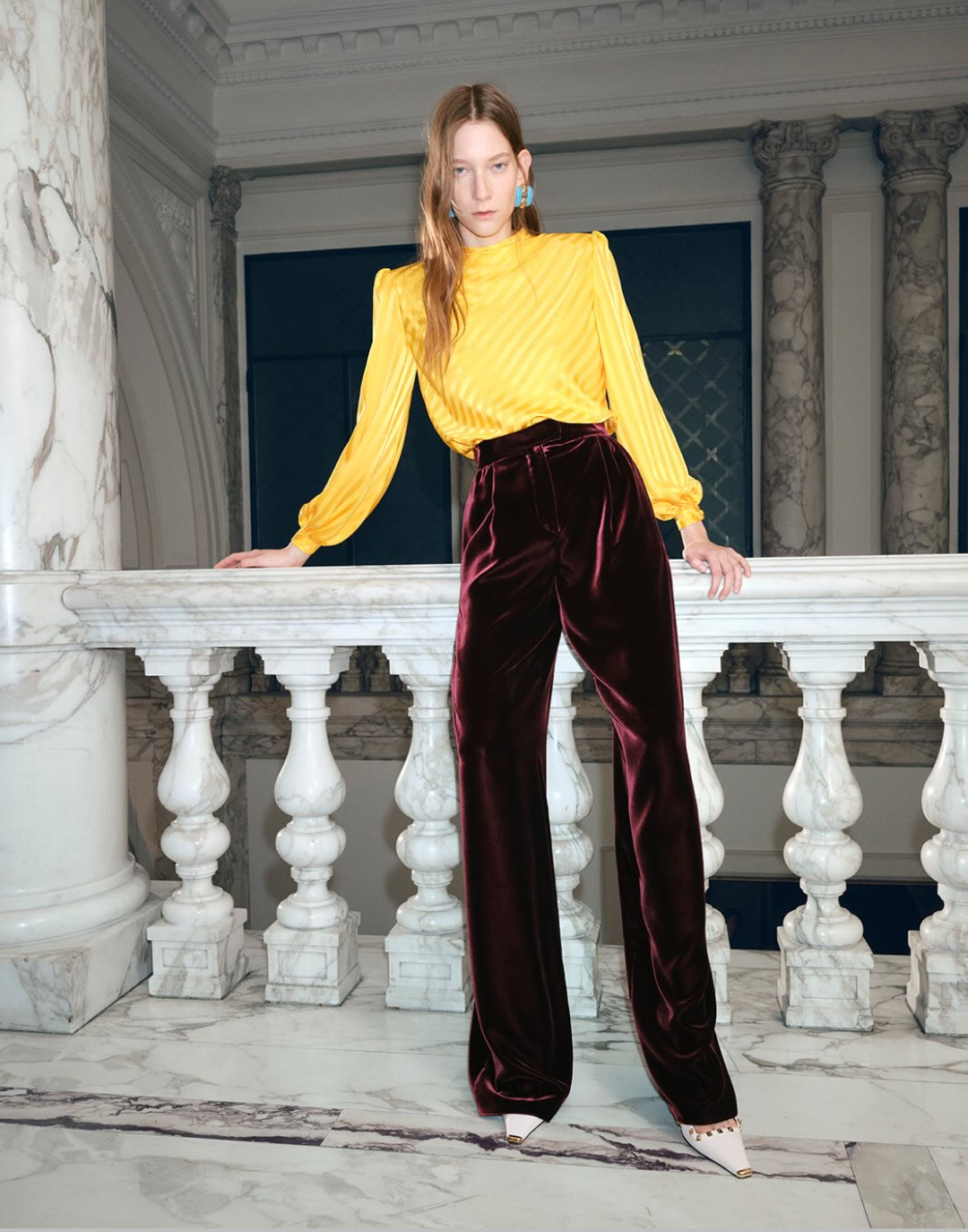
For the FW25 season, brands such as Hermès and Emporio Armani, among many others, proposed velvet in various versions, using this fabric to make even potentially ready-to-wear garments appear elegant, shiny and sophisticated. One example is the velvet blazer by LGN Louis Gabriel Nouchi, which shows how garments made in this fabric are often suitable both for elevating an office look and for being worn on an evening out. Within the context of the “velvet trend,” for FW25 designers also played with silhouettes, from the oversized shapes of Willy Chavarria to the more tailored ones by Todd Snyder, demonstrating how versatile velvet inherently is. But accessories also followed this trend: bags, shoes and small velvet details indeed allow you to add a touch of class to an outfit, evoking a vintage and glamorous allure without appearing overly flashy.
The history of velvet
Velvet is not a material in itself, but a type of weave characterized by a dense pile standing perpendicular to the base. Until the 19th century it was so difficult and expensive to produce that only the wealthiest members of society — such as royalty, high-ranking church officials and the most affluent families — could afford it, also because it was made only of silk. Velvet arrived in Italy around the 13th century, particularly in Venice and Palermo, thanks to contacts with the Asian and Arab worlds. In the 15th century, velvet production expanded to other Italian cities, such as Genoa and Florence, which later exported the fabric throughout Europe.
Until the 17th century, Italy remained the main exporter of velvet, but with the Industrial Revolution its production became faster and cheaper. The fabric spread increasingly because it was very comfortable and represented an alternative to the stiff suits of the time. At the beginning of the 20th century, velvet began to cost even less, thanks to the use of materials such as cotton and wool; in the Sixties and Seventies its popularity grew further, driven by artists and celebrities of the era. Velvet’s moment of greatest visibility, however, arrived in the 1990s, particularly in 1996, when Gwyneth Paltrow wore to the MTV Video Music Awards a suit entirely made of this fabric, in red, designed by Tom Ford for Gucci.
More generally, velvet tends to be especially popular during periods of maximalism in the fashion industry (as in the case of the FW25 collection by Valentino, curated by Alessandro Michele), and this is partly why it continues to be so appreciated and widely sold today. But, if you pay attention, the fabric also works in historical moments marked by a strong nostalgia for the past, particularly the Nineties (as has recently been the case) — a decade in which it was, indeed, quite widespread.
What to read next

5 trends that Trainspotting anticipated Back in 1996
There is much more to the film than the famous Helmut Lang tank top

In what sense is blue the Xanax of fashion?
We are so stressed that we have started dressing in blue again