





























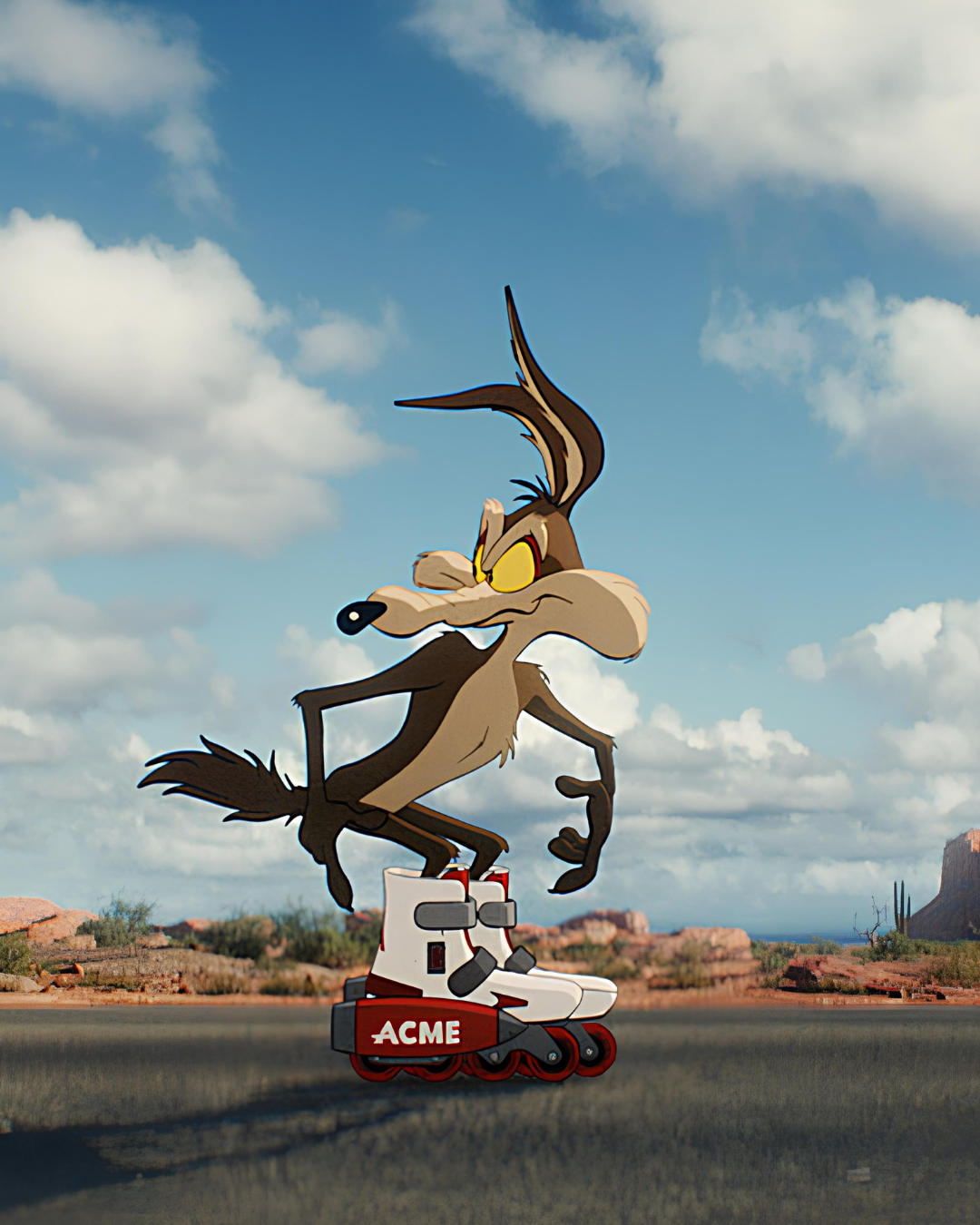
"Coyote vs. Acme" has defeated Warner Bros. In theaters from September 2, Wile E. Coyote's legal battle mirrors the one the film itself truly experienced
Fate always knows what to do, even with films. There are paths that often follow coherent, interlocking logic waiting to be discovered, and that is exactly what happened with Coyote vs. Acme. The story surrounding this hybrid film half live-action, half animated resonates both on and off screen, since what it tells is not so far removed from what it actually lived through. And we thank Ketchup Entertainment for allowing us to see it by acquiring its distribution rights. A film they «wanted to keep hidden from us» much like the secret buried within its plot, which can now finally be revealed.
Wile E. Coyote vs. the Acme Giant
Coyote vs. Acme by Dave Green, as the title suggests, follows the legal battle that the character of Wile E. Coyote chooses to wage against the corporate giant Acme a story based on a same-named article published in 1990 by Ian Frazier in The New Yorker. The company is responsible for every object and gadget used in the world of the Looney Tunes, continuously relied upon by the character to devise plans and catch his sworn enemy and coveted meal, the Road Runner.
Rocket-powered roller skates, massive catapults, gunpowder and explosives — all of them irreparably defective. After a lifetime of squandering his intellect on traps that never once yielded results, Wile E. makes the decision to sue the company over its products' constant malfunctions, kicking up a storm that will sweep out from under the rug the shady secrets that Acme has worked so hard to conceal and that are now in danger of coming to light.
To the company, Wile E. is just another insignificant bug to be squashed. A tiny creature pitted against the billion-dollar corporation he is challenging an institution whose power and wealth go hand in hand, never before questioned, and against which no one would think to stand up. It is the story of the ordinary citizen who must deal daily with the capitalist society in which he lives, and the same holds true for the film itself, dragged out from the shadows of the company that made it and finally given a chance to be heard.
Tax Write-Offs and Cancelled Projects: Warner's Modus Operandi
Despite an initial release planned for 2023, Warner Bros., which held the rights to Coyote vs. Acme, decided to push back the film's release date by a year to make room for the event film Barbie. As time went on, the film's release date became increasingly elusive, until the studio made the inexplicable decision to cancel it altogether.
This is not an unusual modus operandi for Warner. In 2022, the same fate befell Batgirl by Adil El Arbi and Bilall Fallah. Various pressures led the company to shelve the project despite it being virtually finished, with only the final stage of post-production left to complete. Speculation ran rampant. Some felt the film simply wasn't good enough; others believe it was a consequence of the internal upheaval at DC, which passed from the leadership of Walter Hamada to that of James Gunn and Peter Safran.
There were also those who believed Warner preferred to take a loss and settle for a reduction in studio costs rather than see the project through to completion. Others argued that a project conceived for the small screen of HBO Max could never aspire to the event-film status that DC was aiming for with its new titles. In the case of Coyote vs. Acme, the stated reason was more explicit and more contested. In exchange for a tax write-off that allowed the company to declare an accounting loss, Warner chose to cancel the film, thereby avoiding the marketing and distribution costs that would have been required to support Dave Green's work.
How Ketchup Entertainment Saved the Film
It is likely that the studio did not have full confidence in the title inspired by the classic Who Framed Roger Rabbit preferring to claim a tax deduction rather than press on with the costs of a promotional campaign that might not have paid off at the box office. But, much like Wile E. standing up to Acme, or David facing Goliath, the cast and crew pushed back to ensure the film would be released. They praised its quality so highly as to justify the fight they took on against Warner, remaining determined to bring the film to cinemas, where it deserved to be.
This is where Ketchup Entertainment stepped in the equivalent of the lawyer played by Will Forte who, in the story, represents Wile E. After Warner's cancellation, several studios threw the film a lifeline. The company, however, was unwilling to accept anything below 80 million dollars, but as time went on, offers were repeatedly turned down, and it became increasingly difficult for Coyote vs. Acme to see the light of day. It was at a price of 50 million that the two companies finally reached an agreement and this time, in the court of cinema, the good guys won.
A Victory On and Off Screen
Without a doubt this is the best looney tunes movie we’ve gotten and I can’t believe WB were going to shelve this movie forever https://t.co/AegrIsT0ri
— Josh (Go Watch Coyote vs. Acme) (@WileECoyoteFan1) August 29, 2026
This is why, when Coyote vs. Acme arrives in cinemas, one gets the sense of watching on screen the very journey the film went through outside the theatre with Wile E.'s lawsuit against a superpower becoming a metaphor for what the film itself experienced. This adds a triumphant dimension to the picture, whose value nonetheless stands independently of the extra-textual connections that can be drawn between fiction and reality. Those connections certainly enrich the viewing experience, but the film would have been enjoyable even without its arduous backstory.
And that is because, regardless of what happened behind the scenes, the plot speaks knowingly about how society works about how "powerful" so often rhymes with "overbearing," and about how, if one finds the courage to stand up against injustice, things might just begin to change. Sometimes staying exactly the same, especially when it comes to chasing a lightning-fast bird through the desert. But at least this time, it wasn't only capitalism that called the shots and that held true both inside and outside the cinema.
What to read next
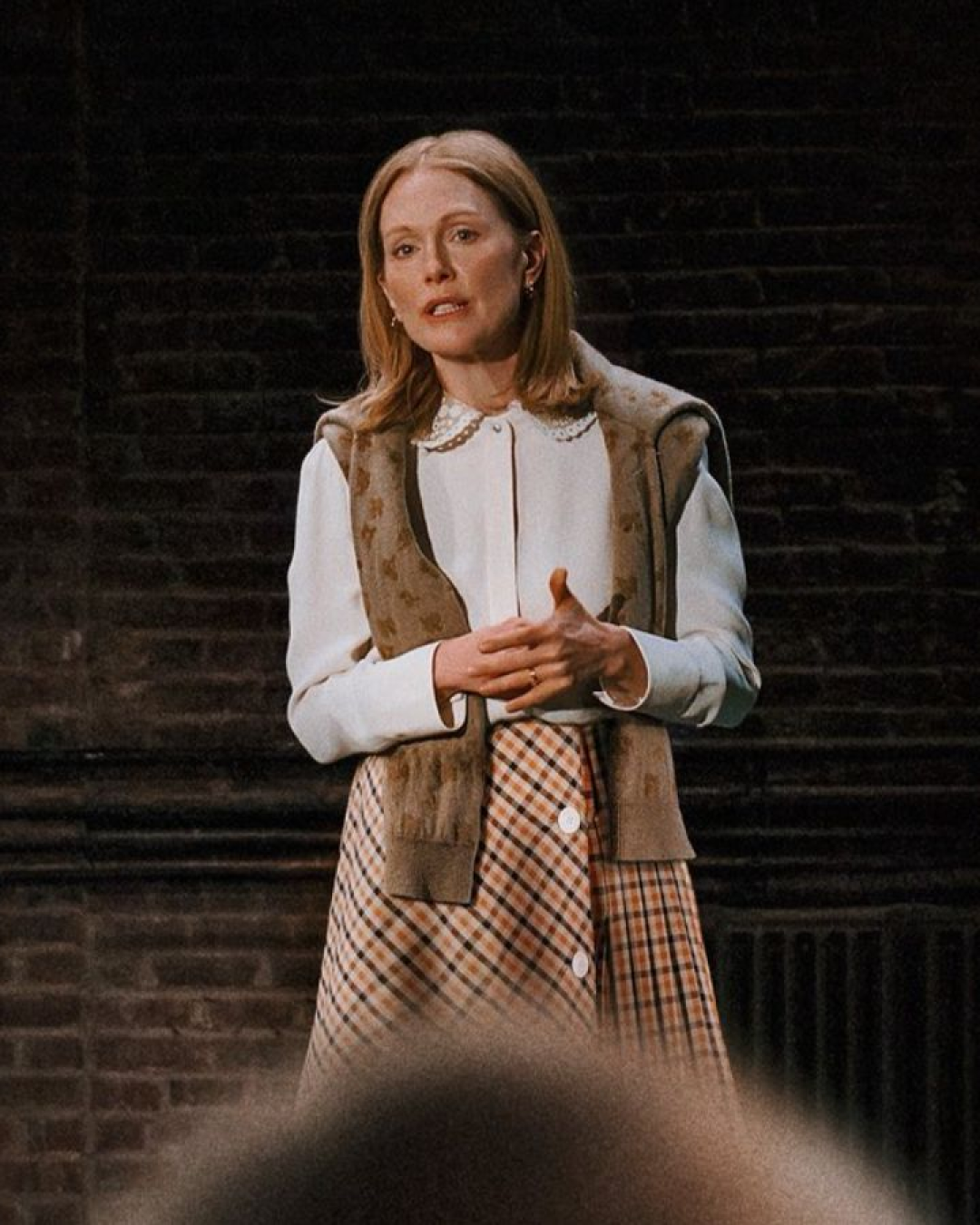
In "The Debut" Julianne Moore gives a masterclass in acting
The film, premiering at the Rome Film Fest, hits theaters on January 1, 2027
"Masterplan" is everything a heist movie shouldn't be
The film starring Stanley Tucci, Simona Tabasco and Victor Belmondo is available on Prime Video

"Fjord" is an impressive piece of writing
Cristian Mungiu's film, winner of the Palme d'Or at Cannes, arrives in cinemas on November 19