




























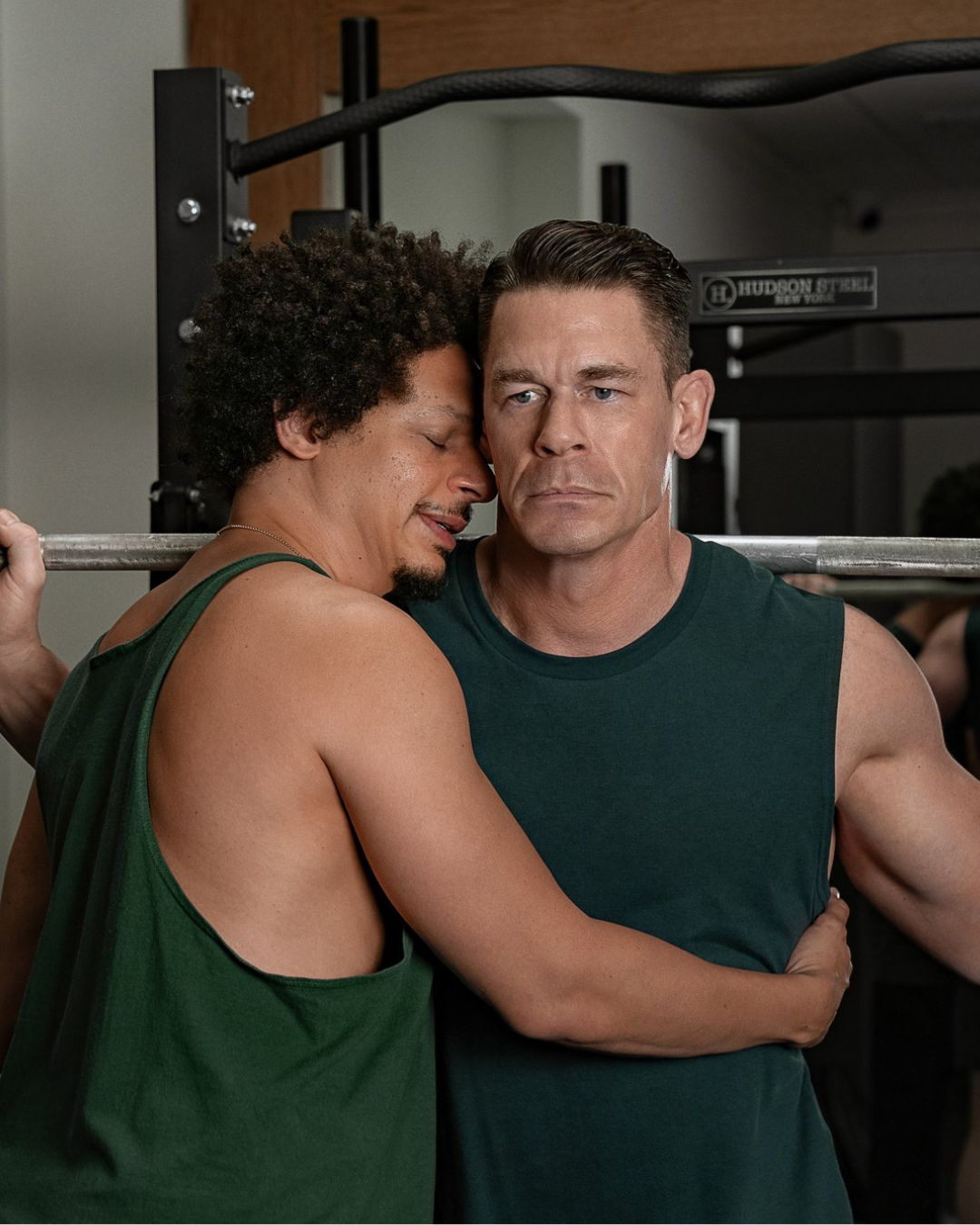
"Little Brother" shows the limits of Netflix comedies The film with John Cena and Eric André wastes its best premises
If there's one type of comedy that does reasonably well on Netflix, it's the romantic kind. A recent example is Messages for Isabelle, which has topped the platform's most-watched chart since the moment of its release. Right behind it, still on the podium, is Little Brother with John Cena and Eric André which, staying firmly in the territory of pure, hard comedy, instead reveals all the limitations this type of film can present, falling into the crudest kind of humor — built on little effort and zero taste.
A screenplay that could have delivered more
@netflixisajoke Not blood, still "brothers." #LittleBrother, starring #JohnCena and #EricAndré original sound - Netflix Is A Joke
An excess that was predictable given the lightweight premise with which audiences are also invited to approach similar productions. Yet the film, directed by Matt Spicer, clashes with a narrative backdrop in which one can glimpse something more than mere scenes where the comic engine is urinating out of a car window (or directly onto one's own face) and performing sexual acts on the side of a road.
The screenplay, co-written by Jarrad Paul and Andrew Mogel, had the potential to become something quite different from the simplistic version we see on Netflix. Perhaps a fine dramedy with Sundance undertones — but that was not the fate of this project. And it's likely that everyone involved in the production and making of Little Brother was more than aware of that.
The triangle between brothers and male insecurities
The film had all the right sentimental and touching foundations to draw on, evident from the very plot. Rudd Lendy (Cena) is a real estate agent with an inferiority complex toward his older brother Josh (Christopher Meloni), who finds himself with the opportunity to step out of his shadow by taking part in a popular reality show. His moment, however, could slip away when Marcus (André) re-enters his life — someone he met in adolescence through a charity program for young people in search of a big brother. The man's arrival will throw Rudd's already precarious equilibrium into disarray, prompting him to question what things are truly important, as well as to reflect on the role each of us plays within our own family.
Unexpectedly, Little Brother applies mechanisms of analysis (and self-analysis) to its characters that are more mature than the gags with which it then stuffs itself. The theme is interesting, and the triangle between brothers involving Rudd, Marcus, and Josh highlights the inability — so often a distinctly male one — to express one's own desires and vulnerabilities, out of fear of overexposing oneself and appearing vulnerable to others.
A missed opportunity for Netflix
Christopher Meloni shares a post about Little Brother
— the chris meloni project (@MeloniProject) June 27, 2026
“Do yourself a favor and check out #LittleBrother on Netflix with Eric André, John Cena, Sherry Cola and Ego Nwodim.” pic.twitter.com/cAt00WLDwq
The insecurities become the stumbling blocks at each of the film's various turning points, backing the characters into a corner. They are what drives — above all — Cena's protagonist to make the most disastrous choices for himself and for others. The comedy follows an uneven rhythm, where the easiest brand of absurdist humor alternates with jokes and moments that generate a more genuine laugh, less bent to the forced crudeness that runs throughout the film.
Had that crudeness been toned down and confined to just a few sequences, rather than recurring as a constant — if not overwhelming — presence, it would have done more justice to the story of Little Brother and its cast. This is a film whose irreverent nature was clear from the outset, and it chose not to leave room for the possibility of becoming anything more. Its missed opportunity lies in failing to be something other than yet another throwaway Netflix comedy. It may well have reached the top of the platform's charts, but it's easy to predict it will soon be forgotten.