





























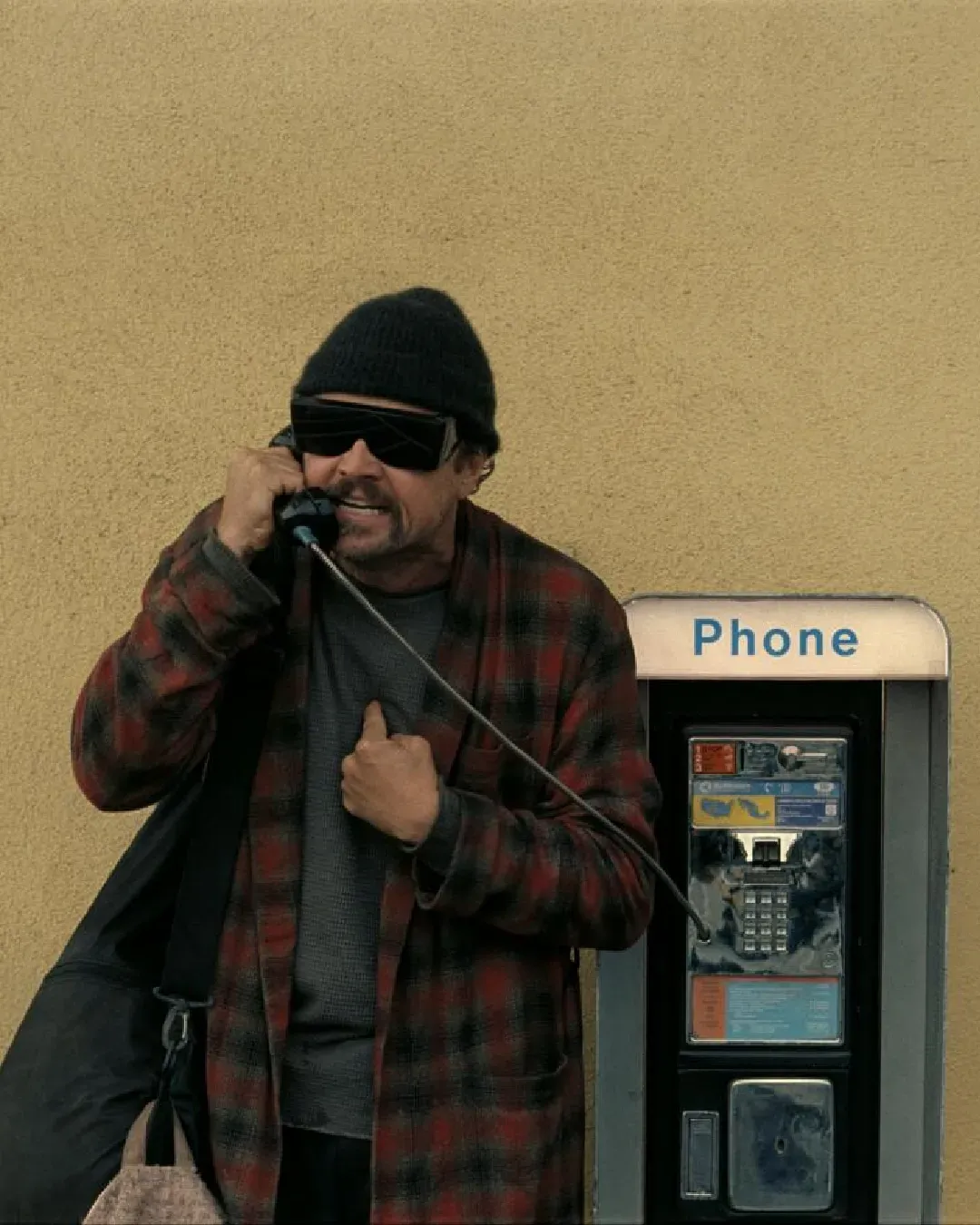
How and why did a work like "One Battle After Another" come about? Paul Thomas Anderson's new film, from book to movie promotion
Paul Thomas Anderson has arrived in cinemas and there’s no room left for anyone else. One Battle After Another has already conquered the critics and started its climb at the box office with a bang, opening with $48.5 million, marking the highest result of his career for the American director. The global response has also been excellent, impacting the box office with Warner Bros.’s distribution and its $26.1 million spread across seventy-four international markets—a figure that even slightly exceeded pre-release expectations. The success factors of One Battle After Another are many, among them the reverence world cinema holds for Paul Thomas Anderson, along with his ability not to miss a single film since his debut in 1996 with Sydney (Hard Eight).
Another key factor behind the resonance of One Battle After Another, though predictable, proved to be crucial: its relevance to the present day. The director portrays with clarity the times we are living in, while framing them within a single story that appears particular and specific to the protagonists, thereby offering a megaphone for the violent and troubling historical times we are entangled in. What is most surprising about PTA’s film is the meticulous adaptation work the director and screenwriter put into crafting it. Initially titled The Battle of Baktan Cross, and even with actors Viggo Mortensen and Joaquin Phoenix attached, the movie is an adaptation of Thomas Pynchon’s novel Vineland, an author Anderson had already adapted in 2014 for his Inherent Vice.
The Adaptation of Thomas Pynchon’s Vineland
Thomas Pynchon's 'Vineland'. pic.twitter.com/4r8GoBZKsi
— @mecomiaunflan.bsky.social (@mecomiaunflan) September 28, 2025
The book, published in 1990, diverges significantly from the feature film brought to the big screen by Anderson, who spent years finding the right way to stage it with omissions and changes from the original text. Starting with the names: the protagonist played by Leonardo DiCaprio, with his already iconic name Bob Ferguson, in the novel corresponds to the character Zoyd Wheeler, while Prairie becomes daughter Willa (Chase Infiniti), and the combative Frenesi Gates from the book is transformed into the explosive Perfidia, played by Teyana Taylor. Even Colonel Steven J. Lockjaw, played by Sean Penn, whose surname perfectly suits PTA’s modern-western vision, was originally Brock Vond in the novel, and his relationship with the woman/enemy he obsesses over was more genuine than what we see reproduced on screen.
Even the timeframe differs between film and book. While Vineland is a satirical work on the changes and failures of revolutionary movements set between the 1960s and 1980s, One Battle After Another is immersed in a temporal frame that resembles our own era, perhaps going slightly back with the incursions of the federal government and its aggressive approaches (including practices of imprisonment and deportation) that somehow foreshadowed today’s America—where immigration is now in the hands of ICE and its disposal policies. A less allegorical backdrop than Pynchon’s, with a more linear plot compared to what emerges from the written pages. An example of a film that carefully takes on the label “inspired by,” because sometimes, to best honor a beloved work, you must also know how to dismantle it in order to reassemble and express it more fully in another medium (in this case, cinema).
Paul Thomas Anderson: «Don’t go against nature»
This brings us to the second point of One Battle After Another: Paul Thomas Anderson’s statements about the format and film stock used to make the viewing experience even more immersive. For the occasion, the director opened an Instagram account, where his first post was a declaration explaining why specific parameters were chosen for bringing his latest work to the screen. «One Battle After Another will be screened in many formats around the world,» reads the account. «For the first time in a long while, a film will be projected in VistaVision. It’s unlikely many have seen anything like it. The last widely distributed film in VistaVision was The Big Fisherman in 1961. But now it’s back. We made three prints. They will be screened in Los Angeles, New York, and London. I hope that, if possible, you’ll choose to see it in this format.»
Anderson had long dreamed of creating a work in VistaVision. Created in 1954 to compete with the mass spread of televisions in homes, VistaVision allowed for higher resolution and finer grain. But that’s not all for film lovers: «If you like big, loud, spectacular movies,» PTA continued on Instagram, «we have screenings in IMAX 70 mm. If you like the old 70 mm five-perforation prints, we have those too. It goes without saying, but it’s worth repeating: watching a movie on film is its most natural way. So don’t go against nature—find the nearest theater screening it on film.»
The Marketing of One Battle After Another
@chase.infiniti one solo shot after another #onebattleafteranother originalljud - KC
The attention to the essence of film and cinema itself seems to clash with a completely unexpected aspect of both One Battle After Another and its figures, including the director. In an era of pervasive social media and advertising that inevitably must pass through channels beyond billboards or TV appearances, Warner has decided to replicate the strategy applied with Superman (though the latter was more structured from the set content through the press tour) and attempt to make Paul Thomas Anderson’s film “social.” This really does seem against nature.
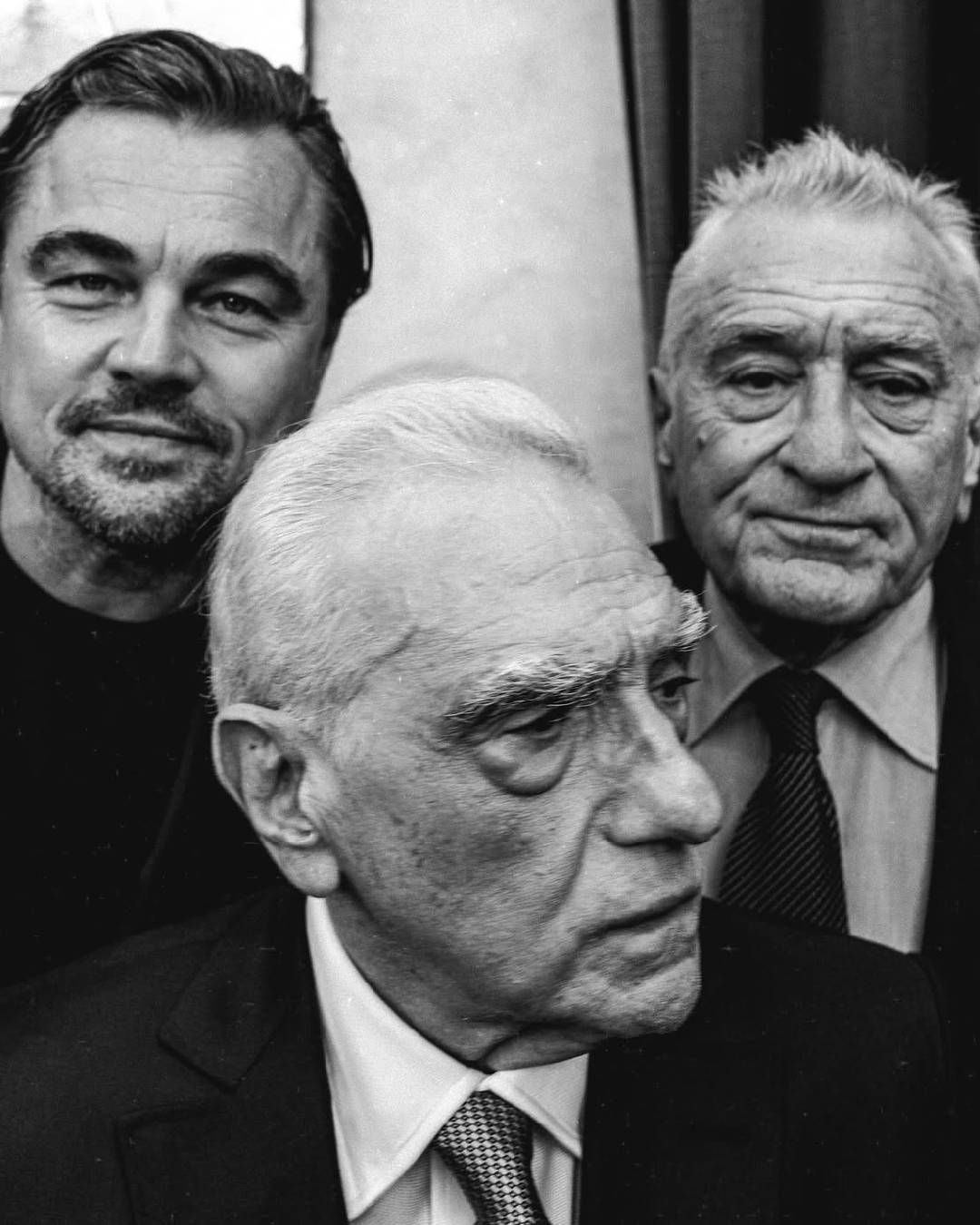
The task was entrusted to Chase Infiniti, the film’s Willa Ferguson, born in 2000, who was used as bait to reel in the rest of the cast. A move that Vulture highlighted, noting that even DiCaprio, the quintessential star whose name alone once drew crowds, might now no longer be enough to bring people into theaters. Judging from box-office results, the promotion of One Battle After Another seems to be working, though it’s likely that even without the reels that stars and great auteurs must now submit to, such a film would have done well anyway. For the box office, however, anything goes, since it remains a vital element of the industry, even for highly artistic products. «I believe the box office is important because it means there are people sitting together in a theater, sharing a professionally crafted experience designed precisely for that purpose,» Leonardo DiCaprio commented in an interview with Variety.
The Message of One Battle After Another
After all, TikTok and reels are part of today’s world, and they’re used by a film that, in turn, speaks clearly about the current period. In this twenty-year-long patchwork process, Paul Thomas Anderson depicts a floundering America where freedom struggles (sometimes with arms) to reclaim its place. Borders are closed, as are people in open-air prisons; inequality has become so entrenched that reason must be wielded to reestablish individual self-determination. In Vineland, characters echo specific ideals, whereas PTA’s film refrains from predicting or preaching, simply staging what surrounds us daily and what we should truly be fighting for. The film is thus almost a cry of hope, weaving a message of transmission that leads not only to one battle after another, but to one generation after another.
Willa becomes the pivot of the private drama of two men, polar opposite fathers, against whom she rebels in her own way. Yet she ends up taking up the rifle herself, opening her eyes to the Wild West around her, made of revolutions impossible to silence and (hypocritical) white supremacists still claiming delusional privileges on this land. Being children of revolt is what PTA wishes for everyone, while in the wake of Eddington by Ari Aster, it’s clear that to describe today’s USA, one can no longer remain in the present, but cinema must reclaim the genre that made it great precisely because it told the story of a country and how it was born.
The westerns of Aster and Anderson, however, can only be the opposite of those from the golden age, more chaotic and aimless, reflecting this 21st-century America which, because it is burning, must rebuild solid foundations in order to start again. Grand, layered, and running two hours and forty minutes, One Battle After Another is (alongside The Voice of Hind Rajab) the most important film of 2025. And perhaps it will continue to be so in the years to come.