




































Where Hoepli’s crisis comes from One of Milan’s most important bookstores and publishing houses is at risk of closing
It was recently announced that the company owning the publisher Hoepli and the historic bookstore in the center of Milan – one of the oldest in the city, not far from the Duomo – will be closed if no one is willing to take over the business.
La notizia della messa in liquidazione della libreria Hoepli è tremenda. Credo fosse ormai l’unica libreria a Milano in cui non servivano vino
— Alessandra Favazzo (@ale_alfa9) March 10, 2026
Hoepli's partners explained that they made this decision also due to some internal family conflicts. The majority of the company belongs to Ulrico Carlo Hoepli and his three children, while the remaining shares belong to the Nava brothers, children of Bianca Maria Hoepli, Carlo Hoepli’s aunt. Significant financial losses linked to the performance of the publishing market have added to the tensions among the partners.
How Hoepli ended up being liquidated
Internal problems within the company owning the Hoepli publisher and bookstore had already emerged about a month ago, when several news outlets reported that the company had started discussions with the unions to implement a temporary layoff scheme for nearly 90 employees, a measure that allows struggling companies to suspend or temporarily reduce work activities, while part of the workers’ salaries is covered by the state.
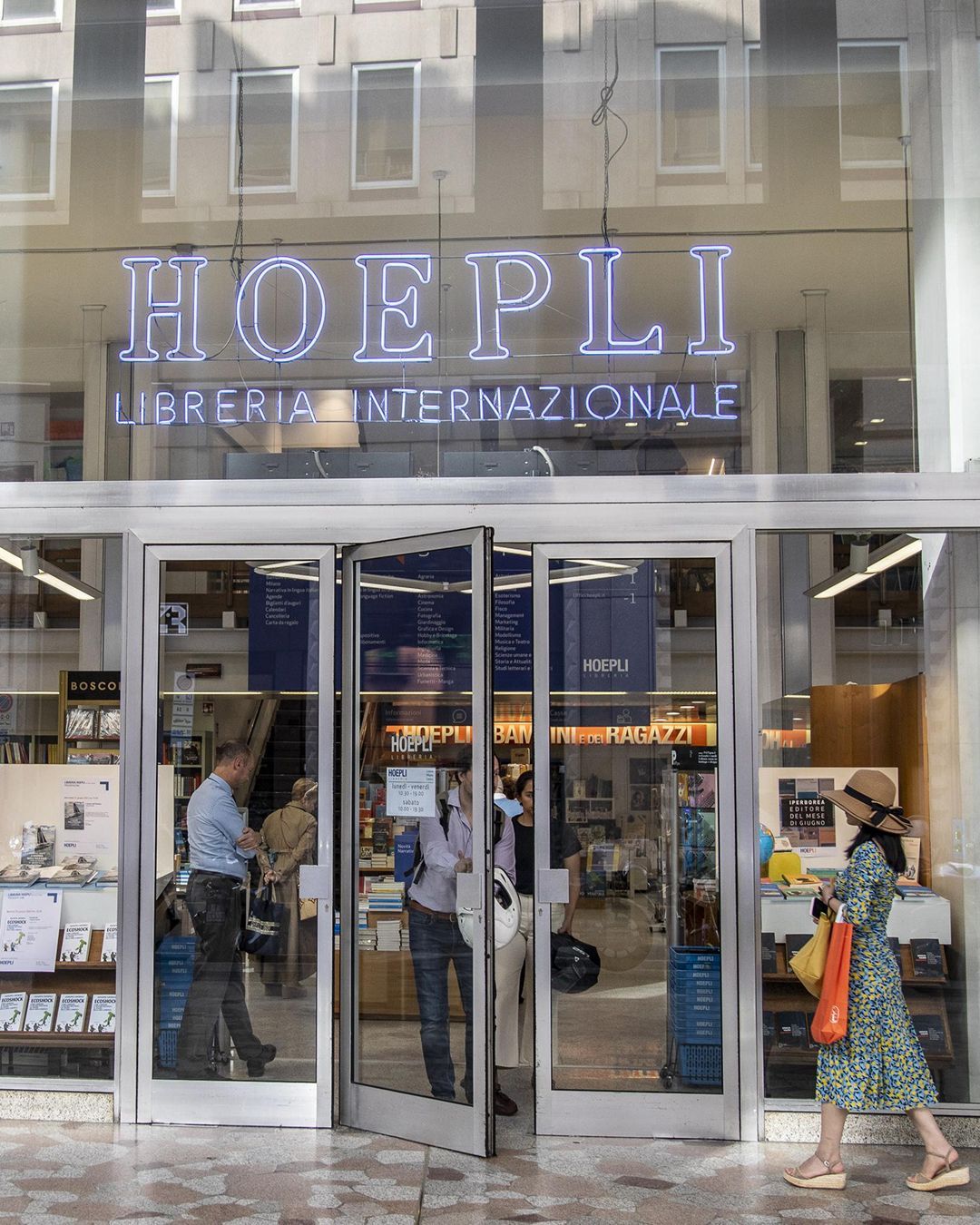
The announcement of Hoepli’s possible permanent closure sparked significant debate, as the bookstore – located at number 5 of the eponymous street, in the heart of Milan’s historic center – is quite famous and beloved by both residents and tourists, also because it spans five floors and offers a very extensive and varied catalog. Moreover, the publisher itself is one of the main references in Italian publishing, particularly in the technical-scientific and educational sectors.
Journalist and potential Milan mayoral candidate Mario Calabresi recently described the bookstore as «one of the most beautiful and complete in the world», «an extraordinary place», with a «technical-scientific catalog without comparison». In a widely commented Instagram post, he warned that «this heritage could disappear», citing the crisis of independent bookstores, competition from e-commerce, declining readership, and «conflicts among the Hoepli heirs», who do not have a «shared vision».
How Italian publishing is doing
@aboutesse In tanti anni che ho visto #Milano non ero ancora andata a vedere la maestosità della #libreriahoepli #booktok #booktokita #booktoker #librerie #libreriebelle #hoeplilibreria #hoeplimilano #libreriemilano #bookstore Hey Lover - The Daughters Of Eve
It is not a particularly favorable period for Italian publishing. After the strong increase during the pandemic, sales in recent years have been largely stagnant. This is concerning considering the sector's fragility, which relies on a relatively small and non-regular readership.
The sector’s difficulties particularly affect smaller publishers, which are more exposed to market fluctuations and have narrower margins to absorb prolonged periods of reduced revenue. As in other cultural sectors, Italy’s book market is largely supply-driven rather than demand-driven: in practice, the release of a book by a well-known author can temporarily make a real difference for the overall sales trend. The number of bestsellers, however, remains largely unpredictable and variable year to year.
On top of this, there are structural issues and factors related to the current economic situation: for example, in recent years the decline in household purchasing power, due to rising inflation, has significantly affected non-essential consumption, which often includes book purchases.