




























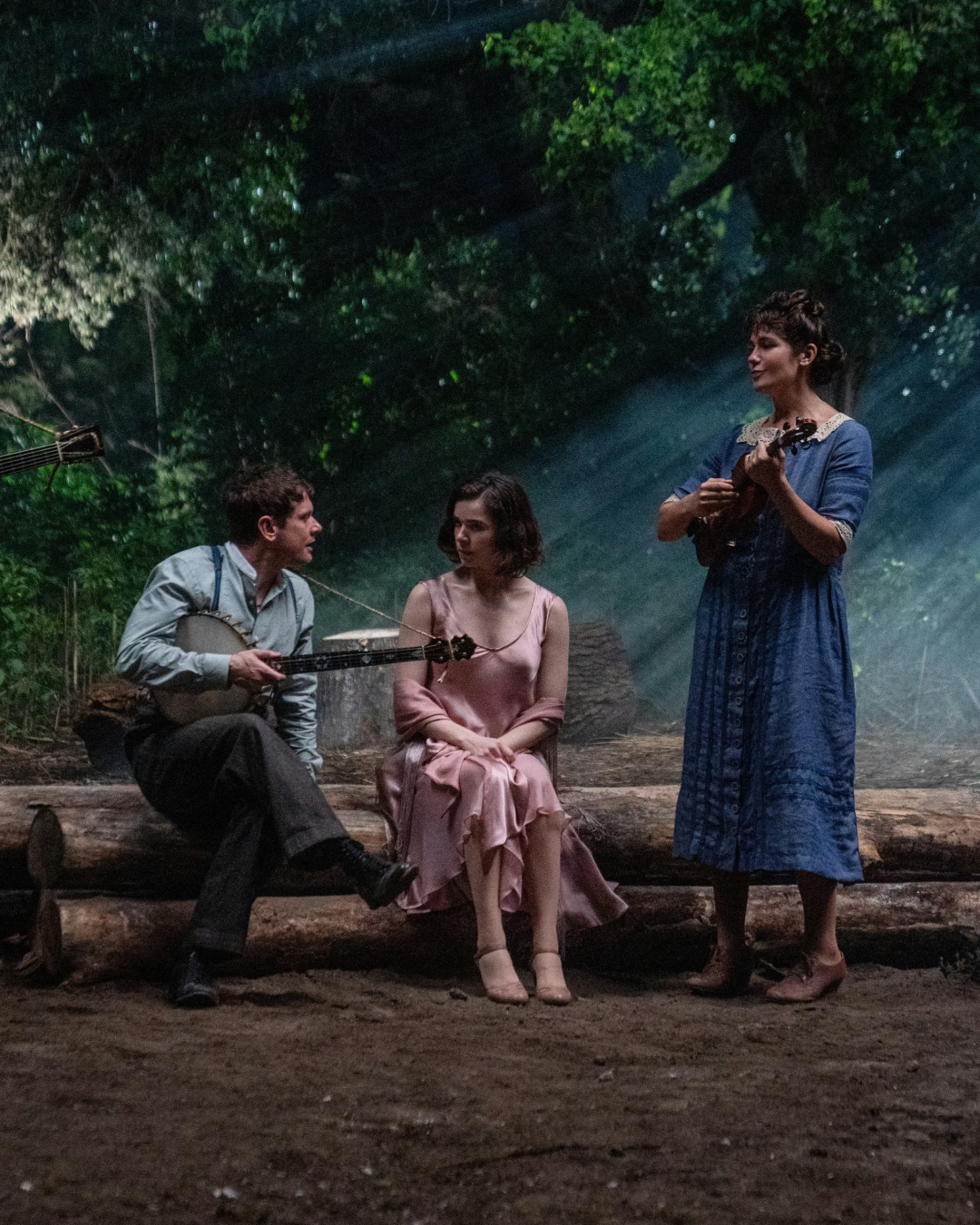
Is the "Sinners" soundtrack special enough to deserve an Oscar? Ludwig Göransson is getting closer to the win
Despite there being no shortage of choices this year—among the nominees for Best Original Score stand out Jonny Greenwood, Alexandre Desplat, and Max Richter—the frontrunner for the win seems to be Ludwig Göransson.
The Swedish musician and composer, already a two-time Oscar winner for the soundtracks of Black Panther (2019) and Oppenheimer (2024), has once again delivered a stunning work for Sinners, Ryan Coogler's breakout film, which broke all records with 16 nominations, including, of course, Best Picture.
Music at the Heart of the Narrative
@warnerbrosph New Trailer Alert: Dance with the devil and he’ll follow you home. #SinnersMovie - Only in cinemas March. #ComingSoon #WhatToWatch
original sound - warnerbrosph
Sinners is a horror movie literally centered on blues music, which in this case is not just background accompaniment but is presented from the start as a central element of the story, later becoming a pivotal turning point within the narrative. The director recounted how the idea came to him through two key moments.
First, the story of the film was inspired by his uncle James, a Mississippi blues enthusiast who passed away while Coogler was in post-production on Creed. Listening to blues became a way to “evoke” his uncle, the director explained. Later, after completing Black Panther: Wakanda Forever, one evening while washing the dishes and listening to Wang Dang Doodle, a 1960 blues song about a wild night party with a cast of colorful characters, he had a sudden insight. The rest is history.
@sonysoundtracks Music to sink your teeth into All of Ludwig Göransson’s music from the #Sinners original sound - Sony Soundtracks
Now, if you’re wondering what a composer born and raised in Sweden in the 1980s could possibly know about blues, the answer is plenty. Göransson’s father was an enormous blues fan and even wanted to name his son after Mississippi musician Albert King, though ultimately he had to yield to his mother’s wishes, who preferred to name him after Beethoven.
Naming aside, the father still managed to pass on his deep love for “Delta music” to his son, who later evolved it into a 360-degree love for a wide range of musical genres, from blues and jazz to heavy metal. It’s no coincidence that drummer Lars Ulrich from the Metallica band was also involved in creating this soundtrack.
@classicfm The exact guitar Ludwig Göransson wrote his 'Sinners' score on! The Swedish composer has just won the Critics' Choice Award for his guitar-based soundtrack. Watch his full breakdown of the score on YouTube. #filmscore #sinners #guitar original sound - classicfm
Regarding the blues, Göransson applied all the rigor and meticulous care of an ethnomusicologist in crafting the Sinners soundtrack, conducting studies, research trips, and numerous interviews with blues legends and expert musicologists, giving piano, guitar, and vocal lessons to all cast members, and making them rehearse until exhaustion.
Even the guitar used by the protagonist, played by newcomer Miles Caton, is a rare 1932 Dobro guitar with a metal amplification cone, literally containing almost a century of blues DNA. The dark allure and mythology of the blues are treated with utmost care in three key moments of the film, where images and sound intertwine and strengthen each other.
The Magical Power of the Blues and the Music of the Devil
@piero.panebianco Robert Johnson è il più misterioso e affascinante chitarrista della storia. Leggenda narra che in cambio del suo talento, abbia venduto la propria anima. Fatto sta, che le sue canzoni, sono la grande madre della musica blues moderna. #robertjohnson #blues #mistero #leggenda #musica #chitarra suono originale - Piero Panebianco
The film opens with a prologue describing the magic of music, illustrating how music can summon spirits and tear the veil between past, present, and future, uniting them on a single temporal plane. In some cases, it is said, the most talented musicians can even awaken the forces of evil. This key element references the blues’ mythology as the music of the devil.
One of the greatest legends, evoked in some way by the film, is that of the legendary bluesman Robert Johnson, who supposedly became so great because one day he crossed paths with the devil and struck a deal with him. This story is rooted in the dark heart of the blues and is well-known to aficionados, having inspired numerous books and documentaries. In the film, the guitar played by the protagonist is said to have belonged to Charley Patton, yet the connection with Johnson remains evident and deeply evocative.
The Incredible Juke Joint Music Scene
@vashinigibson Viral Performances The juke joint scene in Sinners (2025) A supernatural blues sequence that transcends time and space. Sinners features a surreal musical montage representing Six main eras and styles: Blues, Rock 'n' Roll, Hip-Hop, African Tribal Music, Gospel, and Chinese Xiqu. Symbolizing the temporal and cultural journey of music. These spirits/dancers represent ancestors and future performers, including B-boys, Funkadelic-style musicians, and Chinese dancers, appearing as Sammie plays his guitar. #creatorsearchinsights# #sinnerssongs #musictrend##HiddenMeaning#VisualStorytelling I Lied to You - Miles Caton & Sinners Movie
In a breathtaking scene at the center of the film, Caton sings a new blues song during the opening night of the Juke Joint, a term for social gathering spots for African Americans in the southern United States. The piece is a modern, particularly seductive blues track titled I Lied To You, composed by Göransson alongside Raphael Saadiq, the Oakland R&B guru who had this blues in his head since childhood.
It is a true declaration of love for the blues, partially inspired by Marvin Gaye’s I Want You, as the director himself suggested: «I Want You by Marvin Gaye was a major source of inspiration for this film. Look at the album cover. He chose a sugar shack. It’s a juke joint. And the song. It’s not enough to be necessary. You want to be desired. This greatly motivated me while writing. It put me in a blues mood. Marvin Gaye played blues. The song that Sammie sings had to have that».
The Sinners theme score had me levitating Ludwig we are getting you that oscar pic.twitter.com/TpnQfSSwHA
— Patrick Nelis Art (@PatrickNelisArt) April 26, 2025
The scene accompanying the song becomes the heart of the film, showing in practice what was described in the prologue: the director opens a temporal portal, where past, present, and future merge, suddenly revealing ancient African percussionists and dancers sharing the floor with 1930s plantation workers, an electric guitarist midway between Bootsy Collins and Jimi Hendrix, modern twerkers, and DJs. Musically, Göransson achieves a subtle and balanced fusion of genres from different eras, successfully illustrating the blues as part of the DNA of American music, from rock to pop to hip-hop.
Discographic Vampirism
However, blues is not the only music featured in Sinners. At one point, the “evil” evoked by the guitar sound manifests as vampires linked to Irish traditional music. Here too, nothing was left to chance, and Göransson enlisted the guidance of the best traditional Sean-nós singer in Ireland.
This connection between blues and Irish music may sound jarring, but as noted by James Gutierrez, composer and music professor at Northeastern University, Coogler and Göransson highlighted the links between African Americans and Irish Americans, their shared histories of oppression, and how music helped them find a foothold for economic hope.
Both faced a different type of vampirism from early record labels that exploited their art with predatory deals, disadvantaging musicians from vulnerable and discriminated social groups. In the end, they persevered with love and dedication to their music and people.
Reconciling the Blues with Today’s Reality
#sinners
— SyL | #RumorRoulette (@sylabdul) March 13, 2026
This entire final sequence clinched Oscar in my mind https://t.co/CjyV7wlA13
Another key musical moment in the film is the post-credits scene, which was actually the first shot chronologically. Coogler wanted to show a more recent connection to the century-old events portrayed and deeply wished to involve his uncle’s favorite blues musician, Buddy Guy, now in his eighties and hard to reach. It seemed impossible, but finally, thanks to encouragement from the bluesman’s children and grandchildren, they managed to organize a meeting backstage at a concert.
Coogler’s account is moving: «We sit down, and he says to me: ‘Hey buddy, I’m not a cinema guy, but my kids love your films and told me I had to meet you. So here I am, at your disposal.’ “I explained what the film was about,” Coogler continues, «and he told me the story of his life, of when he was a sharecropper kid and then went to Chicago to learn to play. I burst into tears, because everything I had just written in the script, this guy had lived it».
The final cameo with Buddy Guy singing his blues is the cherry on top of a memorable soundtrack.