




































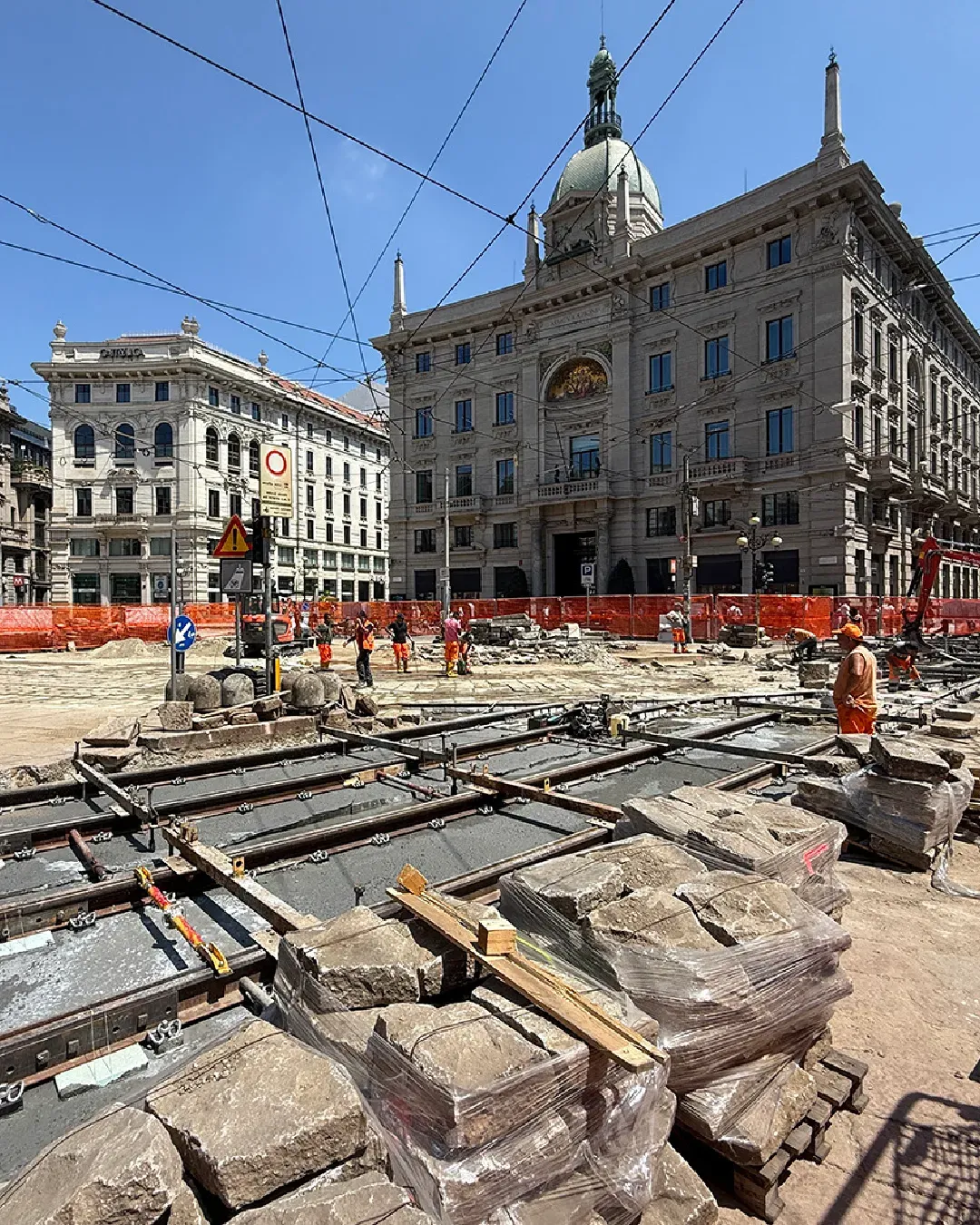
Construction sites as a theatre of work What the Swiss teach us that we ignore in Italy
In the debate on the future of cities, architecture is often discussed as form, urban planning as organization, but far too rarely is there talk about construction, and almost never about building sites. Yet it is precisely in these theatres of work that cities take shape, where the project, from an abstract idea, becomes material, sweat, and skill. In 2025, in a Europe marked by immense climate challenges, internal migrations reshaping demographics, and a labor crisis that severely tests its dignity, construction sites are more than ever the thermometer of a society’s health. And, unfortunately, they lay bare deep contradictions. While in Italy they often remain synonymous with precarity, exploitation, and chronic delays, in Switzerland they represent an advanced model of efficiency, training, mutual respect, and meritocracy. The comparison starts with the numbers. According to the latest survey by the Swiss Contractors’ Association (SBV/SSE), updated to 2024, the average gross salary of a skilled worker is about 5,800 Swiss francs per month (over €6,100), compared to the €1,900 gross in Italy recorded by Istat in the same period. The difference is not only economic, but systemic. In Switzerland, the National Collective Labor Agreement (CCNL) in the construction sector is mandatory and applied throughout the country, with regulated working hours (38 hours per week), guaranteed holidays, and a dual vocational training system that integrates school and work and promotes cutting-edge technologies, sustainability, and internal growth.
@jashiproject Video dedicato a tutti gli italiani che sono fissati con la posizione di prestigio in quanto stiamo arrivando in un mondo dove il lavoratore d’ufficio che fa un lavoro considerato di prestigio prendo un terzo di un operaio in quanto l’operaio è sempre più richiesto è sempre più difficile da trovare questo per darvi un punto di vista diverso dallo standard #Operaio #LavoroManuale #LavoroFisico #LavoroD’Ufficio #PosizioneDiPrestigio #CulturaItaliana #CulturaItalianaDelLavoro original sound - Jashi
This rigorous structure not only ensures high quality and efficiency but also makes Swiss construction sites professional environments in which manual labor is not underestimated, but rather valued and professionalized. There is a code of mutual respect between company and worker, where every role is acknowledged, communication is constant, and responsibilities are clear. Conflicts are resolved through shared protocols, inspections are frequent, and sanctions, if necessary, are certain. It is a system that not only fosters efficiency but embodies true meritocracy: one enters as a highly trained apprentice, grows with years of experience and specialization, and gains access to management positions only with concrete proof of competence and leadership. A clear hierarchy that is not authoritarian but functional to the smooth running of work and the protection of all. In 2025, Switzerland has over 18,000 young people enrolled in vocational courses related to construction (SEFRI data), while in Italy, enrollments in technical institutes for surveyors and construction are in constant decline, with fewer than 7,000 graduates in 2024. This educational imbalance has deep and cascading consequences. It affects not only the quality of the available workforce and sector innovation, but also the social perception of the trade.
@oh_prinscipa Il secondo non mi ha convinto anche se si è ripreso alla fine haha #perte #neiperte #tiktokitalia #cantiere #edilizia #viral #work suono originale - Oh_Prinscipa
In Italy, work on a construction site is often portrayed as a fallback fate, an alienating toil to escape from as soon as possible, rather than as a trade that requires skill, offers dignity, and provides concrete growth prospects. The Italian construction site, in the dominant narrative, and unfortunately in reality, is perceived as disorganized, unsafe, underpaid, and the dramatic INAIL statistics of 2023, with over 1,200 serious accidents and 92 deaths in the construction sector alone, only confirm a systemic crisis in safety and respect for human life. And yet, construction work, if well managed and supported, is also an activity that combines satisfying physicality, a deep sense of visible results, and craftsmanship that leaves a concrete and lasting mark on the landscape. It is hard work, no doubt, but often more rewarding and tangible than many desk jobs, offering a direct connection to the creation and transformation of reality. In Switzerland, physical effort is balanced by sustainable rhythms, state-of-the-art tools, and mandatory breaks, part of an approach that sees the worker respected as both a person and a professional, an integral and valuable part of the construction process. Companies invest heavily in work quality and safety, because they know that a satisfied worker not only works better and more precisely, but is also less prone to accidents. It is a social pact and an investment in human capital that has unfortunately been broken in Italy and should be urgently restored, not only for ethical reasons but also economic ones.
@ninamazza_ @chiarix01 grazie di esistere #paris #cantieri #aiuto #ingegneria #jeuxolympiques #fyp #pourtoi original sound - Nina Mazza
The construction site, therefore, is not only a technical place but an intrinsically political, cultural, and economic space. Because to talk about avant-garde design or the sustainability of materials without talking about those who, with their effort and skills, physically realize what has been designed, is like discussing haute cuisine while ignoring who is in the kitchen. The rhetoric of starchitects has for too long overshadowed the irreplaceable role of manual labor, while Italian construction - overwhelmed by building bonuses that have generated speculative bubbles and by housing emergencies that demand immediate responses - has lost a broader vision, forgetting the importance of investing in the foundation. There is an urgent need to rethink construction sites as social infrastructures, places of continuous training and high professionalism, spaces of active citizenship and virtuous collaboration among all parties. Where the workforce is not merely an executor of directives, but a key player in the construction process, recognized for their expertise and for their essential contribution. Where work is not just a cost to be squeezed, but a value to be recognized and from which to start again to build quality and dignity. Where respect between parties is not an exception but a shared and enforced rule. As Richard Sennett writes in The Craftsman, «the quality of manual work is a form of intelligence.» But to recognize it, a different perspective is needed, not from above, but from the ground. Right where the cement is truly mixed and the city takes shape.