















Maurizio Cattelan unveiled a secret exhibition in Capri In the private and atmospheric Casa Malaparte
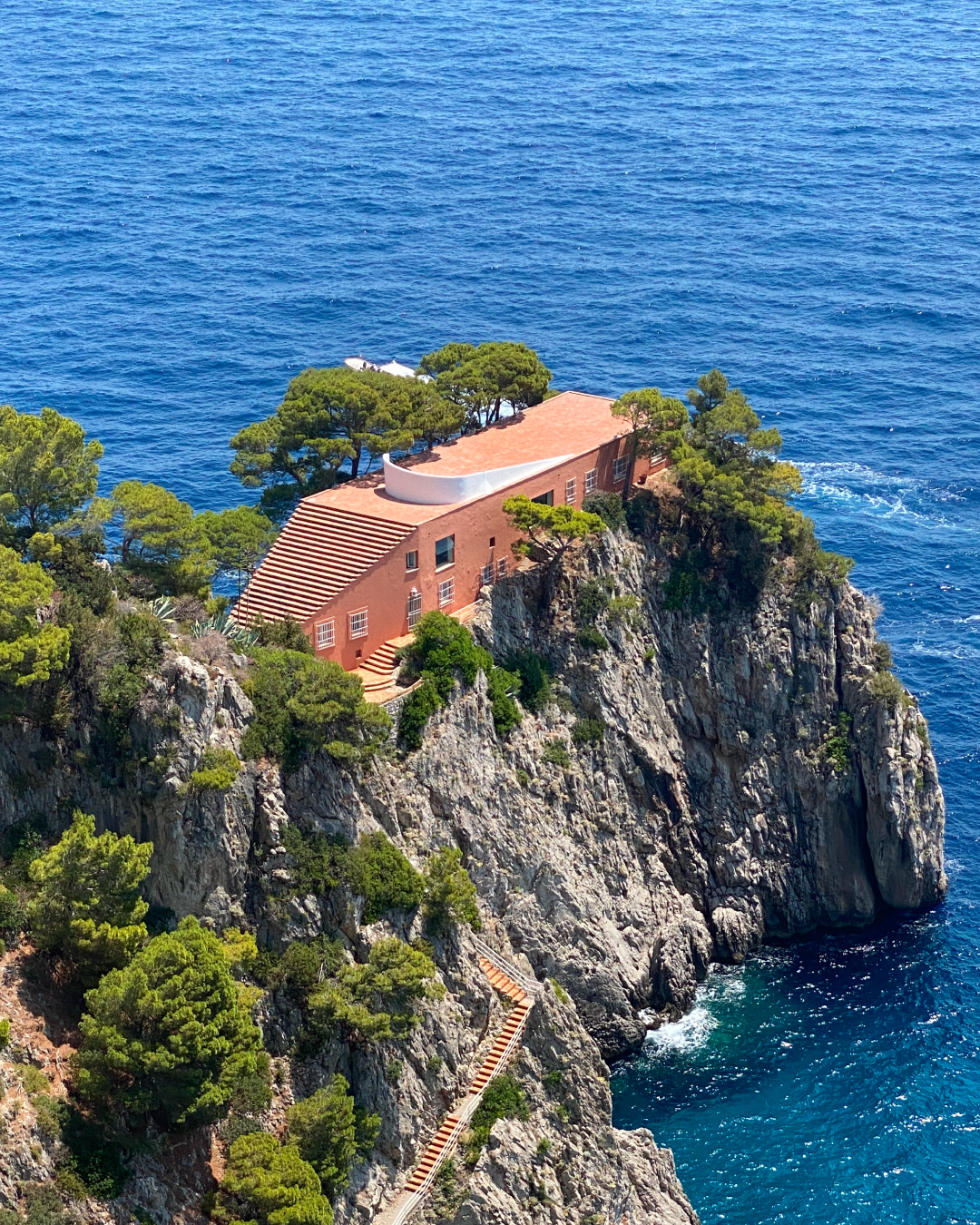
Rich people like to consider themselves connoisseurs of art, especially when it comes to owning it. That might be why the latest project by Maurizio Cattelan, the artist behind Comedian (the banana taped to the wall with duct tape that was sold last November for an astonishing amount), is hidden in one of Italy's most exclusive residences. Not only is the work, titled Fear of Painting, located at Casa Malaparte, a private home on the island of Capri perched on a narrow cliff sloping toward the sea, but the exhibition is accessible only by boat, by invitation only, and photos are not allowed – ça va sans dire. Opened in early July, the exhibition was curated together with the Gagosian gallery, which has previously collaborated with the Italian artist for a show at its New York location and has launched other projects inside the villa. Like all of Cattelan's works, Fear of Painting is fundamentally provocative: as Artribune reports, it consists of a series of marble sculptures, including busts and hands, that «host lifeless birds on piles of closed books and faces concealed by hands gripping cheeks and eyes with force.»
The opening of a secret exhibition in a remote part of the exclusive island of Capri could easily be the perfect set for a new thriller series. Titled Virus and Lies, the mysterious marble works resting on books and wooden bases signed by Cattelan would certainly contribute to the script’s enigmatic atmosphere – too bad that, after a 2024 filled with countless cinematic and TV works about the rich, the public no longer cares how the 1% is doing. Not many know that Villa Malaparte has already served as the set for other artistic projects, including Contempt (1963), by Jean-Luc Godard, with Brigitte Bardot, The Skin (1981), by Liliana Cavani with Marcello Mastroianni, and finally the Jacquemus Cruise SS25 show. The building itself has artistic roots, as the designer and first owner was the writer Curzio Malaparte. With rationalist architecture, the house blends into the natural environment while asserting itself with a bold, geometric silhouette that juts out from the organic rocks. Now owned by the writer’s heirs, it has become the stage for Cattelan's latest artistic whim, which he explained this spring in an interview with The Art Newspaper: «Every work opens a door, sometimes to another work, sometimes to a dead end. I just hope to keep finding doors.» You could definitely say things went more than well for him this time.