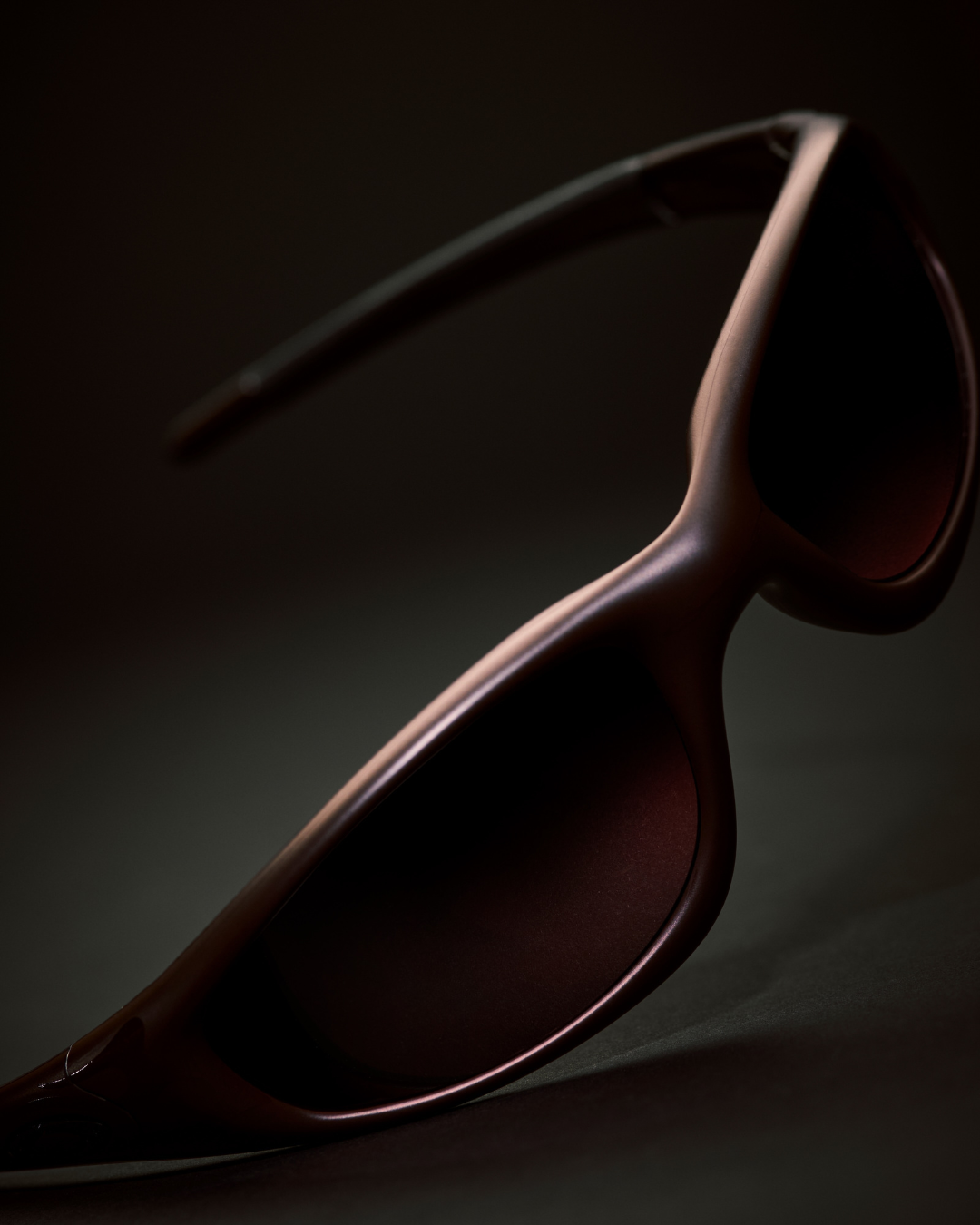








































Meta succeeded in what Google failed in Ray-Ban Meta Glasses are working so well that they are being taken as an example by others
Although they were a failure and those who wore them were often ridiculed due to their unattractive design, today the Google Glass are considered a pioneering device in some respects, perhaps penalized precisely for being launched before the time was right. Created to bring augmented reality into everyday life, the Google Glass combined an external camera, a small screen, and a side touchpad, which could also be activated via voice commands. The idea was to overlay digital elements onto what was seen in the real world. But even before establishing itself as a tech gadget, the device was launched with a strong focus on fashion: during New York Fashion Week in 2012, Google co-founder Sergey Brin wore them at Diane von Furstenberg's runway show, accompanied by models on the catwalk and the designer herself, in an event that was part of the product launch campaign. However, the product ended up being one of Google’s most famous failures. Yet today, it seems that the time has finally come for smart glasses – as these glasses integrating various technological components are commonly called. Sales figures for the Ray-Ban Stories and Ray-Ban Meta Glasses, both born from the collaboration between Mark Zuckerberg's company and the multinational EssilorLuxottica, prove this point.
Google just quietly showed off the next... Google Glass? A pair of glasses—similar to the Ray-Ban Meta smart glasses—that can see the world via cameras and answer questions. pic.twitter.com/IDUwJw1ni0
— Joanna Stern (@JoannaStern) May 14, 2024
When in 2020 Meta announced the imminent launch of new smart glasses, many observers believed they would soon witness another spectacular flop, similar to that of Google Glass. However, the numbers tell a different story: in 2024, the Ray-Ban Meta Glasses surpassed one million units sold, and Meta’s goal for this year is to double that figure. For this reason, Meta has decided to ride the wave: for the past few weeks, there has been talk of a pair of hi-tech glasses made in collaboration with Prada, while recently Zuckerberg’s company presented another model of smart glasses made with Oakley – the Oakley Meta HSTN, equipped with promising camera performance. In the field of wearable devices, Meta aims in the future to make them even more technologically advanced while maintaining the appearance of simple prescription or sunglasses, avoiding turning them into expensive and uncomfortable headsets. Meanwhile, just yesterday Zuckerberg’s company invested $3.5 billion in EssilorLuxottica, acquiring a minority stake that ensures a closer involvement not only with the Italo-French manufacturer but also with all its brands – potential collaborators.
The success of the Ray-Ban Meta Glasses is part of a broader and more recent strategy of the company: after the failure of the metaverse, the group stopped focusing on developing virtual and augmented reality headsets and chose to invest in less bulky glasses – prescription or sunglasses, integrating a more limited yet functional tech component. In this exact direction goes Orion, a new experimental device from Meta that resembles a traditional pair of glasses. Apple, too, after uncertainties about its Vision Pro – a mixed reality headset that yielded rather disappointing results –, has preferred to take a step back to focus on a device similar to the Ray-Ban Meta Glasses. As reported by Bloomberg, the Cupertino company is now accelerating the development of smart glasses similar to Meta’s Ray-Ban Glasses.
Coperni SS24, AI Pin@Humane pic.twitter.com/lLaJpCxCwX
— Taimoor Ahmad (@taimoorahmadx) September 30, 2023
The wearable device market has grown significantly in recent years, thanks in part to the increasing adoption of voice assistants based on artificial intelligence systems. A few years ago, the AI Pin, though another product that failed commercially, paved the way for a series of devices designed to be personal assistants that are easy to carry and wear. Today, the goal shared by almost all players in the sector is not to develop hyper-technological products, however invasive they might be when worn. On the contrary, the underlying idea is to minimize barriers and integrate, as much as possible, increasingly advanced technologies with products we already know and are used to using – like glasses, for example. In essence, in the past, the prevailing strategy of big tech companies was to launch highly advanced devices, even if bulky, and later move towards more compact and lightweight designs. Today, however, Apple and Meta seem to have adopted the opposite approach: start with relatively simple and discreet solutions and gradually evolve them into more sophisticated products, while maintaining accessible and familiar forms.