
























Meet the new IFM generation at PFW The 23 students of the Master of Arts in Fashion Design and Knitwear Design have kicked off Paris Fashion Week
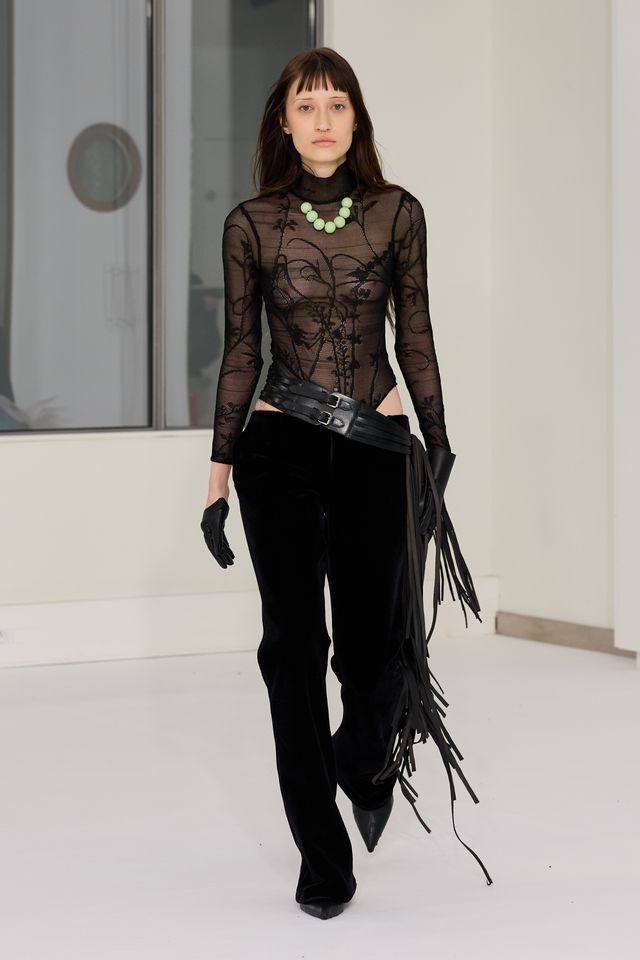
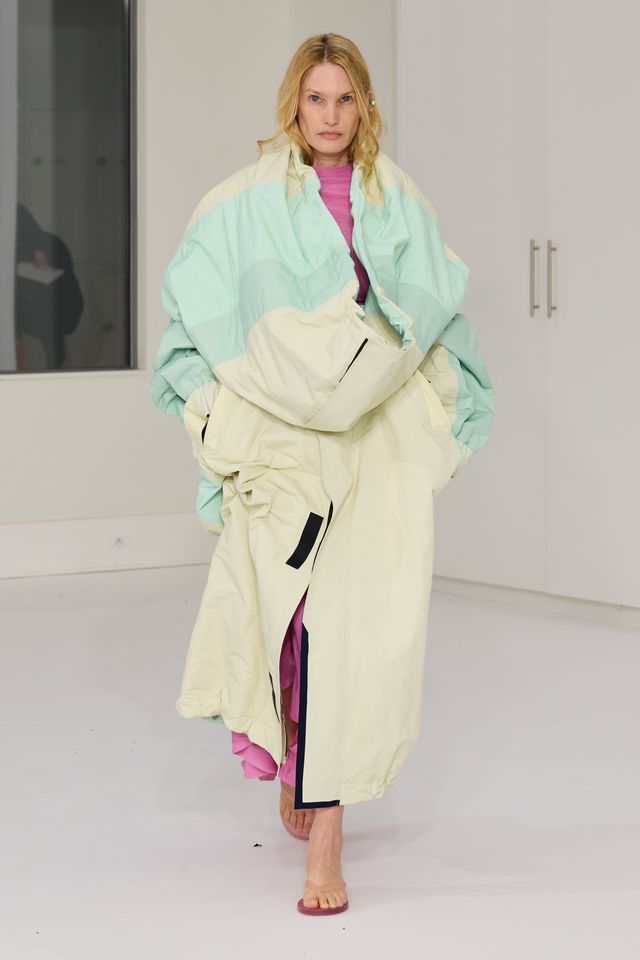
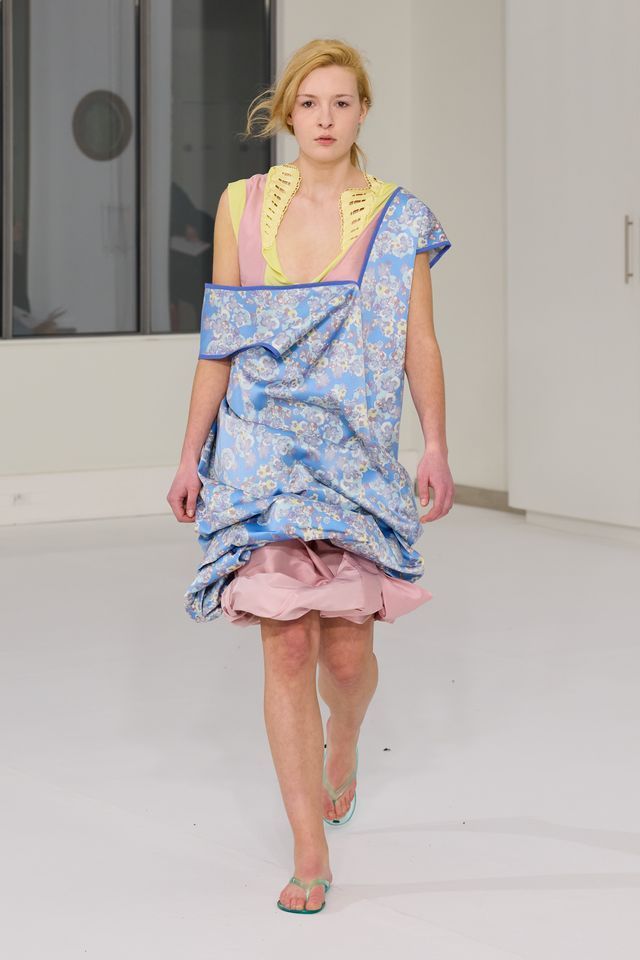
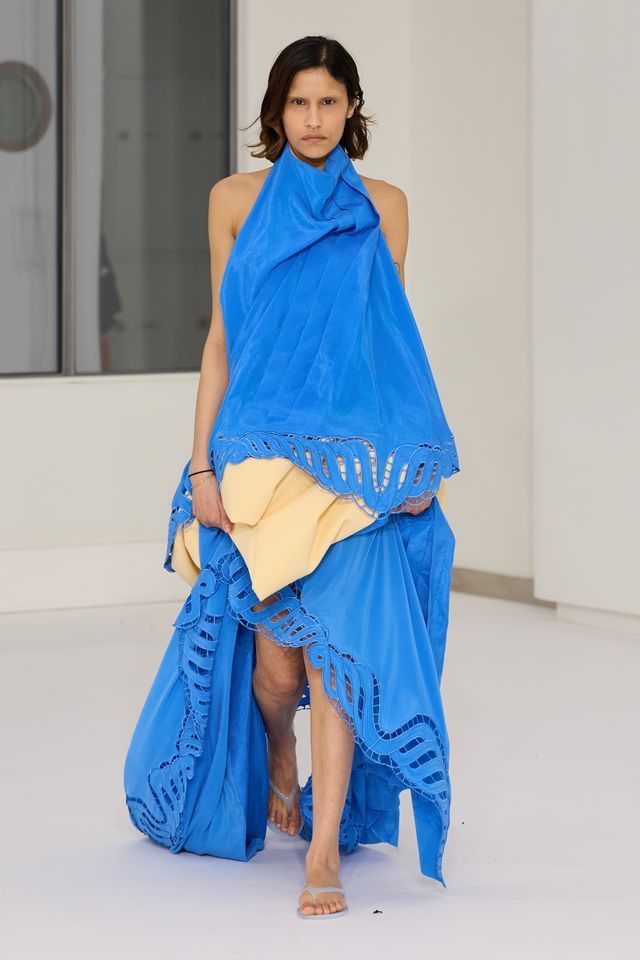
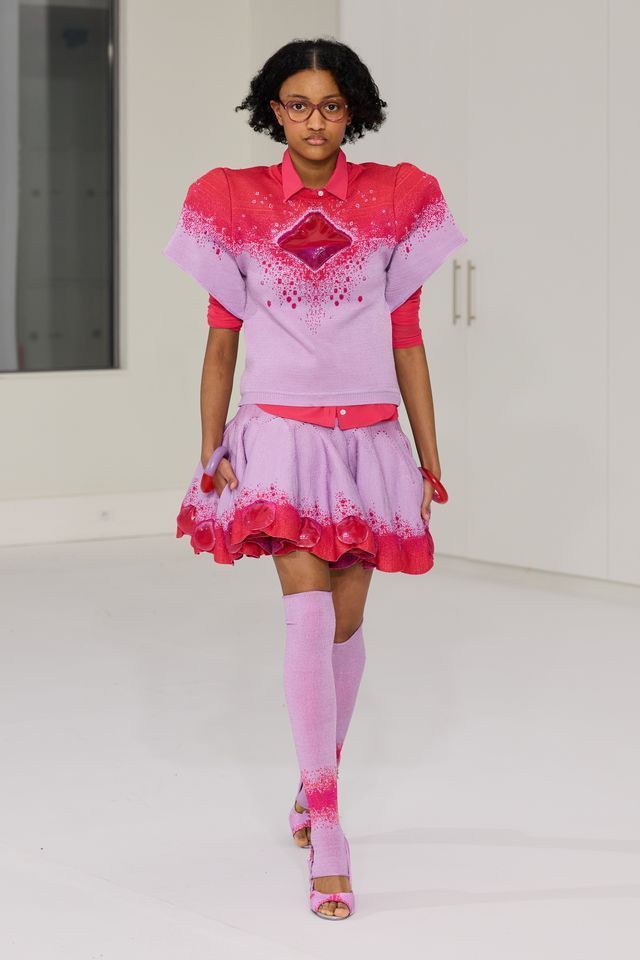
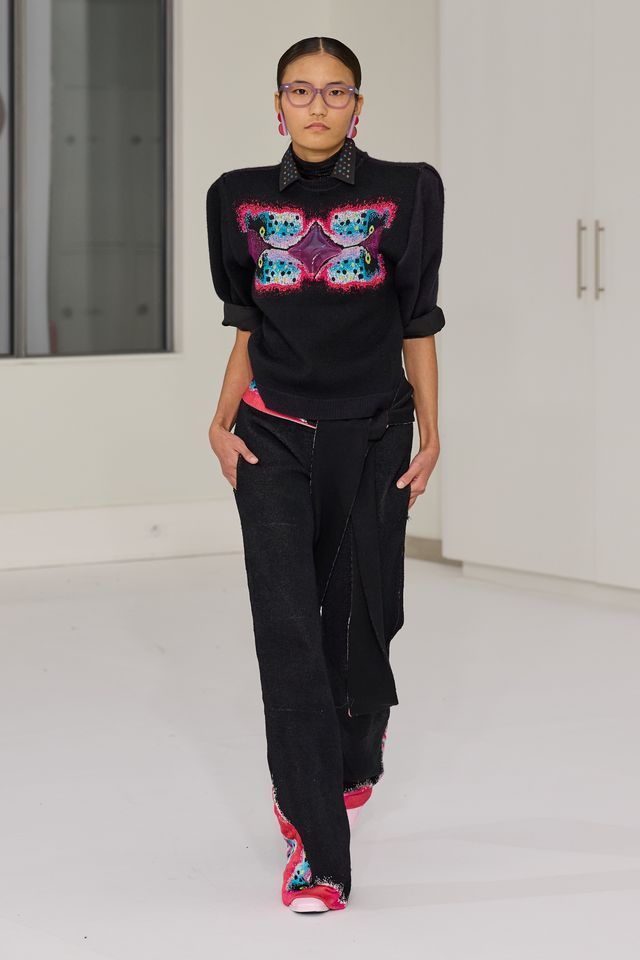
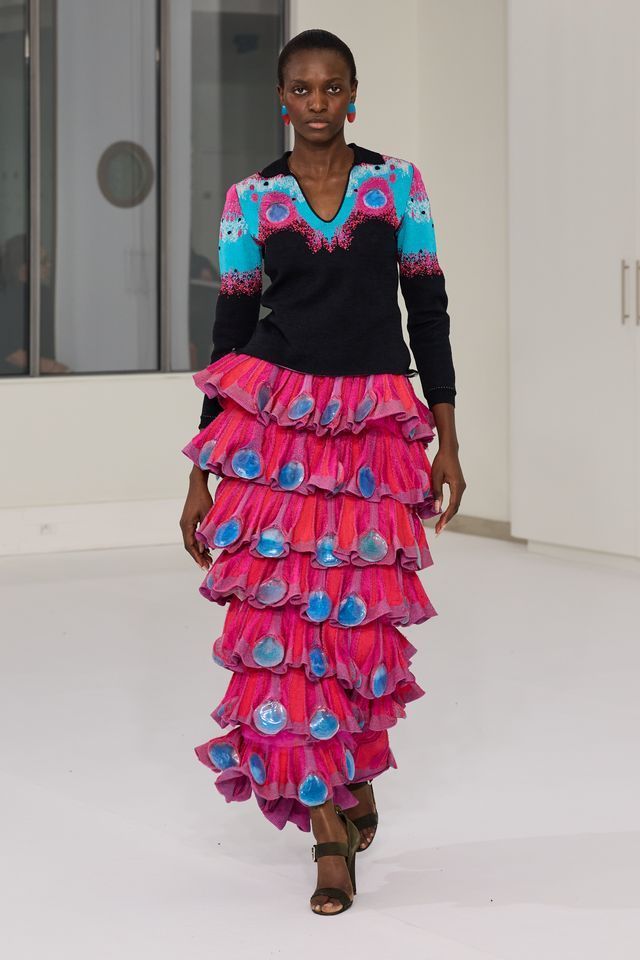
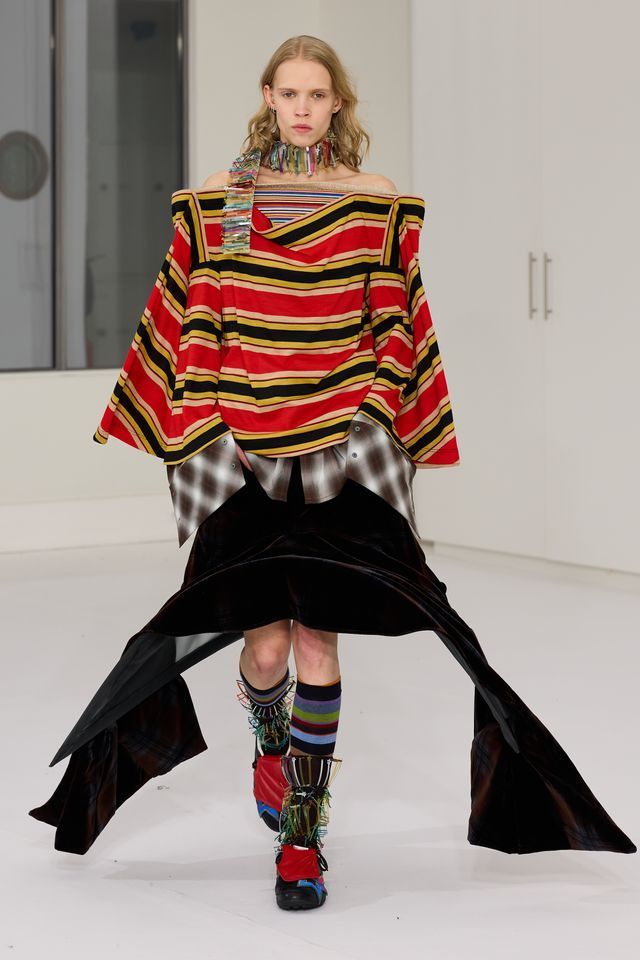
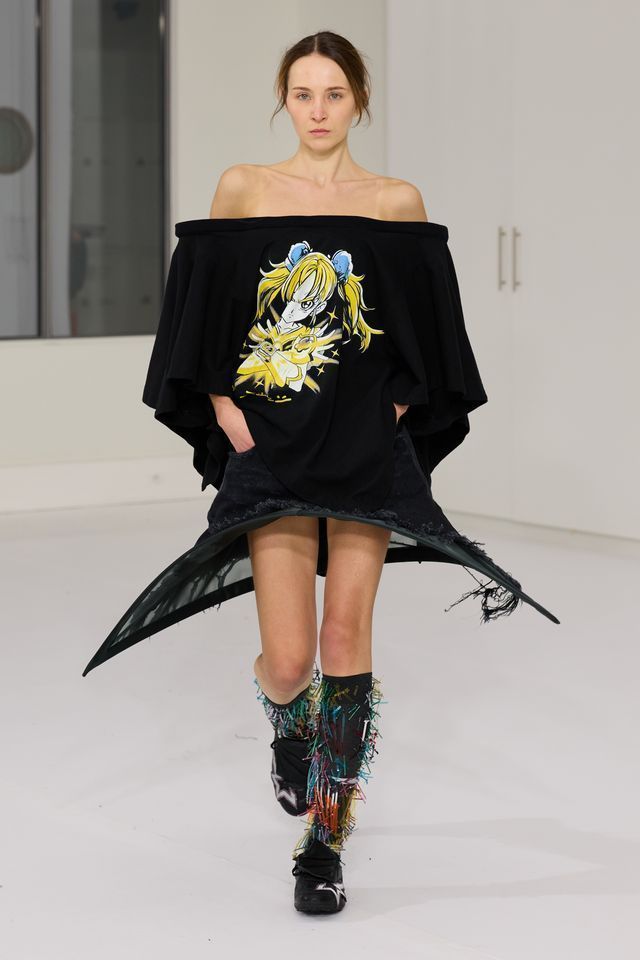
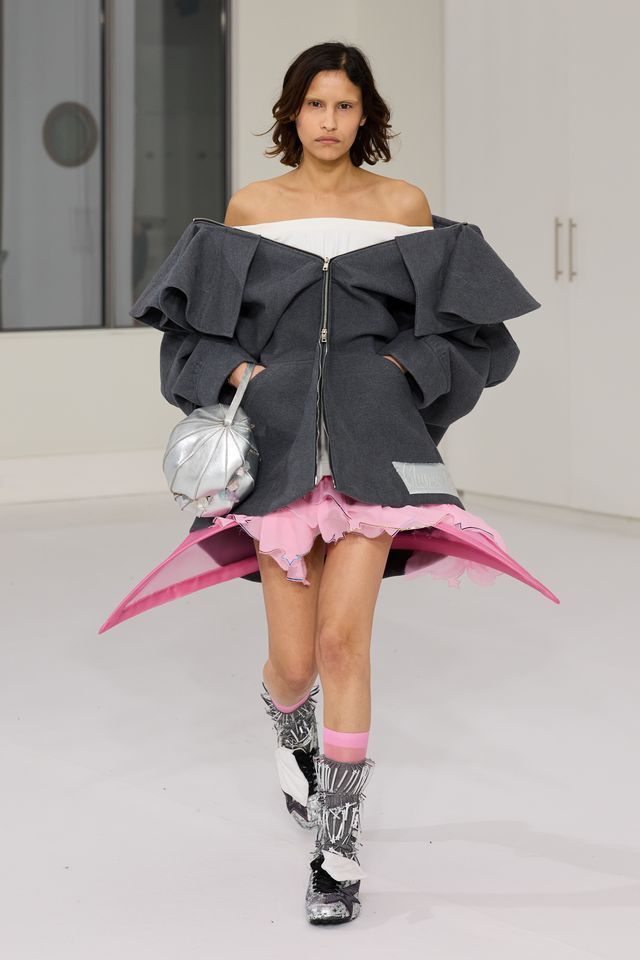
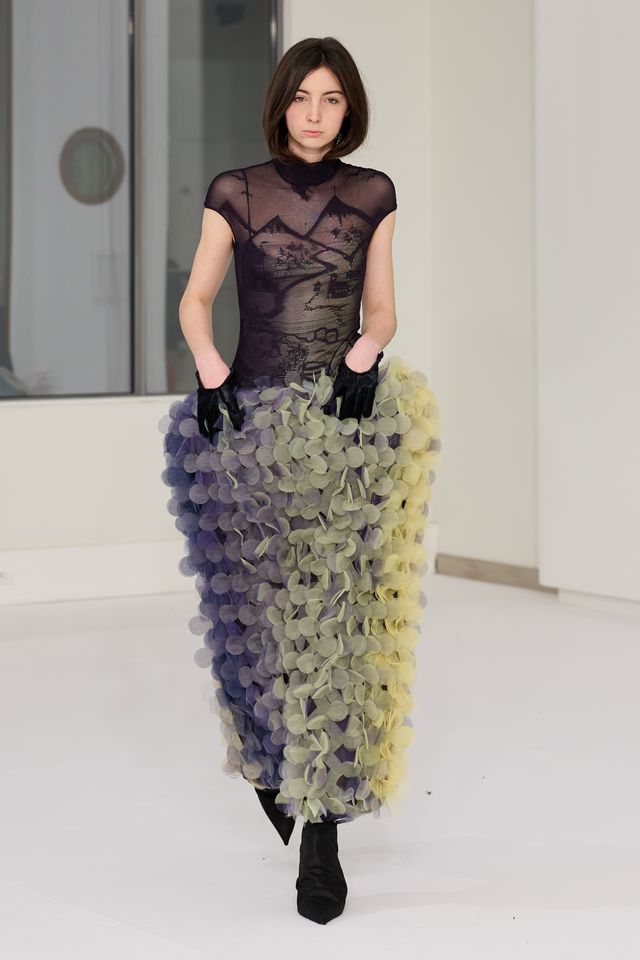
It’s a ritual now deeply embedded in the fashion calendar. On the first day of Paris Fashion Week, sometimes in the early morning, the doors of this prestigious school open to a crowd of professionals, journalists, buyers—and curious onlookers, some of them professionals themselves—eager to discover the students’ work. Renowned for its rigor, the program combines academic guidance with hands-on immersion through internships at some of the world’s top fashion houses. One foot in school, the other already in the industry. Between elevated craftsmanship, textile science, and intimate storytelling, these students explore the fault lines of an ever-shifting fashion landscape.
On a clear, early afternoon, a gentle breeze—already hinting at spring—sweeps through. Behind the massive glass panes of the school, another wind blows: one of dense, generous, sometimes radical creativity, expressed without restraint.
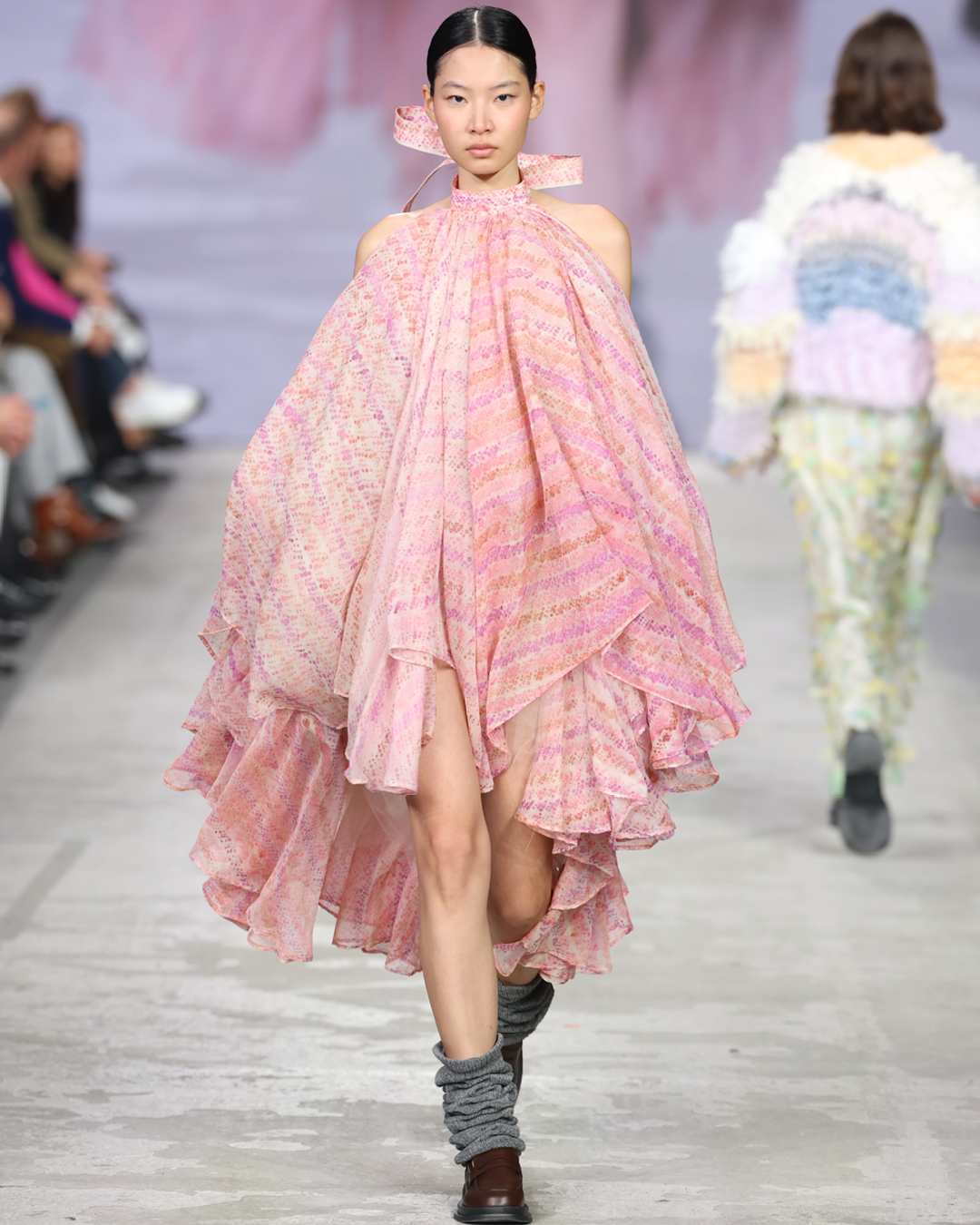
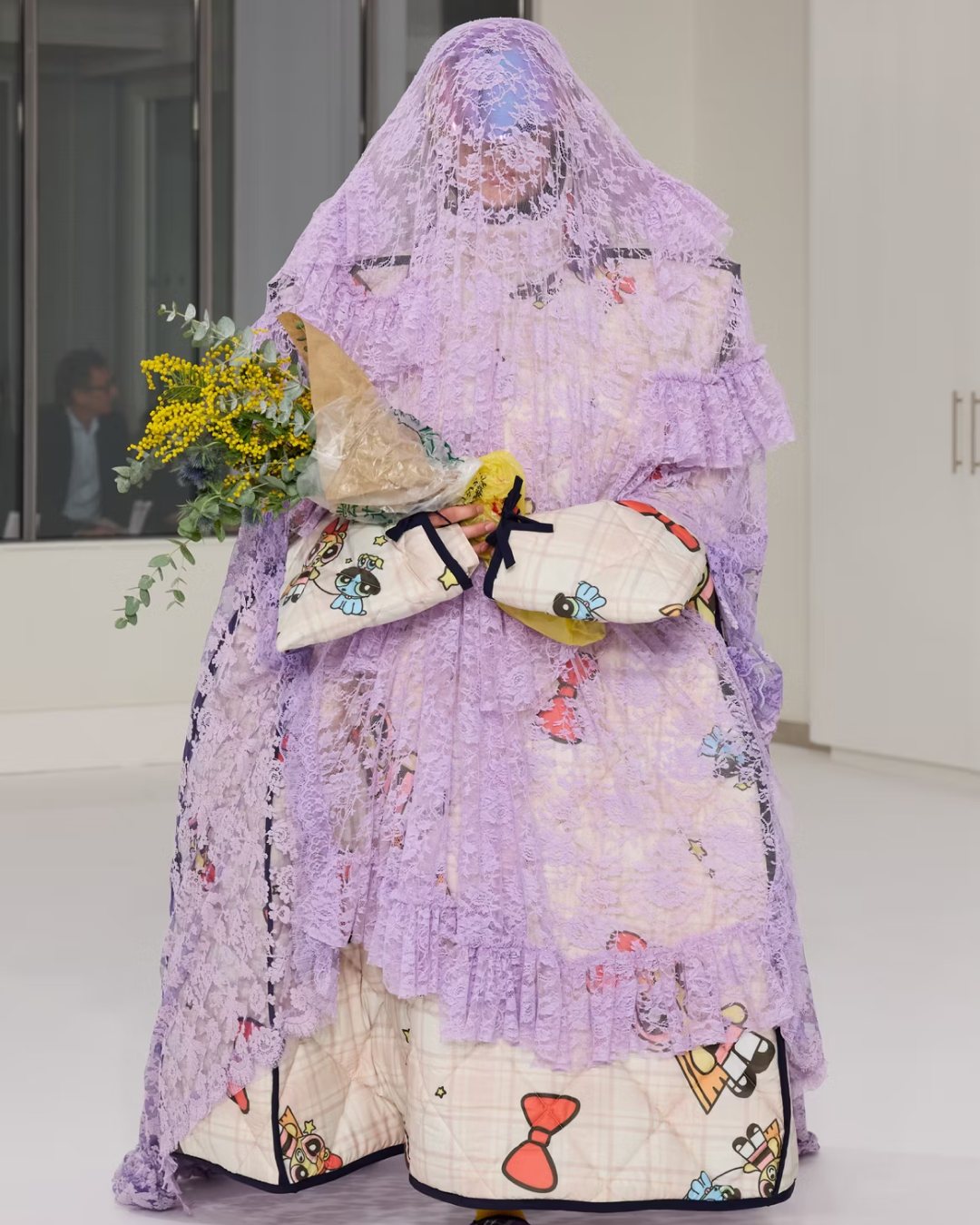
For Paula Lessel, research begins with a simple gesture. “I became obsessed with this process of folding and crumpling pieces of paper,” she explains. From this obsession emerges a method. “The collection is based on a technique that turns something simple, like a rectangle, into something complex.” The starting point is almost childlike; the result is sculptural. Silhouettes appear jagged, caught in a compressed movement. “The collection revolves around the word ‘crush’: it can be something heavy, daunting, but also tender—like having a crush, being in love,” she adds. “I want people to feel this duality.”
Her approach goes further. Supported by LVMH, she’s one of three students granted access to Limn.ai, an artificial intelligence designed not to speed up production but to spark creativity. At a time when AI provokes both hope and anxiety, its role in fashion is still widely debated. In Paula’s work, the digital tool comes into tension with domestic materiality: she repurposes household fabrics—tablecloths, quilts, familiar textiles—creating the impression of everyday objects reimagined. The comforting intimacy of home meets the vertiginous potential of an emerging, unregulated technology.
Home as a lab is also central to Mingrui He, whose collection is titled Make Yourself at Home. Again, the domestic space becomes a place of experimentation. In a field where technology can feel cold and impersonal, these references reintroduce emotion, memory, and human touch.
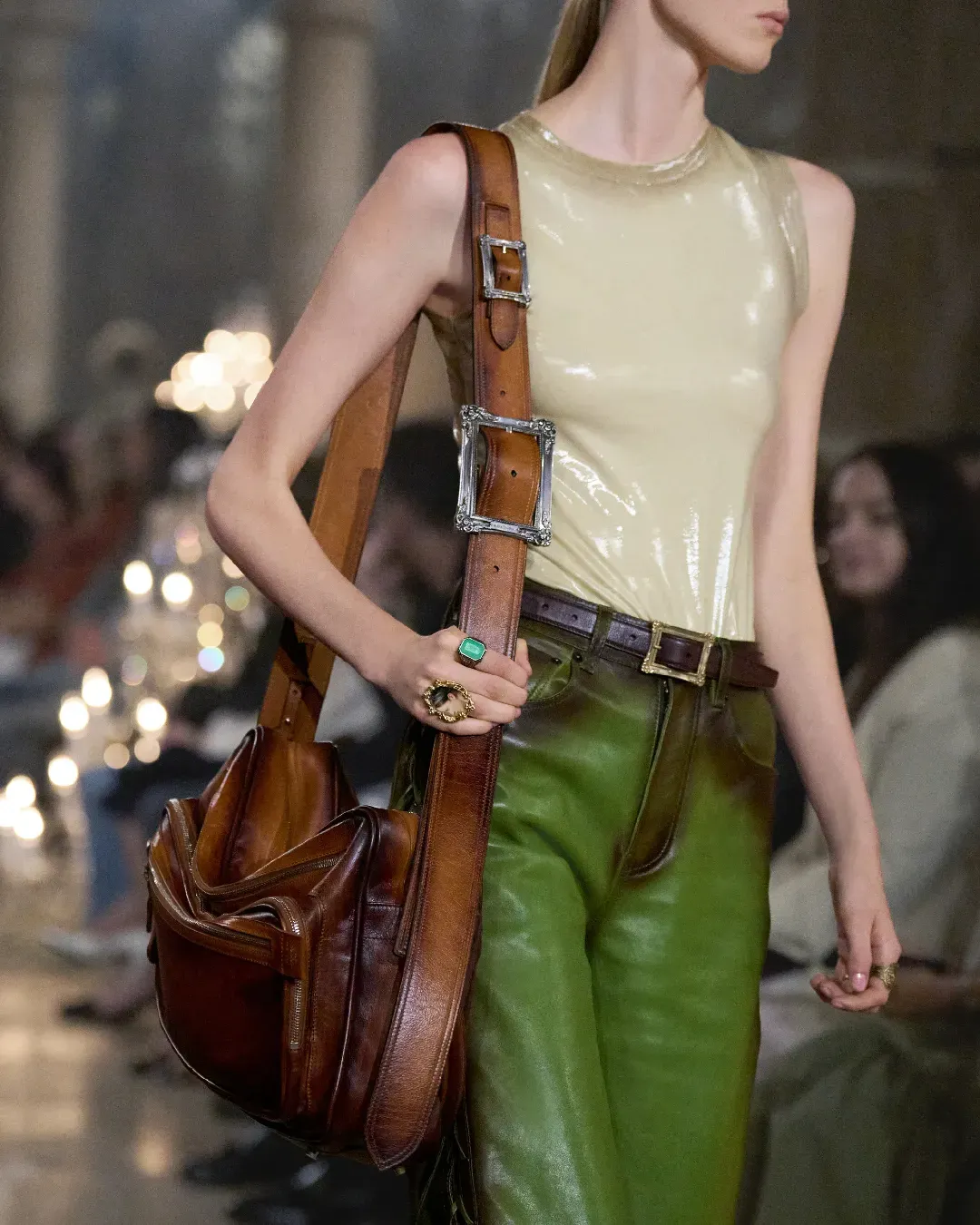
At the other end of the spectrum, Patrick Garvey merges fashion with hard science. His collection, Chromatic Alchemy, embodies this hybrid approach. “I took on the role of a scientist,” he explains. He developed experimental techniques: “I created processes like crystallization to embed embroidery inside knitwear, and methods to encapsulate liquids within knitted structures.” He adds, “My collection is inspired by nature and hybridization.” By integrating chemistry and organic phenomena, he reminds us that fashion doesn’t thrive in isolation. To remain relevant, it must engage with its time, dialogue with other disciplines, and reflect scientific, ecological, and societal questions.
Creating parallel realities, rethinking established narratives—this thread runs through the work of Maja Lenhard. From southern Germany, she deconstructs fairy tales with Once upon a Lie. “I’m from southern Germany, where fairy tales are hugely important,” she explains. Behind the smooth, sanitized imagery, she traces hidden shadows. “My collection draws on the backstage of these tales. They are actually feminist and not as conservative as we think.” Her silhouettes take archetypes only to twist them: altered corsets, volumes that shift the body’s lines, embroidery depicting more ambiguous life scenes than the fixed images of passive princesses. Far from stories where women wait to be rescued, she highlights active figures, full of contradictions, shaping their own destinies. Garments become instruments of rewriting.
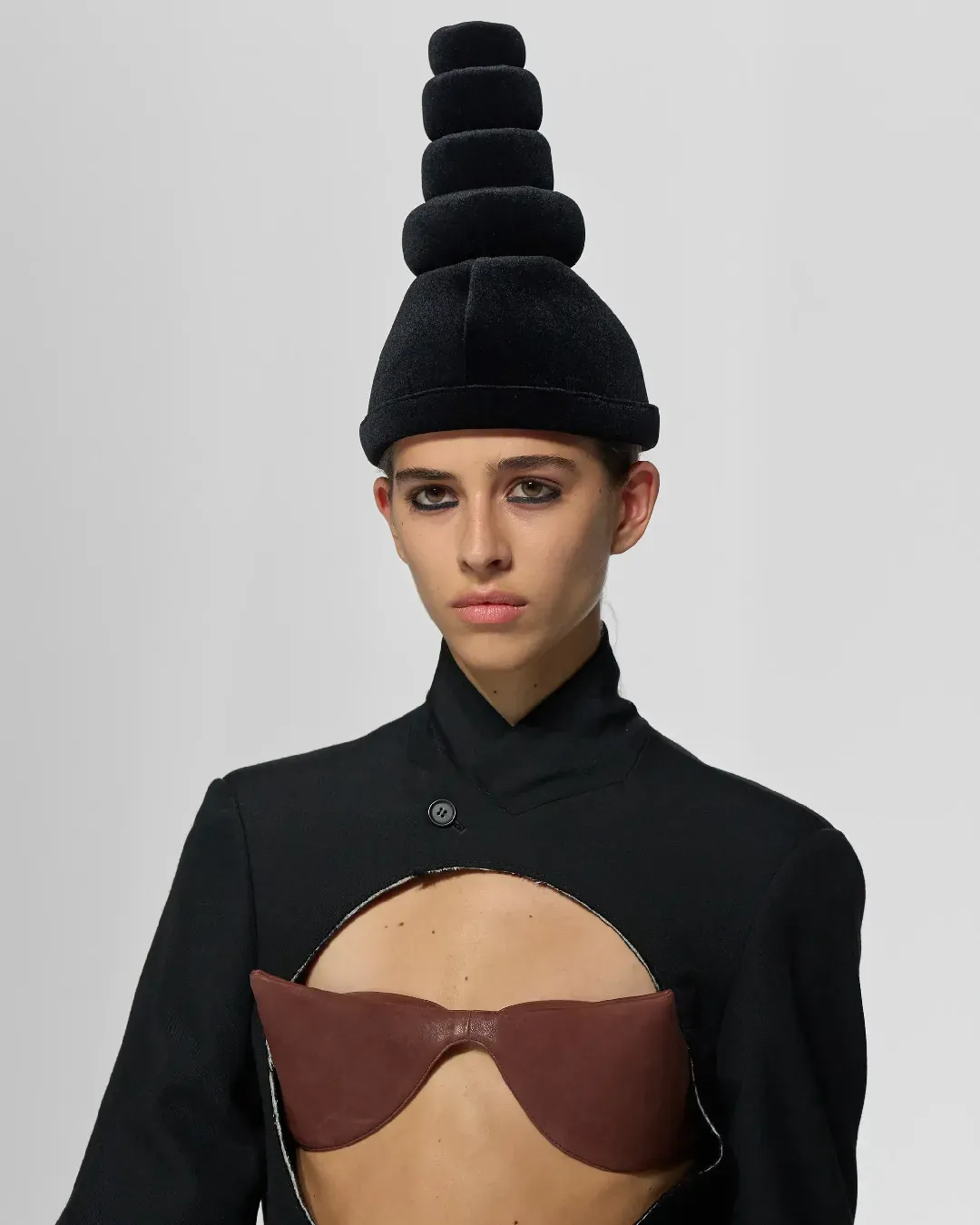
Borja Fernández García’s approach is more introspective. “We all have these inner voices and shadows that make us believe we can’t accomplish anything.” This silent struggle materializes in pieces he describes as “structured pieces that seem to exist independently, in dialogue with the body.” The garments no longer merely clothe: “they were designed to appear as if they float around the body.” Suspended, partially detached, they create a space between body and material. Within this in-between lies the essence: the chance to shed personal shadows, to transform doubt into volume, fragility into architecture.
Across these four approaches, one thing is clear: the next generation no longer sees fashion as a formal exercise. They treat it as an expansive field, intersected by technology, science, psychology, and popular narratives. Between craftsmanship and artificial intelligence, science and twisted fairy tales, introspection and hybridization, these students are shaping a discipline that is porous, even unruly—one that refuses to be confined by rigid boundaries.
What to read next
5 key trends from Paris Fashion Week SS27 Women's
What we'll be wearing next summer, according to the fashion of the Ville Lumière
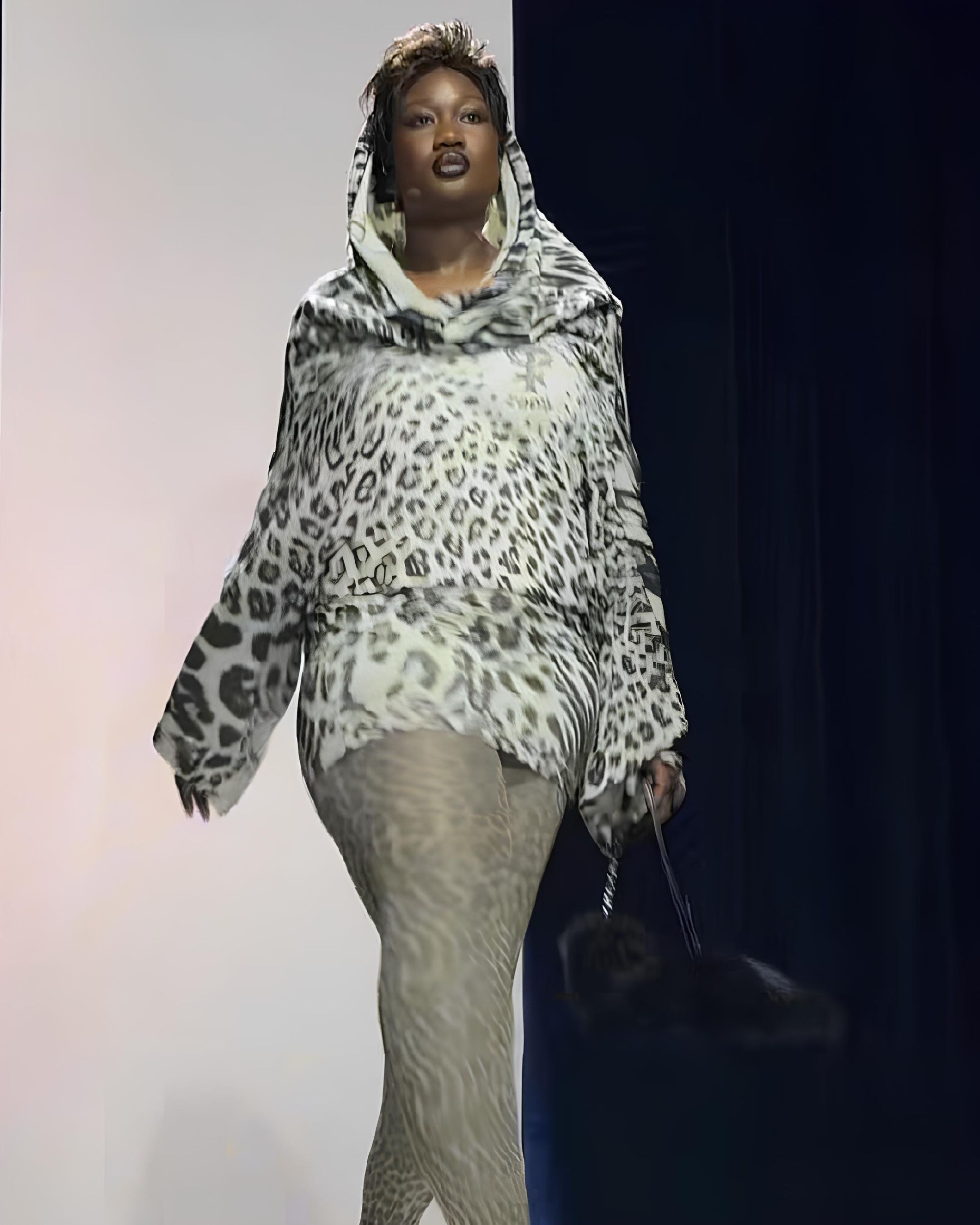
How did Telfar take part in Paris Fashion Week but held a show in New York?
The American brand's trick of presenting its collection on the other side of the world