
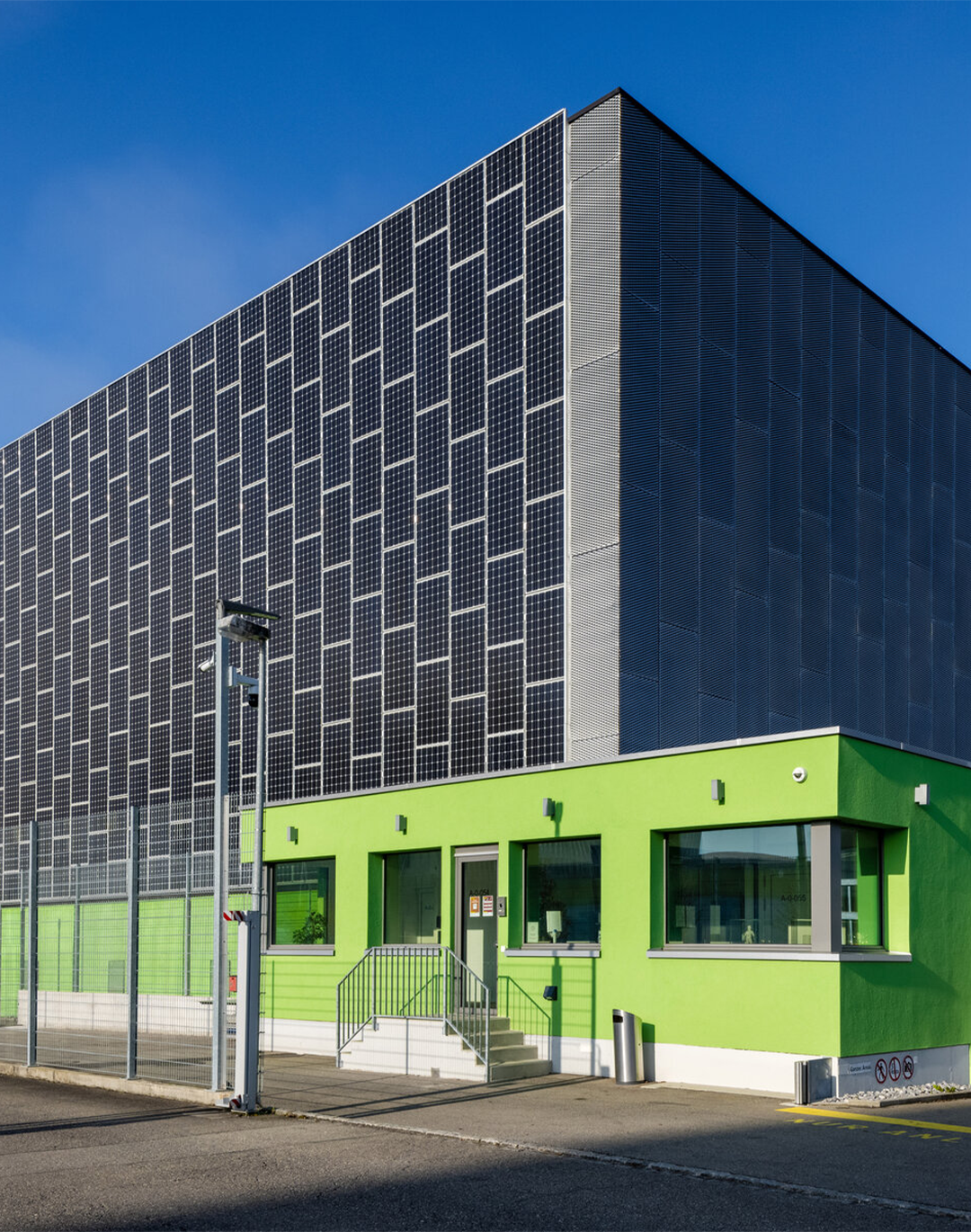
New data centers will open in Lombardy But a new law will regulate their environmental impact
Lombardy has become Italy’s main hub for new digital infrastructures: data centers, large complexes of physical servers where vast amounts of data are stored, processed, and distributed. Already present in the region for years, they are now rapidly expanding not only in number, but especially in size and energy consumption, as in the United States, where this infrastructure developed earlier and whose spread has already begun to modify the territorial structure and, in some cases, the demographic dynamics of certain areas. A notable example is Ashburn, Virginia, now considered one of the world’s leading data center hubs, to the point of being referred to as “Data Center Alley”. As reported by the Washington Post, the concentration of these infrastructures has progressively transformed the local landscape, with technical buildings integrated into residential areas and services, redefining the relationship between inhabited space and digital infrastructure.
With 63% of national authorization requests concentrated in the region, which has also approved the first Italian law dedicated to data processing centers, the need for regulation arises primarily from the issue of environmental impact, until now addressed in a rather vague manner. New data centers, particularly those designed for training artificial intelligence models, require enormous amounts of energy and increasingly complex cooling systems. In the case of generative AI, systems that answer questions, translate texts, or recognize images, whose computing power is far higher than that of a standard corporate server, they therefore appear to require a true sacrifice, not only in terms of energy consumption, but also of environmental resources and territorial space. It is precisely here that the new law comes into play, attempting to limit the impact of these infrastructures in order to embrace technological change and evolution, but in a more conscious way, perhaps in an effort to contain the consequences of something that, inevitably, we will all eventually have to pay for. But let us take a closer look at what this is about.
A price to pay
@headquarters this cannot be the new normal.
original sound - Headquarters
According to a BBC report, a data center can consume between eleven and nineteen million liters of water per day, roughly the amount required by a city of forty thousand people. To this, a study from the University of California Riverside adds that by 2027 global artificial intelligence demand alone could require between 4.2 and 6.6 billion cubic meters of water per year, almost half of the United Kingdom’s total water consumption. The problem, as often happens with digital technologies, is that for years it has remained invisible: water inside data centers is used to prevent servers from overheating, and therefore the greater the amount of data processed, the higher the water consumption required to cool these infrastructures.
For this reason, the new law states that future data centers will not be allowed to use water from public aqueducts for cooling systems. However, there are alternative technologies, although significantly more expensive, that can drastically reduce water consumption. These include closed-loop cooling, where the coolant is continuously recycled without dispersion; direct liquid cooling, which brings the fluid into contact with chips through integrated rack systems; and immersion cooling, perhaps the most radical solution, in which servers are submerged in non-conductive dielectric liquids. This approach seems designed to avoid blocking technological innovation while still setting a clear environmental boundary.
The land issue
@businessinsider #AI #datacenters are popping up everywhere. Here's what it's like living next to one. #serverfarms original sound - Business Insider
Adding to this scenario is the issue of space. The expansion of data centers could cover around 120 hectares of land, equivalent to more than 160 football fields, and in a region where agricultural land is already under pressure, the issue of land sacrifice becomes unavoidable. For this reason, to discourage construction on green or agricultural areas, the law introduces a strong economic disincentive: those who choose to build data centers on agricultural or green land will have to pay significantly higher contributions compared to standard rates. A “penalty,” as some have called it, which however follows a clear urban planning logic: making the recovery of disused industrial areas more attractive.
Those who choose to settle in former industrial sites or contaminated areas eligible for remediation will instead benefit from simplified procedures. To make this system operational, the region also requires municipalities to map and publicly report disused areas, including existing data centers, those under construction, and those being expanded.
Is there a solution for everything?
Not all data centers are the same, and the law recognizes this. The measure introduces a distinction based on the energy capacity of each facility. A traditional corporate data center has significantly lower energy and water consumption compared to a cluster dedicated to generative AI. Confusing these two realities, as often happens in public debate, risks producing distorted estimates and imprecise policy decisions. The Lombardy law instead establishes a clearer hierarchy, reserving stricter oversight for the most impactful facilities.
Finally, there is another aspect that concerns not what data centers consume, but what they produce. Every facility generates enormous amounts of waste heat, which is usually released into the atmosphere. This represents a major loss, considering it could be recovered and reused in urban district heating networks, helping reduce gas consumption and other energy sources. In this sense, the Lombardy law aims to do exactly this: not reject innovation, but interpret it through its real consequences. Embracing change without ignoring its cost, ensuring that the benefits generated by these infrastructures are not lower than their impact on the territory and, more broadly, on the environment. So, all we can do is wait and face change with trust.