
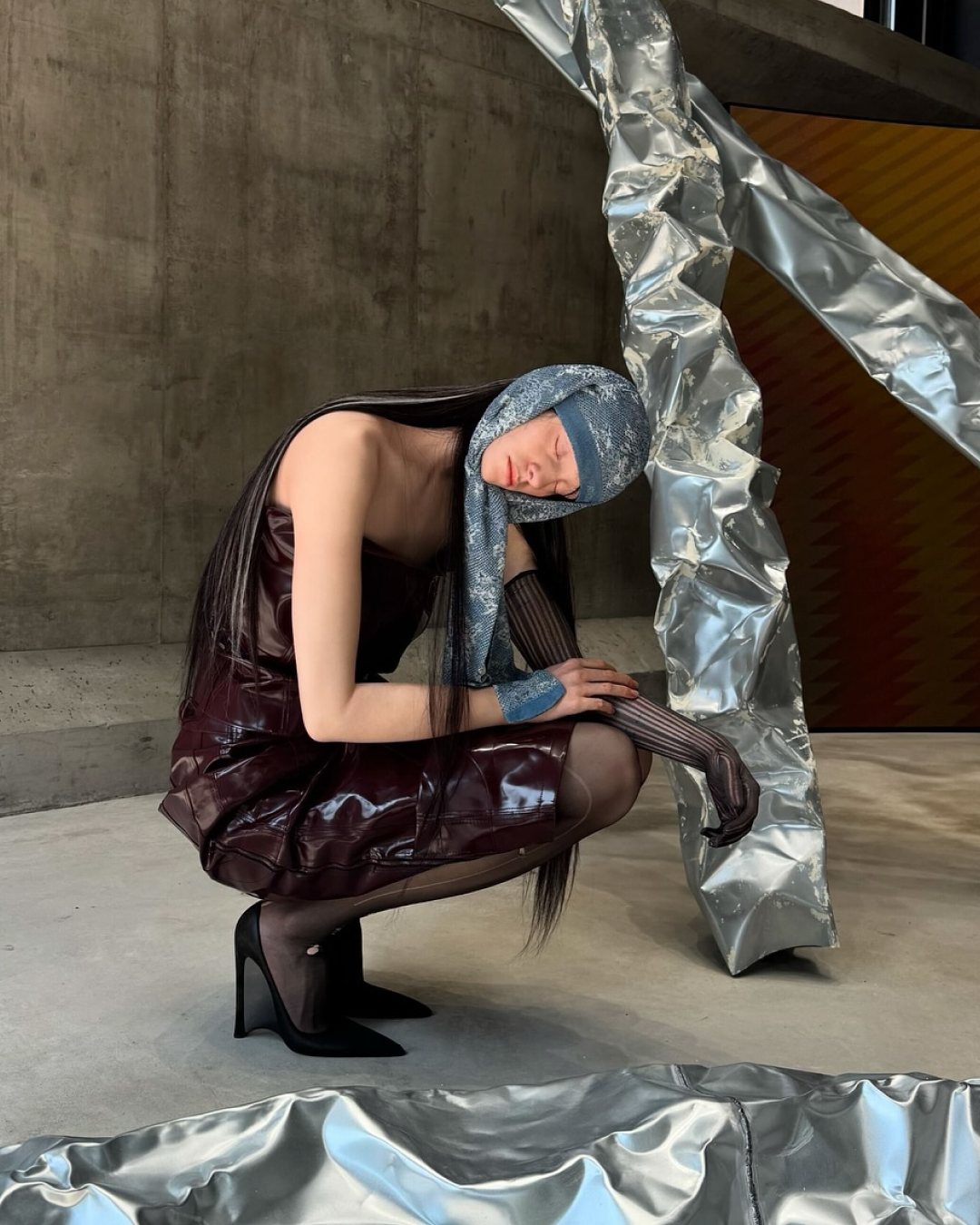
The state of Korean fashion, today Beyond the Gentle Monster ecosystem, there is a whole world to discover
Over the past five years, South Korea has received widespread attention, largely due to the rise of K-pop and the increasing presence of idols in the fashion system, as well as the dominance of cosmetics and skincare in the beauty sector. Despite Korean celebrities frequently appearing in the front rows of fashion week shows, Korean fashion talents have yet to fully bridge the geographic divide and achieve the same success in the West as they do in their domestic market. While success stories like the Gentle Monster ecosystem, which expanded from eyewear into fragrance with Tamburins and more recently into headwear with ATiiSSU, have helped establish a global presence, many Korean fashion brands remain relatively unknown outside Asia. Yet the country now holds a similar appeal in the fashion system as Japan did fifteen years ago. In fact, according to Bloomberg, global Google searches related to Korean fashion have increased by 200% in the past three years, indicating a clear surge in international interest. A significant peak was recorded in March 2025, when keyword searches for “Korean fashion” reached an index of 83 out of 100, according to Accio. With Post Archive Faction featured as guest designer at Pitti Uomo and the opening of the first European Gentle Monster store at 10 Corso Como in Milan, the question naturally arises: where does Korean fashion stand today? To better understand how Korean fashion is perceived from within the industry, we spoke with Yumi Choi, celebrity stylist and fashion director for K-pop groups such as NJZ (formerly NewJeans).
Creativity is not the lack
From the big four fashion weeks to sportswear and fast fashion, Korean brands continue to demonstrate that their strongest asset remains their deep connection to Seoul's subcultures and aesthetics. It is, in fact, difficult to find direct competitors among them, as each brand often caters to very different target audiences. «Personally, I’ve never thought of Korean fashion as being solely concept-driven. I see it as just one of many directions that coexist here. Certainly, there are many stylistic approaches rooted in conceptual and emotional nuance, and I believe I’ve also been naturally influenced by that atmosphere,» explains Choi, emphasizing how expressive value and visual intensity are key elements of Korean fashion. According to Choi, it is less a matter of being undervalued by the West and more about a difference in visual language and emotional sensitivity. «We live in an era where everything is digitally connected in real time, so it's no longer a matter of time lag. But I do think there are still subtle differences in rhythm and emotional tone, and it's precisely that distance that gives Korean fashion its specific identity.»
Choi also noted that some of the most interesting forms of creative expression now come from smaller, often independent brands that work more discreetly while building a refined and intimate visual language. For example, ADERERROR has made visual glitches and imperfections central to its style language, while Matin Kim channels a more understated, minimalist femininity, with essential pieces that reflect a modern Seoul aesthetic. Somewhere in between lies ADSB Andersson Bell, which draws on kitsch and colorful influences but adapts them to the distinctly Korean approach to layering. The key strength of Korean brands that have emerged in recent years is their ability to create cohesive aesthetic universes that are deeply rooted in local culture, yet still resonate globally. Unlike the Western fashion industry, where competition is often intense and brands frequently overlap, Korean fashion thrives on differentiation. Each label grows in parallel, developing a loyal customer base that connects not only with the product but also with the brand’s narrative and aesthetic world. Among the emerging names that embody this sensibility, Choi mentioned labels like GOOMHEO, which excel in translating emotion into design and fusing storytelling with form in a consistent and personal way. For Choi, who was raised within the cultural complexity of South Korea, this kind of sensibility is not only a signature identity but also a direction for the future of Korean fashion.
Is the market still not ready?
While the Korean wave has yet to fully disrupt the Western fashion system the way it has transformed the music and beauty industries, in Asia, South Korea has already captured the attention of an entire generation of consumers by building a deeply digital, interconnected, and increasingly competitive fashion ecosystem. According to KoreaTechDesk, a clear sign of this trajectory came with the recent investment by Chinese giant Alibaba, which acquired a 5% stake in Ably Corporation, South Korea's leading women's fashion commerce platform. The 100 billion won deal (roughly $71 million) pushed Ably’s valuation to 3 trillion won ($2.1 billion), making it South Korea's first unicorn startup of 2025.
@zaiyen.co Do you like Seoul Fashion ? #seoulstreetstyle #koreanfashion #seoulfashionweek Field Trip - Kanye West
Another major player, Musinsa, a Korean e-commerce leader operating similarly to ASOS, is also expanding its operations beyond national borders. As reported by the Korea Times in June, after hosting around 8,000 Korean fashion brands on its online platform, the company announced it would open physical stores in China and Japan, with plans to reach Europe and the Middle East as well. The strategy aims to offer integrated services for partner brands, from marketing to logistics and local operations, enabling hundreds of independent Korean labels to gain visibility beyond boutique distribution. Meanwhile, economic data support the structural soundness of the sector. Invest Korea highlights that South Korean apparel exports have increased by 4.4% since 2010, a notable achievement given strong regional competition and global market volatility. Domestically, the Korean fashion market is now estimated at around 49 trillion won (roughly $35 billion), with an annual growth rate of 2 to 3%, driven particularly by casual wear and sportswear, as reported by GoOver.
Past, present, and future
According to Business of Fashion, the strength of Korean fashion lies in its hybrid structure, combining a distinct stylistic identity with a technological and commercial capability that few other markets can match. In today’s global landscape, where creativity and affordability must coexist, K-fashion strikes a rare balance by offering well-made products with quality materials at attainable yet aspirational prices. Unlike many European maisons, Korean brands maintain a contemporary language that resonates directly with younger generations without compromising on quality or vision. Choi further emphasized that the biggest difference between the Western and Korean systems is not the method, but the pace. «While European maisons tend to move slowly and with structure, Seoul moves at an entirely different rhythm: intuitive, fast, almost instinctive. The Korean scene generates a unique kind of energy that sharpens focus and intensifies awareness.»
gentle monster currently has more than 100 in-house artists [incl. haus dosan, nudake & tamburins] who specialize in spatial art, including architecture, interior design, sculpture, media art, engineering, pottery, robotics, and kinetic art [...] pic.twitter.com/PdeKBWlxoK
— N (@maigosia) December 17, 2023
According to Choi, that energy is deeply rooted in the country’s cultural and historical transformations. «I believe the uniqueness of Korean styling stems from a strong emotional awareness and a remarkable ability to adapt. Korea has undergone numerous cultural shifts in a short period, which created a flexibility that extends into how people dress. Korean styling often blends contrasts: bold yet soft, futuristic yet nostalgic. That complexity is what makes it so compelling.» This sentiment is echoed by Sorya Park, project manager for Korea at Daxue Consulting, who told BoF that «It will be challenging for many Korean brands to expand internationally, but our history shows we know how to adapt. We built a modern economy in a remarkably short time.» The question remains whether the trajectory of Korean fashion will follow a slow and structured path or an accelerated boom, like the economic rise of the 1980s that turned South Korea into the cultural hegemon of an entire continent. Either way, it seems clear that the potential is there, and it is moving fast.