



































Did the clothes stolen during the riots in Milan and Paris really end up on Vinted? The platform has removed several suspicious listings linked to looting during the riots in France
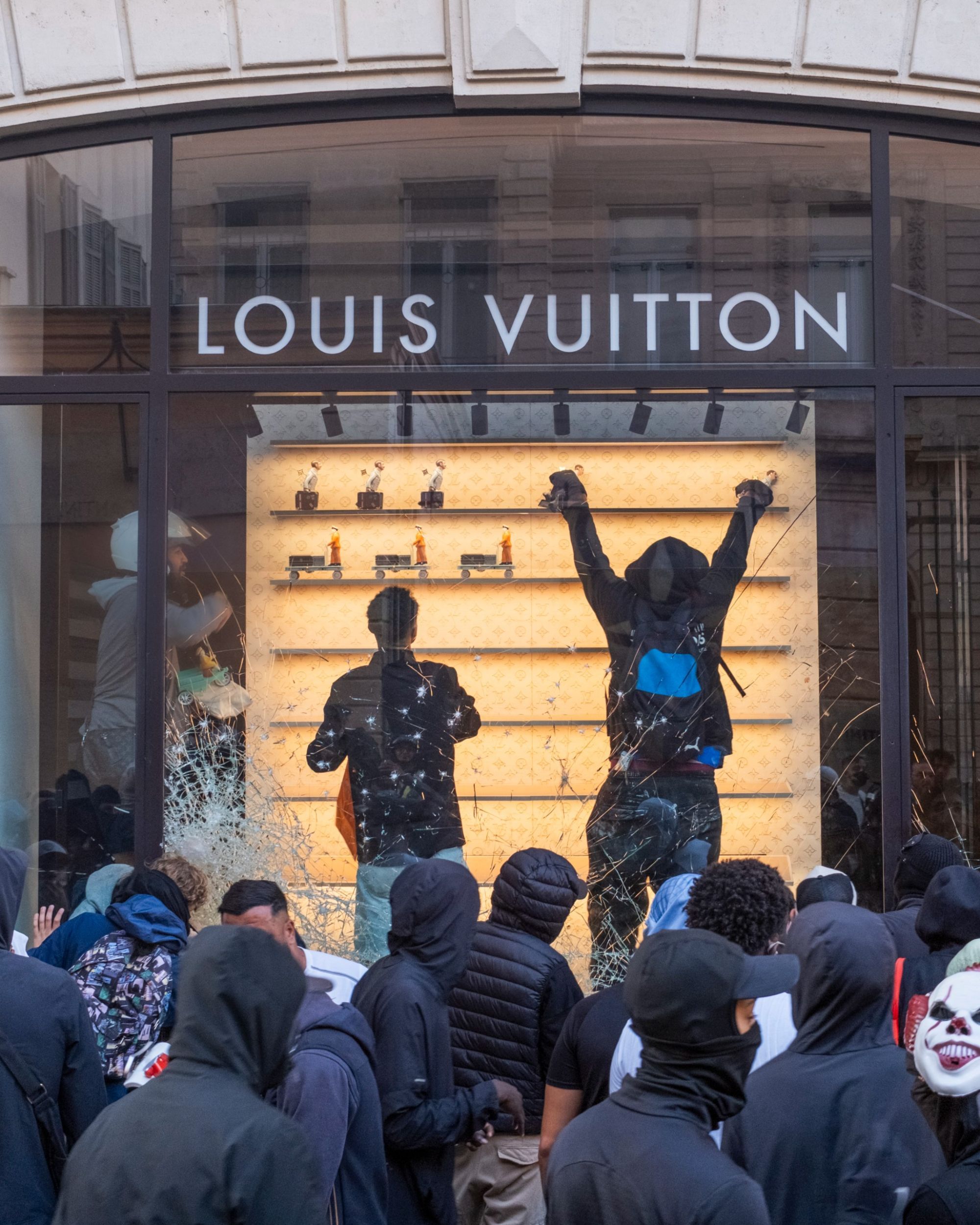
During last weekend's violent unrest, many rioters smashed the windows of numerous shops and looted their goods. Many of these shops sold clothing: while in Milan the broken windows were those of Foot Locker, in France looters threw themselves headlong at boutiques belonging to Louis Vuitton, Celine, Hermès, and the Galeries Lafayette. The targets were luxury bags and shoes, which in some cases were taken directly from the display windows and, according to some sources, subsequently ended up on Vinted shortly afterwards.
Now, there is no precise confirmation of the reports that various products did indeed end up on the platform. But yesterday, Bloomberg covered the story in its own report, and Vinted itself announced that it had identified and removed numerous listings for items believed to have come from the looting of shops in several French cities. The company stated that it had taken immediate action and had stepped up monitoring of suspicious listings, reaffirming its zero-tolerance policy towards the sale of stolen goods. But what do we know for certain?
The looting of luxury shops in France
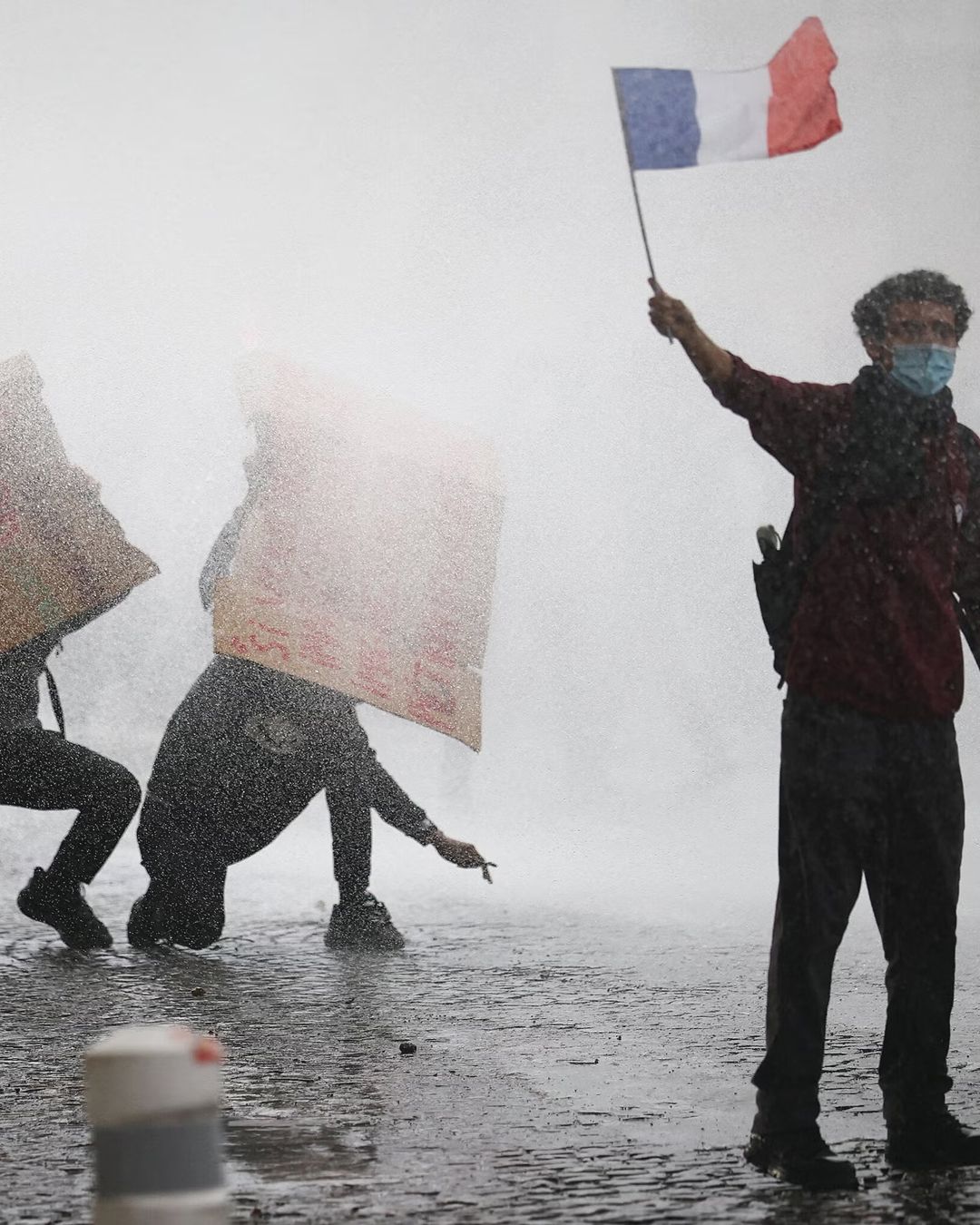
Nationwide protests against the rising cost of living and cuts to public services escalated into clashes of rare intensity, particularly in France. In Paris, Marseille, Lille, and other locations, groups of people — often masked — smashed windows, set fire to vehicles and buildings, and looted shops. According to estimates from the French Chambers of Commerce and Industry, as reported by Euronews, more than 3,000 businesses were damaged or looted nationwide, with damages estimated by the Financial Times at between 1 and 1.2 billion euros. To be clear, that figure refers to damage to shops and not solely to stolen merchandise.
As for the luxury brands, neither the brands themselves nor any official associations have published precise figures. Videos show looting taking place in several French cities, particularly in Marseille and Bordeaux. Hermès, Louis Vuitton, and Rolex were looted in Marseille (attempts in Paris were unsuccessful), while in the capital Celine and Burberry were stripped bare. Reports on Dior are less clear, and it is difficult to determine exactly how many shops were merely vandalised with broken windows and how many were actually emptied.
In any case, bodyguards at Dior's mega-flagship store positioned themselves in front of the shop, which suffered no damage. Cosmetics chains such as Sephora also reported raids at multiple locations. In Marseille, the official Olympique de Marseille store was looted and closed; Lille's club made the same decision for its own shop. Clearly, little is known about the merchandise either: there are TikTok videos showing products being sold on Vinted, but we cannot honestly link them directly to the unrest. That said, if Vinted itself has stated that it removed suspicious products, we must believe that something was indeed there.
What did Vinted do?
Vinted, which counts France among its main markets, explained that it had mobilised its moderation teams from the weekend onwards to identify and remove listings connected to the looting. The company has strengthened its monitoring of anomalous listings and is actively cooperating with French law enforcement and authorities. Those who violate the rules risk sanctions up to and including a permanent ban. So far, user and retailer reports, along with internal monitoring systems, have been used to intercept suspicious behaviour.
Other platforms have taken different stances. eBay said it had not recorded an increase in suspicious listings, while reaffirming that it is cooperating with the authorities. Meanwhile, the French government convened a meeting with marketplace operators alongside representatives from the Ministries of the Interior and Justice to address the issue of online handling of stolen goods. Small business minister Serge Papin and digital minister Anne Le Hénanff publicly urged platforms to act without delay and to cooperate so that those responsible can be prosecuted.
Vinted's role as a democratic marketplace
Vinted have reportedly started to take down "looted hauls" of goods from the French riots that looters brazenly put up to sell. pic.twitter.com/duzVHjHSBf
— (@TheGNPE) October 19, 2026
The episode illustrates how, thanks to its widespread reach and ease of use, Vinted has managed to profoundly reshape the second-hand fashion market. This enormous accessibility has, in recent years, required the implementation of various control measures: a verification service for luxury items, the obligation for sellers above a certain earnings threshold to pay taxes on sales, while in the future it could also become a shipping and payment service. But the broader Vinted's scope becomes, the more necessary such measures are to ward off potential reputational risks — such as, in this case, the handling of illegally obtained goods.
If the platform has today reached a valuation of eight billion, it is precisely because of how easy it is to use. This also implies the need for increasingly complex measures to regulate and oversee a marketplace that can remain an honest channel for private transactions, or a digital space where anyone can become a vintage reseller or sell their own products — but which could also turn into a far murkier free market, something that Vinted itself is naturally keen to avoid.
What to read next
Anti-ultra fast fashion law officially comes into force this September 1st
You will now pay more for items ordered on Temu or Shein

5 brands to search for on Vinted if you love '90s grunge
To head into autumn with a wardrobe worthy of Kurt Cobain and Courtney Love