
























"The Fire You Carry Within" reminds us of the power of great cinema Director Edoardo De Angelis takes Franchini's book and transforms it into a deeply relevant drama
The Fire Within You by Edoardo De Angelis, coming soon to cinemas with 01 Distribution, revisits two of the most prominent themes at the 83rd Venice International Film Festival, where it is in competition. On one hand, there is family, with its dynamics between relatives, the push and pull between parents and children, the home as an intimate and, at the same time, infernal space. On the other hand, there is memory: it is our memories that define us for who we are.
De Angelis drew from Antonio Franchini's book, published by Marsilio, and built an intensely powerful story that manages to bring out the best in everything, from the screenplay he co-wrote with Francesco Piccolo and Ilaria Macchia to the performances of the actors. And the actors, in The Fire Within You, are essential.
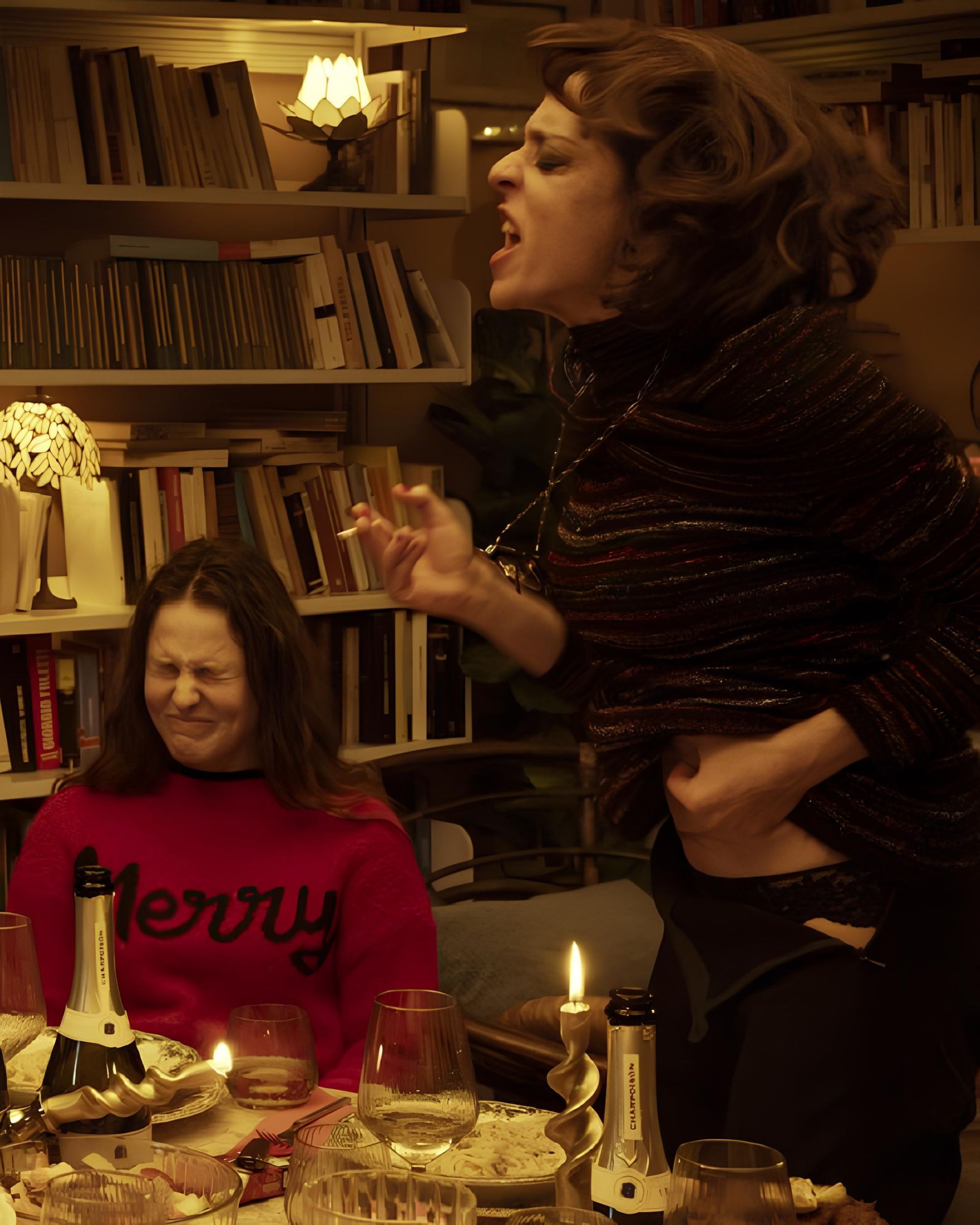
Vanessa Scalera, who plays the mother, is extraordinary. She is everywhere: oceanic, ravenous, musical, passionate and irritating, but also angry, nervous, tense and elusive. And then there is Lino Musella, who plays the son and who does not merely serve as a foil for Scalera, but actively contributes, in every scene, to adding a further layer of tension and intensity. He and Scalera move together as if in a dance. They stand side by side, they clash, they love each other.
The Fire Within You has a non-plot: nothing happens, when you think about it. A family gathers in Milan at Christmas to celebrate. The mother, a Neapolitan, cooks. The son tries to avoid her. The daughter-in-law, played by Elena Radonicich, is accommodating. The grandchildren, played by Nicole Malaj and Samuele Mazza, argue, laugh, play along and don't seem to take anything seriously (she, especially; he is repeatedly made to feel criticised and stung to the quick by his grandmother).
Then there are the daughter, played by Ivana Lotito, and the son-in-law, played by Tony Laudadio. Tommaso Ragno plays a writer who is about to sign with the publishing house run by Musella's character and who invites himself to the Christmas dinner. The cast is perfect. Balanced, well-managed, and above all alive and reactive.
In more than one moment, both because of the size of the apartment in which it is set and because of the dynamism with which the lines are delivered and the dialogue performed, The Fire Within You is reminiscent of a stage play. De Angelis's direction, however, never holds back — it probes, insists, seeks out faces and cheekbones, dwelling on the reactions, rather than the actions, of its actors.
Despite its predominantly dramatic tone, it is a hugely entertaining film. The musicality of the Neapolitan dialect — used constantly by Scalera, Musella and Lotito — gives an extra push to the rhythm of the story. In this regard, mention must also be made of the score composed by La Niña, which perfectly captures the turbulent, fiery soul of the film.
De Angelis reflects on the relationship between parents and children and vice versa, on the weight of blood and flesh. He speaks of anger, frustration, the desire to be free, and the chains that our roots can sometimes become. Family serves a dual function: it is both a cage to escape from and a mirror of who we are (Elena Radonicich's character, precise in her performance, says it plainly to her husband: "you're just like your mother, you have the same stench").
Among the many extraordinary things about this film, there is one in particular that deserves closer attention. It is the work the actors do with their voices, Scalera and Musella above all. They make them tremble, they use them as instruments — first narrowing them, then broadening them. Then they weigh them down and immediately lighten them again. They constantly shift register. They move from comedy to tragedy, and from tragedy back to comedy.
De Angelis knows how to hold it all together, reaffirming his skill as a director and, above all, as a director of performers. He achieves a balance between images and their composition; he makes use of objects and symbolism, creates a mythology for the film, with the return of several recurring elements (the rooster that must be killed, the kitchen as an alchemical laboratory, the cigarettes that pile up and are smoked). When working on stories like The Fire Within You, there is always the risk of slipping into banality, into clichés, into artificial and forced interactions. In this case, no. In this case, everything is in its place, everything is balanced, everything is precise. It is a film full of music — music played through the acting, the direction, the alternation of shots and, of course, the words.
What to read next
«Club Kid is a once-in-a-lifetime opportunity», interview with Jordan Firstman
Everything about the directorial debut of the American actor and screenwriter
"Cambogia" teaches actors that you have to care about your own characters
Valerio Lundini's directorial debut premiered at the Rome Film Festival
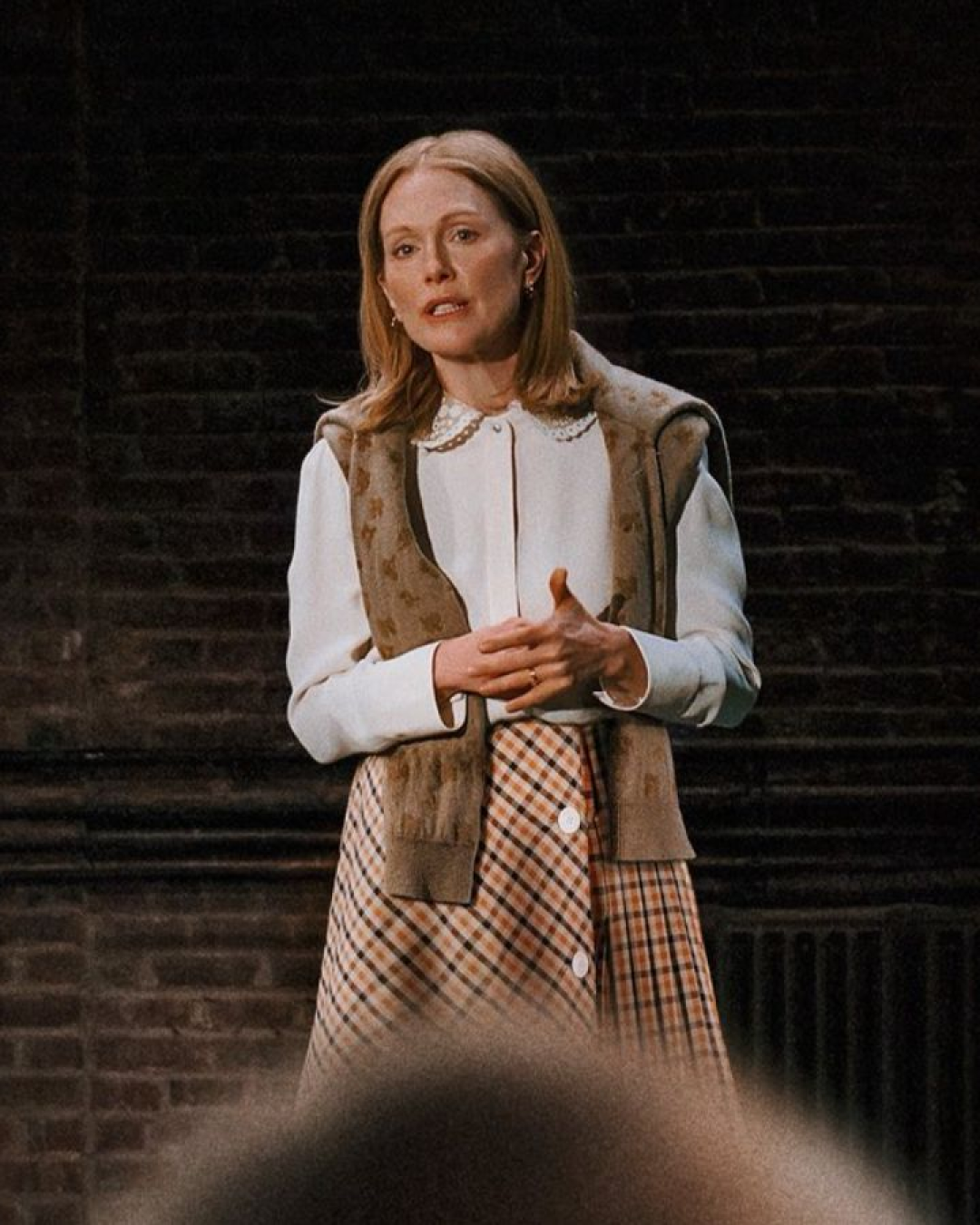
In "The Debut" Julianne Moore gives a masterclass in acting
The film, premiering at the Rome Film Fest, hits theaters on January 1, 2027