





































Why Has Gen Z Started Foraging for Herbs in Parks? Foraging is taking social media by storm, turning wild harvesting into an opportunity for knowledge and zero-cost shopping
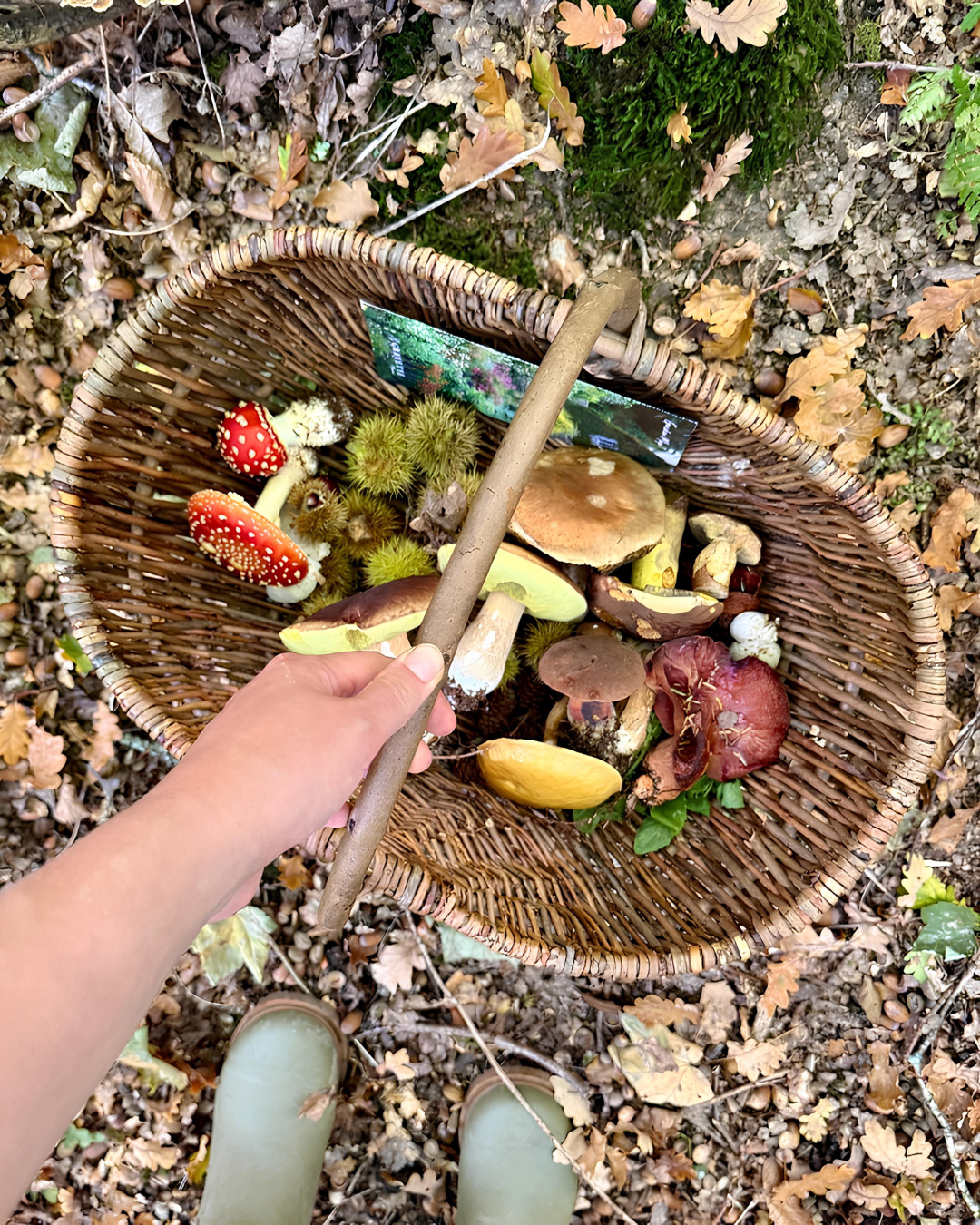
Gathering plants, berries, mushrooms, and flowers that grow wild, without anyone having cultivated them. This is foraging, the collection of wild food, and for the past few months it has become the favourite pastime of Gen Z in major European cities. The phenomenon first exploded in the United Kingdom, with TikTok hosting over three thousand videos of people cooking what they've found in parks, and creators like @fernfreud, with 185,000 followers, and @theforagerscottage, sharing tips on identifying wild plants and recipes, including birch twig biscuits. A menu that seems straight out of a Nordic fairy tale, yet one born from very real needs. What drives a generation raised among supermarket shelves to go looking for food in nature?
The desire for a slow life
@foragedbyfern Here’s the recipe for you! Leave a comment if you think you might give it a go! - Preheat the oven to 170 degrees C (Gas Mark 4) and line and grease a 4.5 x 8.5 loaf tin - Forage 100g nettle tops (only pick the top 6-8 leaves). I use the whole nettle top because I have a good blender BUT if yours isn't very good, cut the leaves away from the stems and use the leaves only - Give them a good wash and then steam for 4 minutes. Transfer them to cold water. Strain and squeeze out excess moisture. -Blend with 200g plant milk and 1 TBSP lemon juice until you have a smooth purée - Place in a bowl with 75ml veg oil and stir well. Add 200g caster sugar, 250g plain flour, 1 TSP bicarbonate of soda, zest of 1 lemon and pinch of salt. - Pour into your cake tin and bake for 45-55 minutes or until a wooden skewer comes out clean. - Remove from the cake tin and allow to cool while you make a drizzle by mixing 50g caster sugar with the juice of 1 lemon (approx 1 TBSP). - Return the cake to the tin and slowly pour over the drizzle. ENJOY! #fyp #foraging #nettle the fairy - Ophelia Wilde
First of all, foraging is not an isolated phenomenon. In recent years, all the hobbies associated with the idea of a slow life have made a comeback — knitting, ceramics, preserving, and home vegetable gardens. Gen Z spends most of its time in front of a screen, whether for studying, working, or scrolling through social media in their free time. On top of that, most everyday activities have become faster and less physical: there's no longer any need to go out grocery shopping when it can be delivered straight to your door with a single tap.
But the more daily life becomes digital, the more Gen Z feels the need to reconnect with physical activities that put them in direct contact with their surroundings, or simply with real life. Foraging has an added element: before you can cook an ingredient, you have to be able to find it.
It is almost a mindfulness practice, and an activity that encourages research and learning. You need to do your homework to understand the growing seasons of different species, the areas where they thrive, and, crucially, how to tell an edible plant from a potentially toxic one. This deepens your knowledge of the world around you while also encouraging you to slow down and approach it with focus and dedication.
What if supermarkets were no longer enough?
Backyard foraging but all I got today was was some apples pic.twitter.com/EvJTefsFtJ
— Noel (@lntostrings) August 24, 2026
Another reason is suggested by the Italian name for the practice: alimurgia. The term was coined in the eighteenth century by the Florentine naturalist Giovanni Targioni Tozzetti, from the Latin alimenta urgentia: the necessity of finding food. Mass retail, the refrigerator, and international trade have built the system we live in today, where almost everything we consume comes from supply chains and industrial agriculture. Finding food is no longer a priority: it is delivered to us ready-made and packaged.
This system seemed almost foolproof — and then 2020 arrived. The pandemic, followed by wars and the extreme weather events of recent years, exposed the real fragility of supply chains. Products vanishing from shelves for weeks, prices doubling from one month to the next — all of this gave rise to a legitimate question: what if the supermarket were no longer enough?
Not to mention the growing distrust of mass retail: 45% of Gen Z identifies the authenticity and origin of ingredients as the primary criterion when making food purchases. It is in this context that foraging provides an answer, doing exactly what its Latin roots promise: with what nature provides, you can put together a meal, at zero cost.
Risks, rules, and opportunities
Here too, however, virality brings a very specific risk: many people replicating the same activity in the same park is precisely what a wild plant may not be able to withstand. In England, the National Trust, the body that manages much of Britain's natural heritage, has already introduced a code of conduct to prevent excessive harvesting from stripping insects and birds of food and shelter, and from destroying ecosystems.
The guiding principle is "never take more than you need," and if this rule holds, foraging could become far more than a summer trend for Gen Z. Especially because it is not an actual, immediate necessity — not for those living in big cities, where the supermarket is still right there, just a few metres from home. It would represent, rather, a choice and a distinctive skill that humanity had somewhat lost over the centuries: knowing what grows and what can be eaten within a kilometre of your front door.