
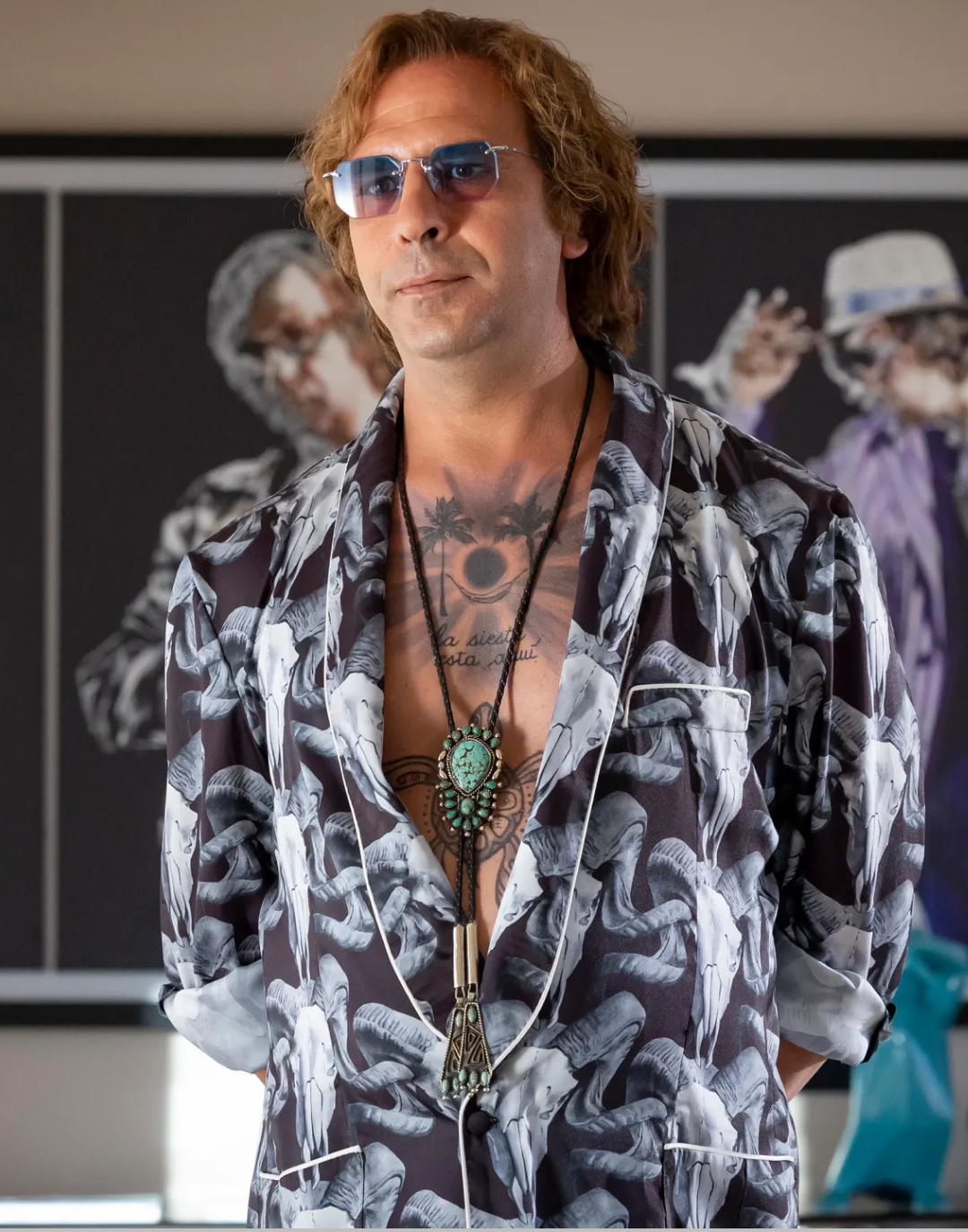
Even Checco Zalone failed to deliver But maybe Buen Camino, in theaters from December 25, will manage to make you laugh
For almost ten years Checco Zalone managed to represent a large slice of Italy. The past tense is used deliberately, because his new film Buen Camino, released five years after the box-office smash Tolo Tolo (€48 million at the box office), feels out of sync with the timeliness through which, for many years, the Apulian comedian had been able to criticise Italy’s very own bigoted reality.
The successes of Checco Zalone
Checco Zalone: percula il vittimismo dell’uomo medio semianalfabeta che vuole rimanere ancorato ai ruoli di genere
— Marta (@DlORDEPP) March 8, 2025
gli incel fasci e misogininazzi: AHAAHAH GRANDE KEKKO SUCATE FEMMINISTE1!1!1 MAALOX PER I SINISTRATI PIDIOTI1!1!1! pic.twitter.com/ek4FRUmKaE
A mask, that of Checco himself, which became a banner for the national-popular, striking a balance while conquering the widest audience modern Italian cinemas had ever seen, and at the same time managing to speak to such a vast number of viewers that it could hope to land a message even on those it was deliberately poking fun at.
It would also take a certain dishonesty not to admit that, in depicting the habits and customs of Italy from 2009 onwards, Zalone managed to reach heights that could place films like Quo Vado? among the comedies that best captured the social and cultural fabric they both drew from and addressed at the same time. A film that would not be surprising to find included in an academic syllabus to describe Italy’s obsession with job security and its idiosyncrasies, the high point of Luca Medici’s career, aka Checco Zalone, and yet another staggering box-office success with €45 million earned.
But what still worked just a few years ago, with Tolo Tolo—which already, compared to previous films, had slightly raised eyebrows among Zalone’s loyal fans—is no longer applicable to the times we are living in. And not because of the character’s political incorrectness, the jokes about Gaza, Schindler’s List or 9/11, but because of a screenwriting that seems to come from the same bracket as his earlier titles, as if it had failed to notice that time has moved on.
Buen Camino: plot and characters
In Buen Camino, Checco Zalone is no longer a working-class character (who didn’t want to work), but becomes a wealthy man with no desire to make an effort, living off inherited income protected by his father’s sixty years of activity. A privilege he never quite manages to be ruthless enough with, limiting himself to an imitation (also anachronistic) of a generic Gianluca Vacchi, complete with domestic staff engaged in cringeworthy dances, skimming the surface of a figure that could have been explored far more deeply and aggressively than it is, using his status merely as a contrast against the chosen backdrop of the Camino de Santiago.
A journey the protagonist undertakes to reconnect with his daughter Cristal, who has decided to embark on a spiritual experience to free herself from all her possessions in search of something authentic, and who, with her father’s arrival, even finds an unexpected new relationship with him. If, for Zalone, dramaturgy is the main concern, one might wonder why Buen Camino’s is so sloppy, frayed and rushed, made no more cohesive even by Gennaro Nunziante’s direction, returning to collaborate with the comedian after their break with Tolo Tolo, for a film that feels adrift by the time it reaches its ending.
Worse still are the comic rhythms, which Checco Zalone no longer seems able to keep up with, his jokes so heavily telegraphed that when they finally land they can’t be all that funny because they are devoid of spontaneity. Something that comes far more naturally to Luca Medici when he presents Buen Camino in Rome than to his cinematic alter ego.
Is it time to say goodbye to Checco Zalone?
And this shows how perhaps the time has come not to tear down the national Checco, but to transform him. Convincing Zalone to collaborate with another director, even to hand over the writing and focus on acting, letting others take the reins or at least surrounding himself with a sharp, current and, why not, young pen.
To act without resorting to grimaces or caricatures, which may be the very traits that first made us grow fond of his Checco, but if he has been able to grow and change in every version of the character he has portrayed since 2009, why shouldn’t he do the same as the common denominator figure of these fifteen-plus years of career? It would be exciting to rediscover the character in this unexpected guise. For now, however, we have to settle for meeting him along the Buen Camino.