
















Milanese people have discovered Roman-style pizza Thanks to two recent openings that everyone is talking about, “Futura” and “Pantera”
According to many, the pizza that in some ways is the quintessential one is the Neapolitan – it is in fact the most widespread of all the variations of this dish, also thanks to international recognitions, including that of UNESCO in 2017. Less well-known yet increasingly appreciated by those who discover it is the “Roman pizza”. But, as you often hear in the Capital, pizza in Rome «is not one but three»: in fact, three main types can be distinguished, very popular in the city and also common in the surrounding areas.
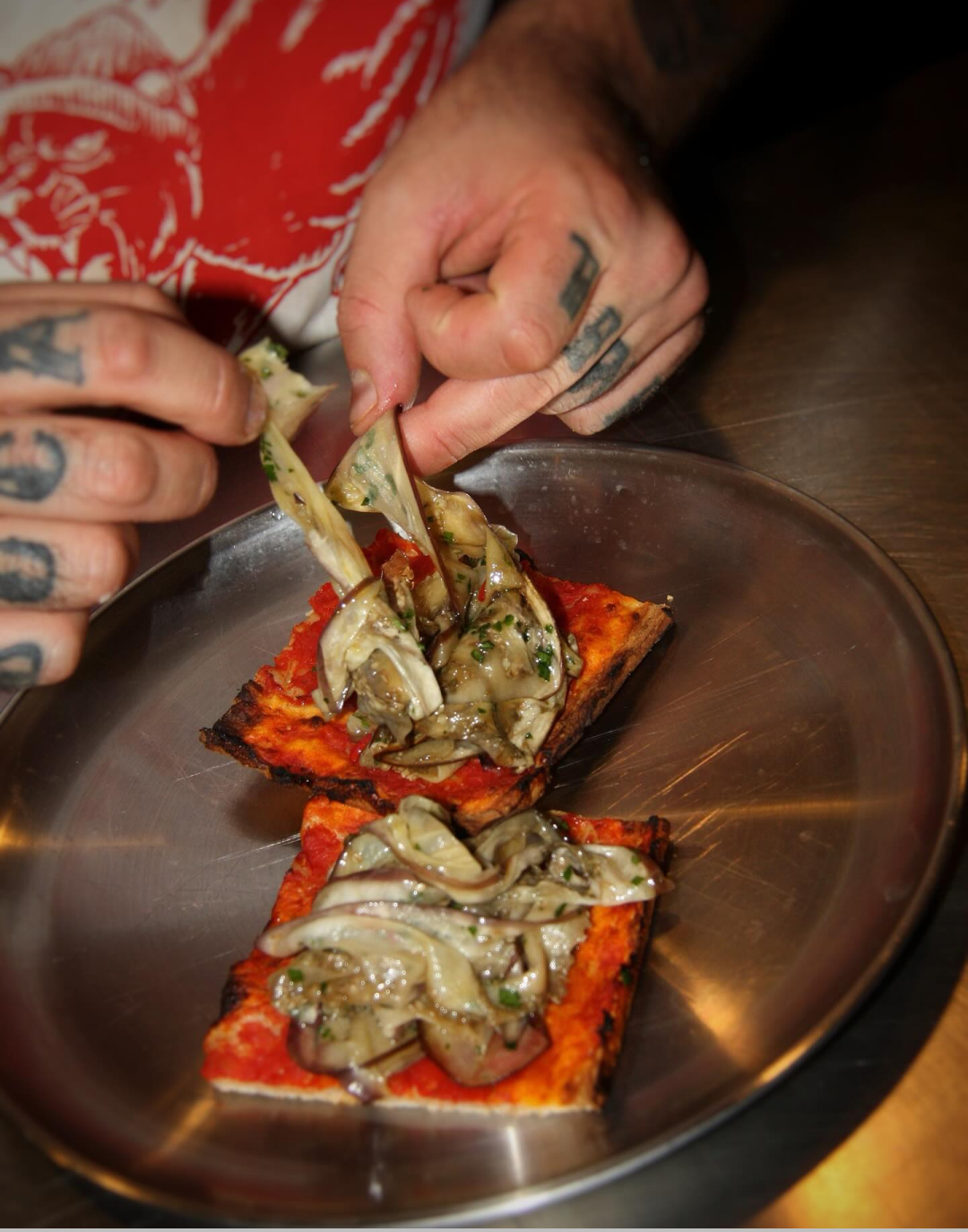
The one with the oldest tradition, widespread since the nineteenth century, is pizza alla pala: it is baked in the same ovens used for bread, at lower temperatures than Neapolitan pizza, which is why it takes longer and loses moisture, becoming very crispy – or «scrocchiarella», as they say. The round variant is also baked at lower temperatures, but in a wood-fired oven, resulting in a thin pizza with virtually no crust. Pan pizza, on the other hand, commonly called “al taglio”, is usually baked in large rectangular trays and then cut into square pieces: it was born as an accompaniment to dishes served in rotisseries, and today many pizza makers (some very famous, like Gabriele Bonci) have made it even more refined in flavor.
Futura: Roman pizza in Milan
@alessandrocapodacqua Futura: the future is crispy and arrives on a plate #milan #milanfood #foodtok #pizza #dinner Paris - The Brazilians of Bossa Nova
Despite the spread of the Roman-style round pizza in the Capital and more generally in Lazio, in recent years several pizzerias have started focusing on a more contemporary version of this dish. In this context, places like 180 Grammi (not far from Centocelle) and A Rota (in Torpignattara) have become very popular. Both, along with pizzas featuring traditional toppings, offer more creative and elaborate solutions – highly appreciated by the public, not only young people.
This format, essentially absent in Milan until recently, has also arrived in the Lombard capital, where it is enjoying particular success. Last month, Futura opened in the Isola district, founded by pizza chef Luca Pezzetta, who already runs a very well-known place in the outskirts of the Capital – in Fiumicino – specializing in Roman pizzas, Clementina.
«There is no sign of stopping when it comes to Milan’s attraction for great Italian pizza makers», writes CiboToday regarding the opening of Futura: «Many have decided in recent years to open a branch» here, and «even the Romans, now, are well represented». Pezzetta explained to Reporter Gourmet that «Futura is an idea of neighborhood Roman pizza. The intention is to bring back to the table that classic, thin pizza with a burnt edge, without frills». On the menu, however, there is no shortage of what Pezzetta himself calls his «signature dishes» – including the “Capricciosa di Mare”, topped with tomato, fresh mozzarella, yellow and red datterino tomatoes, fish prosciutto, Jewish-style artichokes, bottarga, and olive powder.
At Futura, in keeping with the typical menu of Roman pizzerias, «there are of course appetizers like supplì and various fried foods [...], already well known to the Roman public», CiboToday notes. The wine list, consisting of around fifty labels, is «excellent, as in Fiumicino», thanks to a careful selection of organic, biodynamic, and natural wines.
The opening of Pantera in Milan
@nssmagazine Dopo la chiusura della sede romana, Pantera, la pizzeria al taglio dei fratelli Trecastelli, ha aperto un nuovo locale a Milano, in zona Barona. Avete già provato la loro pizza? #pantera #pizza #pizzeriaromana #pizzaromana #milano #milan #cool #eat #restaurant #pizzeria #wheretoeat suono originale - nss magazine
But Futura is not the only place specializing in Roman pizza – with a so-called “contemporary” touch – that has recently opened in Milan. Last June, in the Barona district, Pantera opened, a famous Roman brand well known and appreciated for its Roman “al taglio” pizzas. «The size of the place [...] remains small, in line with the original, with the idea of a spot mainly dedicated to take-out», reads another article by CiboToday.
«Sure, it’s one thing to rely on Rome’s symbolic street food when you’re on home turf, and another to plant your flag in a city that “has seen it all”, like the Lombard capital». The founders of Pantera – the Trecca brothers, already well known in the Roman gastronomic scene and beyond, also thanks to the namesake modern trattoria – argue, however, that in Milan «the response will be even faster than in the Capital. Because not only is there a free niche, but a real open prairie to occupy».