











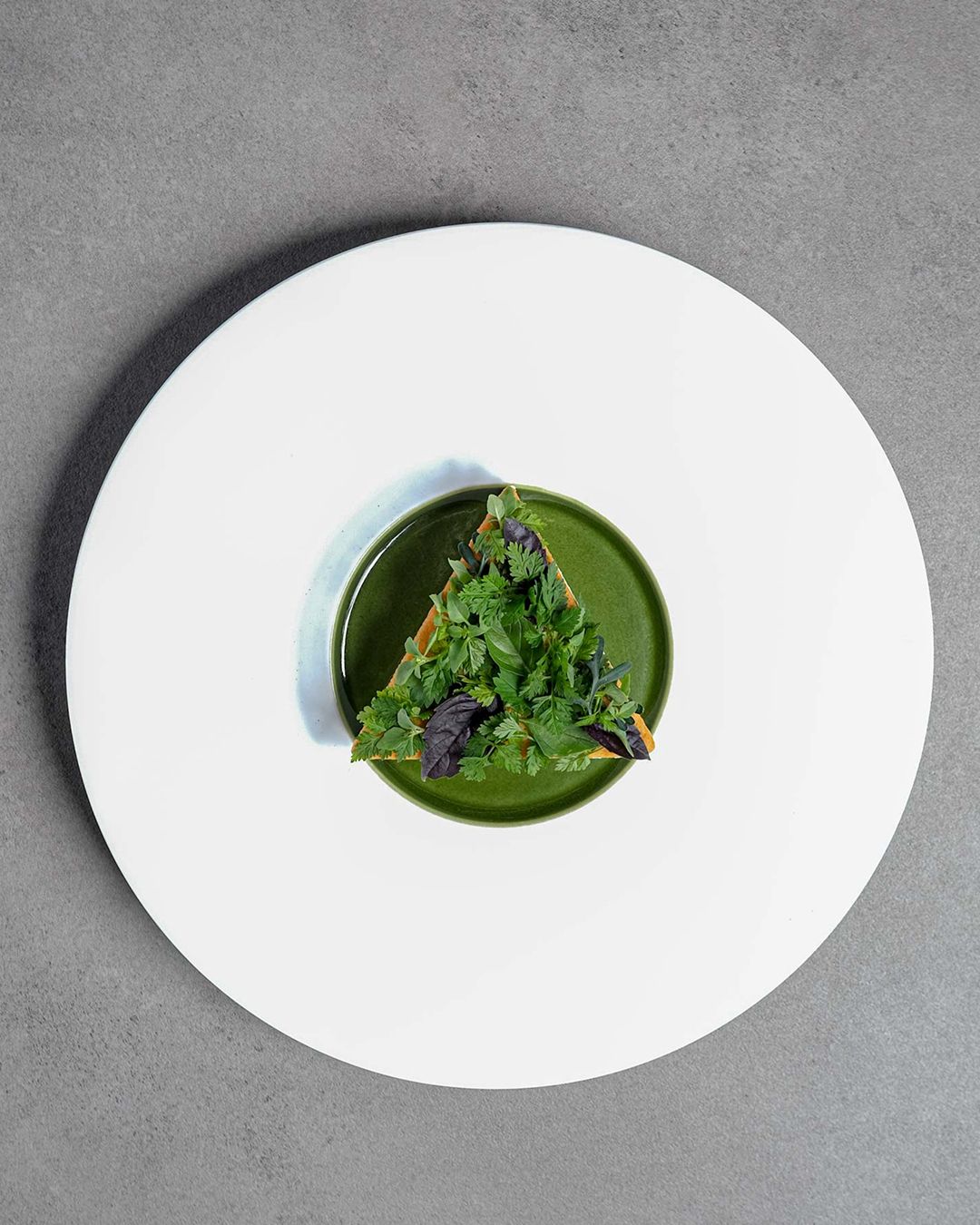
How Italian haute cuisine is changing The new national edition of the Michelin guide says a lot about the direction it is taking.
In recent years, the people approaching fine dining have changed, the consumers’ “palate” has changed, the public’s expectations have changed, and so has what is sought in fine dining. Faced with these transformations, have gastronomic guides managed to keep up?
How are the values and criteria evolving through which fine-dining enthusiasts and the main institutions in the sector — from the Michelin Guide to the World's 50 Best Restaurants — evaluate a restaurant? Does the wonder generated by the complexity of the dishes and by innovation in technique still matter, or are the criteria shifting toward the warmth of hospitality, the narrative consistency of a restaurant, and the economic sustainability of the gastronomic experience in relation to the quality offered?
We discussed how fine dining is changing in Italy with the spokespersons of two Michelin-starred restaurants, Da Lucio in Rimini and Trattoria contemporanea in Lomazzo, in the province of Como, on the occasion of the publication of the national edition of the Michelin Guide 2026, which now includes around 500 establishments. «Just as society changes, so do customers’ expectations and parameters. Today there are many variables that influence how people evaluate their dining experience: where they come from, how old they are, what kind of culture they have, why they are in that place, and so on», say Nicolas Barosi and Jacopo Ticchi, respectively partner and chef-founder of Da Lucio, according to whom what unites a large portion of future consumers is «experiencing a meal in a more experiential and relaxed way». «We’re not saying that formalities should be avoided, but that we should take a further step, making sure the guest feels comfortable», they specify.
«The clientele is increasingly aware and informed. [...] In a sense, it is more difficult to “astonish”», says the team at Trattoria contemporanea. In this context «those who work in an “honest” way, without excesses or unnecessary frills, are competitive and desirable. Guests look for high-level dining that is authentic, sincere, a place where they can feel at ease». For this reason, the group adds, «the human factor is fundamental».
What emerges from the Italian edition of the new Michelin Guide
In the new Italian edition of the “Red Guide” — as the Michelin Guide is called, referring to the colour of its cover — «there is a clear change of paradigm», say Barosi and Ticchi. «We believe that the historical moment we are living in, and the various sociological changes underway, which concern all arts — including cuisine — have finally been taken into account».
«The new Michelin Guide seeks gastronomic proposals with an increasingly strong identity, marked and distinctive; restaurants that stem from research, supported by an identity-driven project and a clear manifesto of values. Restaurants [...] whose promise centres on guest care, making hospitality a fundamental theme», comment the spokespersons of Trattoria contemporanea. «And in our opinion, in Italy, we can set an example in this».
Where modern dining is heading
@a.yelloww Trattoria contemporanea, si trova a lomazzo e ha una fortissima identità visiva, è raro vedere già all'ingresso quest'estetica molto spinta e continuamentr presente. Dentro ci sono molte stampe e quadri pop sui muri. È un ristorante innovativo, più simile agli stili usati nel nord europa. Noi abbiamo preso il menu coraggio, che valorizza anche gli "scarti" del cibo #guidamichelin #ristorante #milano #lomazzo #cibo #lombardia #ristorantestellato #cucina #design shirt by sza - audioz
«A trend that is much more sociological than superficial» in today’s dining scene is the «selection and promotion of producers who become actual collaborators», as well as «of the ingredients that are increasingly narrated», say Barosi and Ticchi. The collective at Trattoria contemporanea agrees: «The careful selection of suppliers of raw materials — cheesemakers, breeders, farmers, among many others — is becoming an increasingly important part of this profession, because the work in the kitchen begins long before transforming the ingredient; it begins with knowing it».
More broadly, modern cuisine must «reflect the present, and the present means the abolition of rigid boundaries», states the collective behind Trattoria contemporanea. «This is a job that must speak to today’s society, not yesterday’s. Dining has the ability to innovate everyone’s gastronomic culture», add Barosi and Ticchi.
How Michelin-starred cuisine is changing
@cosamangiamooggi Siamo andati da Jacopo Ticchi, nel suo ristorante a Rimini "Da Lucio", per scoprire tutti i segreti del pesce frollato. Abbiamo anche assaggiato un fuori menù, l'occhio di tonno. #pesce #pescefrollato #frollatura #jacopoticchi #dalucio #tonno suono originale - cosamangiamooggi
Looking at where the protagonists of the first season of Chef’s Table — the Netflix series that anticipated and fuelled the global fine-dining craze before gradually taking on a more cultural and “political” dimension — are today, one can perceive, with due proportions, how much the sector has changed. Several chefs who about ten years ago were at the top of the dining world — and who were selected for the programme for this very reason — have now lost part of their relevance and influence in the international food-and-wine landscape.
In a highly competitive sector subject to rapid change, remaining in the gotha of haute cuisine is challenging on every level. Maintaining certain recognitions requires a coherent and economically sustainable vision: creative processes must constantly be renewed, logistical ones evolved, and business ones consolidated, without compromising the identity of the restaurant. «Receiving a star also means shining a spotlight on your work — a spotlight that can also turn off; therefore care, attention, and commitment toward what you are doing not only do not decrease, but actually double. [...] The star is the starting point, not the finish line», says the collective of Trattoria contemporanea.
Michelin stars represent one of the most important certifications in the gastronomic world, and for most professionals earning one truly equates to a turning point. Michelin stars are associated with prestige and a guarantee of excellence at the international level, and obtaining one has a clear impact in terms of marketing and revenue. This is especially true for restaurants that, despite already sustaining the structural costs of haute cuisine, cannot count on an almost constant flow of guests: in this sense, earning a star can truly change the economic balance of a restaurant.
With the new Italian edition of the Michelin Guide 2026, «we believe a lot of space is being given to young people [...]; young chefs and teams with long-term projects», states the collective of Trattoria contemporanea. According to Barosi and Ticchi, the new awards convey a very clear position from the “Red Guide”: «Make way for the young» — «not only us, but also Pecis, Sodano, Mammoliti, Guidara and so on. It’s an important sign that speaks of today but also of tomorrow».