


























Have Nordic-style bakeries moved beyond the big cities? The concept is gaining traction particularly in smaller towns
There is a phrase attributed to the photographer from Cesena, Guido Guidi—who, together with Luigi Ghirri, is among the main representatives of landscape photography and the so-called “Italian school”—according to which History in the provinces “settles”: essentially, certain trends – social and cultural – arrive here more slowly, but once they spread they usually persist, “depositing themselves”, precisely, until they become part of the identity of the place. In recent years in Italy, for example, there has been a growing rediscovery of breakfast, with strong interest in proposals inspired by Scandinavian gastronomy.
The phenomenon – fueled by the rise of Northern European dining – has led to the opening of numerous specialized spots, especially in large cities, such as Loste Café in Milan, Allegra in Bologna or Forno Conti in Rome, among many others. For several years, however, the trend seemed confined to metropolitan areas. For some time now, though, this type of bakery has begun to appear even in the provinces, even in places where one wouldn’t expect to find them.
A selection of the best bakeries operating in the provinces
Burro has been described by Gambero Rosso as «the new café with a kitchen where you can have a European breakfast in Puglia», and more precisely in Ostuni—a city of fewer than 30,000 inhabitants, more than 80 kilometers south of Bari. The offer of this bakery includes «danish pastry, pain au chocolat, croissants, cinnamon rolls and many daily specials», according to Gambero Rosso, and «to accompany everything, selected and seasonal specialty coffees that change periodically (from Ethiopia, Honduras, Indonesia), as well as kombucha and homemade juices». Notably, this is anything but a trivial offering, especially considering that tourism in Ostuni is concentrated mainly in the summer, while in winter the flow decreases significantly.
The same happens in Sabaudia, where during the warm months the number of residents increases considerably, but in winter generally does not exceed 20,000 people. Here, however, two establishments operate year-round that one would not be surprised to find in cities like Milan: UAU Parentesi Buccia and Panetto. The first is a recently opened bakery connected to one of the most interesting contemporary trattorias of central Italy, Buccia, precisely. The second, instead, has been described by Gambero Rosso as a «small revolution»: the owner himself, interviewed by the food magazine, explained that Sabaudia lacked «a modern bakery», and he decided to fill that gap with a project in this direction.
The trend of breakfasts that nod to the "Scandinavian school" is becoming increasingly evident also in Romagna—which is also becoming the new epicenter of Italian fine dining (recently Trattoria da Lucio joined the seven Michelin-starred restaurants already in the area). Within a few dozen kilometers there are establishments such as Demetra in Longiano (about 7,000 inhabitants), where queues often form at the entrance over the weekend, or Forno Panico in Faenza (almost 60,000 residents), whose viennoiserie almost always sells out in a short time.
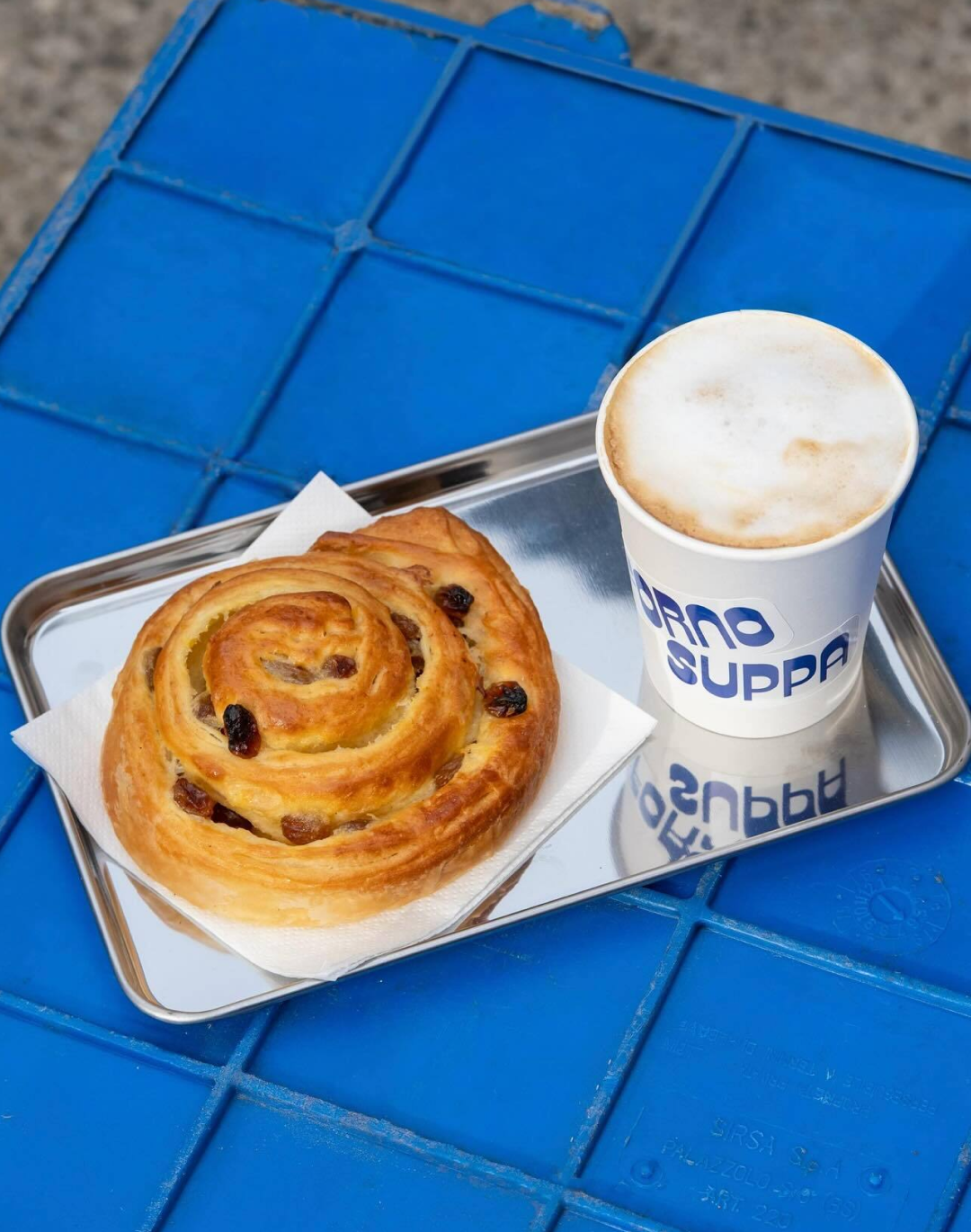
Then there is the newly opened Forno Suppa in Fusignano, which has brought cinnamon rolls, specialty coffees, and more generally a very contemporary aesthetic to a municipality with just over 8,000 inhabitants. Entering Emilia, we find Madré, a bakery in Castel San Pietro Terme, a small town of 20,000 residents on the outskirts of Bologna. Unlike the previous ones, this bakery has now been around for several years and has managed to build a strong identity also thanks to social media.
But why do these and many other establishments – with all their differences in terms of approaches and specialties, and which here (by greatly summarizing and generalizing) we include under the umbrella of Nordic-style bakeries, though one could also say “European” – choose to open in the provinces instead of in a big city? There is clearly no single answer, also because choices of this kind are influenced by many factors, but it can be said with certainty that in the provinces the costs – including rent for the premises – are generally more accessible for those who choose to start a business. Addressing not only tourists but especially residents favors customer loyalty toward the brand, especially when the offering is high-quality and features innovative proposals, as is often the case with this type of bakery.