





























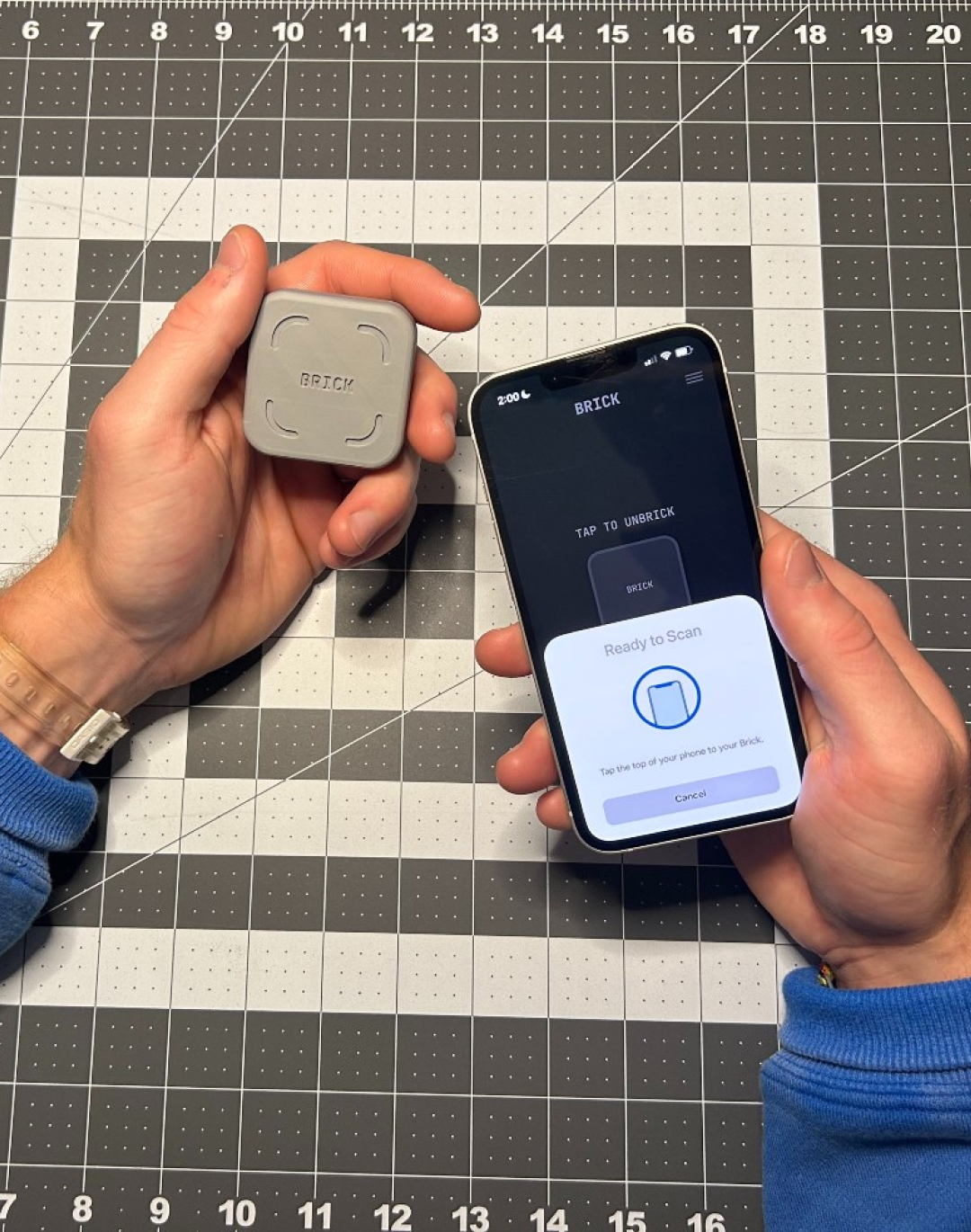
Now there is a device that physically prevents you from using social media. It's called Brick
6 hours and 33 minutes. That’s the daily screen time average of the person writing this over the past two weeks. The number isn’t enormous — it could be worse — but just reading it triggers that familiar mix of anxiety and embarrassment that comes from realising how much of one’s life gets sucked into a screen. If you spend nine hours in front of a computer for work and another six on your phone (often overlapping with those same hours), it means that almost every active minute of your day involves some form of digital interaction. A bleak scenario, even for someone born in 2000 who believes they have a “normal enough” relationship with technology.
What is Brick?
The Brick device transforms your smartphone into the distraction-free tool it was meant to be. pic.twitter.com/vRm3zJiDDU
— Brick (@livebricked) May 27, 2023
Brick is an extreme response to a now-universalised problem: the physical, more than psychological, impossibility of stopping the scroll. Brick is a physical object, a kind of portable “mini safe” that communicates with your phone via NFC and automatically blocks access to addictive apps every time you walk away from it. In practice, instead of buying a dumbphone or deleting all your socials, you put your phone “in jail” without fully separating from it: calls, maps and essential functions remain active.
The idea was born in 2023 from two young founders in the US, Zach Nasgowitz and TJ Driver, who, as reported by Dazed, felt like their smartphone was “taking more than it was giving back.” This led to the creation of a minimal, magnetic box that can be placed in any room and connects to an app that lets you choose which platforms to block, from TikTok, Instagram, X and Discord to even Gmail.
“Bricking” works
@_brooklynroth goodnight!!!!! #brick #screentime #doomscroll @Brick The Subway - Chappell Roan
According to a long list of users who have recently posted their Brick reviews on TikTok, the device actually works. As several users point out, Brick not only helps avoid doomscrolling in the short term, but gradually reminds you what life without your phone feels like. Creator @runwithemily noted in her review that, thanks to consistently using Brick, her evenings feel slower, giving her the space to cook, maybe bake something, read, and fall asleep more peacefully.
As both Laura Sherman noted in her Dazed review and user @lexistives pointed out, it’s the physical act of having to go “unlock” the phone that makes the device so effective. That tiny bit of friction — getting up, walking over to the Brick, touching your phone to unlock it — makes scrolling much less immediate and therefore less automatic. In a way, it also triggers a micro shame mechanism, which is why many users feel discouraged from getting up at dawn just to unlock their phone to check social media.
In her test, Sherman explains that on the third day she even left the house without “un-Bricking” her phone. Only once she got on the train did she realise it, and she simply accepted a full day without social media. When she got home, she didn’t feel the need to unlock it. Her current record for keeping her phone “bricked” is 25 hours and 10 minutes.
How will we use social media in 2026?
There are more and more signs suggesting a growing distancing from social media in the near future. Creator @carmscrolls, in a mini video-essay, talks about a renewed collective desire to lighten things up, slow down, and shake off the pressure of being constantly present. It’s a feeling already taking shape in the new digital yet “analog-like” platforms emerging now, such as Rodeo, the app created by the former COO of Hinge, designed to save all the bars/restaurants/places you’ve seen online and actually use them with your friends.
The video includes a line that sums up this shift perfectly: “Fifteen years ago the internet was a way to escape the real world. Now the real world is a way to escape the internet.” And it’s exactly this reversed perspective that explains why so many people are searching for calmer alternatives to feeds, endless notifications and the pressure of having to participate in — or know — everything at once. Will 2026 be the year that finally drags people back into the real world? We’ll have to wait a few more weeks to find out.