






























How post-credit scenes are created And why the public is a little fed up with them
Many things seem to have started with Marvel. The rise of superheroes, the construction of expanded universes belonging to a single saga, team-up movies that bring together various characters from other titles to finally be protagonists in just one. All things that began well before 2008, the year that marked the beginning, between Hulk and Iron Man, of what would become for more than a decade the dominance of the MCU, including the now integral and essential post-credit scenes. Yet, before the Marvel cinematic era, there is a world and a history that belongs to the short sequences that seal a film. We could start with cinema, but if we go even further back, we can find the concept in theater, especially in the musical domain. It was May 1, 1786, when in Vienna the premiere of The Marriage of Figaro was held, a four-act opera by Wolfgang Amadeus Mozart whose pieces were, for the first time, replayed following a encore. What happened at the Burgtheater in the Austrian capital became a common practice, involving not only a final “tail,” but the repetition of certain musical sequences during the opera itself, causing the show to increase its length or even double it, hence why the practice faded away around the 1920s. The encore later moved to the stages of bands and singers who simulated a false ending, later leading to the true finale, a skit that became part of the performance, taking on an increasingly important role.
It was the ’60s that proved fertile ground for the encore in concerts, and 1966 is the year of the film considered to feature the first post-credit scene in history. The film is The Silencers, starring Dean Martin, and it follows the story of the secret agent whose name gives the film its title, tasked with rescuing the inventor of a death ray who has fallen into the clutches of the criminal Julian Wall. The scene shows Martin’s character shirtless, lying on a rotating bed and surrounded by women; overlaid text reads “Coming Up Next” and “Matt Helm Meets Lovey Kravezit.” The scene, as conceived, invites the audience to await the second Matt Helm film, which would be released the same year titled Murderers' Row, followed in 1967 by The Ambushers and in 1968 by The Wrecking Crew. A fifth installment, The Ravagers, was announced but never entered production. This is essentially the original purpose of post-credit scenes: to act as a bridge from a story that has just ended to assure the audience that another will soon follow, thereby building anticipation and excitement for the next title. A method somewhere between advertisement and cliffhanger serial usage, not always tied to promoting sequels or spin-offs of the concluded film, as its use later evolved.
In Night of the Living Dead (1968), George Romero introduced some mid-credit scenes - scenes during or right after the credits - showing piles of corpses and bonfires, not to hint at a potential sequel, but rather to show the immediate consequences of the story that had just ended. There are also cases where a post-credit scene suggests a possible continuation beyond the strict boundaries of cinema. A continuation, yes, but only for the characters and internal story of the film, not necessarily offering new knowledge to viewers. One of the first instances of this happened with House of Dark Shadows, a 1970 film by Dan Curtis based on the soap opera Dark Shadows (the same one that inspired Tim Burton’s 2012 adaptation). A sequel was actually made, but with a new cast and an original story. In the post-credit scene, Barnabas Collins, seemingly lifeless, suddenly turns into a bat and flies away. It’s a hint at a future, possibly cinematic, but also just a way to let the audience imagine their own ending.
Throughout film history, post-credit scenes have continued to evolve, adapting each time to the product they were placed in. Sometimes they were used to announce sequels, other times just to entertain. These range from bloopers, behind-the-scenes jokes and mistakes shown solo or alongside the credits, to the practice of breaking the fourth wall, one of the most iconic being the red-and-white bathrobe moment from the main character in Ferris Bueller's Day Off (1986), written and directed by the legendary John Hughes—later echoed by Deadpool starring Ryan Reynolds. But it was actually the Muppets who first directly addressed the audience in their The Muppet Movie (1979), in a scene where all the characters are chatting and Animal tells the audience to go home, just like Ferris Bueller would seven years later, and Deadpool thirty-seven years after that.
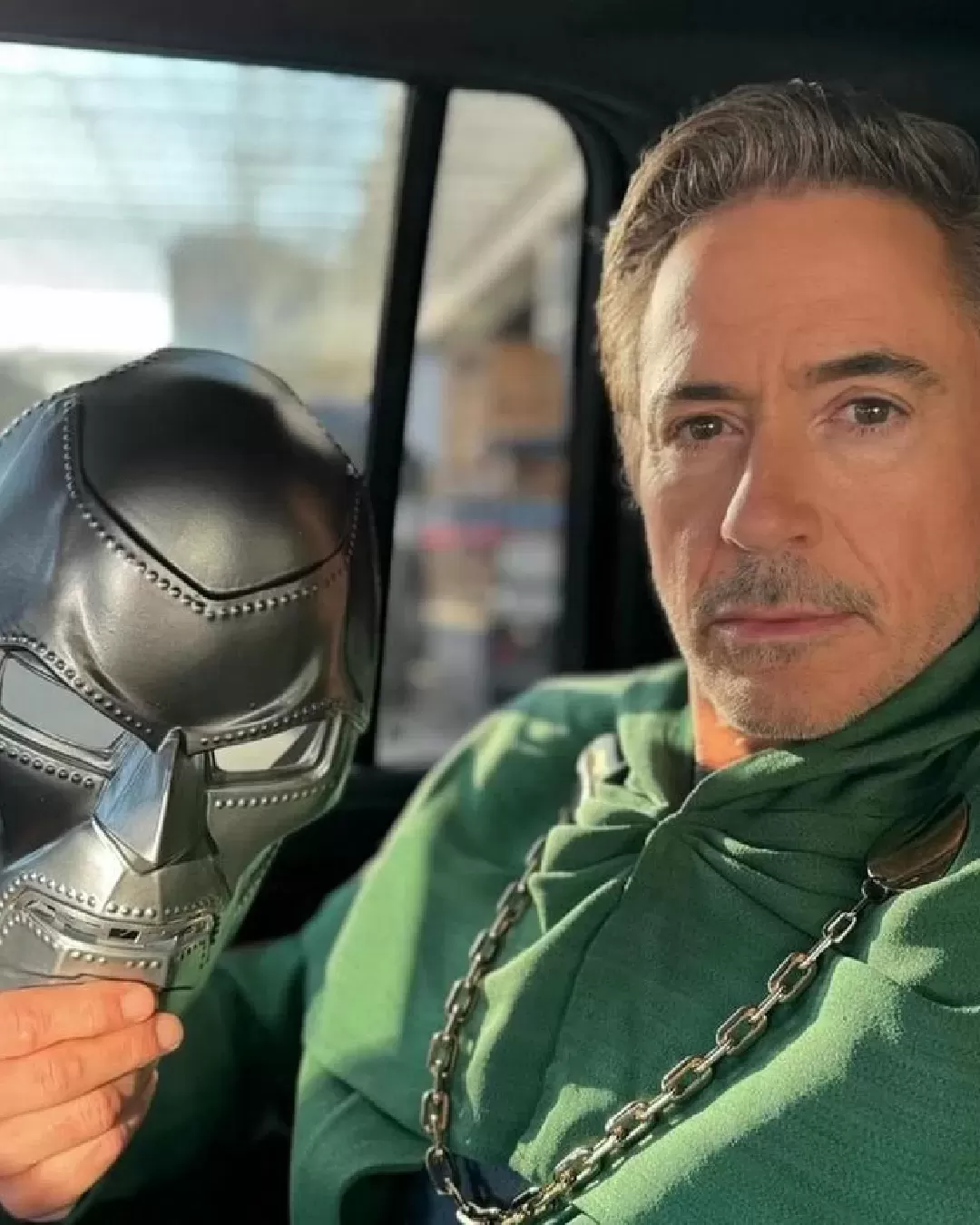
And so we arrive at Marvel and the unprecedented importance given to post-credit scenes. From Jon Favreau’s Iron Man, the MCU began to build, scene after post-credit scene, a broader mosaic of sequels, multiverses, crossovers, and cinematic interconnections. At the end of the 2008 superhero movie, Nick Fury, played by Samuel L. Jackson, visits Tony Stark, who has just revealed his super identity, to talk about something called the “Avenger Initiative.” Fury mocks Stark for thinking he’s special, revealing that Iron Man isn’t the only superhero in the world. One line from the post-credit scene stands out as a manifesto of what superhero and Marvel films would become: Fury tells Tony Stark that he is now part of a bigger universe, he just doesn’t know it yet. And isn’t that exactly what followed in the ensuing years, with the construction of the Marvel Cinematic Universe, in which Robert Downey Jr.’s character still plays a role, and will continue to (he’s expected to appear soon in the green cape of Doctor Doom).
What changed with Marvel's post-credit scenes was the dynamic itself. No longer just a treat or a gift for those who stayed until the end, but the main course, both for superhero movies and for audiences. The constant revealing of new characters or plotlines in Marvel’s mid and post-credit scenes has shifted the anticipation and viewing experience toward simply discovering what happens next. The pleasure of watching the film has dulled, with fans sitting in reverent silence for two to two and a half hours just to enjoy the last 90 seconds of footage. It’s a machine that generates more buzz than the film itself, making it seem as if a superhero movie exists more for its post-credit scene than anything else, raising expectations while weakening the main plot, leading to what's now known as “superhero fatigue,” both cause and effect of the accumulation of Marvel’s mid and post-credit scenes, which, since the 2013 release of Man of Steel, has also affected rival DC.
marvel finally getting the fantastic four right only for their doom to be rdj pic.twitter.com/QNXJMf0eAK
— neo (@neogalaxite) July 24, 2025
It’s a trend that Marvel has been able - and still needs - to fight in only one way: by giving the audience meaningful stories that are entertaining, regardless of what comes next. A clear path that the studio has lost sight of, leading to questionable projects and, more importantly, to a decline in box office returns compared to its golden age. Take, for example, Thunderbolts*, the thirty-sixth MCU film, whose greatest merit and true source of interest lies not only in the revelation that the team becomes the “The New Avengers” or that the Fantastic Four are arriving in their universe via a spaceship, but in a screenplay that makes the film a story about loneliness, depression, and even suicide. Of course, Marvel can’t resist maintaining curiosity, so while one of the two post-credit scenes in Fantastic Four – The Beginning is just their animated series theme song, in the more relevant one, the next Doctor Doom appears from behind, alongside little Franklin, son of Reed Richards and Sue Storm. If post-credit scenes are now a way to keep people seated during the credits - whether out of respect for those staying and not wanting people walking in front of them, or for those who worked on the film and deserve recognition - then that’s certainly a merit to Marvel. For all the unnecessary mid and post-credit scenes that have since flooded cinema, from action to sci-fi, to drama and comedy, we can’t help but blame it a little.
What to read next

With Ray-Ban, the Marvel universe comes to eyewear
The worlds of Marvel Superheroes Spider-Man, Captain America, Doctor Doom and Deadpool brought to life in some of Ray-Ban's most iconic models
"Un tranquillo funerale di famiglia" is everything comedy should not be today
Massimiliano Bruno's film had its premiere at the Rome Film Festival
«Club Kid is a once-in-a-lifetime opportunity», interview with Jordan Firstman
Everything about the directorial debut of the American actor and screenwriter