






Italy's provinces fill with art during summertime More so than the big cities during the winter
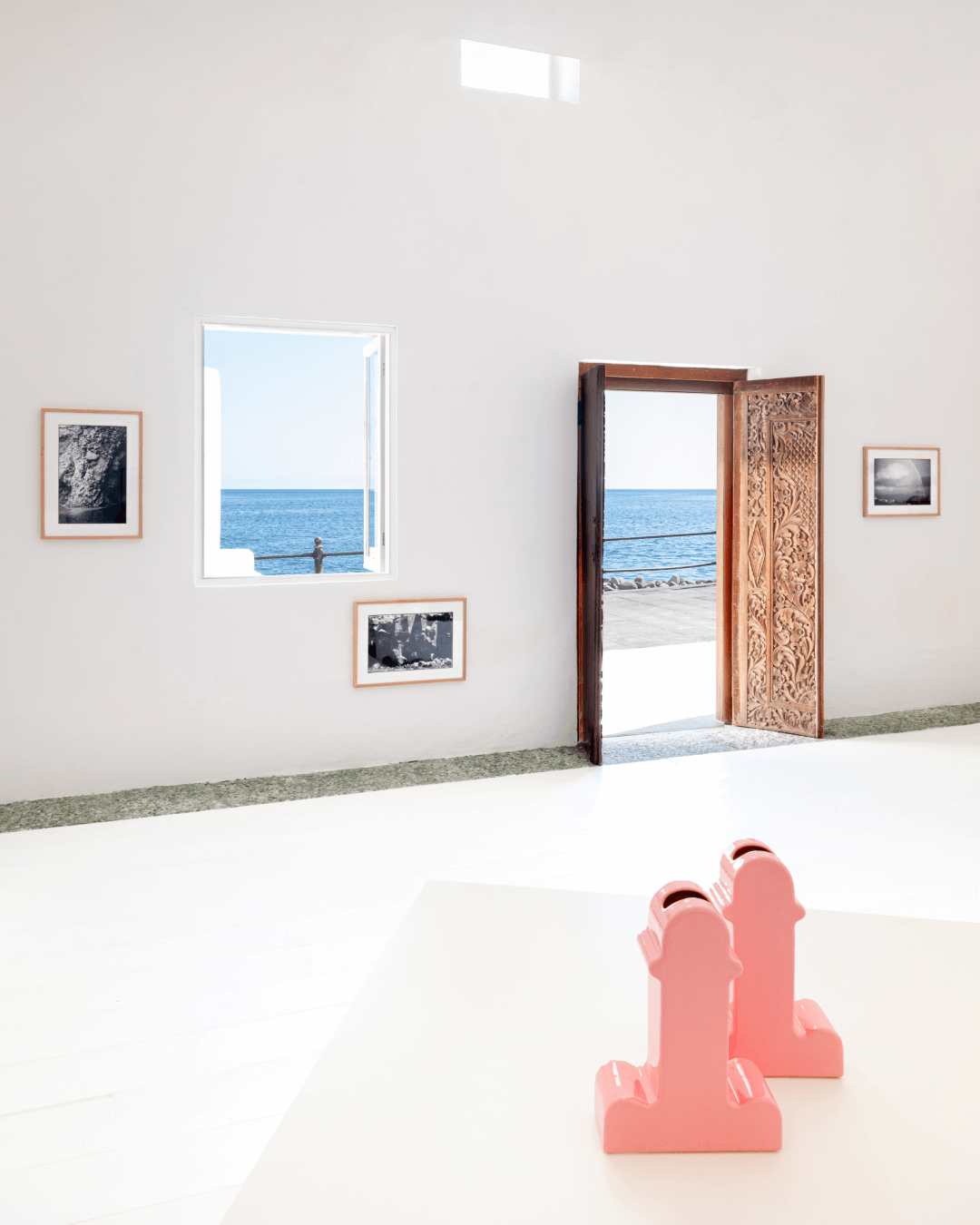
In summer, Italian metropolises empty out, while beach resorts and coastal provinces fill up with things to do. There’s the beach, local festivals, concerts, outdoor movie nights and, finally, exhibitions. And while the artistic offerings in Italy’s provinces have always been richer during the summer, it must be said that in recent years, far from Milan, Rome, and even aristocratic Venice, small towns have rolled up their sleeves more than usual. Moreover, the spaces hosting Italy’s most innovative exhibitions seem to be particularly remote, in close contact with nature and removed from the urban chaos. On the island of Filicudi, part of the Aeolian archipelago, a retrospective on Ettore Sottsass is currently being held. The Italian designer, born in Innsbruck, chose this destination in the 1980s to build an all-white house with Barbara Radice. The new exhibition showcases some of the designer’s most famous works, such as the Superbox Torno Subito, glazed ceramics, and photographs, all in dialogue with the surrounding space, demonstrating the Mediterranean influence of the island on Sottsass’s work. Or in Domodossola, just steps away from the Piedmont Alps, the Civic Museums of Palazzo San Francesco will host works by 20th-century artists of the caliber of Pablo Picasso, Osvaldo Licini, Fausto Melotti, Paul Klee, and Marc Chagall. Further south, Marche and Abruzzo are preparing a packed calendar of openings, from Antonio Marras and Cecco D’Ascoli at the Forte Malatesta in Ascoli Piceno to the centenary of Mario Giacomelli’s birth in Fabriano, from an exhibition on traditional textiles in L’Aquila to Playgrounds by Linda Fregni Nagler in Pescara.
Just like with Sottsass in Filicudi, art enters into conversation with the place that hosts it in Alta Langa, in Piedmont, where the first edition of the Contemporary Art Biennale will be inaugurated, a narrative-exhibition that brings together emerging talents of Italian contemporary art, including figures from music and literature, and aims to promote their work together with local municipalities through an artistic path immersed in nature. Meanwhile, in Puglia, Conversano is currently home to eighty works by the Dutch artist Escher, before they head to Milan this September. Last summer, Milan-based magazine Flash Art inaugurated Casa Flash Art in Ostuni, which hosts exhibitions and other events in the relaxed southern Italian setting during the warmest months of the year. Tuscany also holds its own when it comes to major exhibitions: in Pontedera, in the province of Pisa, contemporary street art by Banksy, Andy Warhol, David LaChapelle, Damien Hirst, and Obey will be on display until early September. In Florence - which can hardly be considered a small province - a retrospective on the provocative Tracey Emin was available to visit until July 20. Set up at Palazzo Strozzi, it was the largest exhibition ever dedicated to the British artist, active since the 1990s, perhaps the clearest sign of how far behind Italy remains when it comes to big names in contemporary art.
The reasons for the success of exhibitions far from metropolitan centers may lie not so much in economic resources (which are scarce across the country, let alone in small towns), but in the resources of time and space that medium-small cities can devote to guest artists. For example, while the exhibition organized by Mudec in Milan for Martin Parr in 2024 featured over two hundred of the photographer’s images in a labyrinth-like room outside the museum - so crowded on any given day that visitors couldn’t truly enjoy the works (all for the modest ticket price of 27 euros) - this summer, the artist will head to Monopoli, in Puglia, as the star guest of the city’s International Festival of Photography and Art. To celebrate the tenth anniversary of Phest, Monopoli will also host exhibitions on the photography of Yorgos Lanthimos and Francisco Goya, along with projects for emerging creatives and evenings with live music and DJ sets. The success of world-renowned artists in Italy’s provinces proves that art is not just a collectible luxury for the wealthy, as suggested by projects like Maurizio Cattelan’s invitation-only exhibition in Capri, but a shared asset, capable of spreading public knowledge just as much as schools and universities, and therefore something that should be made accessible to as many people as possible.